Kansas Cohabitation Agreement
Living together without being married?
Includes 30 days of edits
- 5 to 20 minutes
- Print-ready PDF
- Tailored to Kansas
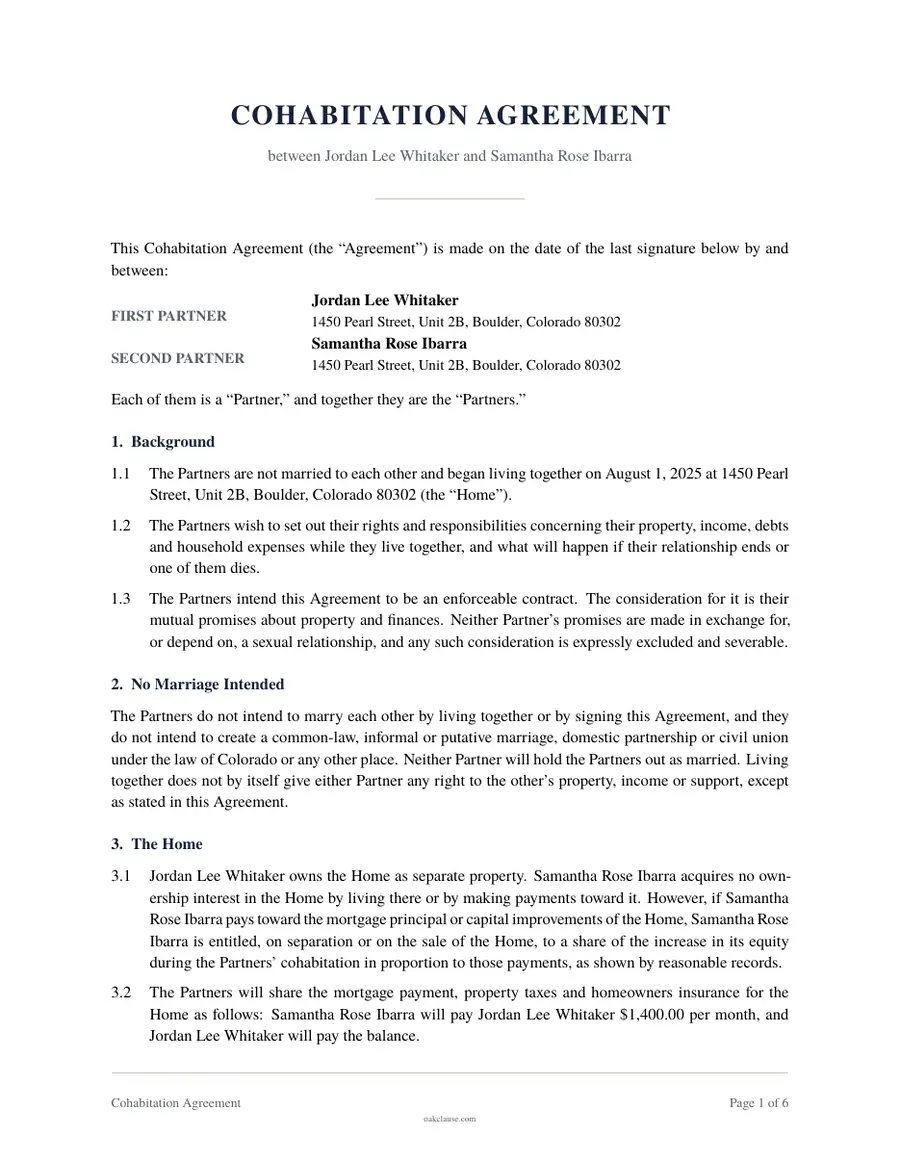
Cohabitation Agreement rules in Kansas
Cohabitation agreements are contracts, so they are governed mainly by each state's contract law, but states differ in how they treat agreements between unmarried partners. Most states enforce written agreements about property and money; a few have historically required them to be in writing or have been reluctant to enforce agreements between cohabitants at all. Some states recognize common-law or informal marriage, which can make the no-marriage statement in this agreement especially important, and states have different rules about co-owning real estate, tenant obligations under a lease and inheritance when there is no will. When you select a state, the agreement uses that state's law as its governing law and defers to that state's rules rather than stating them.
When you create this document for Kansas, the questionnaire uses Kansas as the governing law and adds wording that defers to Kansas requirements where they apply. Laws change, so confirm current rules with official Kansas sources or a local attorney for anything critical.
What is a Cohabitation Agreement?
A cohabitation agreement is a contract between two unmarried partners who live together or plan to. It records which property belongs to each partner, how jointly bought property is owned, how rent or mortgage payments and household bills are shared, and what happens to the home, shared belongings and pets if the relationship ends or one partner dies.
Unmarried partners generally do not get the property division, spousal support and inheritance rules that state law provides for married couples. If a relationship ends without an agreement, partners may be left arguing about who paid for what, and if one partner dies without a will, the other usually inherits nothing. A written agreement gives both partners a clear framework and reduces the chance of an expensive dispute.
Courts in most states will enforce a cohabitation agreement about property and finances as an ordinary contract, as long as it is fair, voluntarily signed and not based on a promise of sexual relations. This document includes a residence clause tailored to whether you rent or own, separate and joint property schedules, a household expense plan, separation steps, an optional support term, pet arrangements, a statement that you do not intend to create a marriage, and signature and optional notary pages.
When to use it
- You and your partner are moving in together and want to agree on how costs and property are handled.
- One partner owns the home and the other will contribute to the mortgage or improvements.
- You are buying a home, car or other major item together without being married.
- One partner is giving up work or moving for the relationship and you want to address support.
- You have pets, furniture or other shared belongings and want to agree who keeps what if you separate.
- You want to make clear that living together does not create a marriage or a claim to the other's property.
What is included
- Partner details, shared address and date you began living together
- Residence terms for renting, sole ownership or joint ownership
- Separate property schedules for each partner
- Ownership rules for property bought together and joint accounts
- Household expense sharing and responsibility for debts
- Separation process, notice, moving out and dividing shared property
- Optional post-separation support payment
- Pet custody and care costs
- Death of a partner and estate planning acknowledgments
- No-marriage statement, dispute resolution, signatures and optional notary block
How to make your Cohabitation Agreement
Answer the questions
Tell us about the parties and the terms you want. Most documents take about 5 to 20 minutes.
Review the preview
Check the draft as you go and change any answer. The document updates instantly.
Download, sign and keep a copy
Download a print-ready PDF, sign it with the other parties, and give everyone a copy.
Cohabitation Agreement in another state
Back to the general cohabitation agreement page51 states shown
- ALAlabama
- AKAlaska
- AZArizona
- ARArkansas
- CACalifornia
- COColorado
- CTConnecticut
- DEDelaware
- DCDistrict of Columbia
- FLFlorida
- GAGeorgia
- HIHawaii
- IDIdaho
- ILIllinois
- INIndiana
- IAIowa
- KSKansas
- KYKentucky
- LALouisiana
- MEMaine
- MDMaryland
- MAMassachusetts
- MIMichigan
- MNMinnesota
- MSMississippi
- MOMissouri
- MTMontana
- NENebraska
- NVNevada
- NHNew Hampshire
- NJNew Jersey
- NMNew Mexico
- NYNew York
- NCNorth Carolina
- NDNorth Dakota
- OHOhio
- OKOklahoma
- OROregon
- PAPennsylvania
- RIRhode Island
- SCSouth Carolina
- SDSouth Dakota
- TNTennessee
- TXTexas
- UTUtah
- VTVermont
- VAVirginia
- WAWashington
- WVWest Virginia
- WIWisconsin
- WYWyoming
Frequently asked questions
Is a cohabitation agreement legally binding?
In most states, yes. Courts generally treat a written cohabitation agreement about property and finances like any other contract, provided both partners signed voluntarily, understood the terms, and the agreement is not based on a promise of sexual relations. Having it in writing and signed by both partners is important.
Do unmarried couples have rights to each other's property?
Generally not in the way married couples do. In most states, property belongs to the partner whose name is on the title or who paid for it, and there is no automatic right to divide property or receive support when unmarried partners separate. A cohabitation agreement lets you create the rights you want.
Will living together make us common-law married?
Living together alone does not create a marriage. Only a small number of states recognize common-law or informal marriage, and they usually require that the couple agree to be married and present themselves as married. This agreement states that you do not intend to be married, which can help avoid confusion.
What happens to our home if we break up?
That depends on whether you rent or own and whose name is on the lease or deed. This agreement lets you decide in advance who stays, how much notice is given, and whether a jointly owned home is bought out or sold. Remember that a landlord or lender is not bound by your agreement, so both partners on a lease or mortgage remain responsible to them.
Does a cohabitation agreement cover inheritance?
Not by itself. If an unmarried partner dies without a will, state law usually leaves everything to blood relatives. To provide for each other, partners need wills, beneficiary designations or jointly titled property. This agreement records that understanding and can include a short period for the surviving partner to stay in the home.
Can we include child custody or child support terms?
Parents can record their intentions, but a court always decides custody and child support based on the best interests of the child, and parents cannot waive a child's right to support. This agreement states that those issues are left to the court.
What if we get married later?
Marriage brings a different set of legal rules. Many couples sign a prenuptial agreement before the wedding, which can replace the cohabitation agreement. This agreement states that it ends if you marry each other unless you agree in writing that it continues.
Should we each have a lawyer review it?
It is not required for an agreement of this kind, but independent review is a good idea, especially if one partner owns significant assets, you are buying property together, or the agreement includes support payments.
More Kansas documents
Other documents people prepare for Kansas, each with the state’s rules where we have checked them.
All Kansas documents and rules