Reference List
Give employers a tidy, ready-to-use page of professional references, with each person's contact details and how they know your work.
Includes 30 days of edits
- 5 to 20 minutes
- Print-ready PDF
What is a Reference List?
A reference list is a one-page document that names the people a prospective employer may contact to learn about your work, character and qualifications. It usually accompanies, or follows, your resume and cover letter, and is most often requested near the end of the hiring process.
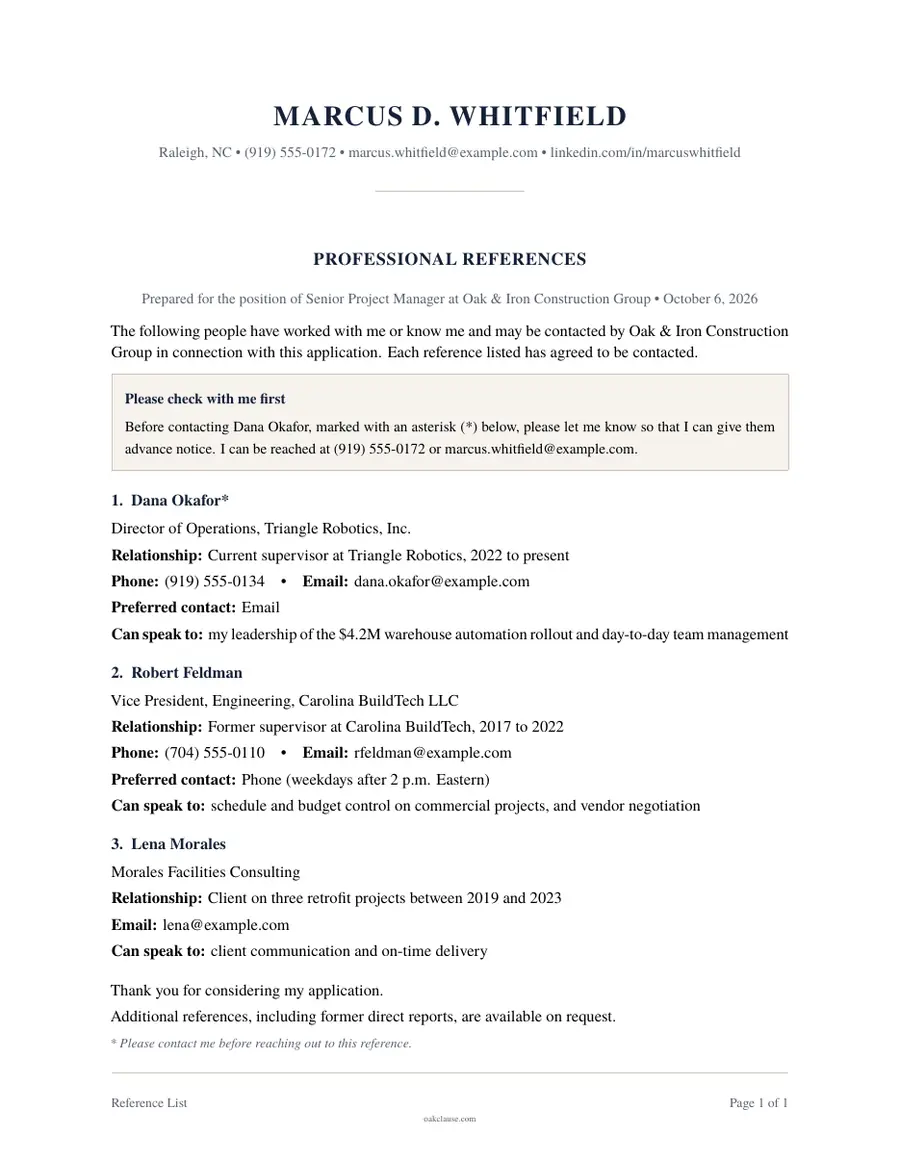
Each entry gives the reference's name, job title, organization, phone number and email address, along with a short note on how you worked together. That context matters: a hiring manager who knows that someone was your direct supervisor for four years will read their comments very differently from those of a casual acquaintance.
A clear, consistent reference list makes it easy for an employer to move forward quickly and shows that you have prepared your references in advance. This template matches the look of a resume header, numbers each reference, and can flag anyone who should not be contacted without checking with you first, such as a current supervisor.
When to use it
- An employer or recruiter has asked you for professional references.
- You are bringing printed materials to an interview and want references ready to hand over.
- A job application, internship or graduate program asks for references as a separate document.
- You want to keep an up-to-date list so you can respond quickly when references are requested.
- You are applying for a rental, volunteer position or program that asks for personal references.
What is included
- Header with your name and contact details
- Optional details of the position and employer
- Numbered entry for each reference
- Reference's title, organization and relationship to you
- Phone, email and preferred contact method
- Best time to reach each reference
- What each reference can speak to
- Flag for references who should be contacted only after checking with you
- Confirmation that references have agreed to be contacted
How to make your Reference List
Answer the questions
Tell us about the parties and the terms you want. Most documents take about 5 to 20 minutes.
Review the preview
Check the draft as you go and change any answer. The document updates instantly.
Download, sign and keep a copy
Download a print-ready PDF, sign it with the other parties, and give everyone a copy.
Frequently asked questions
How many references should I list?
Three references is the most common request, and many applicants prepare three to five. Follow the employer's instructions if they ask for a specific number, and choose people who can speak to the skills the job requires.
Who makes a good professional reference?
Former and current supervisors are usually the strongest references, followed by senior colleagues, clients and people you managed. Students and recent graduates often list professors, internship supervisors or advisors. Family members are generally not appropriate.
Do I need to ask permission before listing someone?
Yes, it is good practice to ask each person first, confirm their current contact details and let them know which jobs you are applying for. A reference who expects the call is far more likely to respond quickly and give a helpful answer.
Should my reference list be part of my resume?
Usually not. Most US applicants keep references on a separate page and share it only when an employer asks. That protects your references' privacy and saves space on your resume for your experience.
Can I list my current boss as a reference?
You can, but many people prefer not to while their job search is confidential. If you do list a current supervisor, this template lets you mark them so the employer knows to check with you before reaching out.
What information should I include for each reference?
Include their full name, job title, organization, phone number and email address, plus a brief description of how you know them, such as “Direct supervisor at Acme Corp, 2020 to 2024.” A home address is rarely needed today.
What is the difference between a professional and a personal reference?
A professional reference has worked with you and can describe your skills and performance. A personal or character reference knows you outside of work and can speak to your reliability and character. Employers usually prefer professional references.
Can employers contact people who are not on my list?
Employers sometimes contact former employers or mutual connections who are not on your list. Rules about what former employers may say, and about background checks, vary by state, so check the rules where you live if you have concerns.