Professional Resume
Build a clean, well-organized resume that puts your experience, education and skills in the order employers expect to read them.
Includes 30 days of edits
- 5 to 20 minutes
- Print-ready PDF
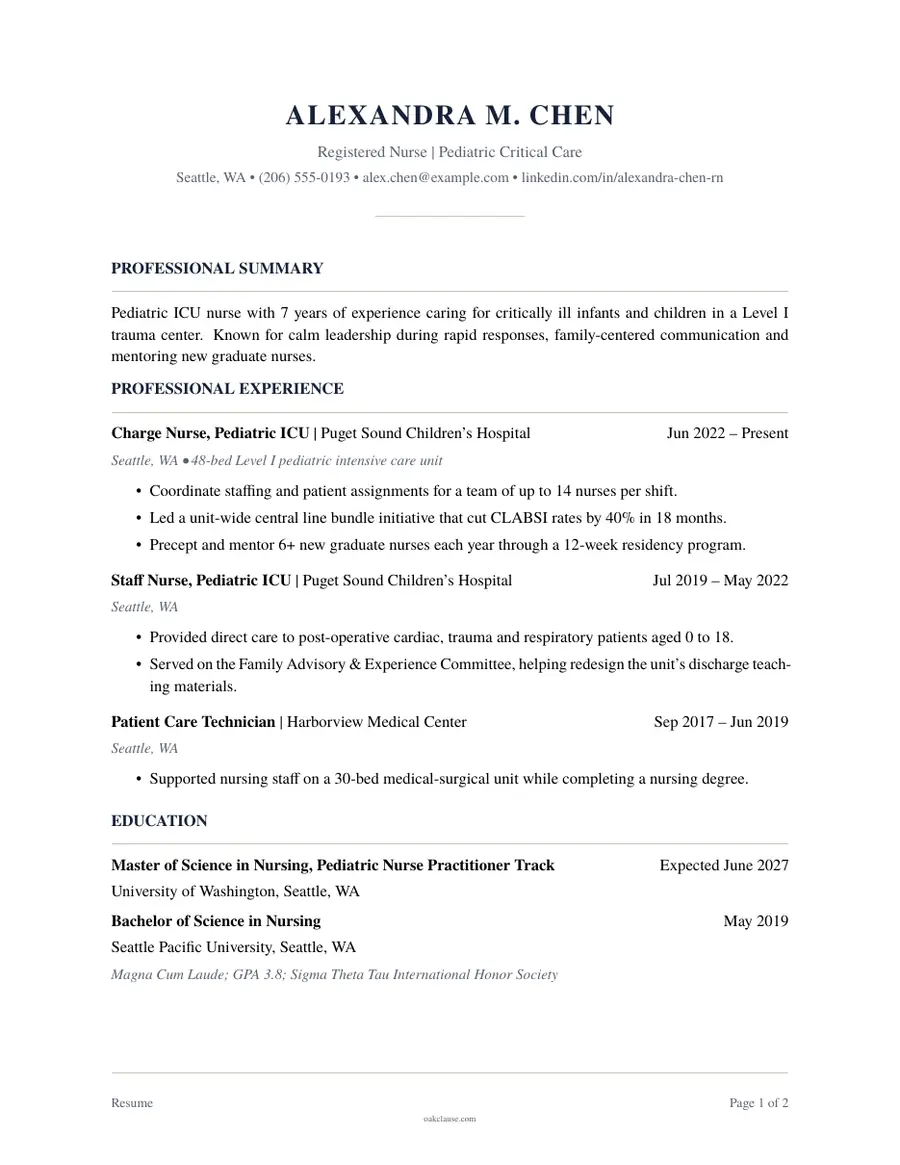
What is a Resume?
A resume is a concise summary of your work history, education, skills and accomplishments that you give to prospective employers. In the United States it is usually one page for early-career applicants and up to two pages for experienced professionals, and it is often the first thing a recruiter or hiring manager sees.
Most US resumes use a reverse-chronological layout: your most recent job comes first, followed by earlier roles, education and supporting sections such as certifications, projects, volunteer work or languages. Each position lists your title, the employer, the location, the dates and a few bullet points describing what you achieved, ideally with concrete results.
Unlike a CV in some other countries, a US resume normally leaves out a photo, date of birth, marital status and other personal details that are not related to the job. This template follows those conventions and produces a simple, single-column format that is easy for people and applicant tracking software to read.
When to use it
- You are applying for jobs and need a current, professional summary of your background.
- A recruiter, networking contact or hiring manager has asked you to send your resume.
- You are a student or recent graduate preparing for internships or your first full-time role.
- You are changing careers and want to reorganize your experience around transferable skills.
- You are returning to work and want to refresh an outdated resume in a modern format.
What is included
- Name, headline and contact line
- Optional professional summary
- Work experience with dates, locations and achievement bullets
- Education with degrees, honors and graduation dates
- Skills grouped by category
- Certifications and licenses
- Projects, volunteer work and awards
- Languages with proficiency levels
- Choice of experience-first or education-first order
- Optional references line
How to make your Resume
Answer the questions
Tell us about the parties and the terms you want. Most documents take about 5 to 20 minutes.
Review the preview
Check the draft as you go and change any answer. The document updates instantly.
Download, sign and keep a copy
Download a print-ready PDF, sign it with the other parties, and give everyone a copy.
Frequently asked questions
How long should a resume be?
One page is typical for students and people with fewer than about ten years of experience. Experienced professionals, managers and people in technical or academic fields often use two pages. Focus on recent, relevant experience rather than listing everything.
Should I include a photo or my date of birth?
In the United States, resumes usually leave out photos, dates of birth, marital status and similar personal details. Employers generally prefer not to receive information that is unrelated to the job, in part because of federal and state anti-discrimination laws.
What is the difference between a resume and a CV?
In the US, a resume is a short, tailored summary for a specific job search, while a curriculum vitae (CV) is a longer, complete record of academic and professional history used mainly for academic, research and medical positions. In many other countries the word CV simply means resume.
Should I include a professional summary?
A two- or three-sentence summary at the top can help a reader quickly understand who you are and what you are looking for, especially if you are changing careers or have a long history. If your experience speaks for itself, you can leave it out.
How do I write strong bullet points?
Start each bullet with an action verb, describe what you did and, where possible, show the result with a number, such as money saved, time reduced, customers served or growth achieved. Keep each bullet to one or two lines.
How far back should my work history go?
Many people include roughly the last ten to fifteen years of relevant experience. Older or unrelated jobs can be summarized briefly or left out unless they show skills the employer is looking for.
Should I write “References available upon request”?
It is optional. Employers generally assume you will provide references when asked, so many applicants leave the line out to save space. Keep a separate, up-to-date reference list ready to send when an employer requests it.
Will applicant tracking systems be able to read this resume?
This template uses a simple single-column layout with standard section headings and no images or tables for content, which applicant tracking systems generally handle well. Using keywords from the job posting in your skills and bullets also helps.