Cover Letter
Write a focused, professional cover letter that tells an employer who you are, why you want the role and what you would bring to it.
Includes 30 days of edits
- 5 to 20 minutes
- Print-ready PDF
What is a Cover Letter?
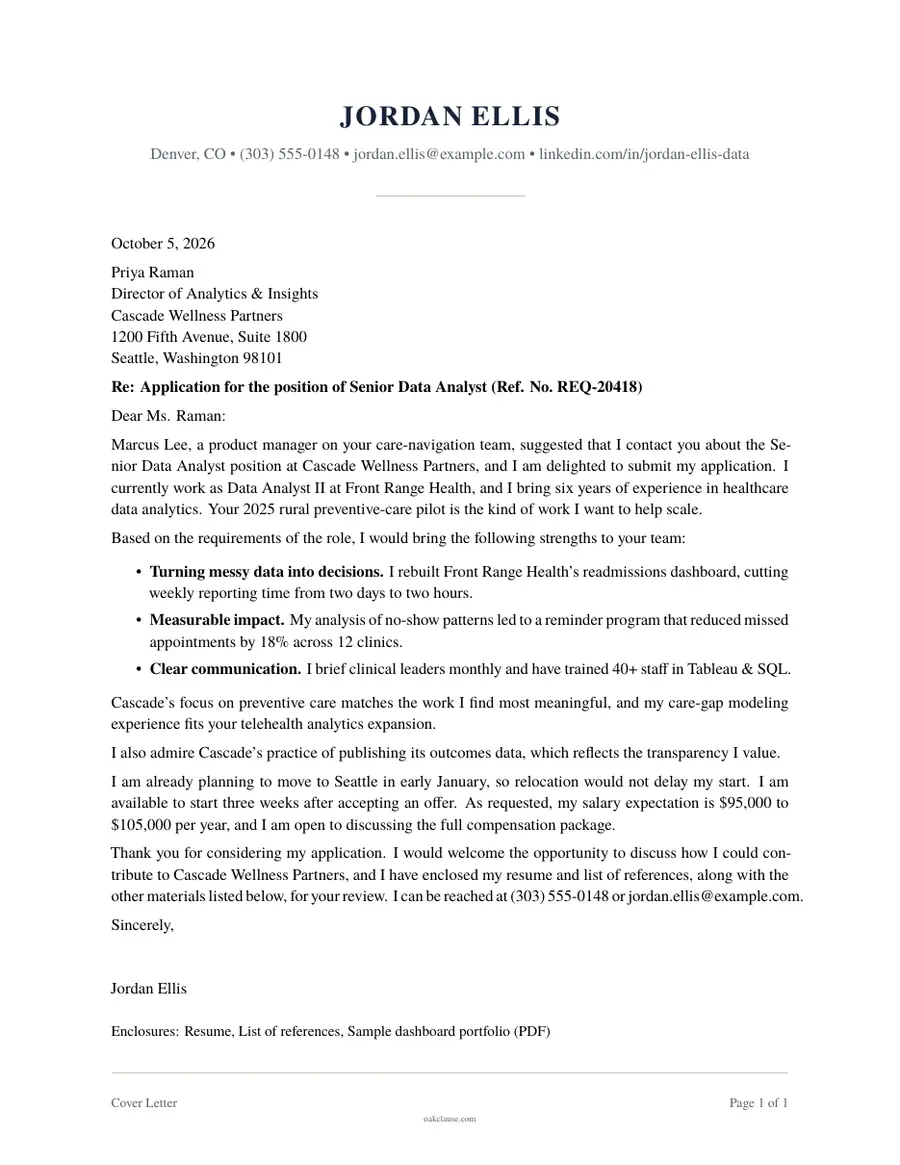
A cover letter is a one-page business letter you send with your resume when you apply for a job. Where a resume lists your history, the cover letter connects that history to one specific position and one specific employer, in your own voice.
Hiring managers often read the cover letter to judge how well a candidate understands the role, how clearly they write and whether they have a genuine reason for applying. A strong letter names the position, explains how you heard about it, highlights two or three accomplishments that match the job, and ends with a clear, polite request for a conversation.
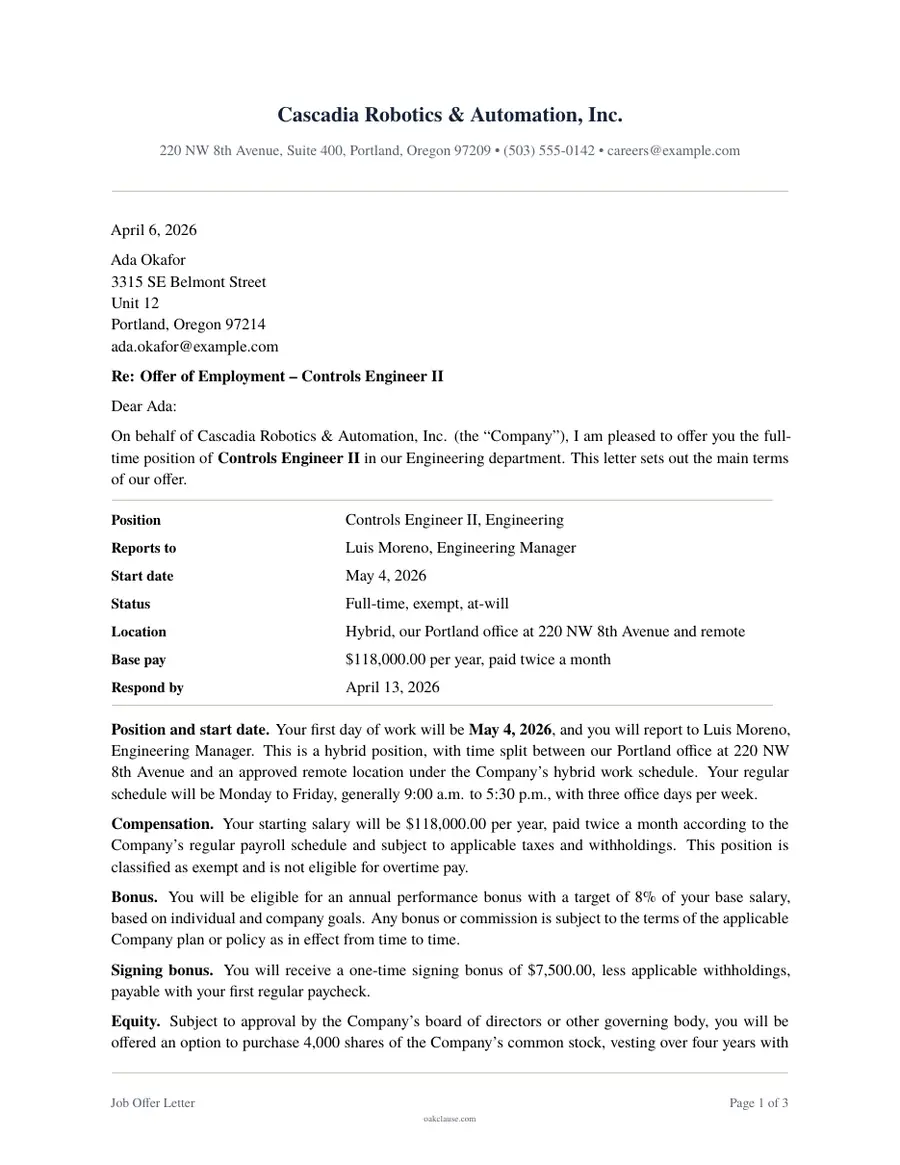
This template follows the standard US business-letter layout: your contact details, the date, the employer's details, a reference line, a salutation, three to five short paragraphs, a closing and a list of enclosures. You answer a few questions and the letter is assembled in a clean, consistent format you can edit before sending.
When to use it
- You are applying for a job and the posting asks for, or allows, a cover letter.
- Someone referred you to an opening and you want to mention that connection up front.
- You are changing careers or returning to work and want to explain the move in context.
- You are sending an unsolicited application to a company you would like to work for.
- A recruiter has asked for a short letter to accompany your resume.
- You need a polished letter for an internship, graduate program or first job.
What is included
- Letterhead with your name and contact details
- Date and employer address block
- Reference line naming the position and any job number
- Personalized or general salutation
- Opening that explains how you found the role or who referred you
- Paragraph on your current situation and experience
- Highlighted strengths as paragraphs or bullet points
- Why you want to work for this employer
- Optional salary, availability and relocation details
- Closing, signature space and enclosure list
How to make your Cover Letter
Answer the questions
Tell us about the parties and the terms you want. Most documents take about 5 to 20 minutes.
Review the preview
Check the draft as you go and change any answer. The document updates instantly.
Download, sign and keep a copy
Download a print-ready PDF, sign it with the other parties, and give everyone a copy.
Frequently asked questions
How long should a cover letter be?
Most cover letters fit on a single page, usually three to five short paragraphs. Hiring managers tend to skim, so a concise letter that makes two or three strong points is usually more effective than a long one.
Who should I address my cover letter to?
If you can find the name of the hiring manager or recruiter, address the letter to that person. If you cannot, a neutral greeting such as “Dear Hiring Manager” or “Dear [Company] Hiring Team” is widely accepted and avoids outdated phrases like “To Whom It May Concern.”
Should my cover letter repeat my resume?
No. The resume already lists your jobs and dates. Use the cover letter to pick out the few accomplishments most relevant to this position and explain why they matter to this employer.
Should I mention salary in a cover letter?
Only if the job posting asks for salary requirements. If it does, giving a range and noting that you are flexible is a common approach. Some states and cities limit what employers may ask about pay history, but you may always choose to share your own expectations.
Is it okay to mention who referred me?
Yes. A referral from a current employee or a mutual contact is one of the most useful things you can mention, and it usually belongs in the first paragraph. Ask the person first so they are not surprised if the employer contacts them.
Do I need to sign a cover letter?
For a printed or PDF letter, many applicants add a handwritten or scanned signature above their typed name. For a letter pasted into an email or an online form, the typed name alone is standard. This template lets you include or leave out the signature space.
Should I send a cover letter if it is optional?
Many hiring managers read optional cover letters, and a short, specific letter can help you stand out, especially if you are changing careers, relocating or have a referral to mention. A generic letter adds little, so tailor it to the role.
What file format should I use?
A PDF keeps your formatting intact on any device and is accepted by most employers and applicant tracking systems. Follow the posting's instructions if it asks for a different format or for the letter in the body of an email.