Employment Verification Letter
Confirm an employee's job title, dates of employment and pay on company letterhead, ready to send to a landlord, lender or agency.
Includes 30 days of edits
- 5 to 20 minutes
- Print-ready PDF
What is an Employment Verification Letter?
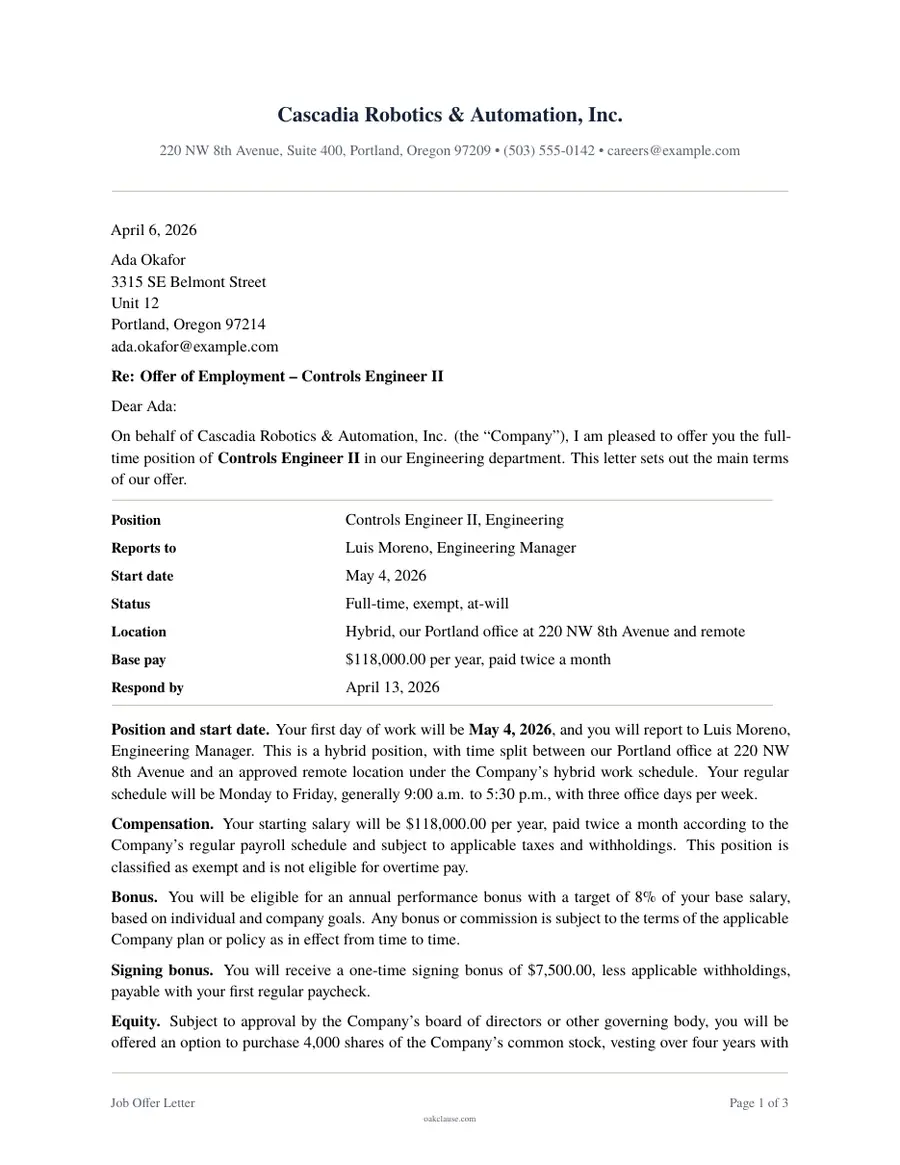
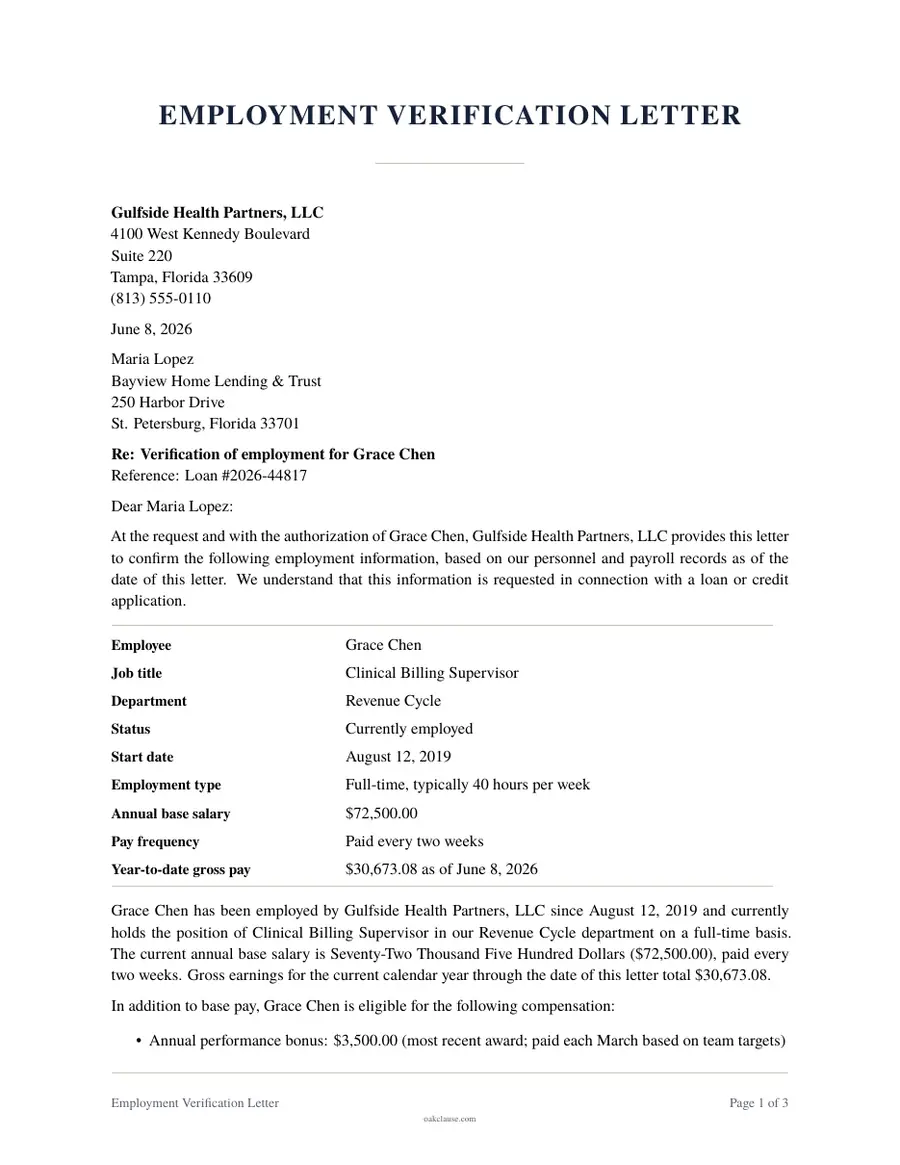
An employment verification letter, often called a proof of employment or proof of income letter, is a short statement from an employer confirming that a person works, or used to work, for the company. It typically lists the person's job title, start date, employment status and, when the employee agrees, their salary or hourly pay.
Landlords use these letters to check that a rental applicant can afford the rent. Mortgage lenders, car dealers and banks use them to support a loan application, and government agencies, immigration offices and schools may ask for one to confirm work history or eligibility for a program.
Because the letter shares personal information, employers usually issue it only at the employee's request or with the employee's written permission, and they stick to facts that can be confirmed from payroll and personnel records. A clear signer, contact details and an optional notary block make the letter easy for the recipient to rely on and verify.
When to use it
- An employee is applying to rent an apartment or house and the landlord asks for proof of income.
- An employee is applying for a mortgage, auto loan or credit and the lender needs written confirmation of employment.
- A former employee needs confirmation of their dates of employment and last position.
- A government agency, immigration authority or benefits program asks for proof of employment.
- An employee needs a letter for a school, a professional license or a visa application.
What is included
- Employer details and a dated letterhead block
- Addressee such as a landlord, lender or agency, or a general greeting
- Application, loan or reference number
- Employee name, job title, department and status
- Hire date and, for former employees, separation date
- Full-time, part-time or other employment type and typical hours
- Optional salary or hourly pay, pay frequency and additional compensation
- Statement that the information is released at the employee's request
- Accuracy statement and limitation on what the letter promises
- Signer contact details and optional notary acknowledgment
How to make your Employment Verification
Answer the questions
Tell us about the parties and the terms you want. Most documents take about 5 to 20 minutes.
Review the preview
Check the draft as you go and change any answer. The document updates instantly.
Download, sign and keep a copy
Download a print-ready PDF, sign it with the other parties, and give everyone a copy.
Frequently asked questions
Is an employer required to provide an employment verification letter?
In most cases federal law does not require private employers to write verification letters, although many do as a courtesy and some states have rules about providing information such as pay records or service letters to employees. Many larger employers use a third-party verification service instead of writing individual letters.
What information is usually included?
The employee's name, job title, start date and whether they are currently employed. Many letters also confirm full-time or part-time status and, with the employee's consent, pay rate or annual salary. The letter should be signed by someone with access to personnel records and include contact details so the recipient can verify it.
Can an employer share salary information without permission?
It is good practice to get the employee's written consent before disclosing pay, and some state privacy laws or company policies require it. This document lets you include or leave out income details and states that the information is being released at the employee's request.
Who should sign the letter?
Usually a manager, Human Resources representative, payroll officer or business owner who can confirm the details from company records. Lenders and landlords often call the signer to verify the letter, so include a working phone number or email address.
Does an employment verification letter need to be notarized?
Usually not. Most landlords and lenders accept a signed letter on company letterhead. Some lenders, immigration processes or government agencies ask for a notarized letter, so this document includes an optional notary acknowledgment block.
Should the letter say that employment will continue?
Employers generally avoid promising future employment. Lenders sometimes ask whether employment is likely to continue, and this document lets you state that there are no current plans to end the employment, while making clear that the letter is not a guarantee or an employment contract.
Can a self-employed person get an employment verification letter?
Self-employed people usually prove income with tax returns, bank statements, profit-and-loss statements or a letter from their accountant rather than an employer letter. This document is designed for an employer confirming the employment of someone on its payroll.
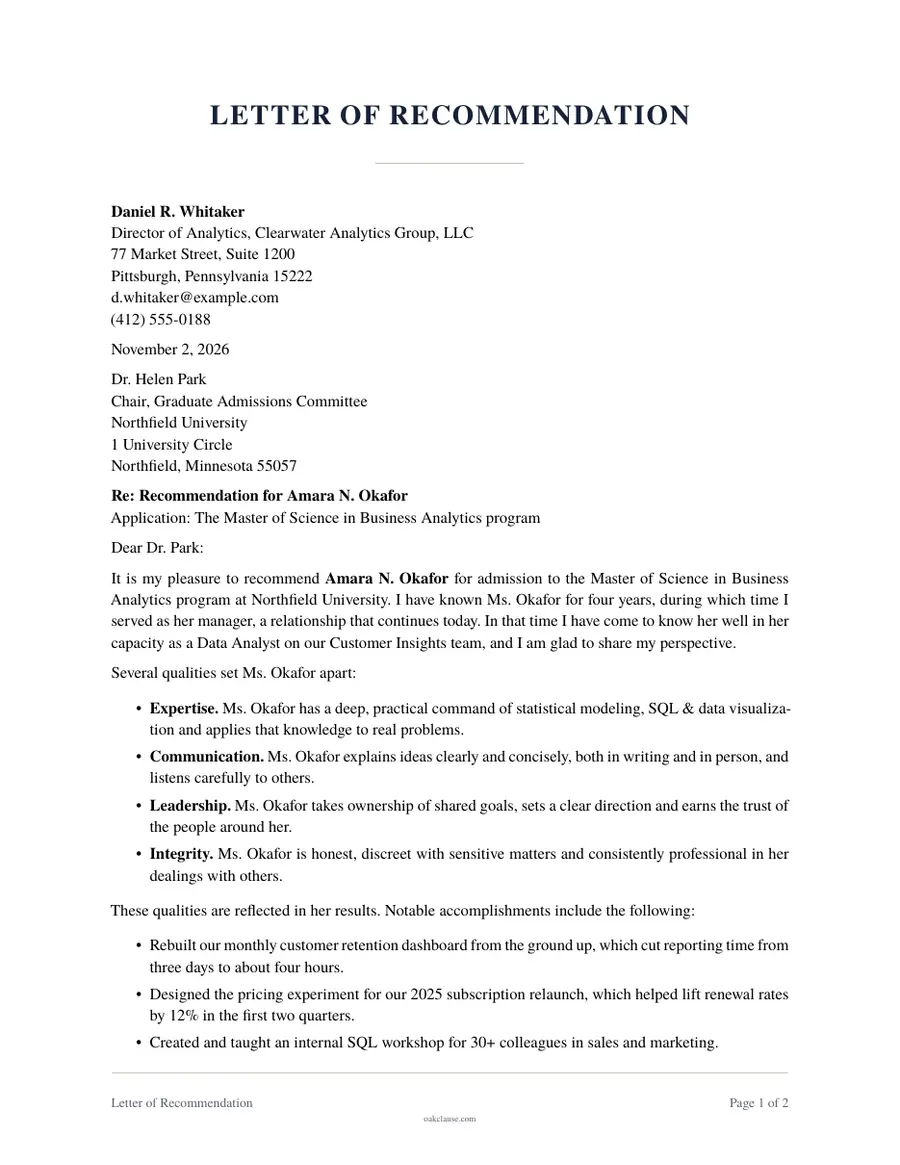
How is this different from a letter of recommendation?
A verification letter confirms objective facts such as dates, title and pay. A letter of recommendation gives a personal opinion about a person's skills and character. Landlords and lenders typically want verification, while employers and schools want recommendations.