Maine Partnership Agreement
Agree in writing on what each partner brings, how profits and decisions are shared, and what happens when a partner leaves, so your business relationship rests on more than a handshake.
Includes 30 days of edits
- 5 to 20 minutes
- Print-ready PDF
- Tailored to Maine
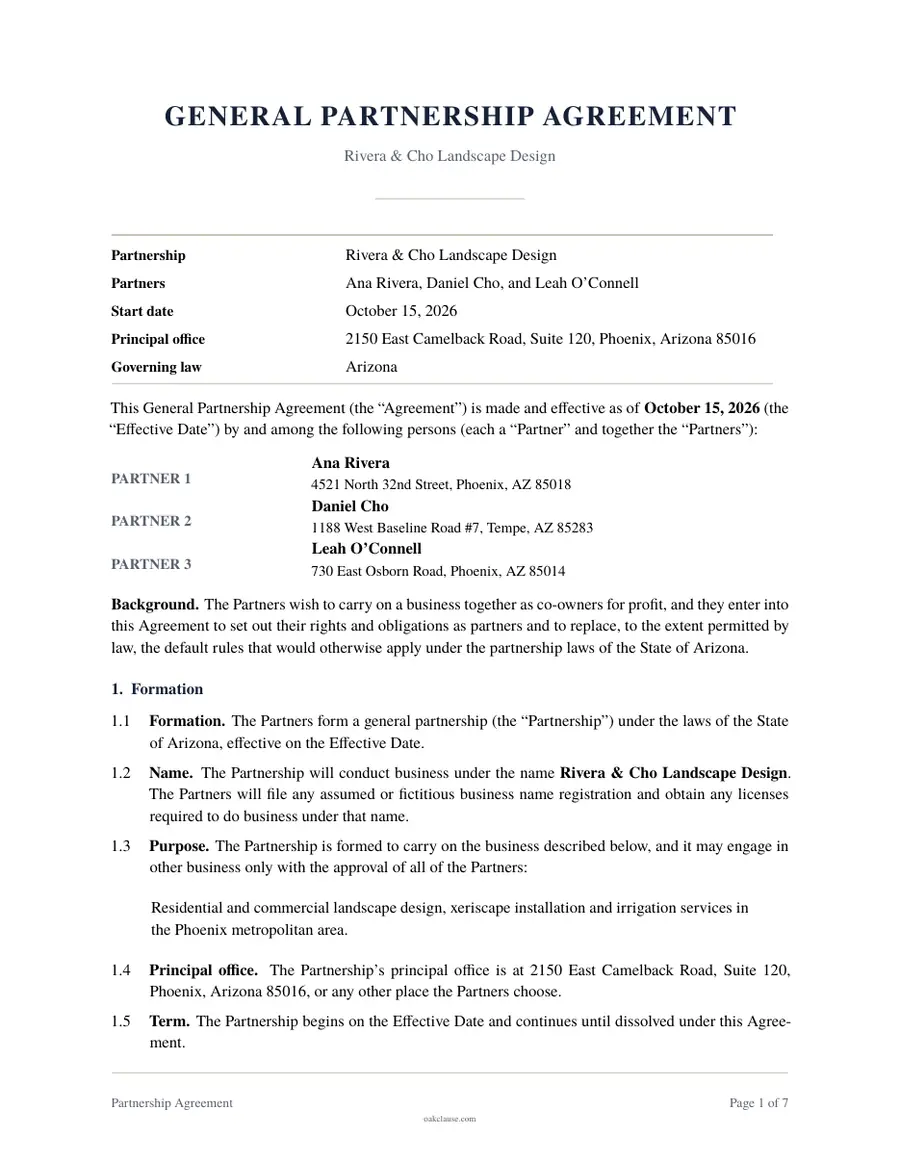
Partnership Agreement rules in Maine
Partnerships are governed by each state's partnership statute, which many states have based on a uniform model act but with local differences. The rules that commonly vary include partners' duties to each other and how far they can be limited, what happens when a partner dissociates, whether the partnership must continue or wind up after a partner leaves, whether a statement of partnership authority or an assumed business name must be filed, and the enforceability of non-competition covenants. This agreement names the state you select as its governing law and defers to that state's non-waivable rules. Check your state and county filing requirements for a partnership name, and consider an attorney if the partnership will hold significant assets or take on large debts.
When you create this document for Maine, the questionnaire uses Maine as the governing law and adds wording that defers to Maine requirements where they apply. Laws change, so confirm current rules with official Maine sources or a local attorney for anything critical.
What is a Partnership Agreement?
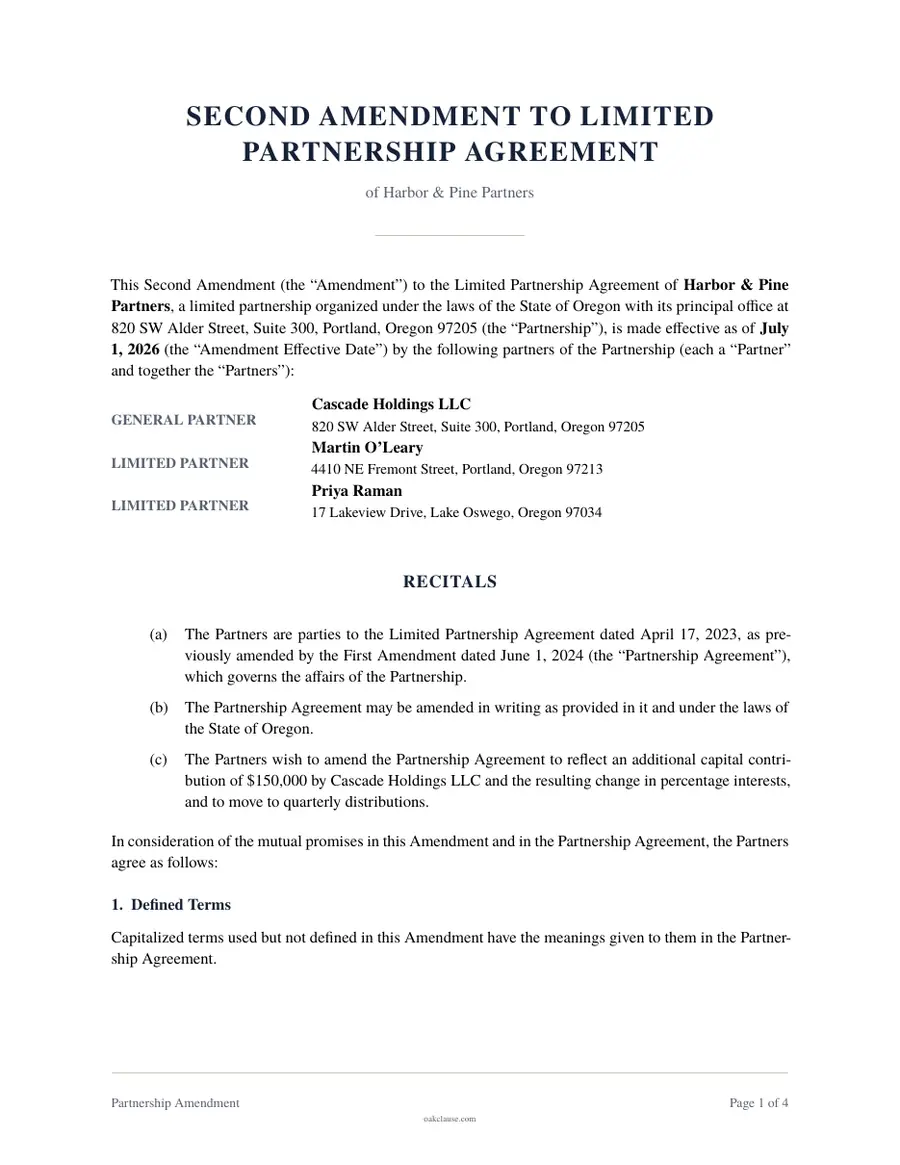
A partnership agreement is a contract between two or more people or companies who run a business together for profit. It records each partner's capital contribution, their share of profits and losses, how the business is managed, what authority each partner has to bind the partnership, and how partners can leave or be bought out.
A general partnership can form simply because two people start doing business together, even without any paperwork. When there is no written agreement, the state's partnership statute fills the gaps, often with rules such as equal profit shares regardless of who invested more. Partners in a general partnership are also usually personally responsible for the partnership's debts, which makes clear limits on spending authority and decision making especially important.
This agreement is built for general partnerships. It lets you set unequal profit shares, choose how losses are divided, name a managing partner, require unanimous or majority consent for major decisions, cap what one partner can spend alone, and choose buyout and dispute resolution terms that fit your business.
When to use it
- You are starting a business with one or more partners and have not formed an LLC or corporation.
- You already operate as partners on a handshake and want to put the terms in writing.
- Partners are contributing different amounts of money, property or time and you want shares to reflect that.
- You want clear rules for adding a partner, a partner leaving, or a partner's death.
- A bank or landlord has asked for a copy of your partnership agreement.
What is included
- Partnership name, purpose, principal office and term
- Partners, capital contributions and profit shares
- Allocation of losses, draws and distributions
- Management, voting, managing partner and spending limits
- Partner duties, time commitment, salaries and outside activities
- Books, bank accounts, fiscal year and tax returns
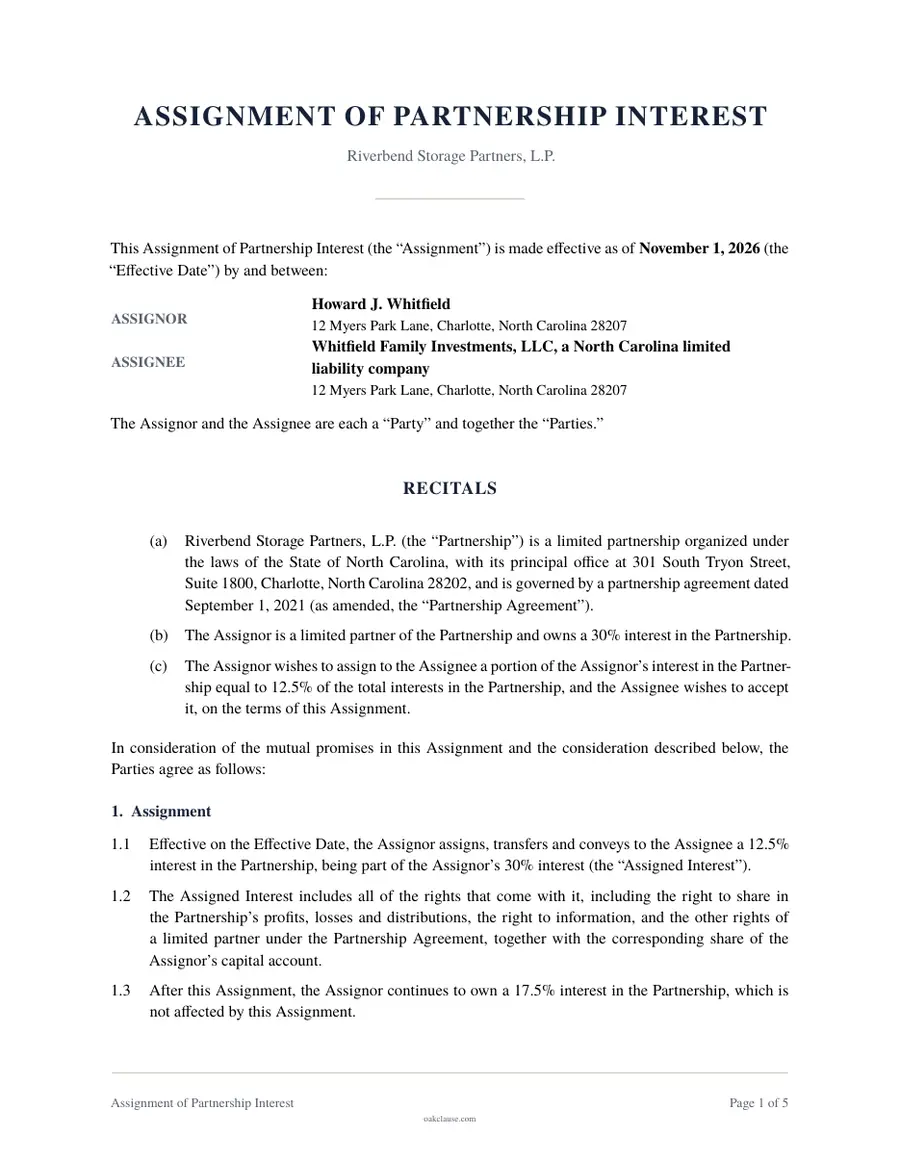
- Admission of new partners and transfer restrictions
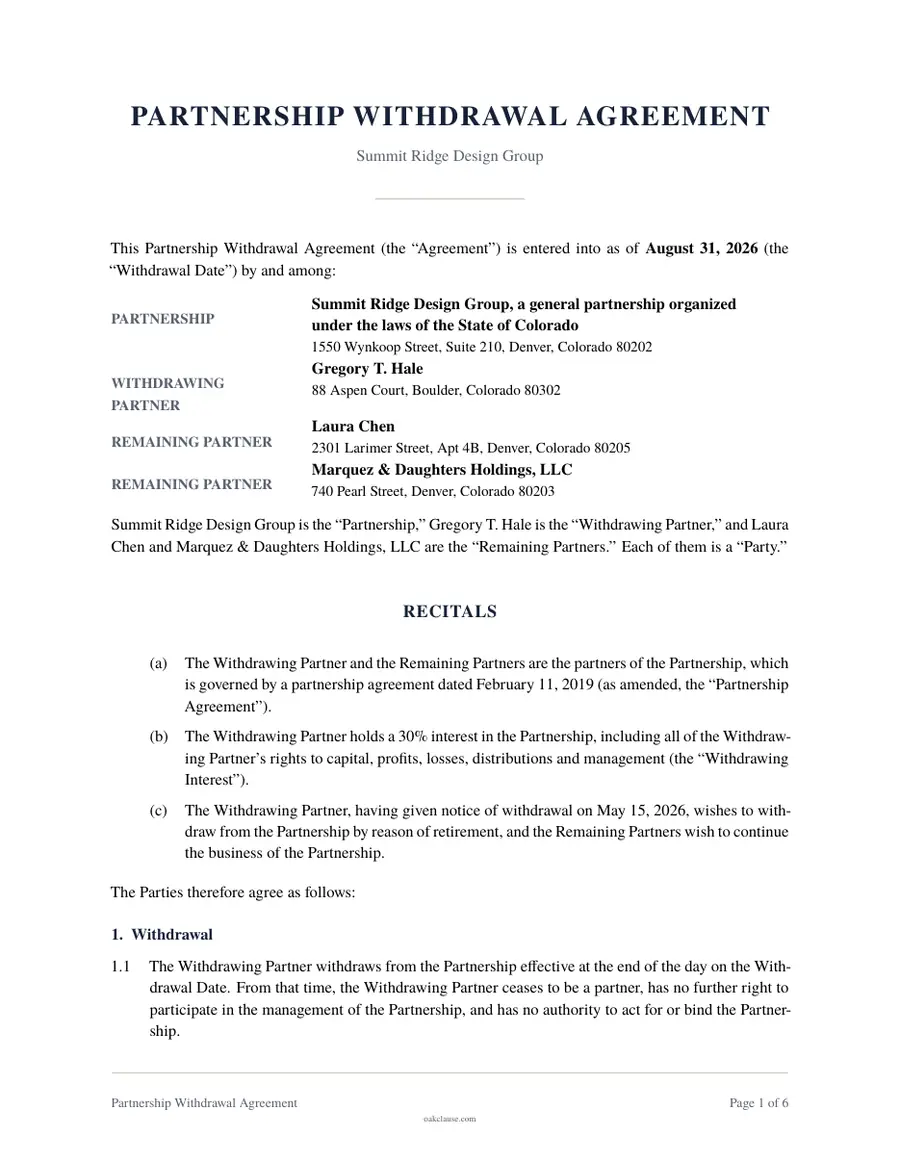
- Withdrawal, death, disability and buyout terms
- Optional non-competition, dispute resolution and dissolution
- Partner signatures with an optional notary acknowledgment
How to make your Partnership Agreement
Answer the questions
Tell us about the parties and the terms you want. Most documents take about 5 to 20 minutes.
Review the preview
Check the draft as you go and change any answer. The document updates instantly.
Download, sign and keep a copy
Download a print-ready PDF, sign it with the other parties, and give everyone a copy.
Partnership Agreement in another state
Back to the general partnership agreement page51 states shown
- ALAlabama
- AKAlaska
- AZArizona
- ARArkansas
- CACalifornia
- COColorado
- CTConnecticut
- DEDelaware
- DCDistrict of Columbia
- FLFlorida
- GAGeorgia
- HIHawaii
- IDIdaho
- ILIllinois
- INIndiana
- IAIowa
- KSKansas
- KYKentucky
- LALouisiana
- MEMaine
- MDMaryland
- MAMassachusetts
- MIMichigan
- MNMinnesota
- MSMississippi
- MOMissouri
- MTMontana
- NENebraska
- NVNevada
- NHNew Hampshire
- NJNew Jersey
- NMNew Mexico
- NYNew York
- NCNorth Carolina
- NDNorth Dakota
- OHOhio
- OKOklahoma
- OROregon
- PAPennsylvania
- RIRhode Island
- SCSouth Carolina
- SDSouth Dakota
- TNTennessee
- TXTexas
- UTUtah
- VTVermont
- VAVirginia
- WAWashington
- WVWest Virginia
- WIWisconsin
- WYWyoming
Frequently asked questions
Do I need a written partnership agreement?
In most states a general partnership can exist without one. But without a written agreement, your state's default partnership rules decide how profits are split, who can make decisions and what happens when a partner leaves, and those defaults may not match what you intended. A written agreement avoids those surprises.
Are partners personally liable for partnership debts?
In a general partnership, each partner is generally personally liable for the partnership's debts and for obligations other partners take on for the business. That is why this agreement limits each partner's spending authority. If personal liability is a concern, forming an LLC or a limited liability partnership may be worth discussing with an attorney.
Do profits have to be split equally?
No. Partners can agree on any split, such as one that reflects different contributions of money or time. The agreement records each partner's profit share, and you can choose to divide losses the same way or equally.
How is a partnership taxed?
A partnership generally does not pay federal income tax itself. It files an annual information return, and each partner reports their share of the profit or loss on their own tax return. Partners usually owe self-employment tax on their share as well. A tax professional can explain how this applies to you.
What happens if a partner wants to leave?
The agreement requires written notice and lets the remaining partners buy out the departing partner's interest at a price set by the method you choose, paid in a lump sum or installments. The business can then continue without being dissolved, to the extent your state's law allows.
Does a partnership agreement need to be notarized?
Generally no. A partnership agreement is valid when the partners sign it. Some partners choose to have it notarized for extra evidence of the signatures, and documents involving real estate or certain filings may have their own requirements. You can add a notary acknowledgment as an option.
Do we need to register our partnership?
Many states and counties require a partnership that does business under a name other than the partners' own names to register that name, often called a fictitious or assumed business name. Partnerships also usually need an employer identification number and any required business licenses. Check your state and local rules.
What is the difference between a partnership and an LLC?
Both can be taxed as pass-through entities, but an LLC is formed by a state filing and generally protects its owners from personal liability for business debts, while a general partnership usually does not. An LLC uses an operating agreement instead of a partnership agreement.
More Maine documents
Other documents people prepare for Maine, each with the state’s rules where we have checked them.
All Maine documents and rules