Partnership Withdrawal Agreement
Put a partner's exit in writing: the withdrawal date, the buyout price and payment schedule, who takes over the departing share, and how debts and claims are handled.
Includes 30 days of edits
- 5 to 20 minutes
- Print-ready PDF
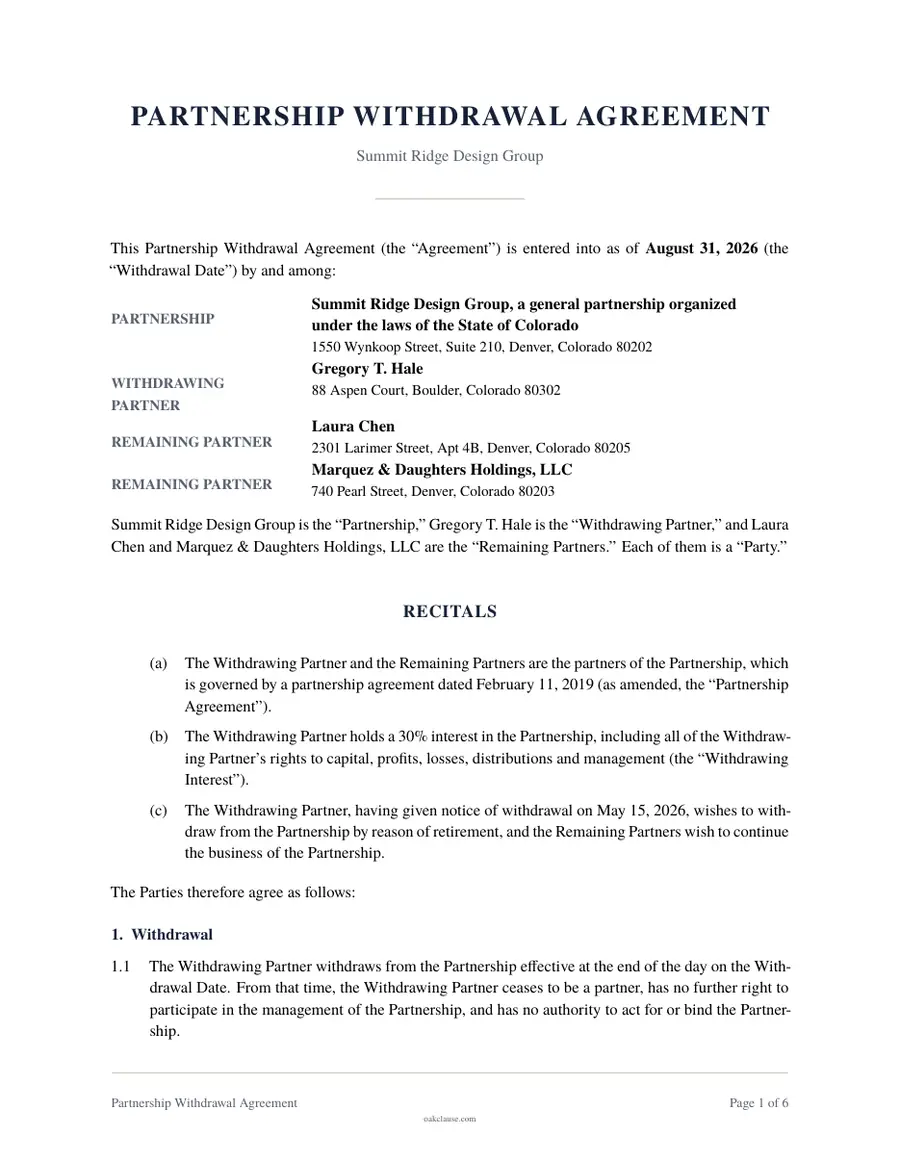
What is a Partnership Withdrawal Agreement?
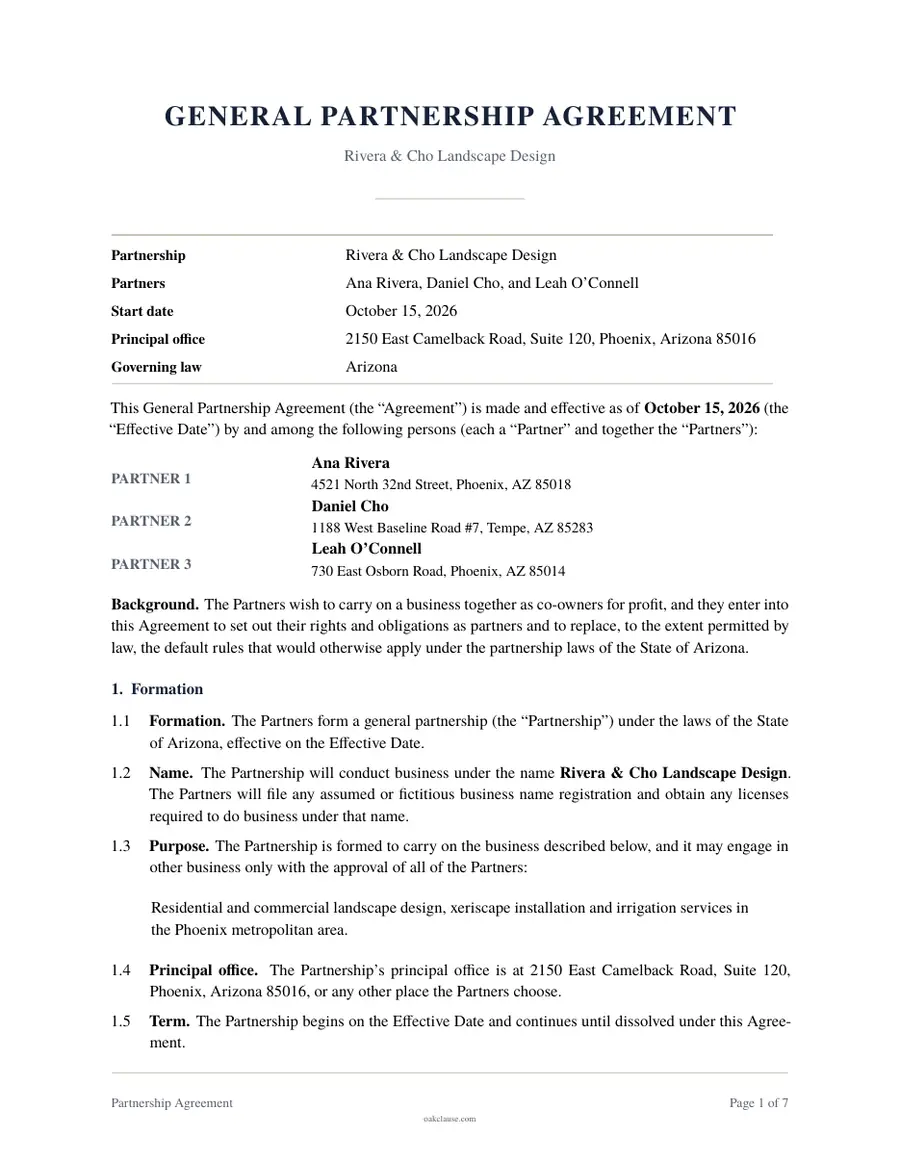
A partnership withdrawal agreement records the terms on which one partner leaves a partnership while the remaining partners carry on the business. It is signed by the withdrawing partner, the remaining partners and usually the partnership itself, so that everyone is bound by the same exit terms.
When a partner leaves, several questions need clear answers. How much will the departing partner be paid for their interest, and when? Who takes over that interest? Who is responsible for debts the partnership owed on the withdrawal date, and for debts it takes on afterward? Can the departing partner compete with the business or contact its clients? Without a written agreement, state partnership law fills in many of these answers, and its default rules may not match what the partners expect.
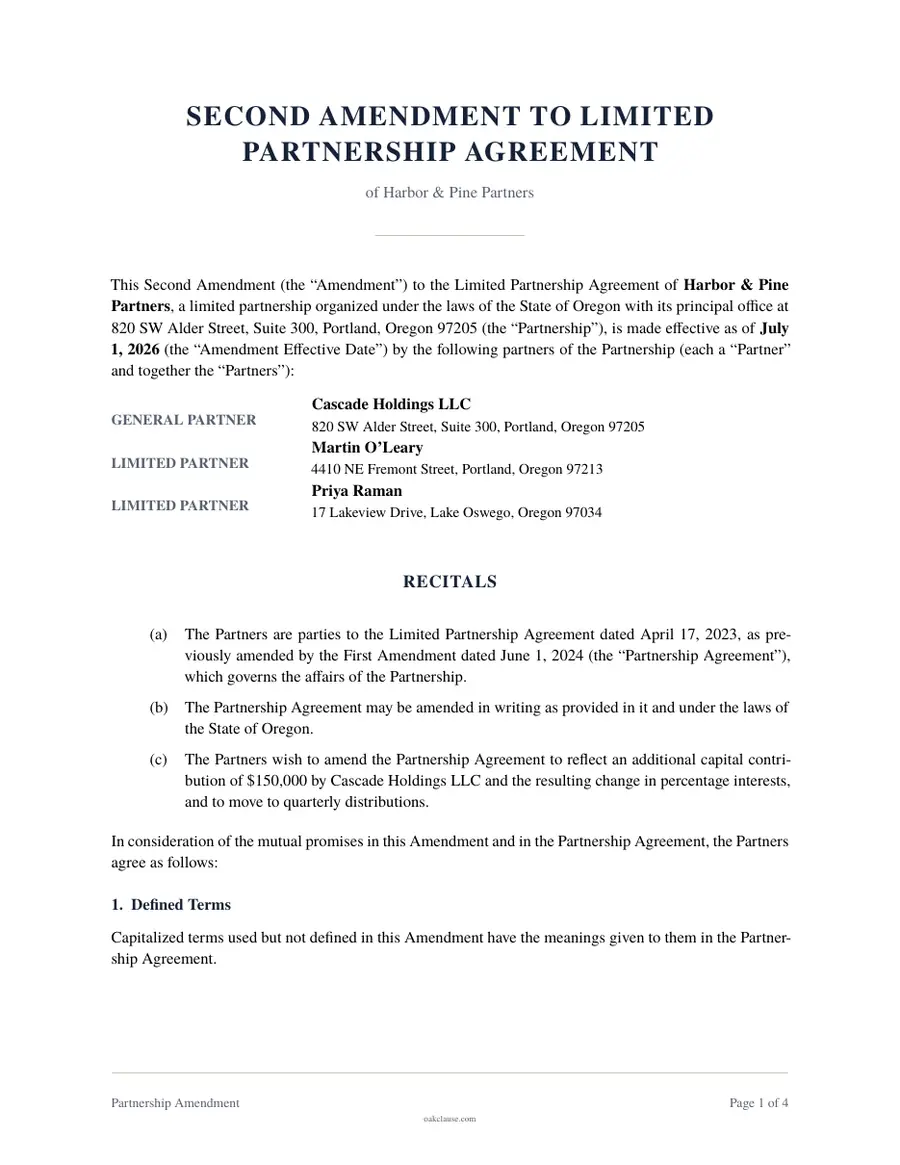
This agreement sets out the effective date of withdrawal, the purchase price and how it will be paid (in one payment or in installments), how the withdrawing partner's share is reallocated, indemnification for partnership liabilities, return of property, optional non-compete and non-solicitation terms, and a mutual release. It can also include a spouse's consent where a partner's interest may be marital property.
When to use it
- A partner is retiring, changing careers or relocating, and the others will continue the business.
- The partners have agreed on a buyout price for a departing partner's interest.
- A partner is leaving under a buy-sell provision in the partnership agreement and the terms need to be documented.
- You want a clear cut-off for the departing partner's share of profits, losses and liabilities.
- The partners want mutual releases so the exit does not lead to later claims.
What is included
- Withdrawal date and end of the departing partner's authority
- Purchase price with lump-sum or installment payment terms
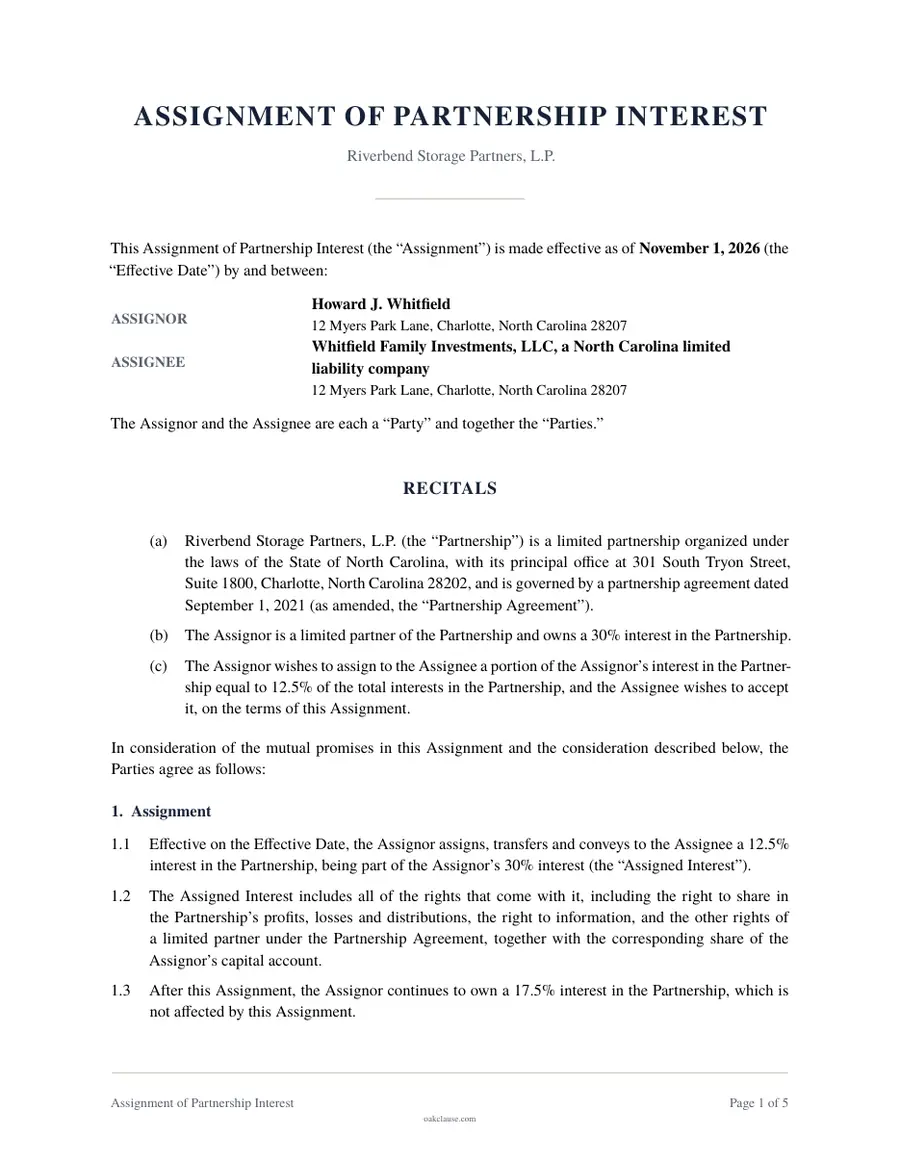
- Reallocation of the withdrawing partner's interest
- Allocation of profits, losses and tax items for the withdrawal year
- Indemnification for existing and future partnership liabilities
- Notice to clients, creditors and public filing offices
- Return of partnership property and transition assistance
- Optional confidentiality, non-compete and non-solicitation covenants
- Mutual release of claims and dispute resolution
- Signatures for all partners, with optional spousal consent and notary acknowledgment
How to make your Partner Withdrawal
Answer the questions
Tell us about the parties and the terms you want. Most documents take about 5 to 20 minutes.
Review the preview
Check the draft as you go and change any answer. The document updates instantly.
Download, sign and keep a copy
Download a print-ready PDF, sign it with the other parties, and give everyone a copy.
Frequently asked questions
What is the difference between withdrawing and dissolving a partnership?
When a partner withdraws, that partner leaves but the business usually continues with the remaining partners. Dissolution means the partnership itself winds up its affairs and ends. This agreement is designed for a withdrawal where the business carries on.
Does a withdrawing partner stay liable for partnership debts?
Generally, a partner who leaves remains responsible to creditors for partnership obligations that arose while they were a partner, even if the remaining partners agree to take them over. An indemnity in the withdrawal agreement lets the departing partner recover from the partnership if a creditor pursues them. State law may also limit liability for debts incurred after the withdrawal once proper notice is given.
How is the buyout price usually determined?
Partners often follow a formula in their partnership agreement, such as book value, a multiple of earnings or an independent appraisal. Others simply negotiate a price. This agreement records whichever price you agree on and how it was arrived at.
Can the buyout be paid in installments?
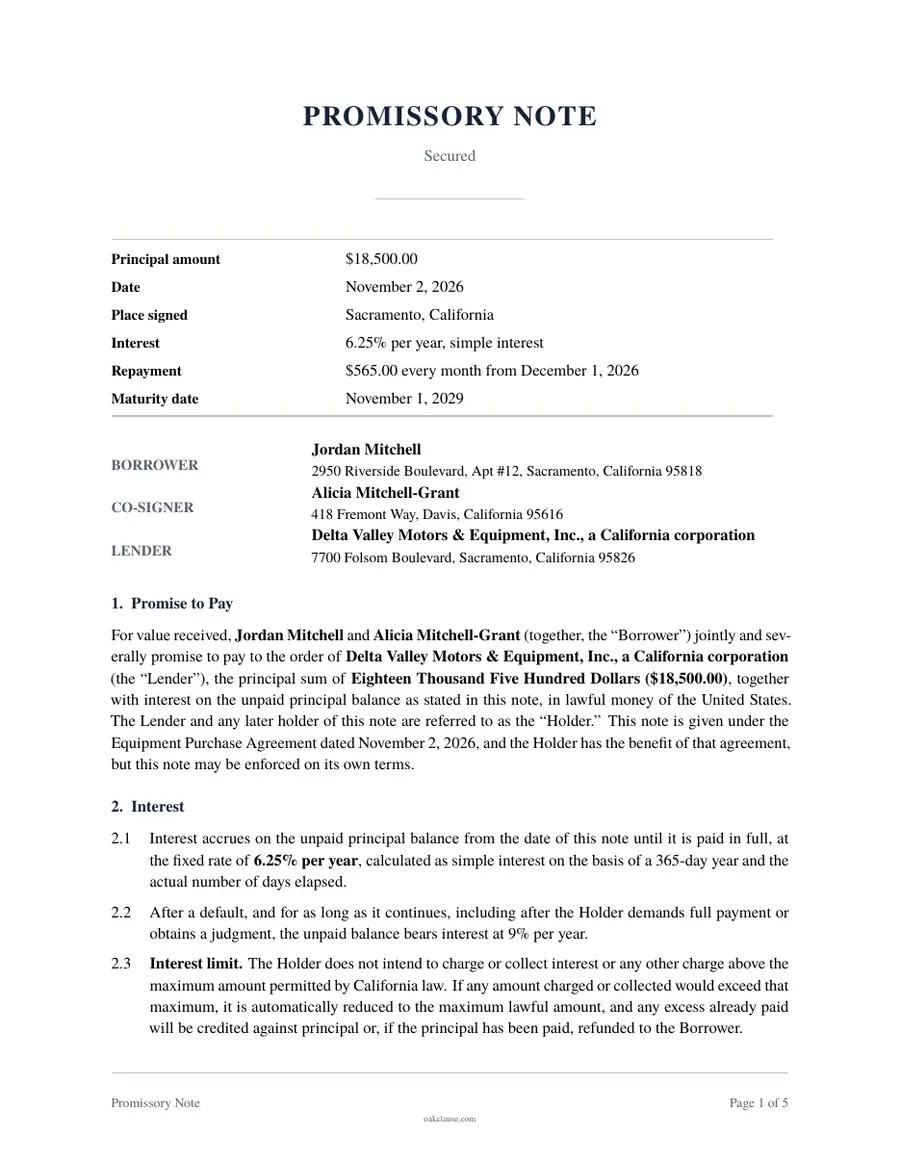
Yes. You can choose a lump-sum payment or a down payment followed by regular installments with interest. Many partners also have the payer sign a separate promissory note for the unpaid balance.
Should the partnership file anything with the state?
It depends on the partnership type and the state. Limited partnerships and limited liability partnerships may need to update their public filings, and some states let a partnership or departing partner file a statement of dissociation to give public notice. Check with the state filing office.
Can a withdrawing partner be prevented from competing?
Many states enforce a reasonable non-compete given in connection with the sale of a business interest, but rules vary widely, and a few states restrict non-competes heavily. Keep any restriction reasonable in time and geography, and review it with a local attorney if it matters to the deal.
Why would a spouse need to sign?
In community property states and in some other situations, a partner's spouse may have an interest in the partnership interest being sold. A spouse's consent helps confirm that the sale will not be challenged later.
What happens to the withdrawing partner's capital account?
The purchase price is usually treated as full payment for the partner's entire interest, including the capital account and any share of undistributed profits. This agreement states that clearly to avoid later claims.