Consignment Agreement
Hand your goods to a shop, gallery or dealer to sell for you while you keep ownership.
Includes 30 days of edits
- 5 to 20 minutes
- Print-ready PDF
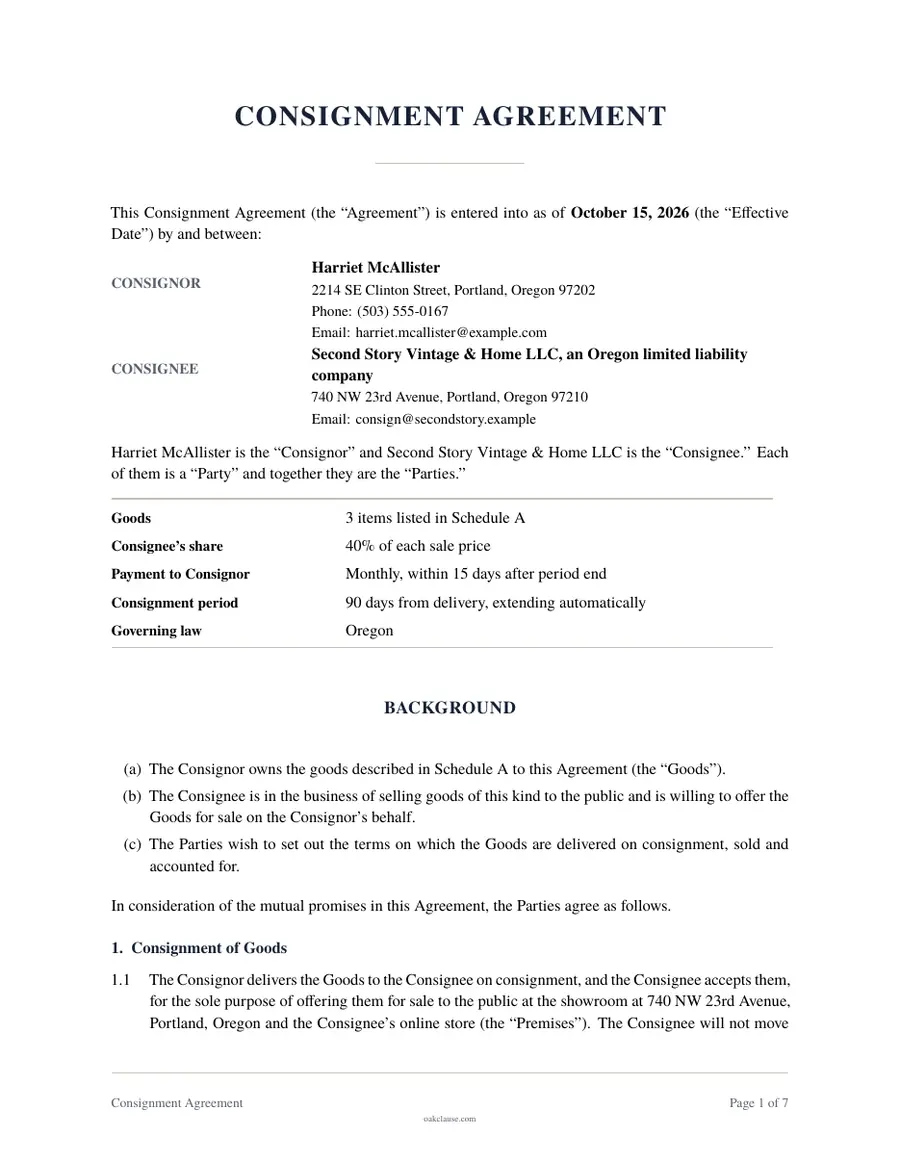
What is a Consignment Agreement?
A consignment agreement is a contract between the owner of goods (the consignor) and a business that agrees to display and sell them (the consignee). The consignor keeps ownership of the goods until they are sold. When an item sells, the consignee keeps an agreed commission and pays the rest of the sale price to the consignor.
Consignment is common for clothing, furniture, antiques, art, jewelry, sporting goods, vehicles and handmade products. It lets a seller reach customers without opening a store, and lets a shop stock more inventory without paying for it up front. Because the goods change hands without changing ownership, a written agreement is important: it records exactly which items were delivered, the minimum prices, who bears the risk of loss or damage, and how long the shop may keep the goods.
This agreement includes an itemized inventory schedule, pricing and discount rules, the commission formula, payment timing and sales reports, care and insurance obligations, and clear instructions for unsold items at the end of the consignment period. It also confirms that the consignor keeps title and may give public notice of its ownership, which can matter if the consignee runs into financial trouble.
When to use it
- You are placing clothing, furniture, art, antiques or collectibles in a consignment shop or gallery.
- You make products and want a boutique or retailer to sell them on a sale-or-return basis.
- You run a consignment store and want consistent terms for every consignor.
- You are asking a dealer to sell equipment, a vehicle or a boat on your behalf.
- You want a written record of which items you handed over and the prices you agreed.
What is included
- Consignor and consignee details, with business signers
- Itemized schedule of consigned goods with condition and minimum prices
- Pricing authority and maximum discount rules
- Percentage or flat-fee commission and permitted deductions
- Payment schedule, payment method and sales reports
- Title retention, sales tax and optional financing statement
- Care of goods, risk of loss and insurance
- Consignment period, early withdrawal and unsold items
- Optional storage fees and abandoned goods procedure
- Governing law, dispute resolution and signature blocks
How to make your Consignment Agreement
Answer the questions
Tell us about the parties and the terms you want. Most documents take about 5 to 20 minutes.
Review the preview
Check the draft as you go and change any answer. The document updates instantly.
Download, sign and keep a copy
Download a print-ready PDF, sign it with the other parties, and give everyone a copy.
Frequently asked questions
Who owns the items while they are on consignment?
The consignor does. The consignee holds the items only to display and sell them. Ownership passes directly from the consignor to the buyer at the moment of sale, and the consignee keeps its commission from the price.
What is a typical consignment commission?
Commissions vary widely by industry and item value. Clothing and furniture shops often keep a larger share than dealers who sell high-value items such as vehicles or fine art. The agreement lets you set a percentage or a flat fee per item, so use whatever the parties negotiate.
Who is responsible if a consigned item is lost, stolen or damaged?
Whatever the agreement says. Many shops accept responsibility while goods are on their premises and agree to pay the consignor the share it would have received on a sale at the item's minimum price for any item that is lost or damaged, while others leave the risk with the consignor. This agreement lets you choose and add an insurance requirement.
What happens to items that do not sell?
The agreement sets a consignment period. At the end of it, unsold items can be picked up by the consignor, returned by the consignee, or donated if the consignor does not collect them after notice, depending on what you choose. It also sets a pickup deadline and how the consignee may handle items that are never collected.
Should a consignor file a UCC financing statement?
For valuable inventory, it is worth considering. Under the Uniform Commercial Code, a consignor's ownership may not be protected against the consignee's creditors in some situations unless public notice is given, often by filing a UCC-1 financing statement with the state. Rules differ by state and item type, so check with an attorney for high-value consignments.
Who collects sales tax on consigned goods?
In most states the retailer that makes the sale, usually the consignee, collects and remits sales tax from the buyer. The agreement assigns that duty to the consignee and makes clear sales tax is not part of the price used to calculate the consignor's share.
Can I take my items back before the consignment period ends?
The agreement lets the consignor withdraw unsold items early after giving notice. You can also require the consignor to pay a withdrawal fee to cover the shop's costs, or leave withdrawal free.
Does a consignment agreement need to be notarized?
No. A consignment agreement is valid when signed by both parties. Consignments of certain titled property, such as vehicles, may involve separate title or power of attorney documents that have their own signing rules.