Commission Agreement
Spell out exactly how a salesperson or sales agent earns commission, how it is calculated and when it is paid, so there are no surprises on payday or after the relationship ends.
Includes 30 days of edits
- 5 to 20 minutes
- Print-ready PDF
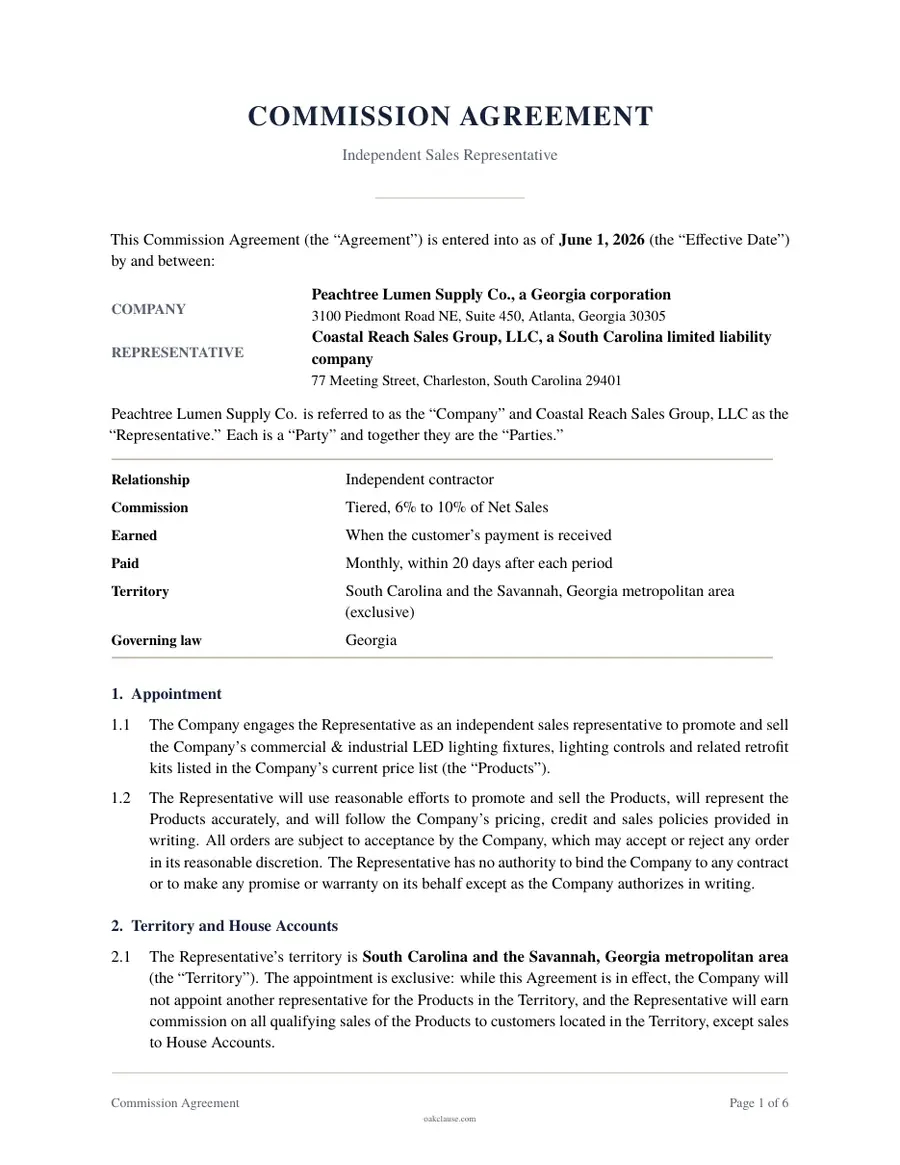
What is a Commission Agreement?
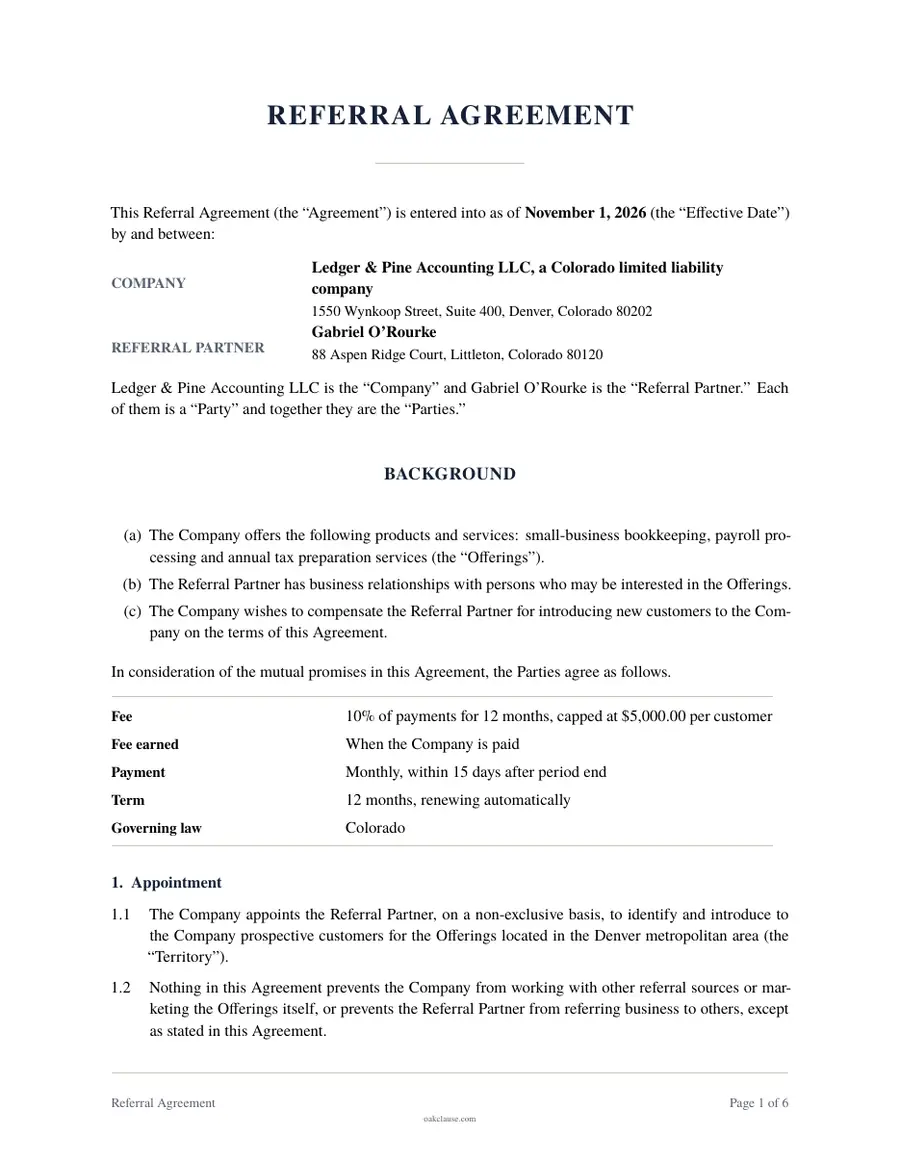
A commission agreement is a contract between a business and a salesperson, sales representative or agent that explains how the salesperson is paid for the sales they generate. It sets the commission rate or schedule, what the commission is calculated on, the moment a commission is earned, and when payment is made.
Commission disputes usually come down to a few questions: was the commission earned, on what amount, and what happens to deals that close after the salesperson leaves. A written agreement answers those questions in advance. It can also cover draws against future commissions, chargebacks for returns or unpaid invoices, house accounts that are excluded, and territory rules.
Commission agreements are used with both employees and independent sales representatives. Several states require that commission arrangements with employees or sales representatives be in writing and set rules on how quickly commissions must be paid, especially when the relationship ends, so a clear signed agreement helps both sides understand their rights.
When to use it
- You are hiring a salesperson whose pay will be partly or fully based on commission.
- You are engaging an independent sales representative or agent to sell your products.
- You want to change an existing commission plan and document the new rates in writing.
- You are offering a draw against commission and need to set how it is repaid.
- You want clear rules for commissions on orders that close after the salesperson leaves.
What is included
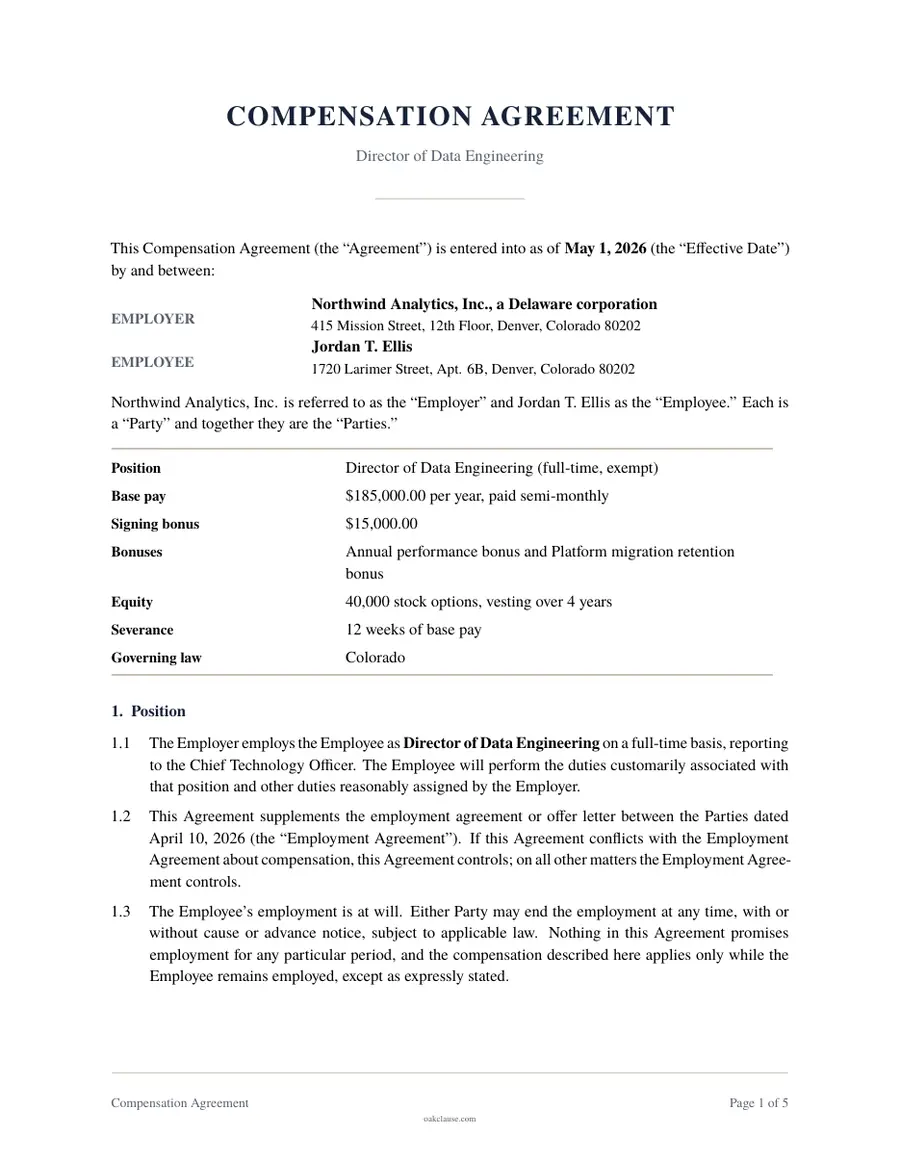
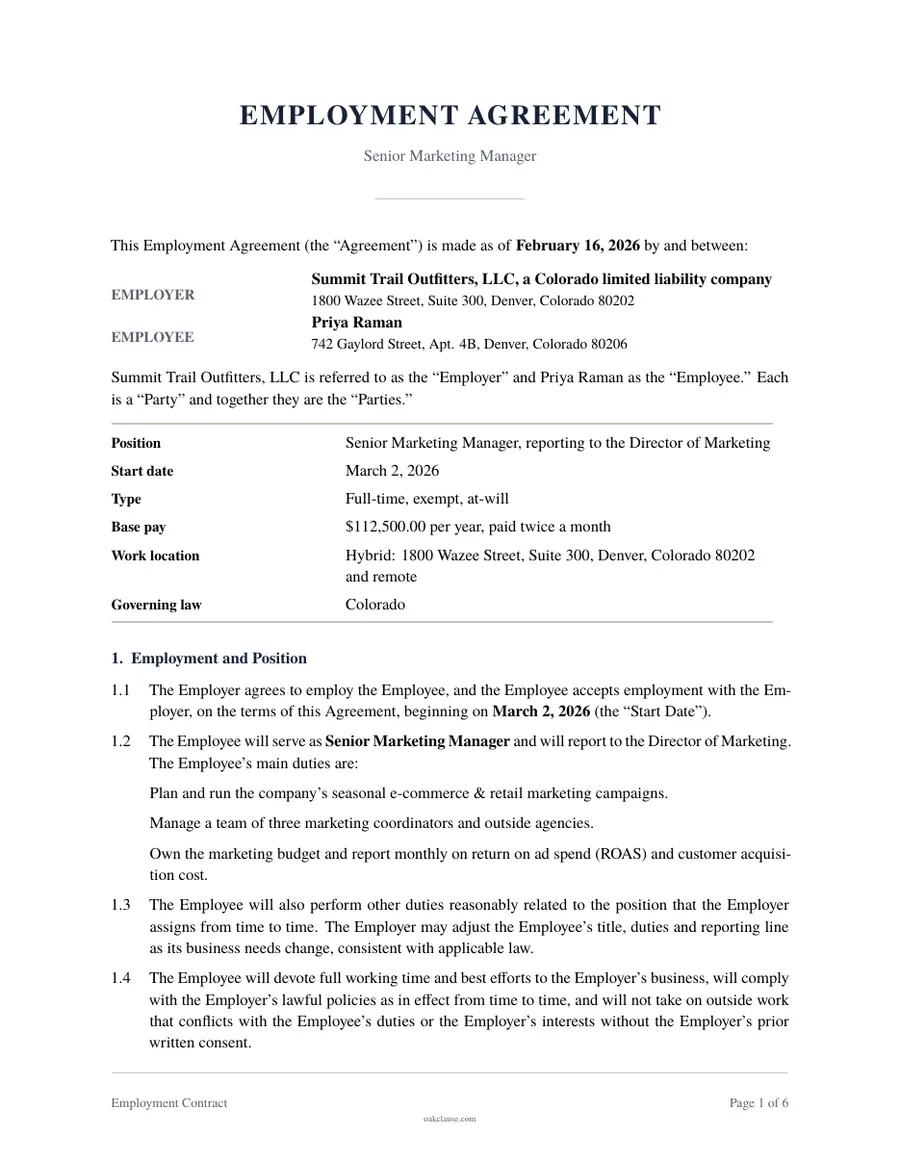
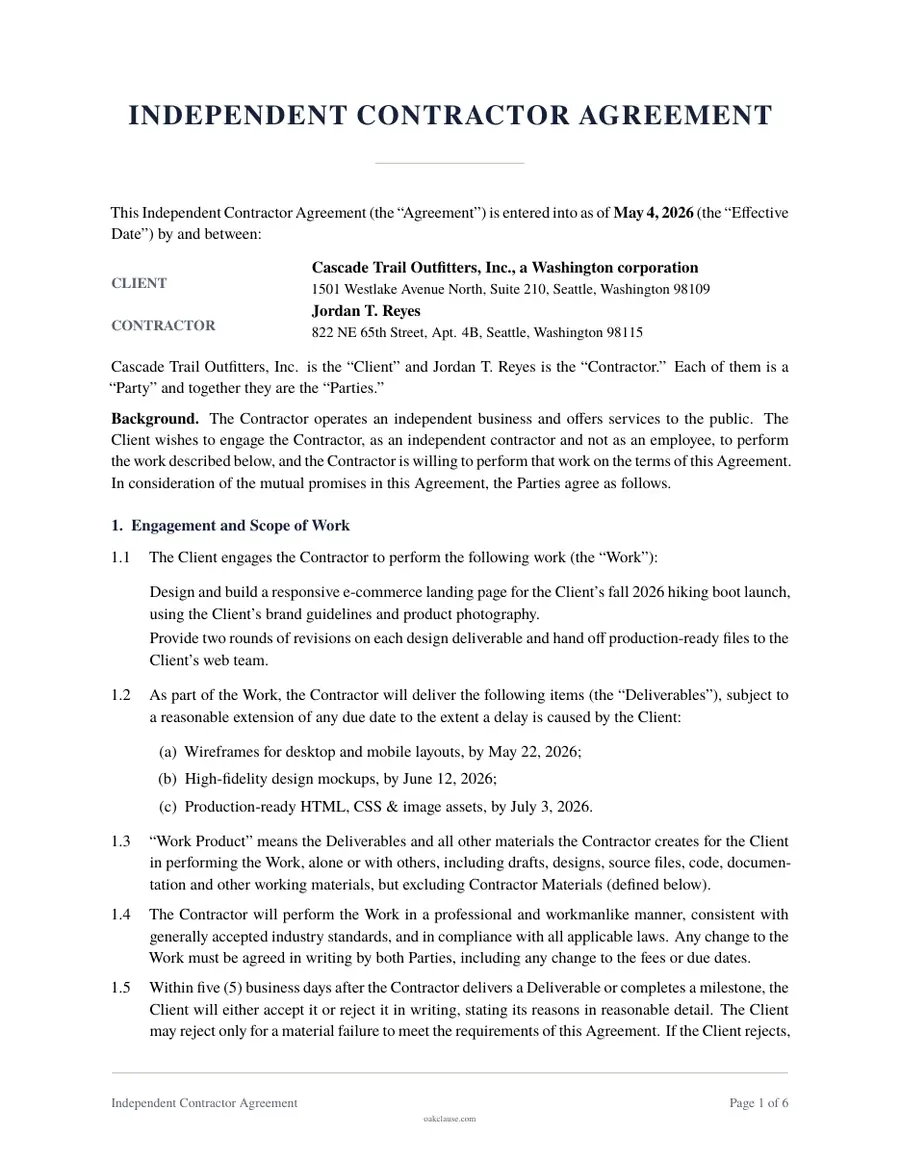
- Parties and whether the salesperson is an employee or independent contractor
- Products or services covered, territory and house accounts
- Flat-rate, tiered or per-sale commission structure
- Commission basis, such as gross sales, net sales or gross profit
- When commissions are earned and when they are paid
- Optional draw against commission and chargebacks
- Commission statements, records and the right to review them
- Commissions after termination
- Confidentiality, optional customer non-solicitation and expense rules
- Governing law, dispute resolution and signatures
How to make your Commission Agreement
Answer the questions
Tell us about the parties and the terms you want. Most documents take about 5 to 20 minutes.
Review the preview
Check the draft as you go and change any answer. The document updates instantly.
Download, sign and keep a copy
Download a print-ready PDF, sign it with the other parties, and give everyone a copy.
Frequently asked questions
When is a commission considered earned?
Whenever the agreement says it is. Common choices are when the customer's order is accepted, when the customer is invoiced, or when the business actually receives payment. Choosing payment received protects the business from paying commission on sales it never collects, while order acceptance favors the salesperson.
What is a draw against commission?
A draw is an advance paid to a salesperson on a regular schedule, which is later offset against the commissions they earn. A recoverable draw must be paid back from future commissions if commissions fall short; a non-recoverable draw works more like a guaranteed minimum. Rules on recovering draws from employees vary by state.
Does a salesperson get commission on sales after they leave?
It depends on the agreement and state law. Many agreements pay commissions that were earned before termination, and some also pay on orders that close within a set period afterward. Several states require earned commissions to be paid within a specific time after the relationship ends.
What are house accounts?
House accounts are customers that the business reserves for itself, often existing major clients or accounts handled by management. Sales to house accounts do not earn the salesperson a commission unless the agreement says otherwise.
What is a chargeback?
A chargeback reverses a commission already paid when the underlying sale falls through, for example because the customer returns the product, cancels or never pays. The agreement should say how long after the sale a chargeback can happen and how it is recovered.
Can commission-only employees be paid less than minimum wage?
Generally no. Most employees must receive at least the applicable minimum wage, and non-exempt employees must receive overtime, even if they are paid by commission. Some outside salespeople and certain retail commission employees are exempt under federal law, but the rules are technical and state law may differ.
Is a commission agreement required to be in writing?
Some states require commission arrangements with employees or sales representatives to be in writing and signed, and may require that the salesperson receive a copy. Even where it is not required, a written agreement is the best way to prevent disputes.
Can this agreement be used with an independent contractor?
Yes. You can choose whether the salesperson is an employee or an independent contractor, and the agreement adjusts its wording. Keep in mind that the label does not decide the question; it depends on how much control the business has over the work under federal and state tests.