Compensation Agreement
Put an employee's full pay package in writing, from base salary and bonuses to equity, benefits and severance, so everyone knows exactly what was promised.
Includes 30 days of edits
- 5 to 20 minutes
- Print-ready PDF
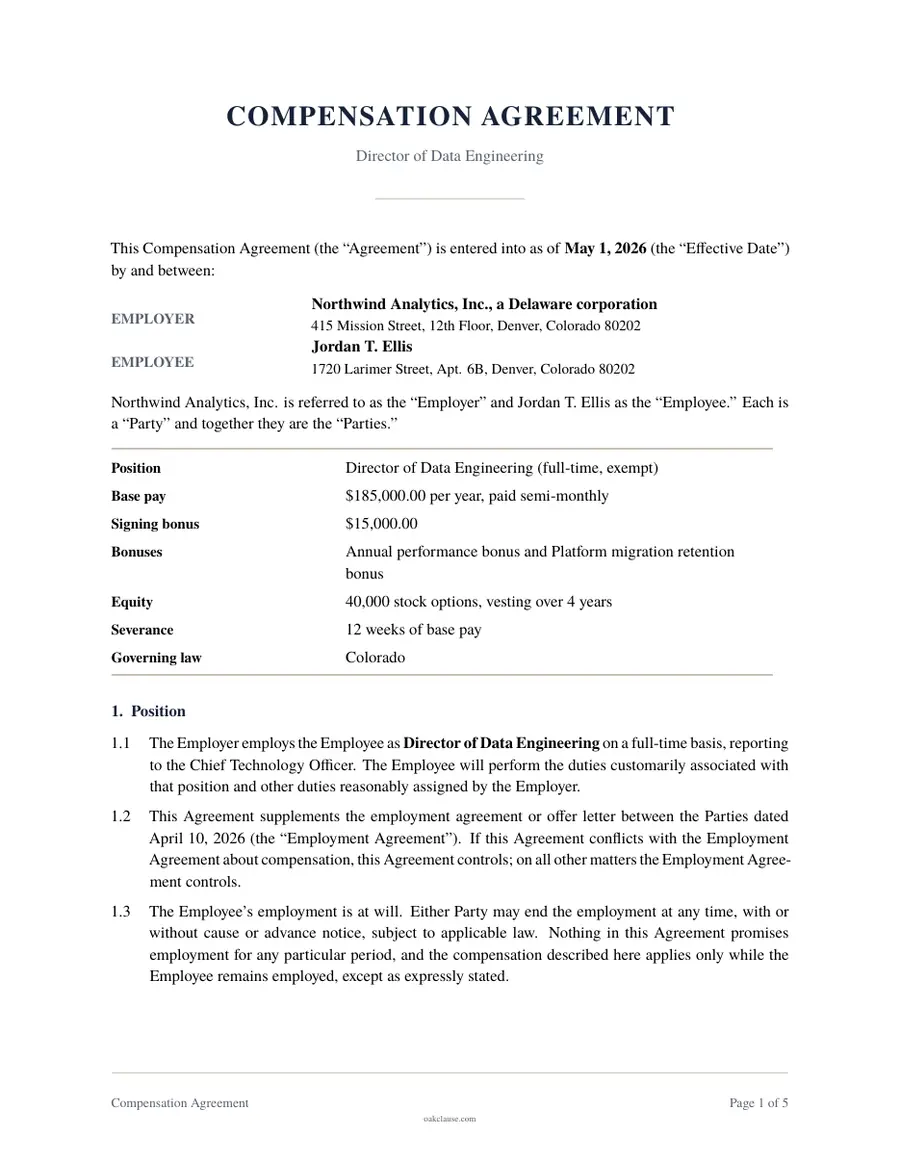
What is a Compensation Agreement?
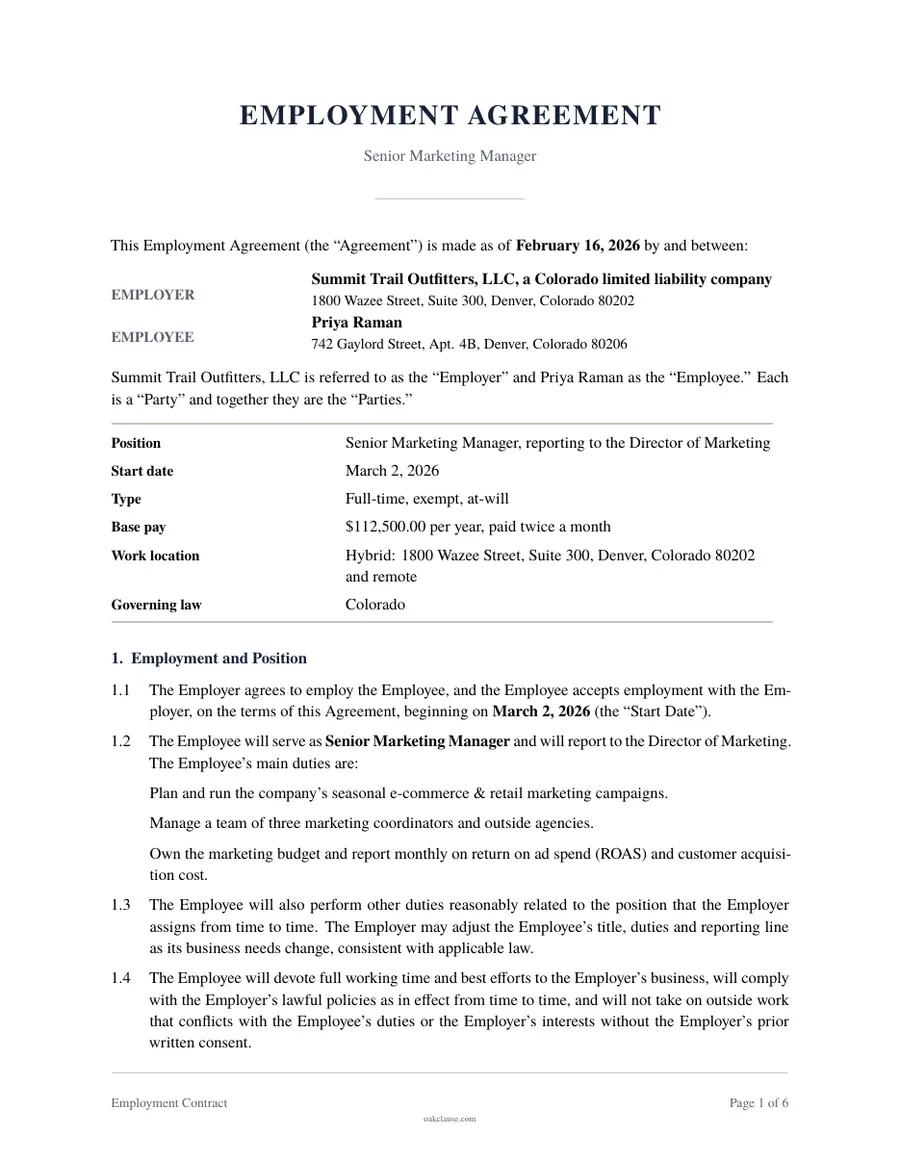
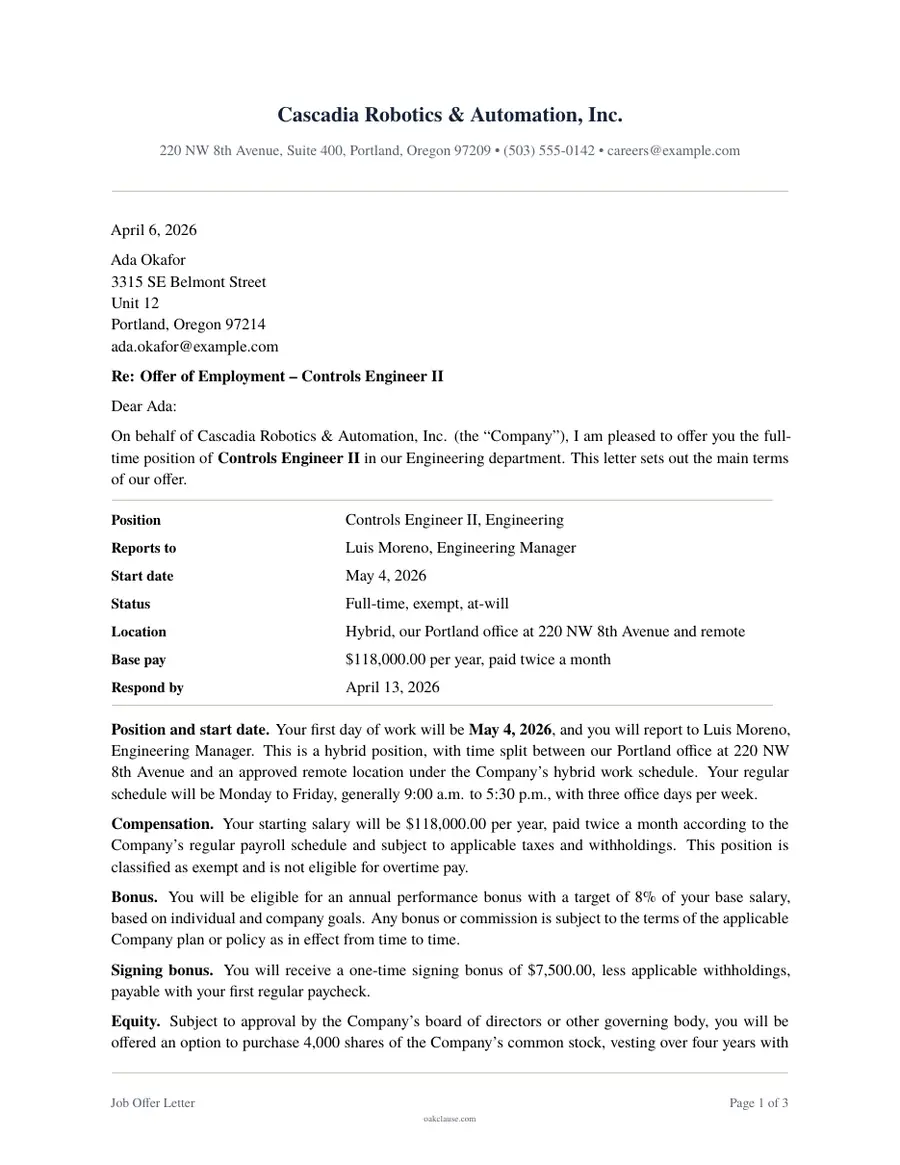
A compensation agreement is a written contract between an employer and an employee that sets out how the employee will be paid. It covers base pay and pay schedule, and can also document signing bonuses, performance or retention bonuses, equity awards, benefits, allowances, paid time off and severance.
Employers often use a compensation agreement alongside an offer letter or employment contract, or on its own when pay terms change, for example after a promotion, when an executive joins, or when a bonus or equity grant is negotiated. Having the numbers and conditions in one signed document avoids disputes about what was agreed and when a payment is earned.
A clear compensation agreement explains not only how much is paid but also the conditions: whether a bonus is discretionary or tied to measurable goals, whether the employee must still be employed on the payment date, how equity vests, and what happens to pay if employment ends. It does not replace wage and hour laws, which continue to apply to minimum wage, overtime, final pay and deductions.
When to use it
- You are hiring an employee or executive and want the pay package documented in detail.
- An employee is being promoted or given a raise, bonus plan or new incentive.
- You are granting equity, such as stock options or restricted stock units, as part of compensation.
- You want to set clear conditions for a signing, retention or performance bonus.
- You are agreeing on severance pay that will apply if employment ends without cause.
What is included
- Employer, employee, position and effective date
- Base salary or hourly rate, pay schedule and overtime status
- Signing bonus with an optional repayment condition
- Performance, retention and discretionary bonuses with clear conditions
- Equity grant summary with vesting schedule and acceleration
- Benefits, paid time off, allowances and expense reimbursement
- Compensation reviews, withholding and lawful deductions
- Optional severance pay conditioned on a release
- Clawback, tax compliance and governing law provisions
- Signature blocks for the employer and employee
How to make your Compensation Agreement
Answer the questions
Tell us about the parties and the terms you want. Most documents take about 5 to 20 minutes.
Review the preview
Check the draft as you go and change any answer. The document updates instantly.
Download, sign and keep a copy
Download a print-ready PDF, sign it with the other parties, and give everyone a copy.
Frequently asked questions
What is the difference between a compensation agreement and an employment contract?
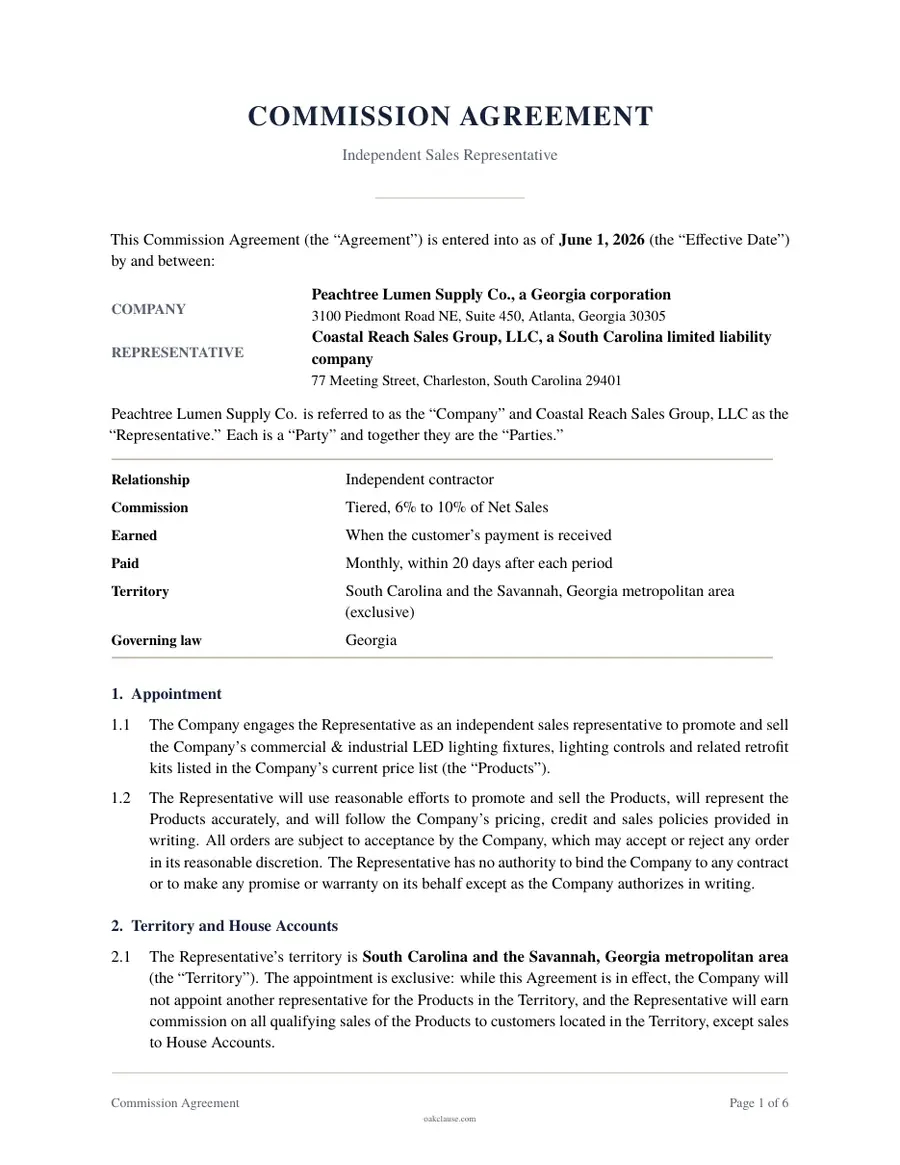
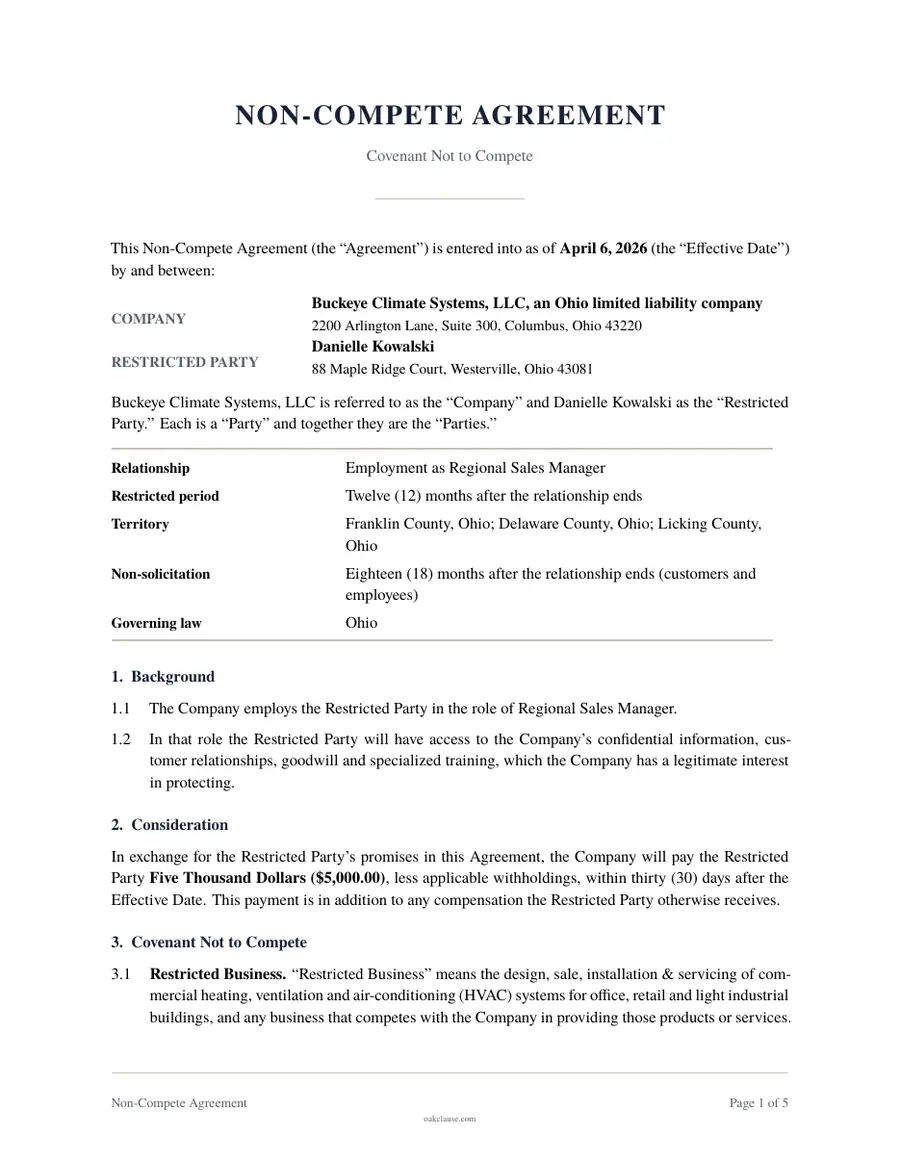
An employment contract covers the whole working relationship, including duties, term, termination and restrictive covenants. A compensation agreement focuses on pay and related benefits. Many employers use both, or use a compensation agreement on its own to document new or changed pay terms.
Does a compensation agreement change at-will employment?
Not by itself. This agreement can confirm that employment remains at will, meaning either side can end it at any time, while still setting out the pay that applies while employment continues. Promising a fixed term of employment would require clear language saying so.
What is the difference between a discretionary and a performance bonus?
A discretionary bonus is paid only if the employer decides to pay it, in an amount the employer chooses. A performance bonus is earned when stated goals are met. Spelling out which type applies, and the conditions for earning it, helps avoid arguments later about whether a bonus is owed.
Can an employer require a signing bonus to be repaid?
Many employers include a condition that the employee repays some or all of a signing bonus if they leave within a set period. Whether and how such a repayment can be collected, and whether it can be deducted from wages, depends on federal and state law, so this agreement makes repayment subject to applicable law.
Does this agreement grant stock options or other equity?
It records the key terms that were agreed, such as the type and number of units and the vesting schedule. Equity is normally granted under a company equity plan and a separate award agreement approved by the board, which this agreement refers to and which control the details.
Should exempt or non-exempt status be stated?
It is helpful to record it. Whether an employee is exempt from overtime depends on federal and state tests based on duties and pay, not on what the agreement says. Labeling a role exempt does not make it exempt if the legal tests are not met.
Can the employer change the employee's pay later?
Generally, pay for at-will employees can be changed going forward with notice, but not for work already performed. Changes to amounts promised in a signed agreement are best made by a written amendment signed by both sides, and some states require advance notice of pay changes.
Is severance required by law?
In most cases, no. Severance is usually a matter of agreement or company policy. Employers commonly condition severance on the employee signing a release of claims, and special rules can apply to releases of age discrimination claims and to large layoffs.