Cease and Desist Letter
Put someone on formal notice to stop infringing your trademark or copyright, harassing you, spreading false statements or breaking a contract, with clear demands and a firm deadline.
Includes 30 days of edits
- 5 to 20 minutes
- Print-ready PDF
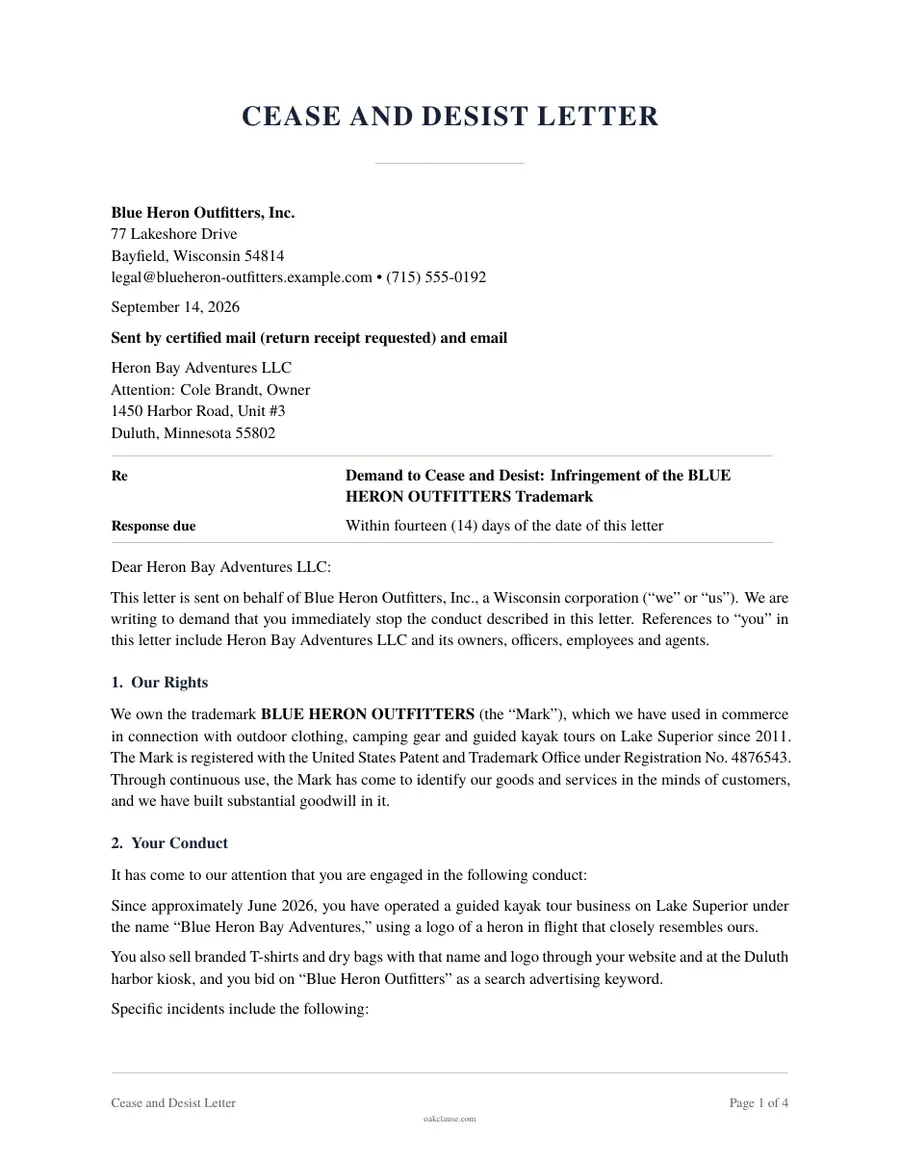
What is a Cease and Desist Letter?
A cease and desist letter is a formal written demand asking a person or business to stop (cease) a specific activity and not start it again (desist). It explains who you are, what rights you believe are being violated, what the recipient is doing, and exactly what you want them to do by a set deadline.
A cease and desist letter is not a court order and does not by itself start a lawsuit. Its power comes from putting the recipient on notice. Many disputes end at this stage because the recipient realizes the problem, or decides that complying is cheaper than a fight. If they continue, the letter becomes evidence that they knew about your objection, which can matter in later legal proceedings, for example in showing that infringement was willful.
This letter covers the most common situations: trademark infringement, copyright infringement, harassment, defamation, breach of a contract such as a non-compete or NDA, and other violations you describe yourself. It lists the specific incidents, sets out your demands, asks the recipient to preserve evidence and confirm compliance in writing, and can include a signature page for the recipient's acknowledgment.
When to use it
- A competitor is using a business name, logo or product name that is confusingly similar to your trademark.
- Someone has copied your photos, artwork, writing, music or software without permission.
- A person keeps contacting you, your family or your employees after being asked to stop.
- Someone is publishing false statements that damage your reputation or your business.
- A former employee, contractor or business partner is breaking a non-compete, non-solicitation or confidentiality agreement.
- You want a written record that you objected before you consider further action.
What is included
- Sender and recipient details with delivery method
- Subject line tailored to the type of violation
- Statement of your rights, such as a trademark, copyright or contract
- Description of the conduct and a dated list of incidents
- Record of any earlier warnings
- Specific demands, from stopping the conduct to removing content or paying damages
- Response deadline and the actions you may take if ignored
- Evidence preservation notice and reservation of rights
- Optional acknowledgment page for the recipient to sign
How to make your Cease and Desist
Answer the questions
Tell us about the parties and the terms you want. Most documents take about 5 to 20 minutes.
Review the preview
Check the draft as you go and change any answer. The document updates instantly.
Download, sign and keep a copy
Download a print-ready PDF, sign it with the other parties, and give everyone a copy.
Frequently asked questions
Is a cease and desist letter legally binding?
No. It is a demand, not a court order, so the recipient is not legally required to obey the letter itself. However, the underlying law, such as trademark, copyright, harassment or contract law, may require them to stop. The letter puts them on notice and creates a record that can be used later.
Do I need a lawyer to send a cease and desist letter?
No. Anyone can send one on their own behalf. A letter on a law firm's letterhead may carry more weight, and an attorney is a good idea if the stakes are high, if you are unsure your claim is strong, or if the recipient is likely to respond aggressively.
What should I include in a cease and desist letter?
Identify yourself and the recipient, explain the right you hold, describe the conduct with dates and specifics, state exactly what you want the recipient to do, set a deadline, and describe the steps you may take if they do not comply. Keep the tone firm and factual. Avoid threats you do not intend to carry out, or threats of criminal charges made to gain an advantage in a civil dispute, which can be unlawful in some states.
How should I send a cease and desist letter?
Use a method that proves delivery, such as certified mail with return receipt, an overnight courier with tracking, or hand delivery with a witness. Many people also send a copy by email for speed. Keep a copy of the letter and the proof of delivery.
How long should I give the recipient to respond?
Deadlines of about ten to fourteen days are common for business disputes, while ongoing harassment or infringement that is causing immediate harm may justify a shorter deadline. You can choose either a number of days or a specific date.
What happens if the recipient ignores my letter?
You can decide on next steps, which may include filing a lawsuit, seeking an injunction, sending a takedown notice to a website host or platform, or, for harassment, asking a court for a protective order or reporting the conduct to law enforcement. The letter itself does not commit you to any of these.
Can sending a cease and desist letter backfire?
It can. An overly aggressive or unsupported letter may be published online, may prompt the recipient to sue first to have a court declare they are not infringing, or in some cases may expose the sender to claims. Make sure your facts are accurate and your claim is well founded before sending.
Is a cease and desist letter the same as a DMCA takedown notice?
No. A cease and desist letter goes to the person doing the infringing. A DMCA takedown notice goes to the website host or platform that stores the infringing material and follows a specific format set by federal law. You can send both.