Business Plan
Turn your idea or growing company into a clear, structured plan that lenders, investors and partners can read in one sitting, from your mission to your financial projections.
Includes 30 days of edits
- 5 to 20 minutes
- Print-ready PDF
What is a Business Plan?
A business plan is a written description of what your business does, who it serves, how it will reach those customers, who runs it and how it expects to make money. It pulls the important facts about the company into one organized document that outsiders can evaluate and insiders can steer by.
Banks and lenders often ask for a plan before approving a business loan, and investors usually want to see one before they put money in. Even when nobody asks for it, writing a plan forces you to test your assumptions about the market, your pricing and your costs before you commit time and savings.
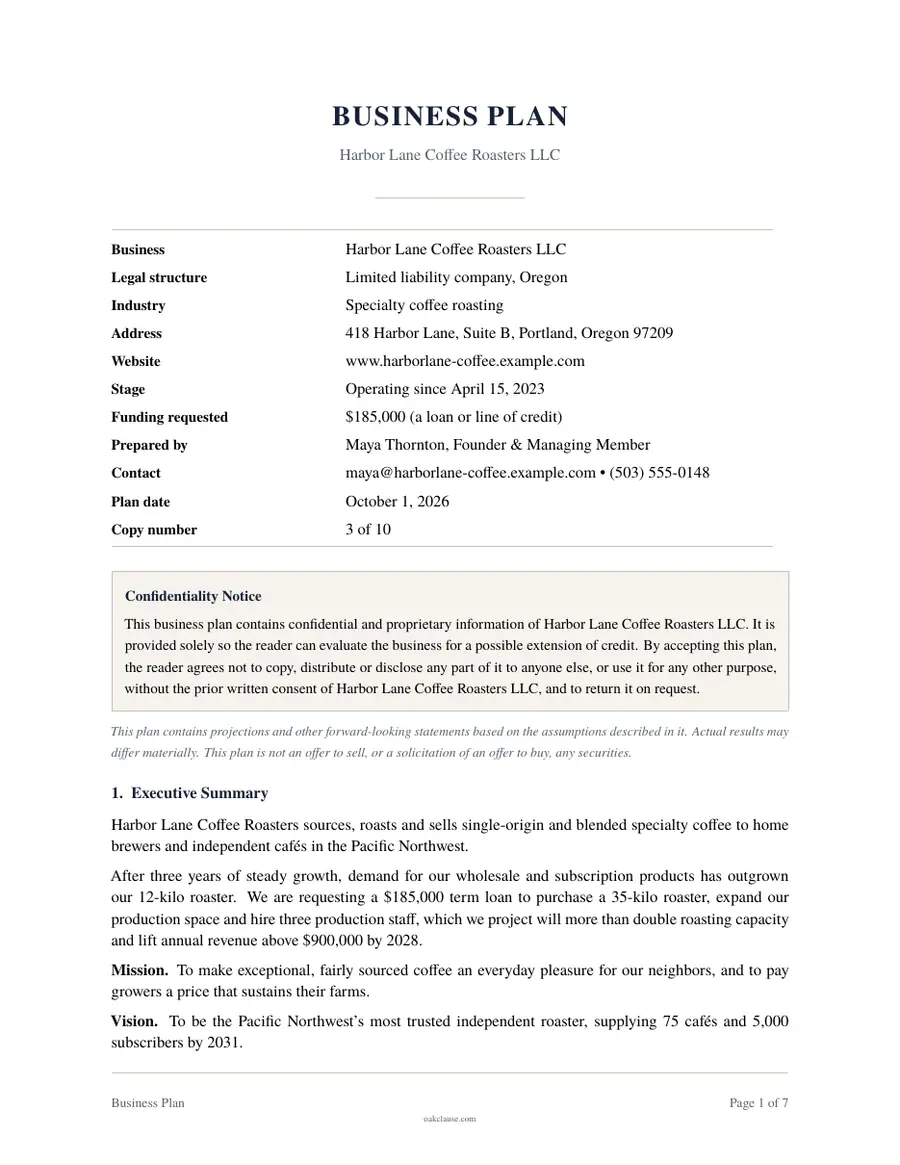
This plan follows the structure most readers expect: an executive summary, a company description, products and services, a market and competitor analysis, a marketing and sales strategy, operations and management, and a financial section with funding needs and projections. You can add an optional confidentiality notice and a receipt page for readers to sign.
When to use it
- You are applying for a bank loan, a line of credit or another form of business financing.
- You are pitching your company to angel investors, venture funds or a prospective business partner.
- You are starting a new business and want to test whether the idea, pricing and costs add up.
- You are expanding an existing business, opening a new location or launching a new product line.
- You want a shared roadmap so owners, managers and key employees work toward the same goals.
What is included
- Cover page with company details and plan contact
- Optional confidentiality notice and reader acknowledgment
- Executive summary, mission and vision
- Company description, legal structure and ownership
- Products and services with pricing
- Industry, target market and competitor analysis
- Marketing, sales channels and milestones
- Operations, management team and staffing
- Funding request with itemized use of funds
- Multi-year financial projections and key assumptions
How to make your Business Plan
Answer the questions
Tell us about the parties and the terms you want. Most documents take about 5 to 20 minutes.
Review the preview
Check the draft as you go and change any answer. The document updates instantly.
Download, sign and keep a copy
Download a print-ready PDF, sign it with the other parties, and give everyone a copy.
Frequently asked questions
What should a business plan include?
Most plans cover an executive summary, a description of the company, the products or services offered, an analysis of the market and competitors, the marketing and sales approach, operations and management, and financial information such as funding needs and revenue and expense projections.
How long should a business plan be?
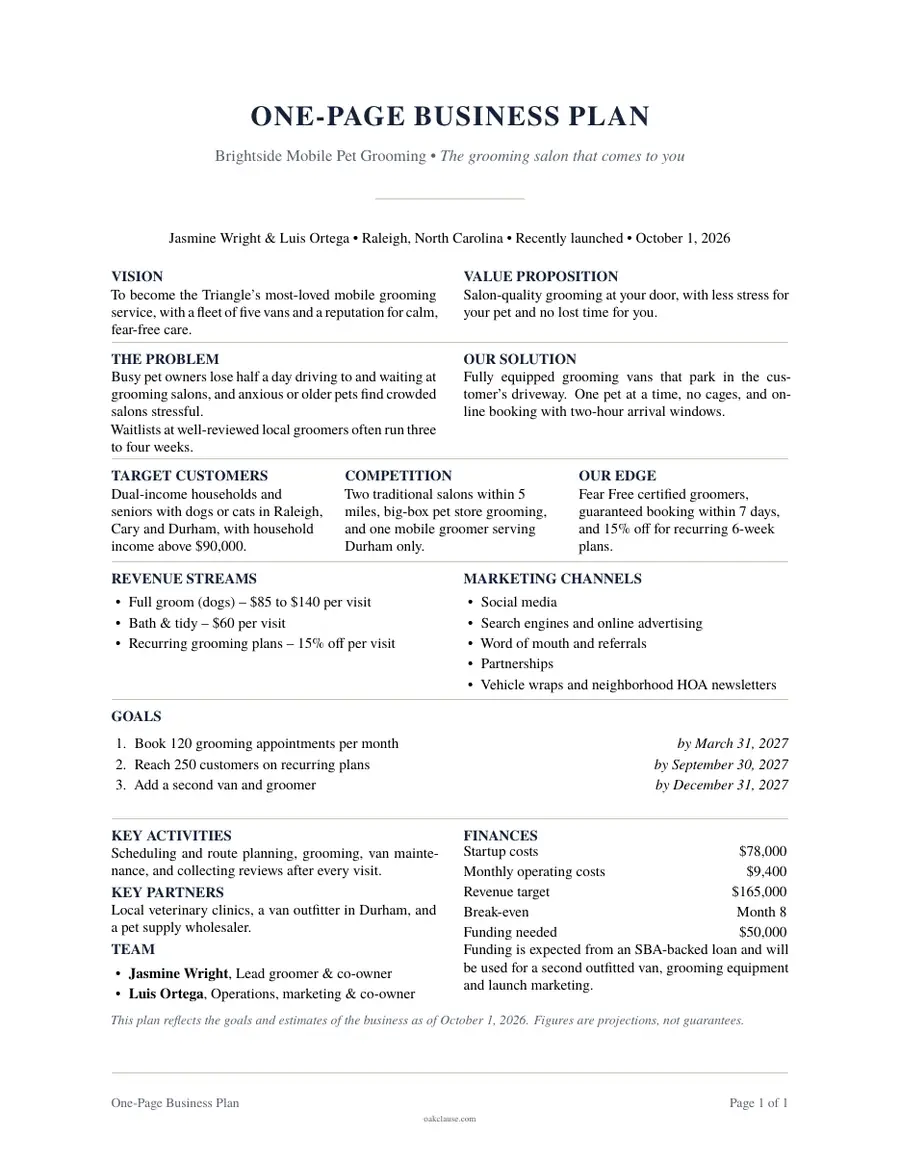
There is no required length. Plans prepared for lenders or investors often run between 15 and 30 pages including financial tables, while internal plans can be shorter. Clear, specific information matters more than page count. If you only need a quick snapshot, a one-page business plan may be enough.
Do I need a business plan to get a small business loan?
Many lenders ask for one, especially for startups or larger loans, because it shows how the money will be used and how the loan will be repaid. Requirements differ from lender to lender, so check what your bank or loan program expects before you apply.
Is a business plan a legally binding document?
No. A business plan describes your intentions and expectations; it is not a contract. However, statements made to investors in connection with raising money can carry legal consequences under securities laws, so make sure everything in the plan is accurate and that projections are clearly labeled as estimates.
Should I write the executive summary first or last?
Many people draft it last, after the rest of the plan is finished, because it summarizes everything else. It appears first in the document because it is often the only section a busy reader looks at before deciding whether to keep reading.
How do I protect the information in my business plan?
You can mark the plan confidential and ask readers to sign an acknowledgment that they will not share it, which this document can include. For deeper protection, especially before sharing trade secrets, consider asking readers to sign a separate non-disclosure agreement. Note that many professional investors decline to sign NDAs at an early stage.
How far ahead should financial projections go?
Three to five years of annual projections is common, and some lenders also want monthly figures for the first year. Projections should rest on assumptions you can explain, such as expected customers, pricing and costs, and those assumptions should be written down alongside the numbers.
How often should I update my business plan?
Many owners review their plan at least once a year and whenever something important changes, such as a new product, a funding round, a change in ownership or a major shift in the market. An outdated plan can mislead readers and lose its value as a management tool.