Business Name Transfer Agreement
Hand over the right to use a trade name, DBA or assumed business name to a new owner, with clear terms on price, goodwill and when the old owner must stop using it.
Includes 30 days of edits
- 5 to 20 minutes
- Print-ready PDF
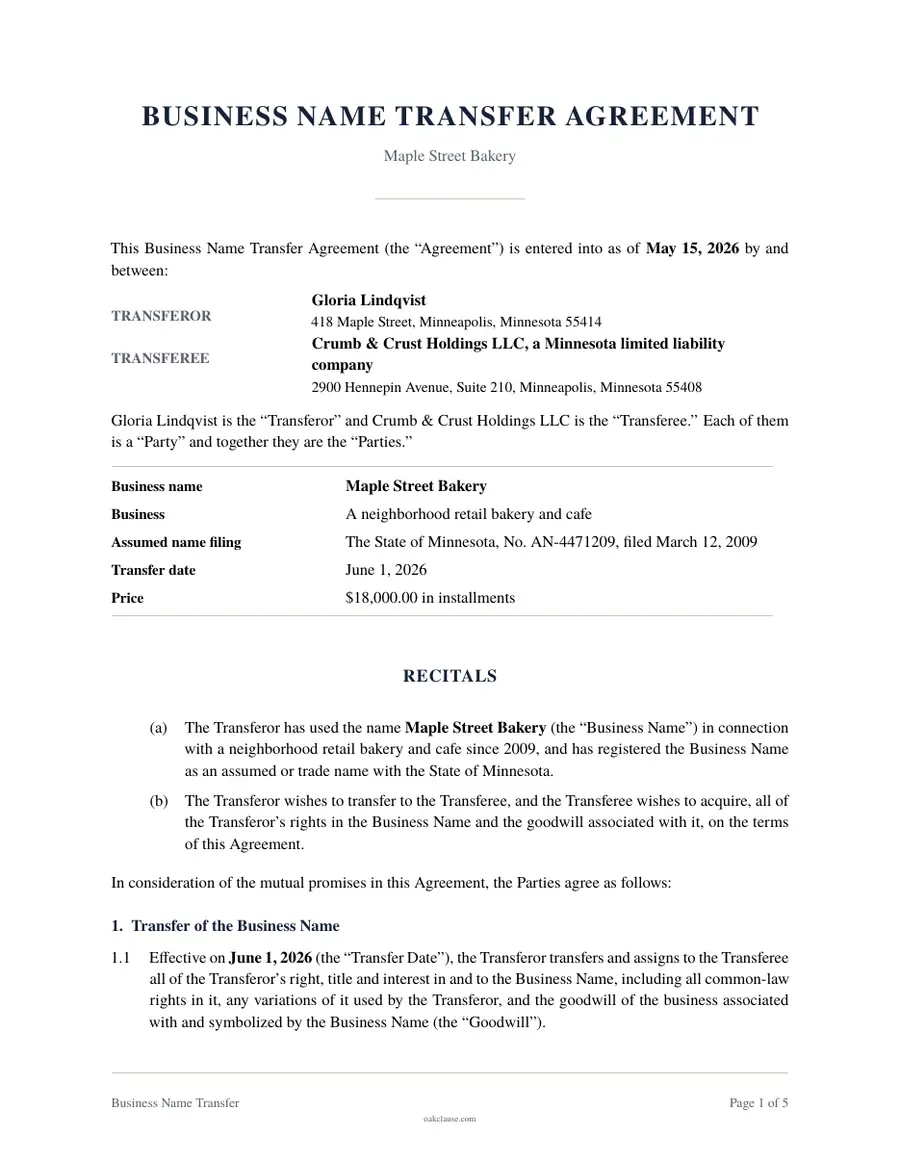
What is a Business Name Transfer?
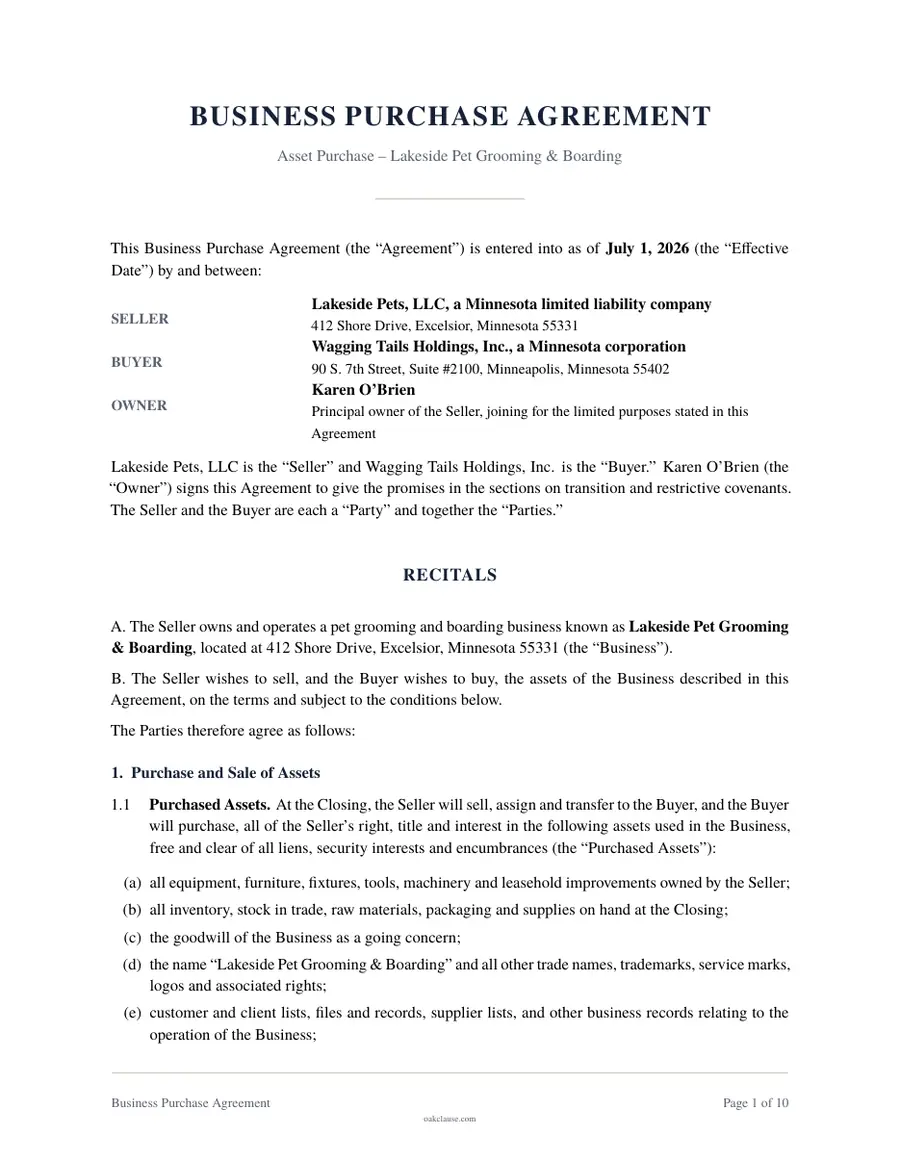
A business name transfer agreement is a contract in which the person or company that currently uses a business name (the transferor) gives up its rights in that name and transfers them to someone else (the transferee). The name might be a trade name, a “doing business as” (DBA) name, or an assumed or fictitious business name registered with a state or county.
Filing an assumed name with a government office usually just puts the public on notice of who is behind a business; it does not on its own create ownership. The real value lies in the reputation and customer recognition the name has built up. This agreement transfers that goodwill along with the name, sets a date by which the transferor must stop using it, and allocates responsibility for updating public filings.
The agreement can also move the assets that go with the name, such as the website domain, social media accounts, phone numbers and signage, and it makes clear that the transferee does not take on the transferor's old debts simply by taking over the name.
When to use it
- You are selling a small business and the buyer wants to keep operating under the same name.
- A sole proprietor is moving a DBA into a newly formed LLC or corporation.
- You are retiring or closing a business and someone else wants to buy the name and its reputation.
- Two businesses with similar names are settling which one keeps the name going forward.
- A business partner is leaving and the remaining owner will continue under the shared trade name.
What is included
- Identification of the business name and any assumed name filing
- Transfer of the name together with its goodwill
- Optional transfer of domains, social media, phone numbers and marketing materials
- Purchase price with lump-sum, installment or larger-deal options
- Deadline for the transferor to stop using the name
- Responsibility for withdrawing and refiling assumed name registrations
- Optional restriction on using a confusingly similar name
- Clear allocation of pre-transfer debts and liabilities
- Warranties, governing law and signatures with optional notary block
How to make your Trade Name Transfer
Answer the questions
Tell us about the parties and the terms you want. Most documents take about 5 to 20 minutes.
Review the preview
Check the draft as you go and change any answer. The document updates instantly.
Download, sign and keep a copy
Download a print-ready PDF, sign it with the other parties, and give everyone a copy.
Frequently asked questions
What is the difference between a trade name, a DBA and an assumed name?
They are largely the same idea under different labels. A trade name is the name a business uses with the public. When that name differs from the owner's legal name, many states and counties require the owner to register it, and the registration may be called a DBA, assumed name, fictitious business name or trade name certificate depending on where you are.
Can a DBA registration itself be transferred?
In many places it cannot simply be reassigned. The usual approach is for the transferor to withdraw or cancel its registration and for the transferee to file a new registration in its own name. This agreement allocates those steps between the parties and requires them to follow the procedure of the office where the name is registered.
Is a business name the same as a trademark?
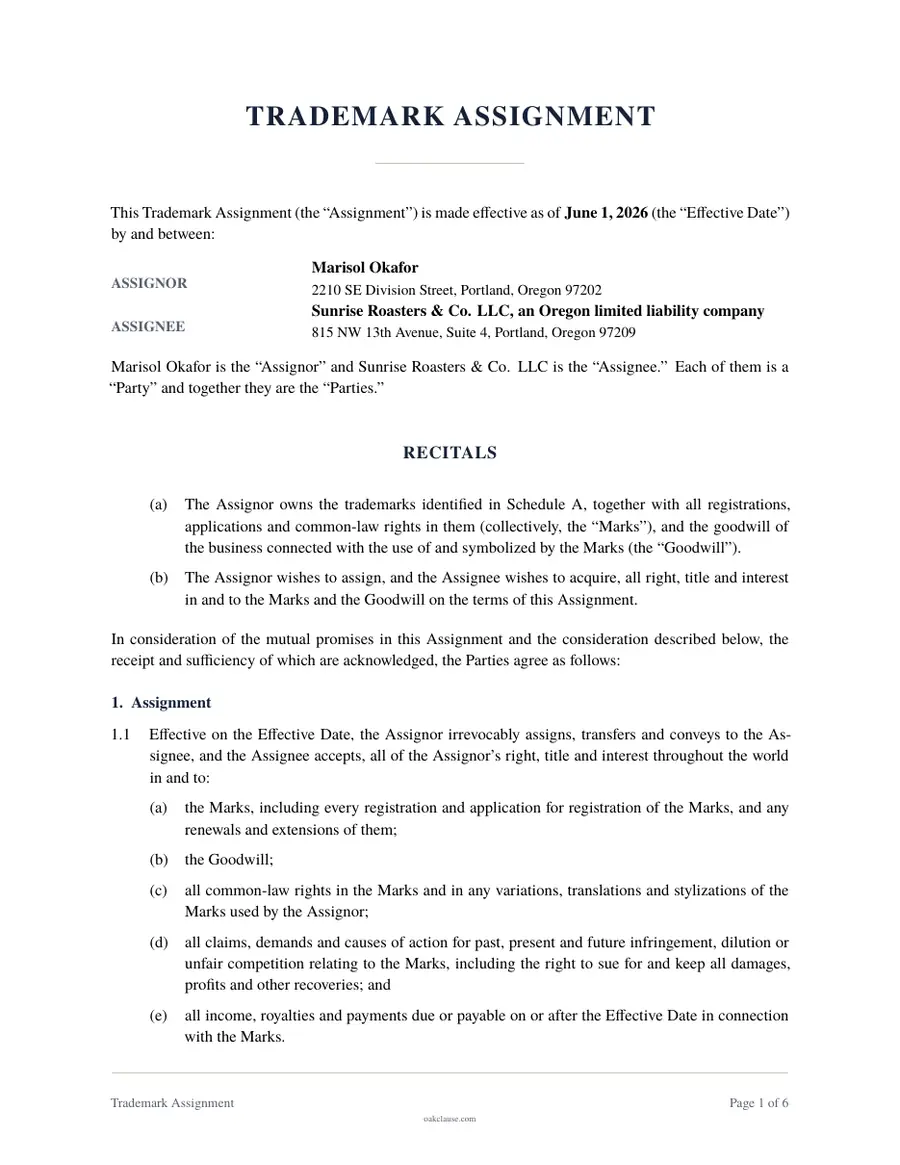
Not always. A business name identifies the company, while a trademark identifies the source of goods or services. A name can be both. If the name is also a registered trademark, this agreement transfers those rights too, and the parties should sign a separate trademark assignment that can be recorded with the trademark office.
Does the new owner become responsible for the old owner's debts?
This agreement states that the transferor keeps responsibility for debts and obligations from before the transfer, and each party indemnifies the other for its own period. Be aware that some states have rules that can make a buyer of business assets liable to certain creditors or tax authorities, so check local requirements when the name is part of a larger business sale.
How long does the old owner have to stop using the name?
You choose. Many transfers allow a short wind-down period so the transferor can update signs, invoices and online listings. After that date the transferor must stop using the name and anything confusingly similar.
Can I stop the seller from opening a business with a similar name?
Yes, the agreement includes an optional restriction on using a confusingly similar name within an area and time you choose. Keep it reasonable; courts in some states look closely at restrictions that go beyond protecting the value of what was sold.
Should I check that the name is available before buying it?
It is wise to search your state's business entity records, the local assumed name records and the federal trademark database before paying for a name. Another business with stronger rights in the same area could limit how the name can be used.
Does a business name transfer need to be notarized?
Usually not. The agreement is binding when both parties sign. Some filing offices or banks may ask for notarized documents, so you can add a notary acknowledgment if you expect to need one.