Missouri Offer to Purchase Real Estate
Make a clear written offer on a home or land, with your price, deposit, financing and conditions, plus a response section the seller can sign to accept, reject or counter.
Includes 30 days of edits
- 5 to 20 minutes
- Print-ready PDF
- Tailored to Missouri
Purchase Offer rules in Missouri
States differ on what a seller must disclose before a buyer is bound, whether a buyer gets a period to cancel after receiving disclosures, how a broker or title company must hold earnest money, whether an attorney must take part in the closing, and which deed and closing-cost customs apply. In some areas an accepted offer is the complete contract, while in others buyers and sellers routinely sign a separate full purchase agreement afterward. This offer defers to the law of the state where the property is located on each of these points and lets you choose whether acceptance creates a binding contract on its own or is followed by a formal agreement.
When you create this document for Missouri, the questionnaire uses Missouri as the governing law and adds wording that defers to Missouri requirements where they apply. Laws change, so confirm current rules with official Missouri sources or a local attorney for anything critical.
What is an Offer to Purchase Real Estate?
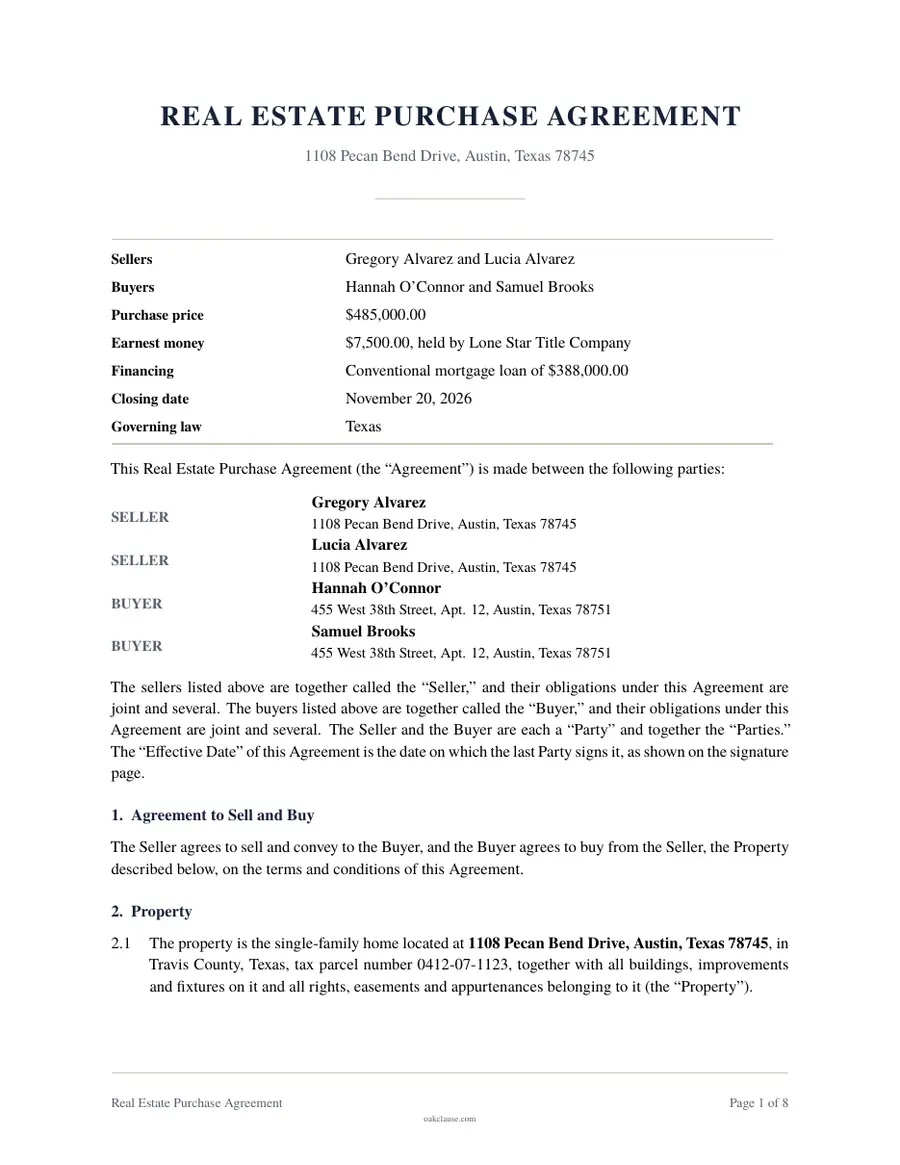
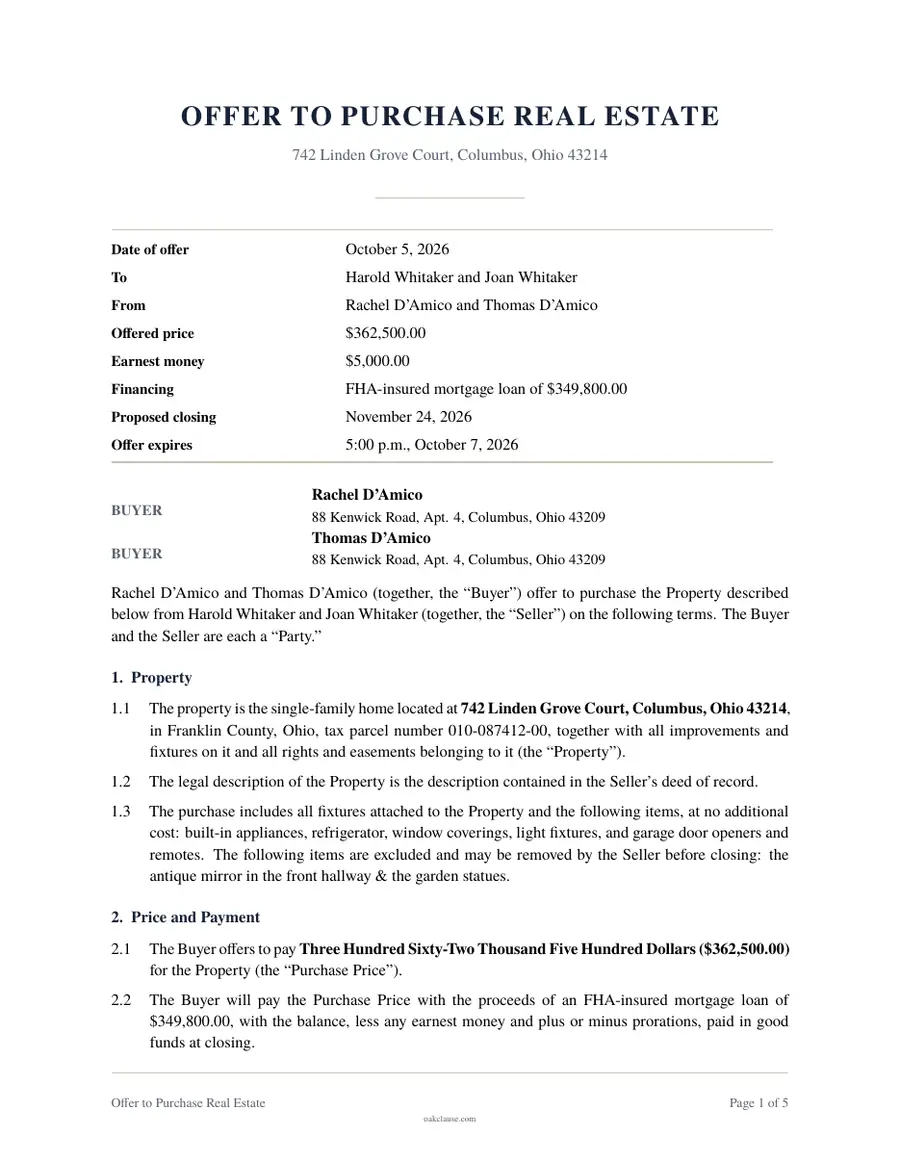
An offer to purchase real estate is a buyer's written proposal to buy a specific property on specific terms. It names the price, the earnest money the buyer will deposit, how the purchase will be paid for, the conditions the buyer needs satisfied, the proposed closing date and a deadline for the seller to respond.
A written offer shows the seller you are serious and gives both sides a precise set of terms to react to. The seller can sign it to accept, reject it, or answer with a counteroffer. Because an accepted offer can become a binding contract, it matters that every term in it is one you are prepared to keep.
Home sales follow the law of the state where the property is located. This offer asks for that state and defers to its rules on seller disclosures, earnest money handling and closing practice, so the terms you propose stay consistent with local requirements.
When to use it
- You have found a house, condo or parcel of land and want to make a formal offer to the owner.
- You are buying directly from an owner who is selling without an agent.
- You want to set out your price, deposit and conditions before a full purchase contract is drafted.
- You need a written offer with an expiration deadline so the seller must respond promptly.
- You want the seller's acceptance, rejection or counteroffer documented on the same page.
What is included
- Buyer details and the seller or owner of record
- Property address, legal description and included or excluded items
- Offered price, earnest money and escrow holder
- Cash or loan financing and optional proof of funds or pre-approval
- Financing, appraisal, inspection and home sale contingencies
- Proposed closing date, deed type, closing costs and possession
- Seller disclosure and lead-based paint terms
- Offer expiration date and time
- Buyer signatures and a seller response section to accept, reject or counter
How to make your Purchase Offer
Answer the questions
Tell us about the parties and the terms you want. Most documents take about 5 to 20 minutes.
Review the preview
Check the draft as you go and change any answer. The document updates instantly.
Download, sign and keep a copy
Download a print-ready PDF, sign it with the other parties, and give everyone a copy.
Purchase Offer in another state
Back to the general purchase offer page51 states shown
- ALAlabama
- AKAlaska
- AZArizona
- ARArkansas
- CACalifornia
- COColorado
- CTConnecticut
- DEDelaware
- DCDistrict of Columbia
- FLFlorida
- GAGeorgia
- HIHawaii
- IDIdaho
- ILIllinois
- INIndiana
- IAIowa
- KSKansas
- KYKentucky
- LALouisiana
- MEMaine
- MDMaryland
- MAMassachusetts
- MIMichigan
- MNMinnesota
- MSMississippi
- MOMissouri
- MTMontana
- NENebraska
- NVNevada
- NHNew Hampshire
- NJNew Jersey
- NMNew Mexico
- NYNew York
- NCNorth Carolina
- NDNorth Dakota
- OHOhio
- OKOklahoma
- OROregon
- PAPennsylvania
- RIRhode Island
- SCSouth Carolina
- SDSouth Dakota
- TNTennessee
- TXTexas
- UTUtah
- VTVermont
- VAVirginia
- WAWashington
- WVWest Virginia
- WIWisconsin
- WYWyoming
Frequently asked questions
Is an offer to purchase real estate legally binding?
An offer is not binding on the seller until the seller accepts it. Once it is accepted in writing and the acceptance is communicated to the buyer before the offer expires, it can become an enforceable contract. This document lets you state whether acceptance creates the final contract or whether the parties will sign a full purchase agreement next.
Can I withdraw my offer after I submit it?
Generally yes, as long as the seller has not yet accepted it and communicated that acceptance to you. To withdraw, give the seller or the seller's agent written notice as soon as possible. Once the offer has been accepted, backing out is governed by the contingencies and default terms in the contract.
How much earnest money should I offer?
There is no single rule. Deposits commonly range from about one to three percent of the price, and more in competitive markets, but local custom varies widely. A larger deposit can make an offer more attractive, but it is also the amount the buyer may lose if the buyer defaults without a valid contingency.
What contingencies should I include in my offer?
Most buyers include an inspection contingency, and buyers using a loan usually include financing and appraisal contingencies. If you need to sell your current home first, a home sale contingency protects you. Each contingency gives you a way out with your deposit, but sellers may prefer offers with fewer conditions.
What happens if the seller makes a counteroffer?
A counteroffer rejects your original offer and proposes new terms. You can accept it, reject it or counter again. Nothing is binding until both sides have signed the same set of terms and acceptance has been delivered.
How long should I give the seller to respond?
Buyers often give a seller one to three days. A short deadline keeps the process moving and limits the seller's ability to shop your offer to others, while a longer one may suit an out-of-town or unrepresented seller. The offer automatically expires if it is not accepted by the deadline you set.
Do I need a real estate agent to make an offer?
No. Buyers can make a written offer directly to an owner. Without an agent, it is especially important to understand the contingencies and deadlines you are proposing and to arrange a title company or real estate attorney to handle the closing. Some states require an attorney to participate in the closing.
Should I attach a pre-approval letter or proof of funds?
It is a good idea. A lender's pre-approval letter or a recent bank statement shows the seller you can actually close. Sellers comparing several offers often favor the buyer who has shown proof of financing.
More Missouri documents
Other documents people prepare for Missouri, each with the state’s rules where we have checked them.
All Missouri documents and rules