Tennessee Commercial Eviction Notice
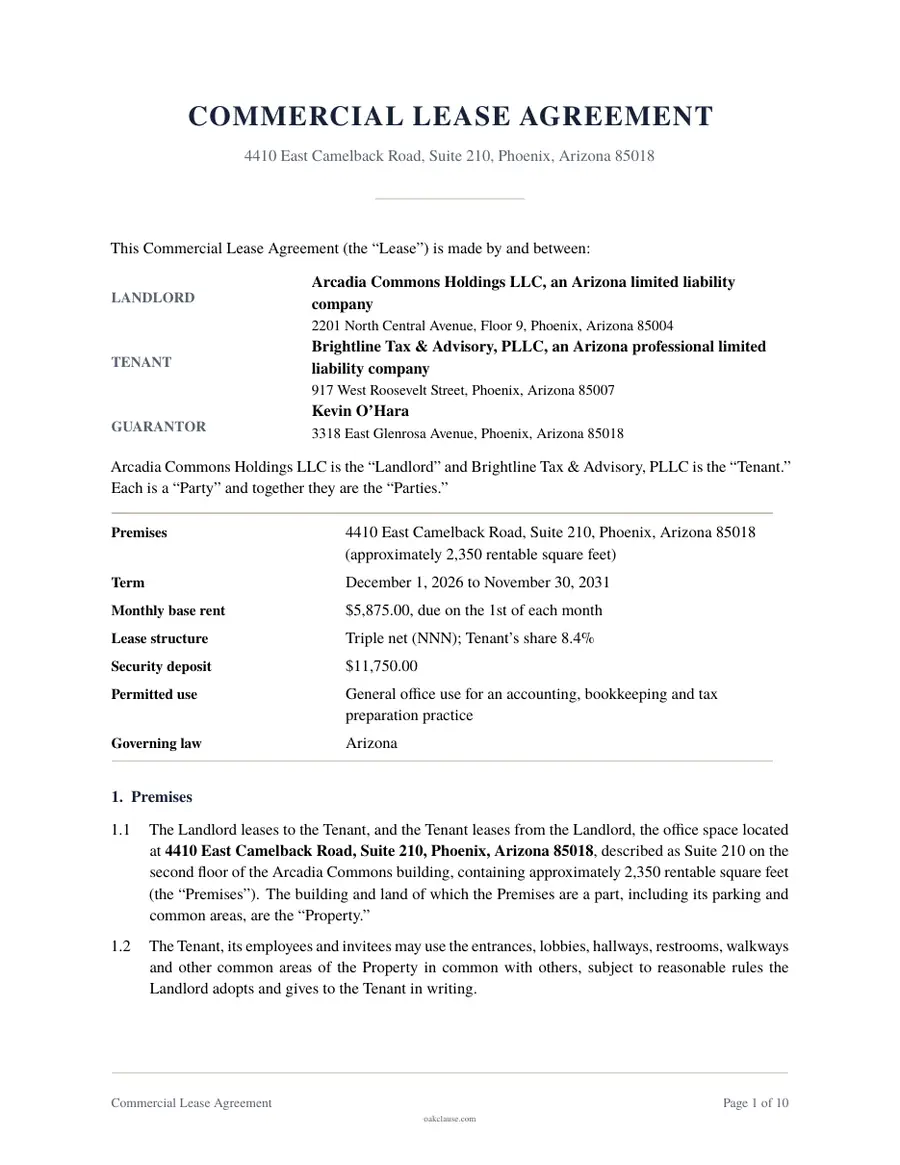
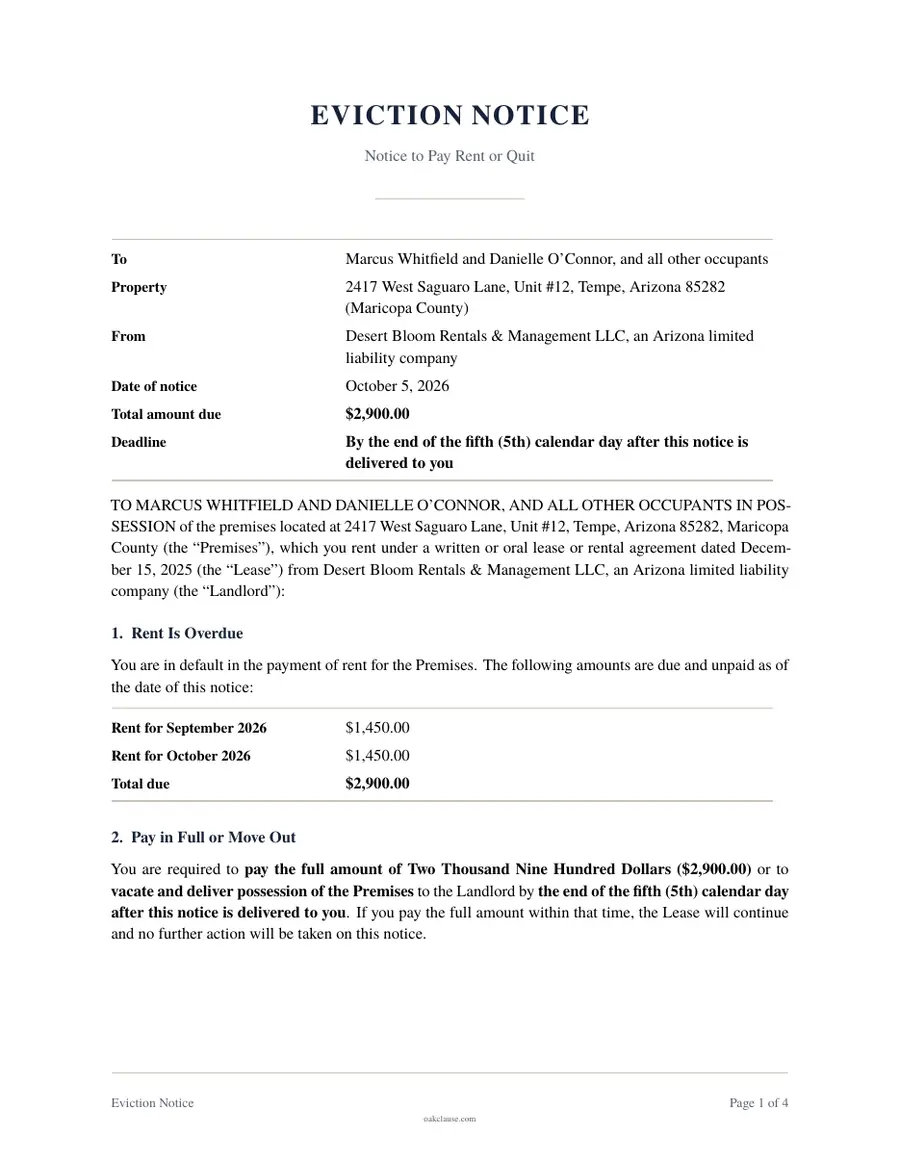
Put a business tenant on formal written notice of a default under a commercial lease, spell out exactly what it must pay or fix, and set the deadline to cure or surrender the space.
Includes 30 days of edits
- 5 to 20 minutes
- Print-ready PDF
- Tailored to Tennessee
Commercial Eviction rules in Tennessee
The law of commercial evictions differs by state, and often by city. States set the minimum time a commercial tenant must be given to pay or cure, whether the lease can shorten or waive that notice, which delivery methods are valid, whether a landlord must accept a late full payment, and whether any self-help remedies are available. Many states give commercial tenants fewer protections than residential tenants, but the lease itself frequently adds longer cure periods and specific notice addresses. This notice uses the state you select for its governing-law wording, asks you to enter the deadline yourself so you can match the longer of your lease and state law, and states that any shorter deadline is extended to the legal minimum. Confirm both your lease and your state's current rules before serving it.
When you create this document for Tennessee, the questionnaire uses Tennessee as the governing law and adds wording that defers to Tennessee requirements where they apply. Laws change, so confirm current rules with official Tennessee sources or a local attorney for anything critical.
What is a Commercial Eviction Notice?
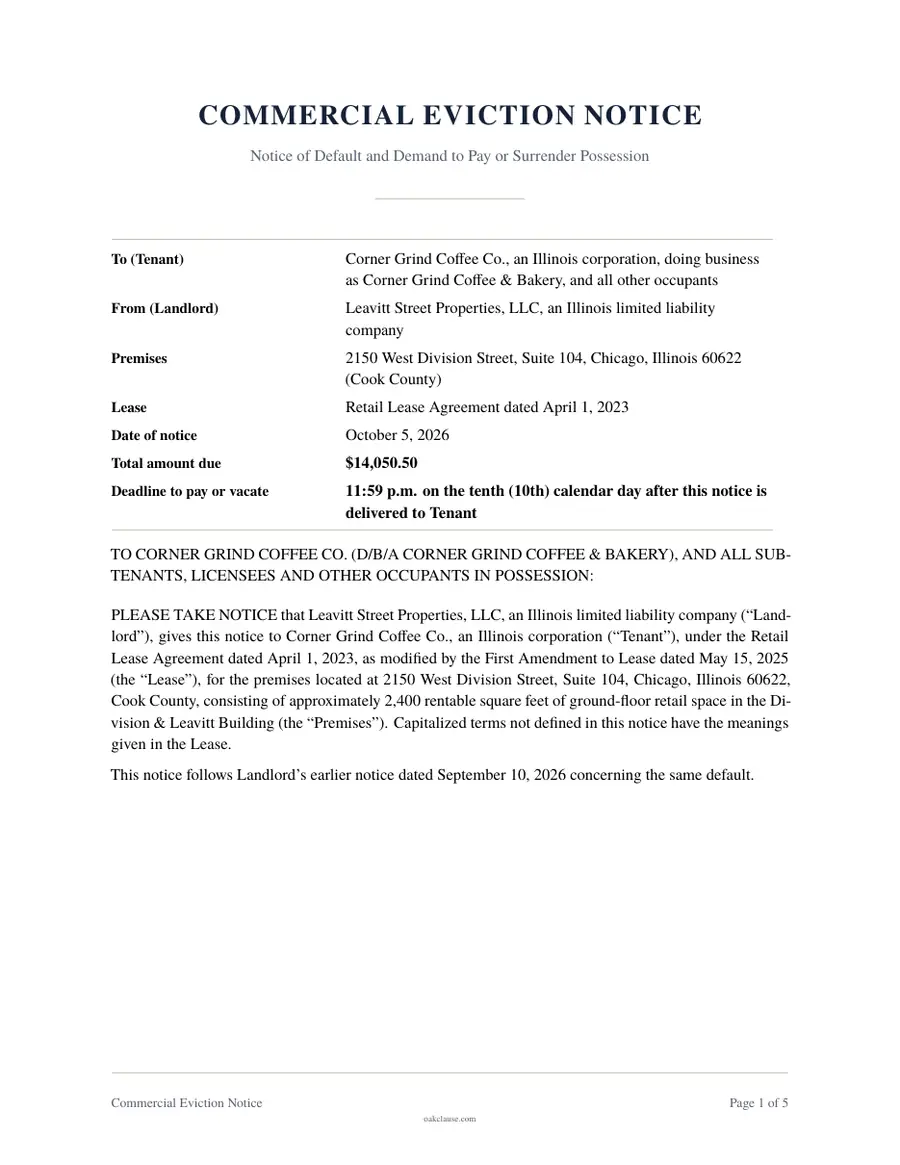
A commercial eviction notice is the written notice a landlord of office, retail, industrial or other business space gives a tenant that has defaulted under its lease. Depending on the situation it may be called a notice of default, a notice to pay or quit, a notice to cure or quit, a notice of lease termination or a notice to vacate. It identifies the lease and the premises, describes the default, states what the tenant must do to cure it, and sets the date by which the tenant must comply or give up possession.
Commercial leases usually contain their own default and notice provisions, and those provisions matter as much as state law. A lease may require a specific cure period, delivery to a particular notice address, copies to a lender or an attorney, or notice to a guarantor. A notice that skips a step the lease requires can delay recovery of the space or weaken the landlord's position in court.
Serving this notice does not remove the tenant from the property. If the tenant does not cure or leave, the landlord generally must file an eviction or possession action, and only a court order carried out by a sheriff, marshal or similar officer can force the tenant out. Some states permit limited self-help against commercial tenants, but the rules are narrow and vary widely, so this notice relies on the court process.
When to use it
- A business tenant has not paid base rent, common area maintenance charges, taxes or other amounts due under the lease.
- A tenant is breaching a non-monetary lease obligation, such as insurance, permitted use, maintenance or unapproved alterations.
- A default has gone uncured and you are ready to terminate the lease as the lease allows.
- A month-to-month or holdover commercial tenancy needs to end on a set date.
- You need a dated written record of the demand, the cure deadline and how the notice was delivered.
- You want guarantors and other required parties to receive a copy at the same time as the tenant.
What is included
- Identification of the landlord, tenant, lease and premises
- Notice type: pay or quit, cure or quit, lease termination or end of tenancy
- Itemized schedule of rent and other charges in default
- Description of non-monetary defaults with the lease sections involved
- Specific cure steps and an extended cure option for complex defaults
- Deadline to cure or surrender possession, subject to state minimums
- Surrender and removal of property instructions
- Reservation of rights, non-waiver and security deposit language
- Copies to guarantors and other notice parties
- Signature block and optional proof of service page
How to make your Commercial Eviction
Answer the questions
Tell us about the parties and the terms you want. Most documents take about 5 to 20 minutes.
Review the preview
Check the draft as you go and change any answer. The document updates instantly.
Download, sign and keep a copy
Download a print-ready PDF, sign it with the other parties, and give everyone a copy.
Commercial Eviction in another state
Back to the general commercial eviction page51 states shown
- ALAlabama
- AKAlaska
- AZArizona
- ARArkansas
- CACalifornia
- COColorado
- CTConnecticut
- DEDelaware
- DCDistrict of Columbia
- FLFlorida
- GAGeorgia
- HIHawaii
- IDIdaho
- ILIllinois
- INIndiana
- IAIowa
- KSKansas
- KYKentucky
- LALouisiana
- MEMaine
- MDMaryland
- MAMassachusetts
- MIMichigan
- MNMinnesota
- MSMississippi
- MOMissouri
- MTMontana
- NENebraska
- NVNevada
- NHNew Hampshire
- NJNew Jersey
- NMNew Mexico
- NYNew York
- NCNorth Carolina
- NDNorth Dakota
- OHOhio
- OKOklahoma
- OROregon
- PAPennsylvania
- RIRhode Island
- SCSouth Carolina
- SDSouth Dakota
- TNTennessee
- TXTexas
- UTUtah
- VTVermont
- VAVirginia
- WAWashington
- WVWest Virginia
- WIWisconsin
- WYWyoming
Frequently asked questions
How is a commercial eviction notice different from a residential one?
Commercial tenants are businesses, and most states give them fewer statutory protections than people renting homes. The lease usually plays a bigger role: it often sets the cure period, the notice address and who must receive copies. Commercial notices also commonly cover charges beyond base rent, such as common area maintenance, taxes and insurance, and address guarantors.
How much time does a commercial tenant get to pay or cure?
It depends on the state and on the lease. Some states set a short statutory period for unpaid rent, while many leases give a longer cure period, especially for non-monetary defaults. A common approach is to use whichever period is longer. This notice lets you enter the deadline and states that it is extended if the law requires more time.
Can I include late fees, CAM charges and taxes in the amount demanded?
Commercial leases often define these items as additional rent, and many states allow them in a commercial pay or quit notice when the lease does. Some states or courts are stricter about what may be demanded. Listing each charge separately, with the lease section that creates it, makes the demand easier to verify and easier to adjust if needed.
Can I change the locks on a commercial tenant?
A few states allow limited lockouts of commercial tenants under specific conditions, while many others prohibit self-help and require a court order. Because the rules are technical and the penalties for getting them wrong can be significant, this notice states that the landlord will pursue possession through the courts. An attorney can explain whether any other option exists where your property is located.
Do I need to send a copy to the guarantor?
Many guaranties and leases require the landlord to notify the guarantor of a tenant default, and doing so helps preserve claims against the guarantor. Even when it is not required, sending a copy keeps everyone informed. This notice lets you list each guarantor and any other party the lease says must receive copies.
What if the default cannot be fixed within the deadline?
Some defaults, like major repairs or obtaining a permit, take longer than a short cure period. Many commercial leases allow the tenant extra time if it starts the cure promptly and keeps working on it diligently. You can turn on that option, and the notice will explain the requirement to begin the cure and complete it within a reasonable time.
Does accepting rent after serving the notice cancel it?
It can. In some states, accepting rent after a notice of default or termination may waive the default or reinstate the lease unless the landlord clearly reserves its rights. This notice includes a reservation of rights, but the effect of accepting money depends on state law and the lease, so it is worth checking before accepting any payment.
What happens to the tenant's equipment and inventory if it leaves?
The lease and state law control what happens to property left behind, including any landlord lien or abandonment procedure. This notice reminds the tenant to remove its property and restore the premises as the lease requires, and states that anything left behind will be handled as the lease and state law allow.
More Tennessee documents
Other documents people prepare for Tennessee, each with the state’s rules where we have checked them.
All Tennessee documents and rules