Customer Complaint Letter
Explain what went wrong with a purchase, ask for a clear fix and set a reply date, all in a calm, organized letter that creates a paper trail.
Includes 30 days of edits
- 5 to 20 minutes
- Print-ready PDF
What is a Customer Complaint Letter?
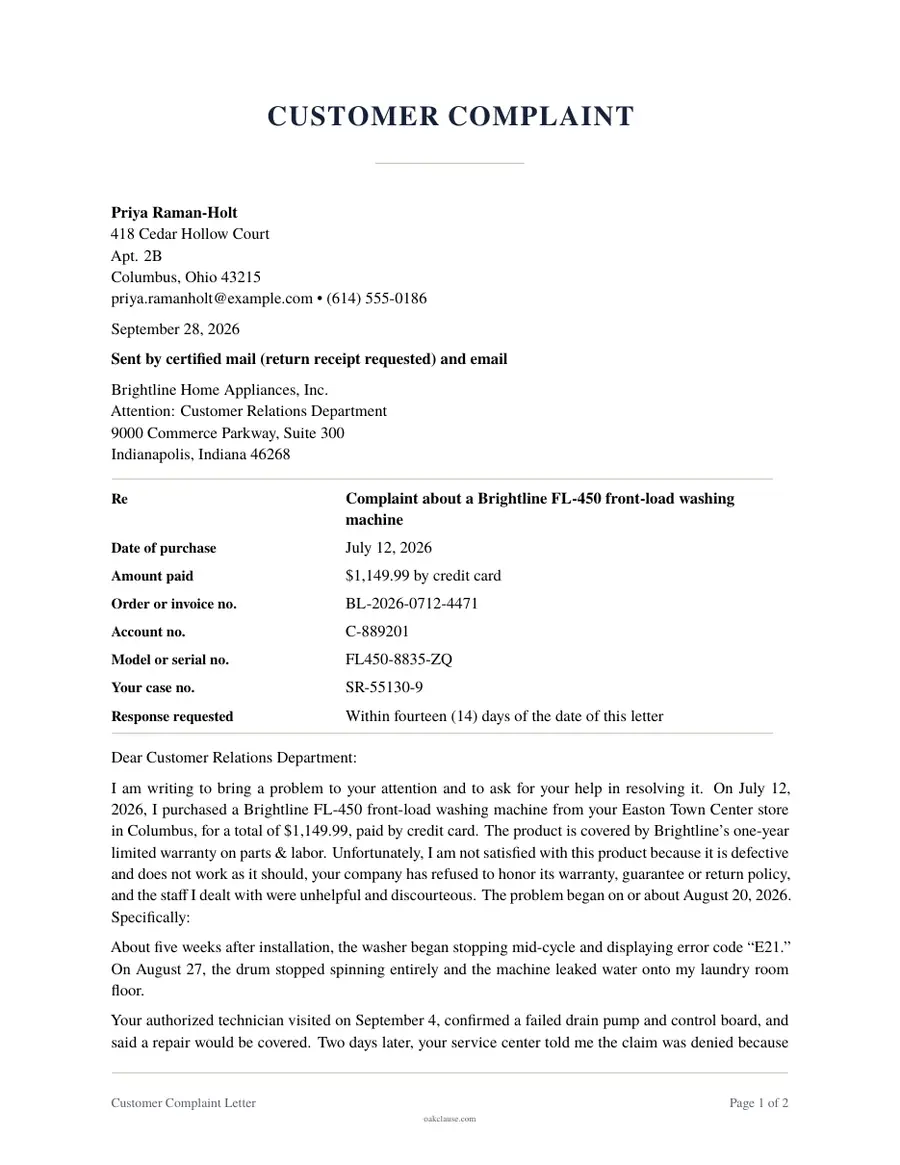
A customer complaint letter is a written message from a consumer to a business describing a problem with a product or service and asking the business to make it right. It identifies the purchase, explains the problem in factual terms, lists any earlier attempts to resolve it and states the specific remedy the customer wants, such as a refund, replacement or repair.
Putting a complaint in writing tends to get better results than a phone call alone. It gives the company everything it needs to look up the transaction, it reaches someone with authority to resolve the issue, and it shows that you are organized and serious. A reasonable deadline for a response keeps the matter from drifting.
The letter also becomes evidence. If the business does not respond, a dated letter with copies of receipts and earlier correspondence is useful when you dispute a card charge, file a complaint with your state attorney general or a consumer protection agency, or bring a claim in small claims court.
When to use it
- A product arrived damaged, stopped working or is not what was advertised.
- A contractor, repair shop or service provider did poor or unfinished work.
- You were billed incorrectly, charged twice or charged for something you canceled.
- A company refused to honor a warranty, guarantee or return policy.
- Phone calls and chat conversations with customer service have not solved the problem.
What is included
- Your contact details and the company's address
- Subject line with order, account and serial numbers
- Purchase details, including date, place, price and payment method
- Clear, factual description of the problem
- Warranty or guarantee information
- Timeline of earlier contacts with the company
- The specific remedy you are requesting
- Response deadline and the next steps you may take
- List of enclosed supporting documents
How to make your Complaint Letter
Answer the questions
Tell us about the parties and the terms you want. Most documents take about 5 to 20 minutes.
Review the preview
Check the draft as you go and change any answer. The document updates instantly.
Download, sign and keep a copy
Download a print-ready PDF, sign it with the other parties, and give everyone a copy.
Frequently asked questions
Who should I send a complaint letter to?
Send it to the company's customer relations or consumer affairs department, or to a specific manager if you know one. Many companies list a complaints address on their website, receipt or warranty card. For serious problems, some people also send a copy to the head office or chief executive.
How should I send the letter?
Email or an online complaint form is fast, but mailing a printed copy by certified mail with a return receipt gives you proof of delivery. Many people do both. Keep a copy of the letter and everything you enclose.
Should I send original receipts?
No. Send copies of receipts, invoices, photos and earlier emails, and keep the originals in a safe place. You may need them later for a card dispute, an agency complaint or small claims court.
How long should I give the company to respond?
A deadline of around two weeks is common for most consumer complaints, though you can choose a shorter or longer period depending on the urgency. The letter lets you set the number of days or a specific date.
What if the company ignores my letter?
You may be able to dispute the charge with your credit card issuer, file a complaint with your state attorney general's consumer protection office or the Better Business Bureau, or file a claim in small claims court. Rules and deadlines for card disputes and lawsuits vary, so act promptly.
Is a complaint letter the same as a demand letter?
Not quite. A complaint letter is usually the first, cooperative step that asks the company to fix a problem. A demand letter is a firmer, more formal notice, often sent later, that demands a specific payment or action and warns of legal action if it is not received.
How do I keep the letter effective?
Stick to the facts, stay polite and be specific about what you want. Include order numbers, dates and amounts so the company can find your transaction quickly, and avoid insults or exaggeration, which make a letter easier to dismiss.
Can I use this letter for a service rather than a product?
Yes. The letter works for services such as home repairs, travel, internet or phone service, auto repair and subscriptions. You can describe the service, when it was performed and what went wrong.