Personal Care Profile
Give every caregiver the full picture of a person's health, routines and preferences on a few clear pages.
Includes 30 days of edits
- 5 to 20 minutes
- Print-ready PDF
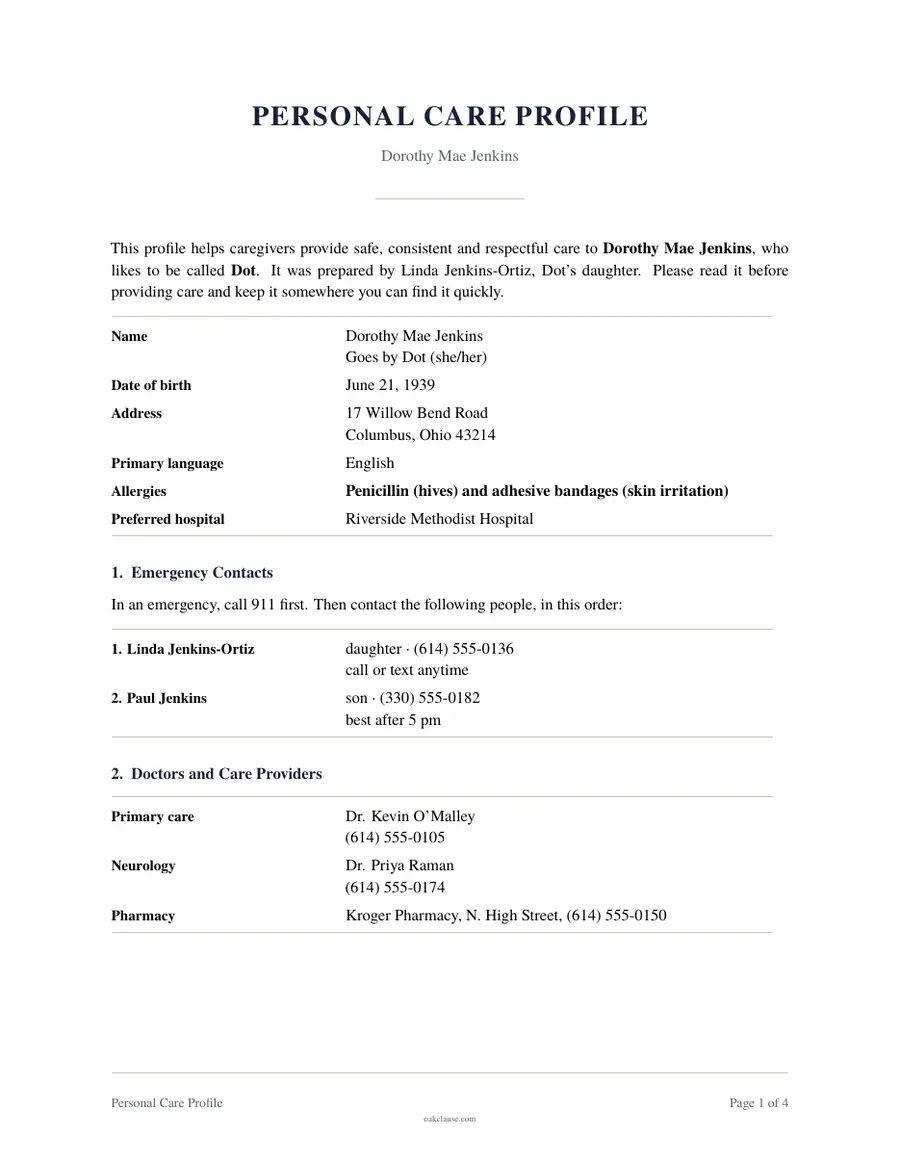
What is a Personal Care Profile?
A personal care profile is a practical reference sheet that tells caregivers how to look after someone well. It gathers emergency contacts, doctors, medical conditions, medications and allergies in one place, along with the everyday details that are easy to overlook: when the person likes to wake up, how they take their coffee, what helps them calm down, and how much help they need with bathing, dressing or getting around.
Profiles are especially useful when care is shared among family members, home health aides, respite workers or a new care facility, or when a family caring for a child or adult with special needs relies on others for support. Instead of repeating the same information to every new helper, you hand them a document that lets them provide consistent, respectful care from the first day.
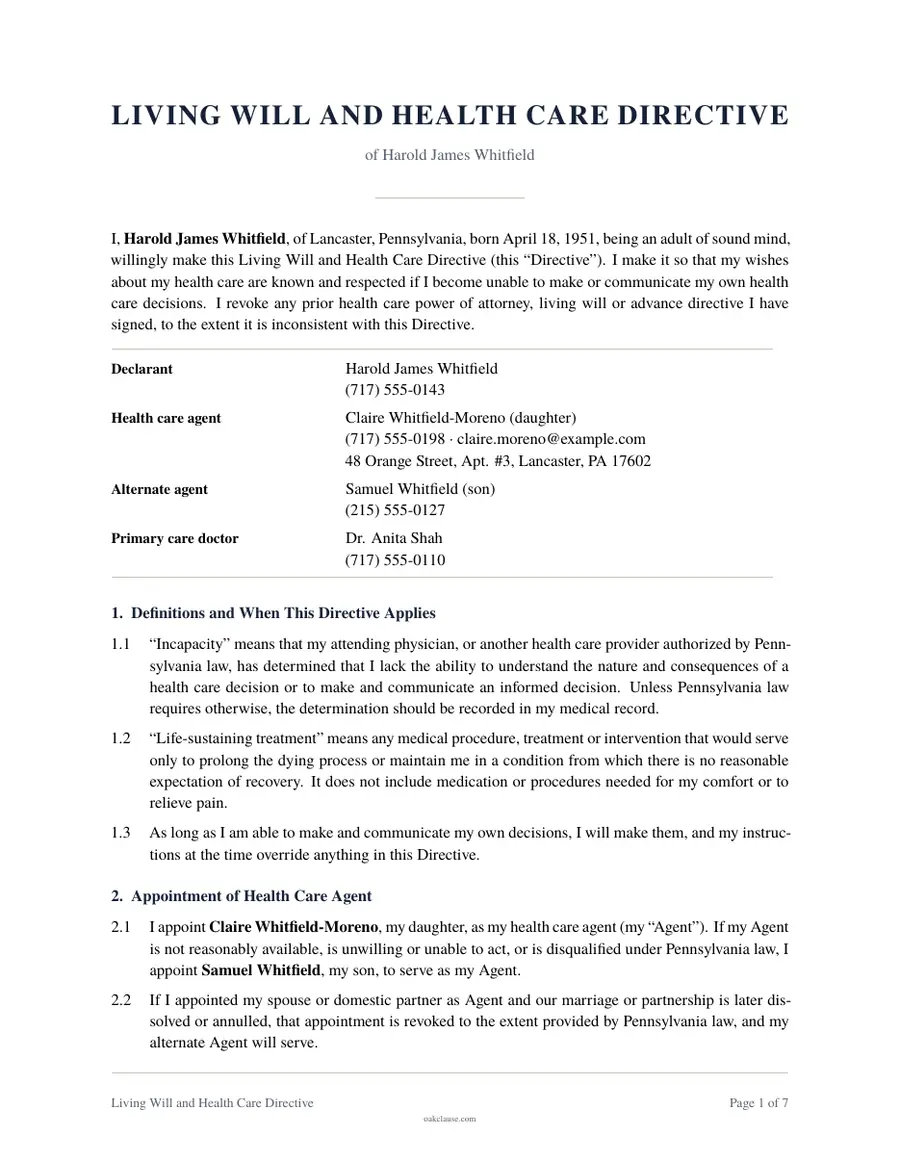
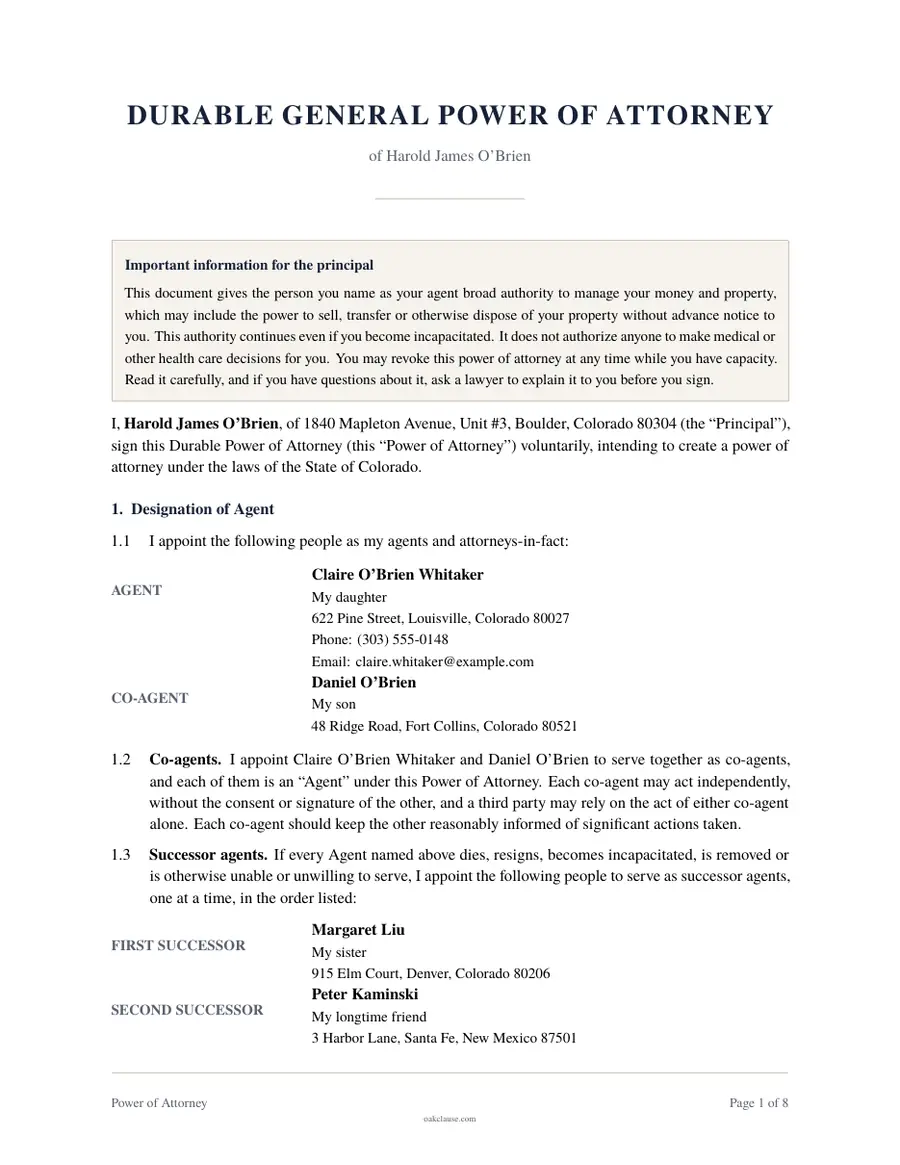
A personal care profile is not a legal authorization. It does not give anyone the right to make medical or financial decisions. It works best alongside documents that do, such as a health care directive, a power of attorney or a guardianship order, and the profile can tell caregivers where those documents are kept.
When to use it
- A new home care aide, sitter or respite caregiver is starting to help.
- An aging parent is moving into assisted living or a nursing home.
- You care for a child or adult with disabilities and need a handover sheet for others.
- Several relatives share caregiving and need the same up-to-date information.
- You want your own preferences known in case you need care after surgery or an illness.
What is included
- Personal details, language and communication needs
- Emergency contacts, health care agent and doctors
- Medical conditions, allergies and insurance details
- Medication list with doses and schedules
- Daily routine from morning to bedtime
- Mobility, personal care and fall-risk information
- Diet, food preferences and eating assistance
- Likes, dislikes, triggers and calming strategies
- Location of legal documents such as directives and powers of attorney
How to make your Personal Care Profile
Answer the questions
Tell us about the parties and the terms you want. Most documents take about 5 to 20 minutes.
Review the preview
Check the draft as you go and change any answer. The document updates instantly.
Download, sign and keep a copy
Download a print-ready PDF, sign it with the other parties, and give everyone a copy.
Frequently asked questions
Is a personal care profile a legal document?
No. It is an information document for caregivers. It does not authorize anyone to make decisions or access records. For that, people typically use a health care directive, a power of attorney, a HIPAA authorization or a court order. The profile can point caregivers to those documents.
Who should fill out the profile?
Ideally the person receiving care, in their own words. When that is not possible, a family member, guardian or trusted caregiver who knows them well can prepare it, and the form records who prepared it.
Who should get a copy?
Give copies to anyone who provides regular care, such as family helpers, home health aides, day programs or facility staff. Keep one in an easy-to-find spot at home, for example on the refrigerator or in a care binder, so it is available in an emergency.
How often should it be updated?
Update it whenever medications, doctors, health conditions or care needs change, and review it at least every few months. Put the date on each version and collect old copies so nobody relies on outdated information.
Should I include medications and dosages?
Yes, a current medication list is one of the most useful parts of the profile, especially in an emergency. Always follow the instructions on the prescription label and from the prescribing doctor if they differ from the profile, and update the list whenever a medication changes.
Can I use this for a child with special needs?
Yes. The same sections work well for children, covering routines, communication, sensory needs, calming strategies and medical information. It can be shared with babysitters, schools, camps and respite providers.
Is it safe to write down sensitive health information?
The profile contains private information, so share it only with people involved in care and store it securely. Consider leaving out details such as full Social Security or account numbers, which caregivers rarely need.