End-of-Life Plan
Tell your loved ones exactly how you want to be remembered, from burial or cremation to the music at your service.
Includes 30 days of edits
- 5 to 20 minutes
- Print-ready PDF
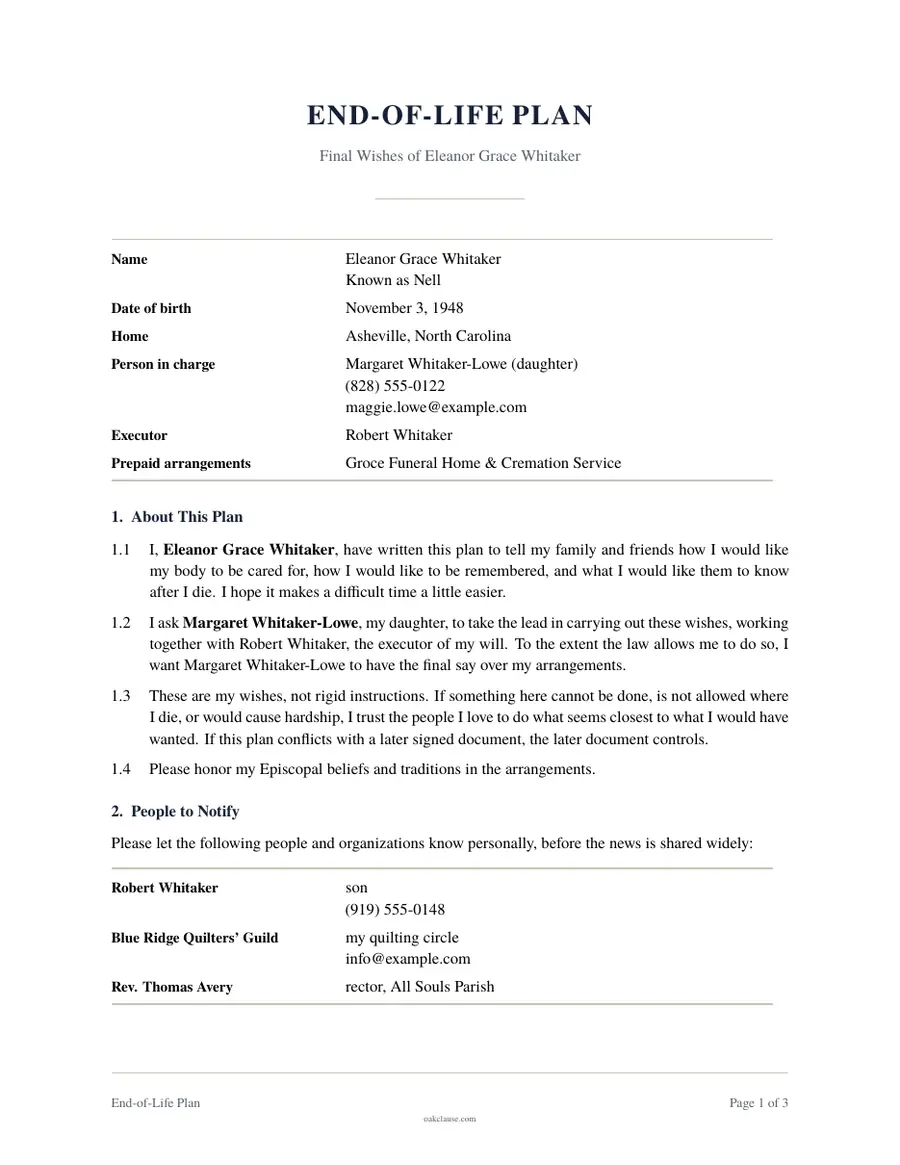
What is an End-of-Life Plan?
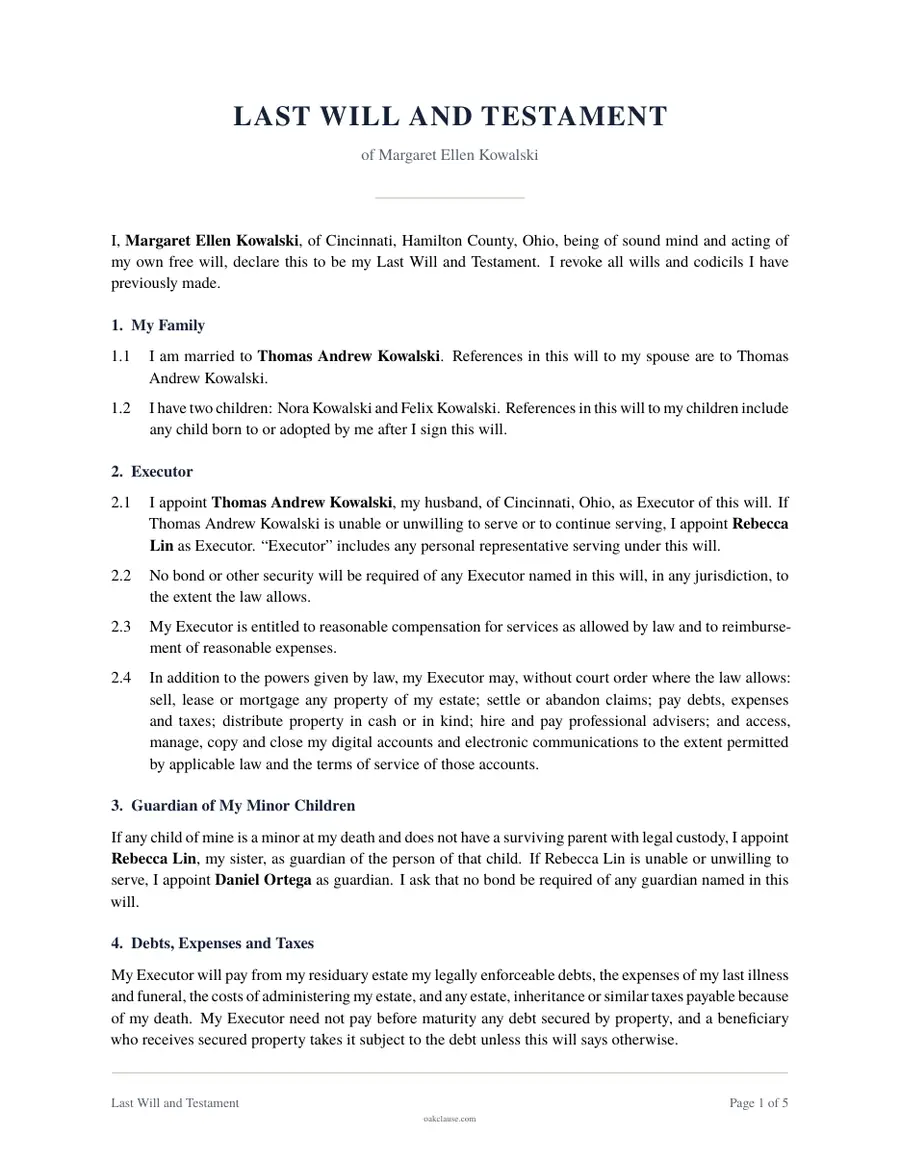
An end-of-life plan, sometimes called a funeral plan or final wishes document, is a written guide for the people who will handle arrangements after you die. It records your choices about burial, cremation or body donation, the kind of service you want, who should be told, what your obituary should say, and any personal messages you want to leave behind.
Families often have to make dozens of decisions within days of a death, while grieving and sometimes without knowing what their loved one wanted. A written plan removes the guesswork, reduces the chance of disagreements, and can help avoid overspending on arrangements you would not have wanted. It also gives you a chance to share what matters most to you.
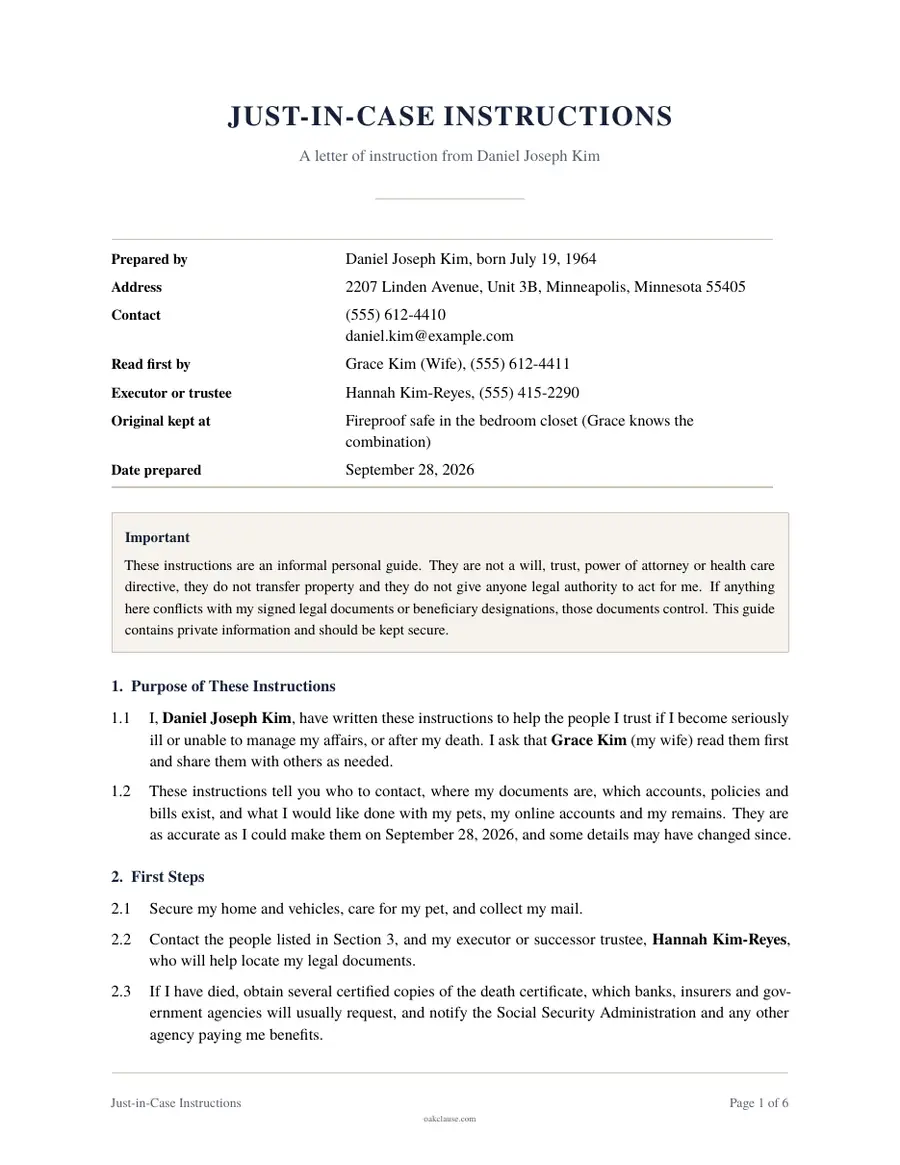
This plan is a statement of your wishes rather than a contract. Your will is often not read until after the funeral, so funeral wishes are best kept in a separate document like this one that your family can find right away. It also notes where your important papers are kept and whether you have prepaid arrangements.
When to use it
- You want your family to know whether you prefer burial, cremation or another option.
- You have specific wishes about your funeral, memorial or celebration of life.
- You have prepaid funeral arrangements or a cemetery plot and want your family to know about them.
- You are facing a serious illness or getting older and want to ease the burden on loved ones.
- You want to leave personal messages or an obituary in your own words.
What is included
- The person in charge of carrying out your wishes
- People and organizations to notify
- Burial, cremation, green burial or body donation choices
- Funeral, memorial or celebration of life details
- Music, readings, speakers and flowers or donations
- Military or fraternal honors
- Obituary details and an epitaph
- Prepaid arrangements, budget and the location of important documents
- Personal messages to loved ones
How to make your End-of-Life Plan
Answer the questions
Tell us about the parties and the terms you want. Most documents take about 5 to 20 minutes.
Review the preview
Check the draft as you go and change any answer. The document updates instantly.
Download, sign and keep a copy
Download a print-ready PDF, sign it with the other parties, and give everyone a copy.
Frequently asked questions
Is an end-of-life plan legally binding?
Generally, no. It is a written statement of your wishes that guides your family and the person handling your arrangements. In many states, the right to control the disposition of remains belongs to a specific person or follows an order of priority set by law, and some states let you appoint that person in a separate signed document. A clear written plan still carries significant weight with families and funeral providers.
Should I put funeral wishes in my will?
You can, but a will is often located and read only after the funeral has already taken place. Keeping your wishes in a separate document that your family can find quickly is usually more practical. Make sure your plan and your will do not contradict each other.
Who should I choose to carry out my wishes?
Many people choose their executor, spouse or a close adult child. Pick someone who is likely to be available, who knows you well and who will respect your choices even if others disagree. Tell that person about the plan and where to find it.
Where should I keep my end-of-life plan?
Keep it somewhere your family can reach immediately, not only in a safe deposit box that may be hard to open after your death. Give copies to the person in charge, your executor and anyone else who will help with arrangements.
Can I donate my body to science?
Yes. Many medical schools and research programs accept whole-body donations, but most require you to register in advance, and they may decline a donation depending on the circumstances at death. If you choose this option, include the program name and keep your registration paperwork with your plan.
What if I have already prepaid for a funeral?
Record the funeral home, the type of contract and where the paperwork is kept. Your family may not know about a prepaid plan unless you tell them, and that can lead to paying twice. Check periodically that the provider is still in business and the plan still fits your wishes.
How often should I update my plan?
Review it every few years and after major life events such as a move, a marriage, a divorce, or a change in religious beliefs or finances. Date the new version and give updated copies to everyone who had the old one.