Just-in-Case Instructions
Give the people you trust a clear guide to your documents, accounts, bills, digital life and wishes, so they are not left searching if something happens to you.
Includes 30 days of edits
- 5 to 20 minutes
- Print-ready PDF
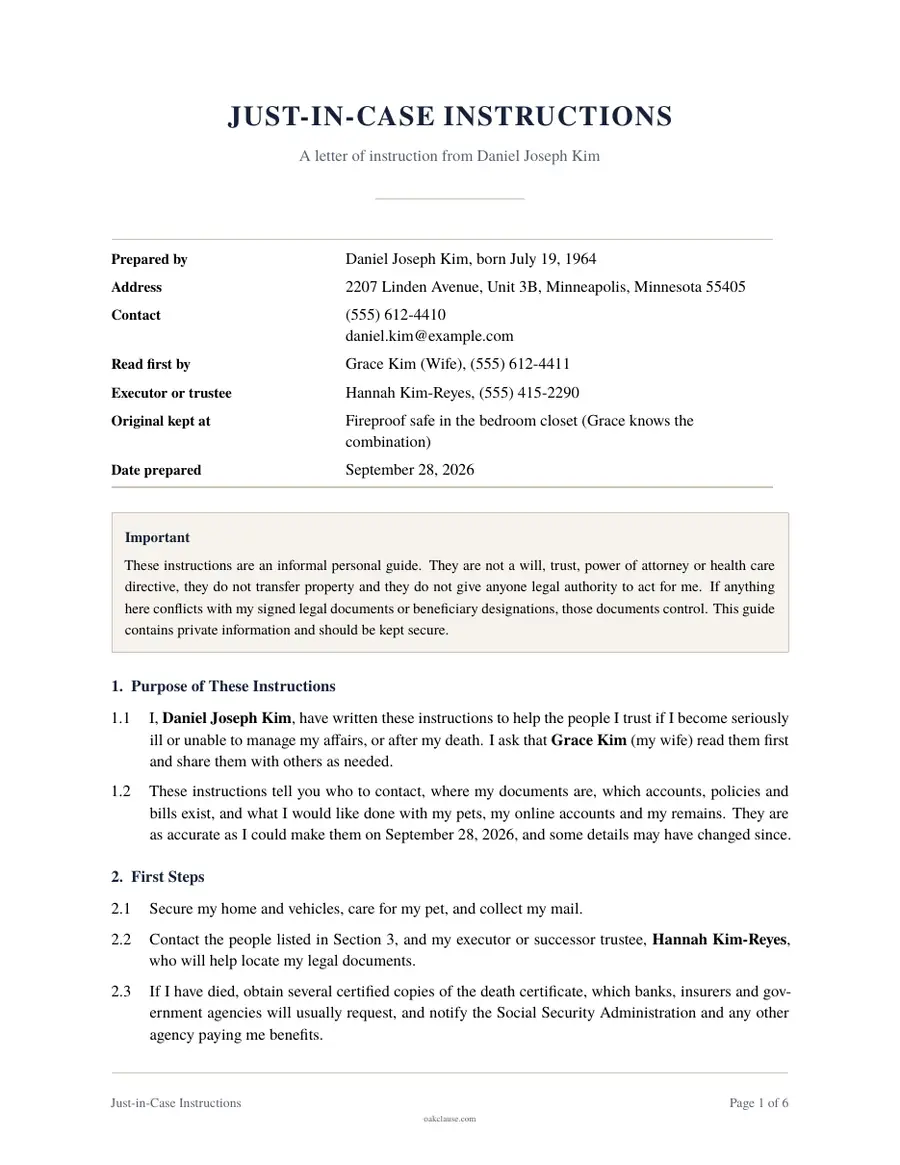
What is a Just-in-Case Instructions?
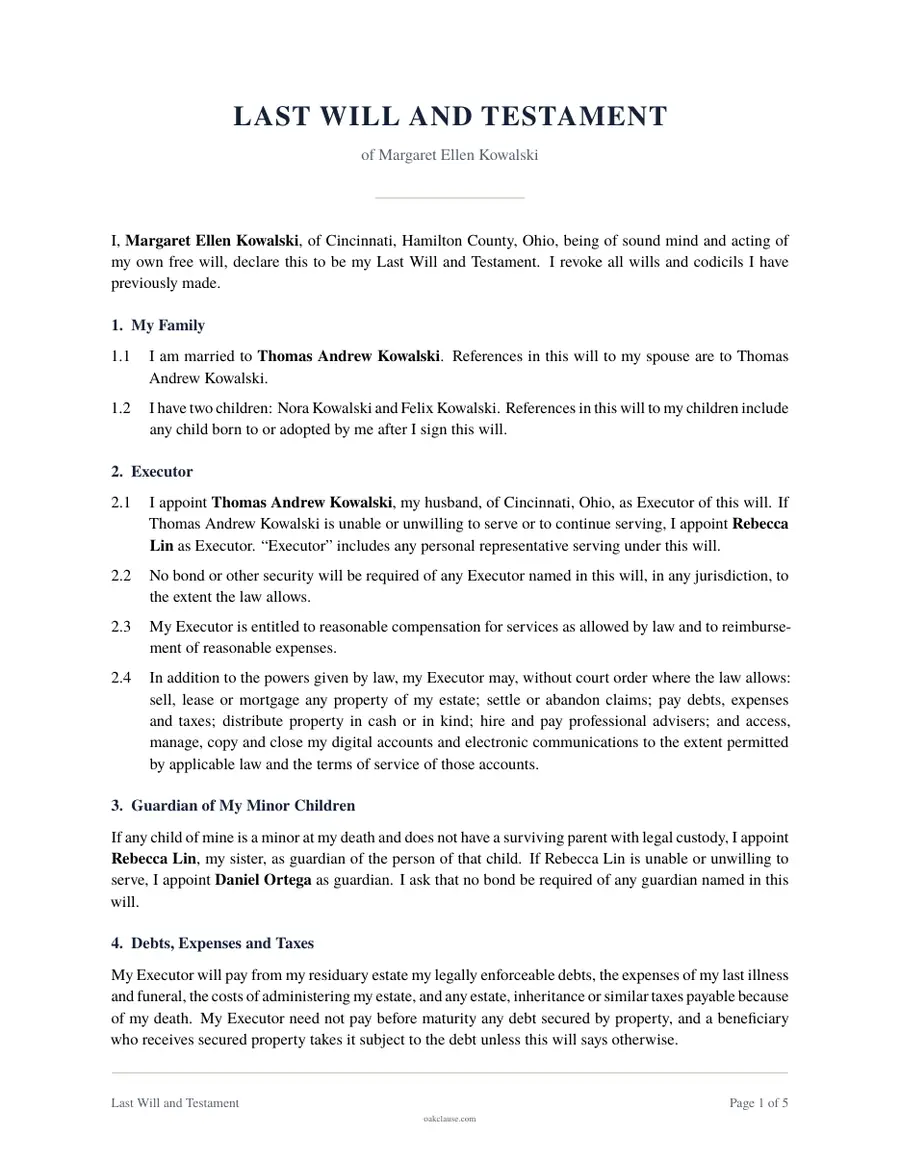
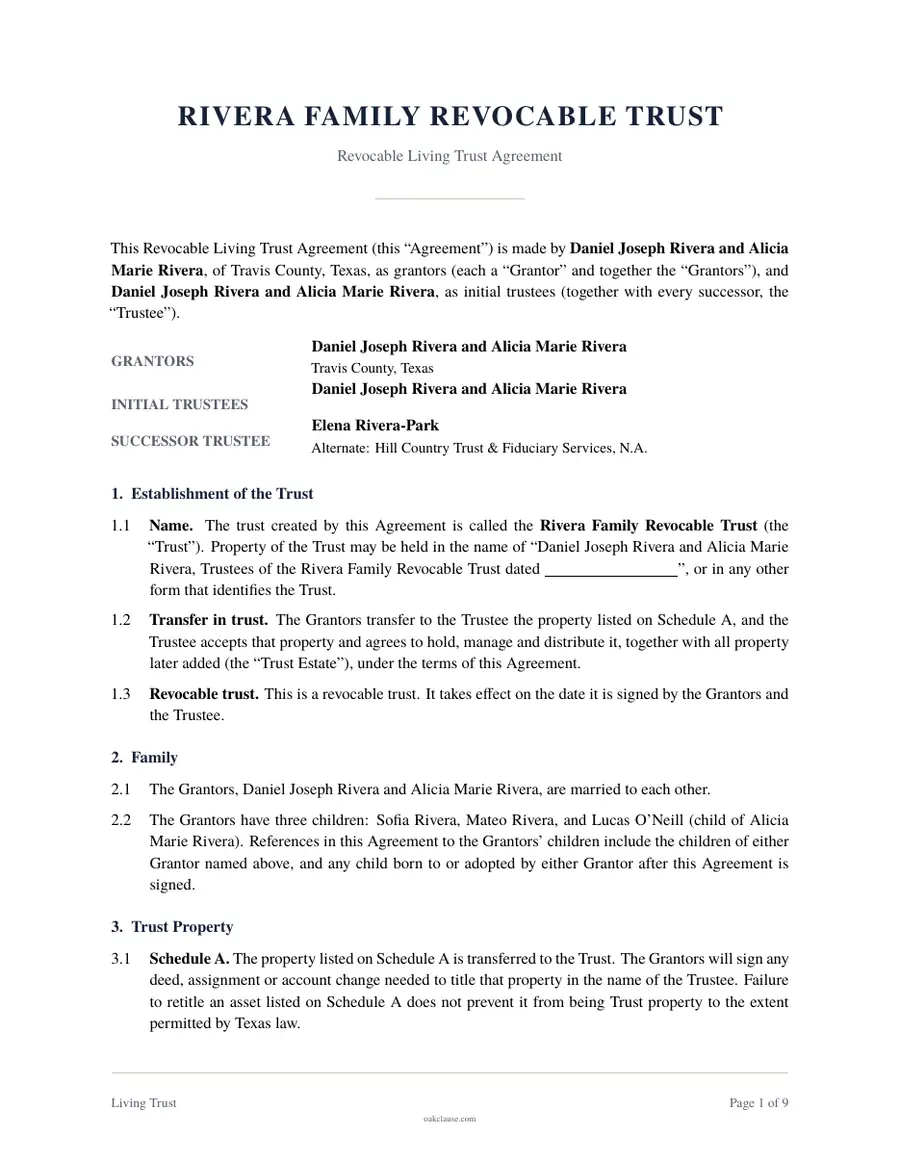
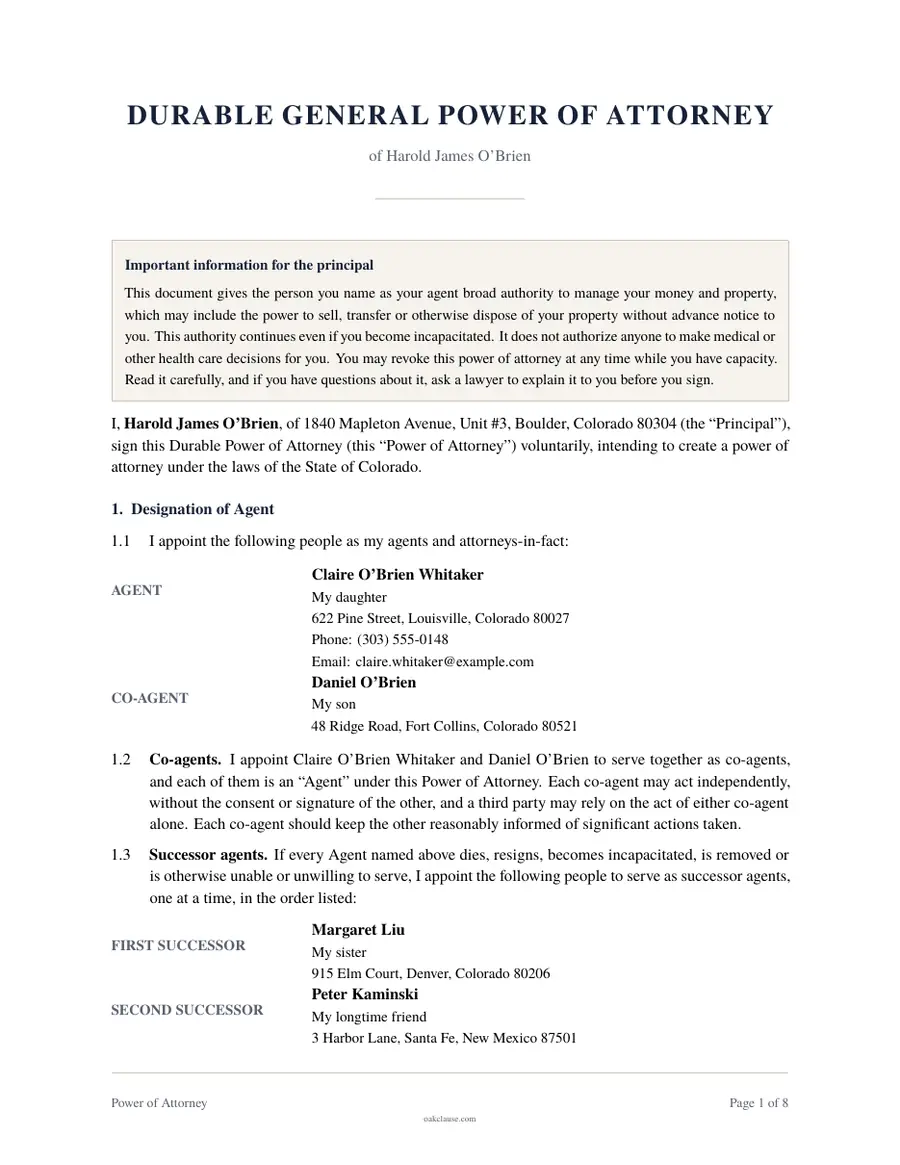
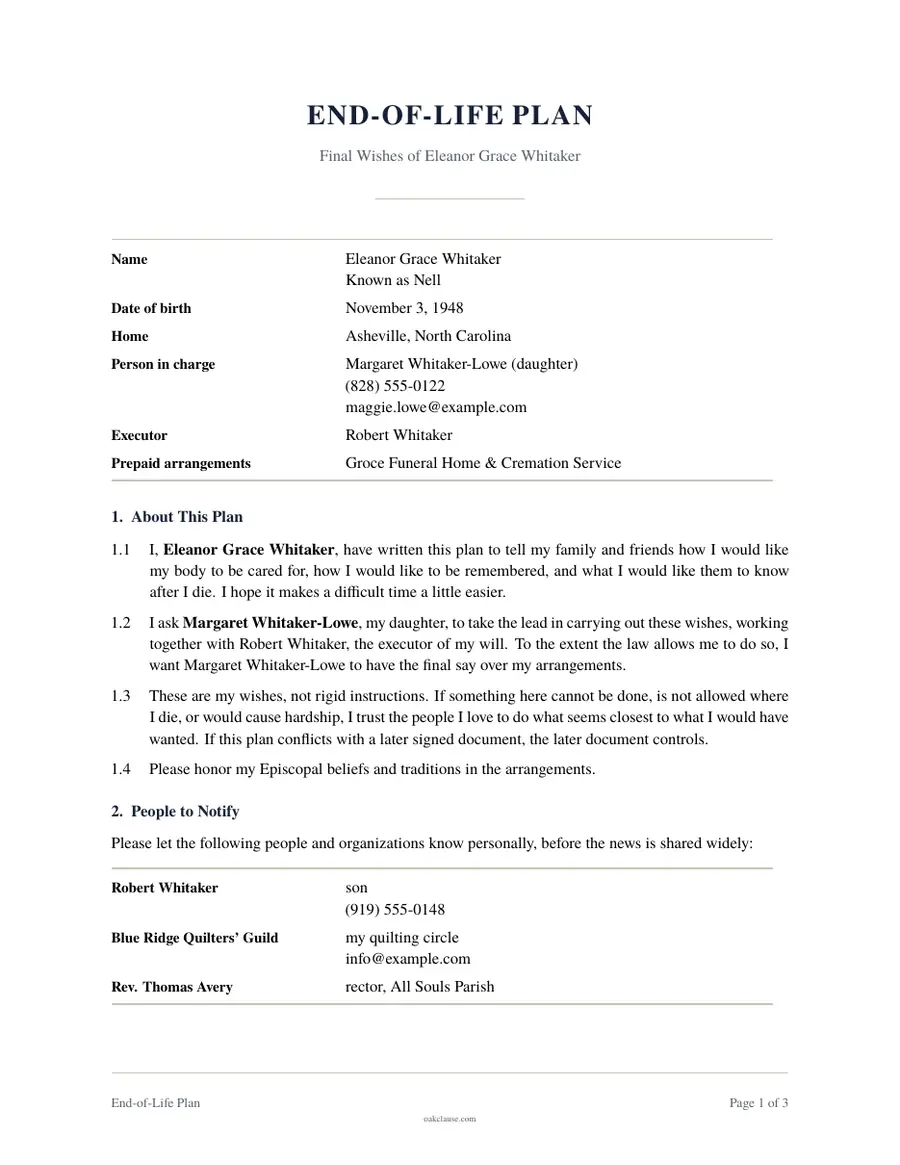
Just-in-case instructions, often called a letter of instruction, are a personal guide for the people who would step in if you became seriously ill, were incapacitated or died. They explain who to call first, where your will and other important papers are kept, which accounts and insurance policies exist, which bills need paying, and how you would like your pets, digital accounts and funeral handled.
Families often spend weeks or months piecing this information together from mail, statements and old emails. A single organized guide saves time, reduces stress and lowers the risk that an account, policy or benefit is overlooked. It also gives you a place to share personal messages and practical wishes that do not belong in a will.
This document is informal and is not a substitute for a will, trust, power of attorney or health care directive. It does not transfer property or appoint anyone with legal authority, and if it conflicts with a legal document, the legal document controls. For security, it records where information can be found and only the last digits of account numbers, never passwords or full account numbers.
When to use it
- You have made a will or trust and want your executor to find everything quickly.
- You manage most of the household finances and want your spouse, partner or children to be able to take over.
- You live alone or far from family and want someone to know who to contact and where things are.
- You are facing surgery, a serious diagnosis, military deployment or extended travel.
- You have pets, digital accounts or funeral wishes you want to make known in writing.
What is included
- First steps and people to notify
- Executor, attorney and other advisors
- Locations of legal and personal documents
- Bank, retirement, investment and credit accounts
- Insurance policies and benefits
- Recurring bills, debts and property
- Digital accounts, devices and password access
- Care instructions for dependents and pets
- Funeral, burial and memorial wishes
- Personal messages to loved ones
How to make your Just-in-Case Guide
Answer the questions
Tell us about the parties and the terms you want. Most documents take about 5 to 20 minutes.
Review the preview
Check the draft as you go and change any answer. The document updates instantly.
Download, sign and keep a copy
Download a print-ready PDF, sign it with the other parties, and give everyone a copy.
Frequently asked questions
Is a letter of instruction legally binding?
No. Just-in-case instructions are an informal guide and are generally not enforceable the way a will is. They work alongside your legal documents by explaining where things are and what you would like. If they conflict with your will or trust, the legal document controls.
Should I put passwords in my just-in-case instructions?
It is safer not to. Paper copies can be lost or read by the wrong person. A common approach is to use a password manager with an emergency access feature, or to keep passwords in a sealed envelope in a secure place, and simply note in the instructions where access can be found.
Do I still need a will if I have just-in-case instructions?
Yes. Only a properly signed will, trust or beneficiary designation can control who inherits your property. These instructions help the people carrying out those documents find what they need, but they cannot replace them.
Who should have a copy?
Usually your executor or successor trustee, the person you named as agent under a power of attorney, and a spouse, partner or adult child you trust. Tell them where the original is kept. Because it contains sensitive details, avoid sharing it more widely than necessary.
Where should I store the original?
Somewhere secure that the right people can reach quickly, such as a fireproof home safe or with your attorney. A bank safe deposit box can be difficult for others to open after a death or during incapacity unless someone else has access rights.
How often should I update it?
Review it at least once a year and whenever you open or close an account, change insurance, move, buy property, adopt a pet or change your wishes. Outdated instructions can send loved ones looking for accounts that no longer exist.
Can I include funeral wishes?
Yes, and it is a good place for them, because a will is often not read until after the funeral. Note whether you prefer burial or cremation, any prepaid arrangements, and the kind of service you would like. Some states let you appoint someone with legal authority over funeral decisions through a separate document.
What about my social media and email accounts?
Many online services let you name a legacy contact or set up inactive-account instructions. This document lets you list your main accounts and say whether you want each one memorialized, closed or kept, which helps your loved ones make those requests.