Family Emergency Plan
Put your household's emergency contacts, meeting places, evacuation routes and medical needs on paper, so everyone knows what to do when a disaster strikes.
Includes 30 days of edits
- 5 to 20 minutes
- Print-ready PDF
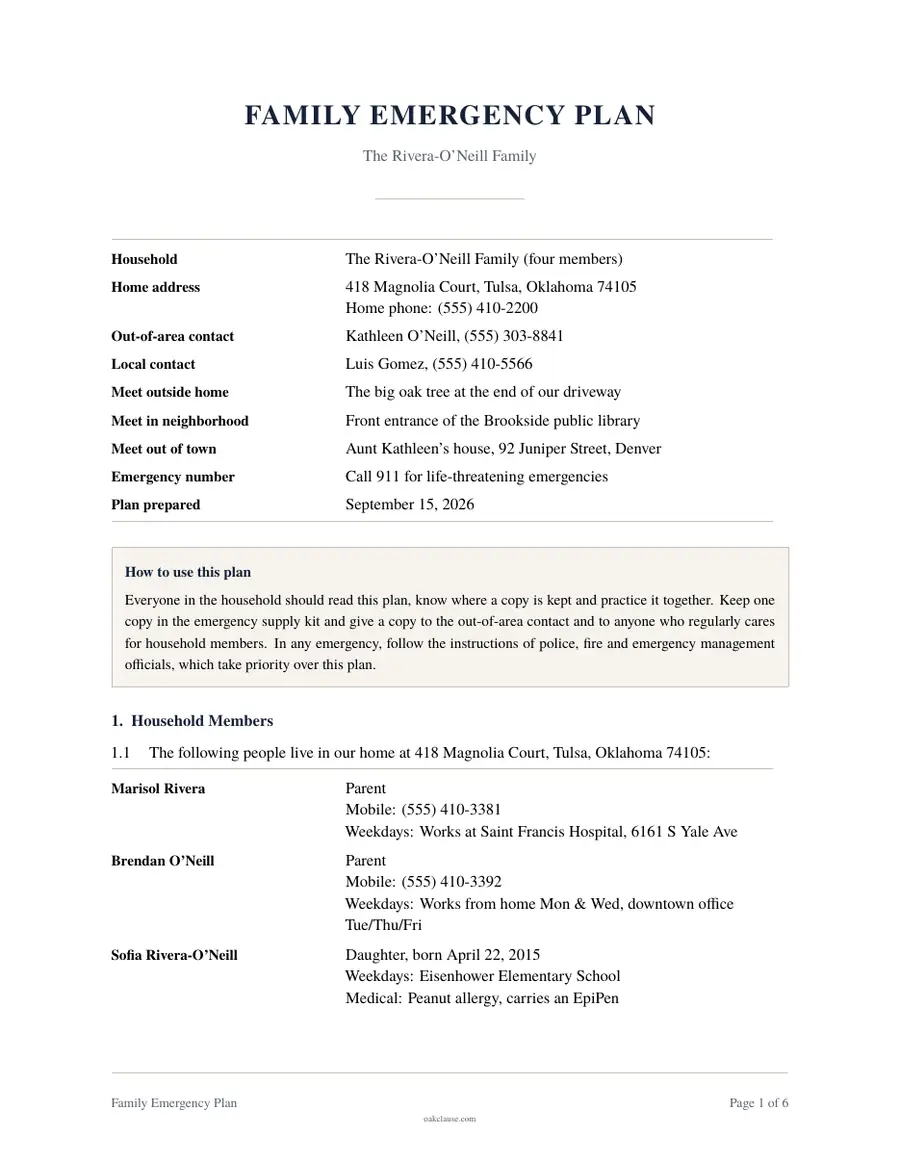
What is a Family Emergency Plan?
A family emergency plan is a written guide that tells everyone in your household how to reach each other, where to meet and what to do if a fire, storm, flood, earthquake or other emergency hits. It gathers the details people struggle to remember under stress, such as an out-of-area contact's phone number, the location of the gas shutoff, or which relative can pick the children up from school.
Phone networks are often overloaded during a disaster and family members may be at work, school or on the road when it happens. A plan agreed on ahead of time means nobody has to guess. Each person knows the first place to go, who to check in with and how the household will reunite.
This plan is a practical household document rather than a contract. It does not need to be notarized or filed anywhere. It covers household members, emergency and out-of-area contacts, meeting places, evacuation and shelter-in-place steps for the hazards common where you live, utility shutoffs, children's schools, medical needs, pets, supplies and a schedule for practicing and updating the plan, with an optional wallet card you can cut out.
When to use it
- You live in an area exposed to hurricanes, tornadoes, wildfires, floods, earthquakes or severe winter weather.
- Your household includes children, older adults or anyone who depends on medication or medical equipment.
- You have just moved, had a baby, taken in a relative or adopted a pet and want to update your arrangements.
- You want caregivers, babysitters or neighbors to know your household's contacts and meeting places.
- Your children's school or your employer has asked families to prepare an emergency plan.
What is included
- Household member list with phones and daily locations
- Out-of-area and local emergency contacts
- Communication and alert plan
- Meeting places inside, near and away from home
- Evacuation destination, routes and transportation
- Shelter-in-place steps for selected hazards
- Utility shutoff and safety equipment locations
- School pickup, medical needs and pet arrangements
- Emergency supply kit and document checklist
- Practice schedule and optional wallet contact card
How to make your Emergency Plan
Answer the questions
Tell us about the parties and the terms you want. Most documents take about 5 to 20 minutes.
Review the preview
Check the draft as you go and change any answer. The document updates instantly.
Download, sign and keep a copy
Download a print-ready PDF, sign it with the other parties, and give everyone a copy.
Frequently asked questions
What is an out-of-area contact and why do I need one?
An out-of-area contact is a friend or relative who lives far enough away that they are unlikely to be affected by the same emergency. After a local disaster, long-distance calls and texts often get through when local lines are jammed, so every household member checks in with that one person, who relays messages.
How many meeting places should a family emergency plan include?
Most preparedness guides suggest at least two: one right outside your home for sudden emergencies like a fire, and one in your neighborhood in case you cannot return home. Many families add a third location outside the area in case the whole neighborhood has to evacuate.
Does a family emergency plan need to be signed or notarized?
No. It is a planning document, not a legal contract, so there are no signing formalities. This template includes optional signature lines so adults in the household can confirm they have reviewed the plan, which some families find helps everyone take it seriously.
Who should get a copy of our emergency plan?
Every household member old enough to use it, your out-of-area contact, and anyone who regularly cares for your children, pets or a dependent relative. Keep a copy in your emergency kit and consider storing a digital copy where you can reach it from your phone.
How often should we review and practice the plan?
Many families review their plan at least once a year and practice fire escape and shelter drills more often. Update it whenever phone numbers, schools, jobs, medications or members of the household change. The plan includes a review schedule you choose.
Should I include medical information in the plan?
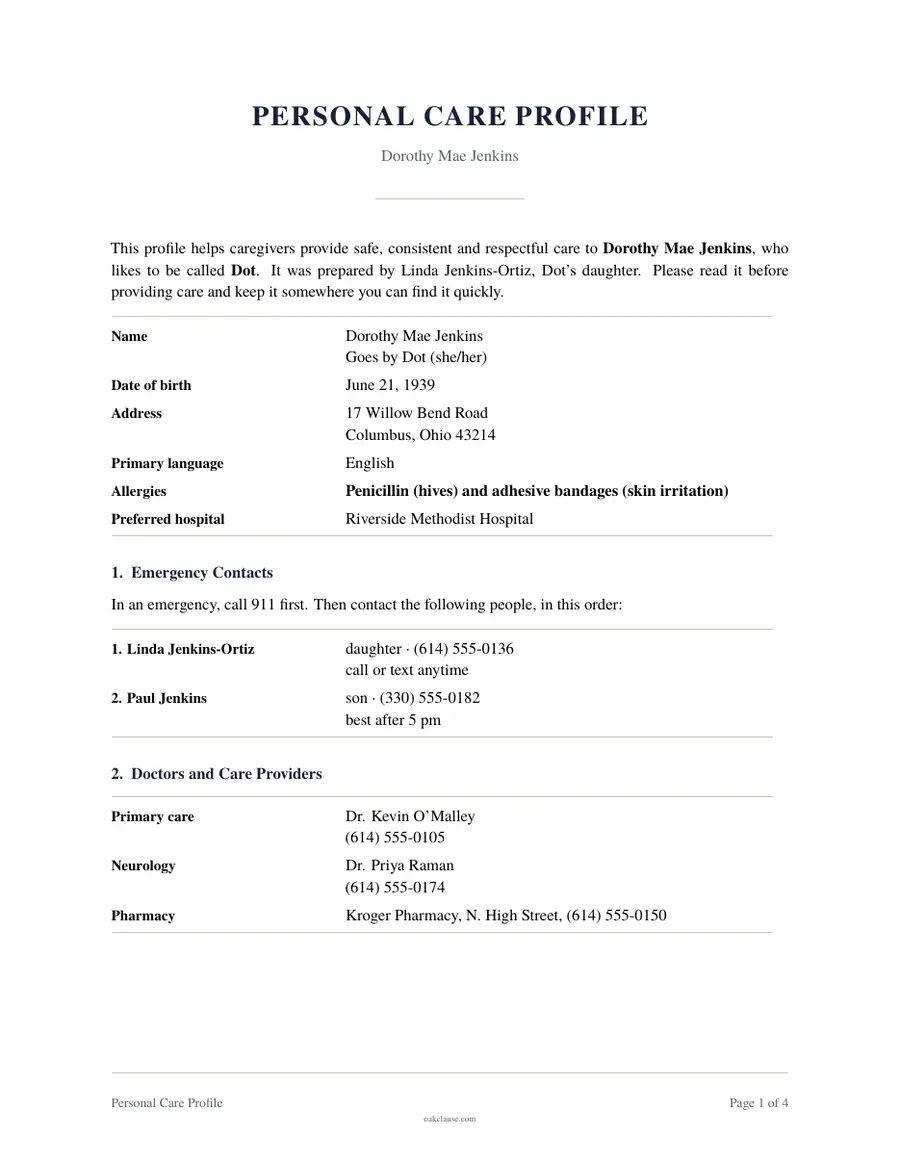
Including key medical needs, such as medications, allergies, equipment and doctors, helps whoever is with a family member during an emergency. Keep it to what responders and caregivers need and store the plan somewhere private, since it contains personal details.
What if we do not have a car to evacuate?
Note in the plan how you would leave, such as riding with a named neighbor or relative or using public transit or community evacuation assistance. Many local emergency management offices keep registries or offer help for residents without transportation, so check what your area provides.
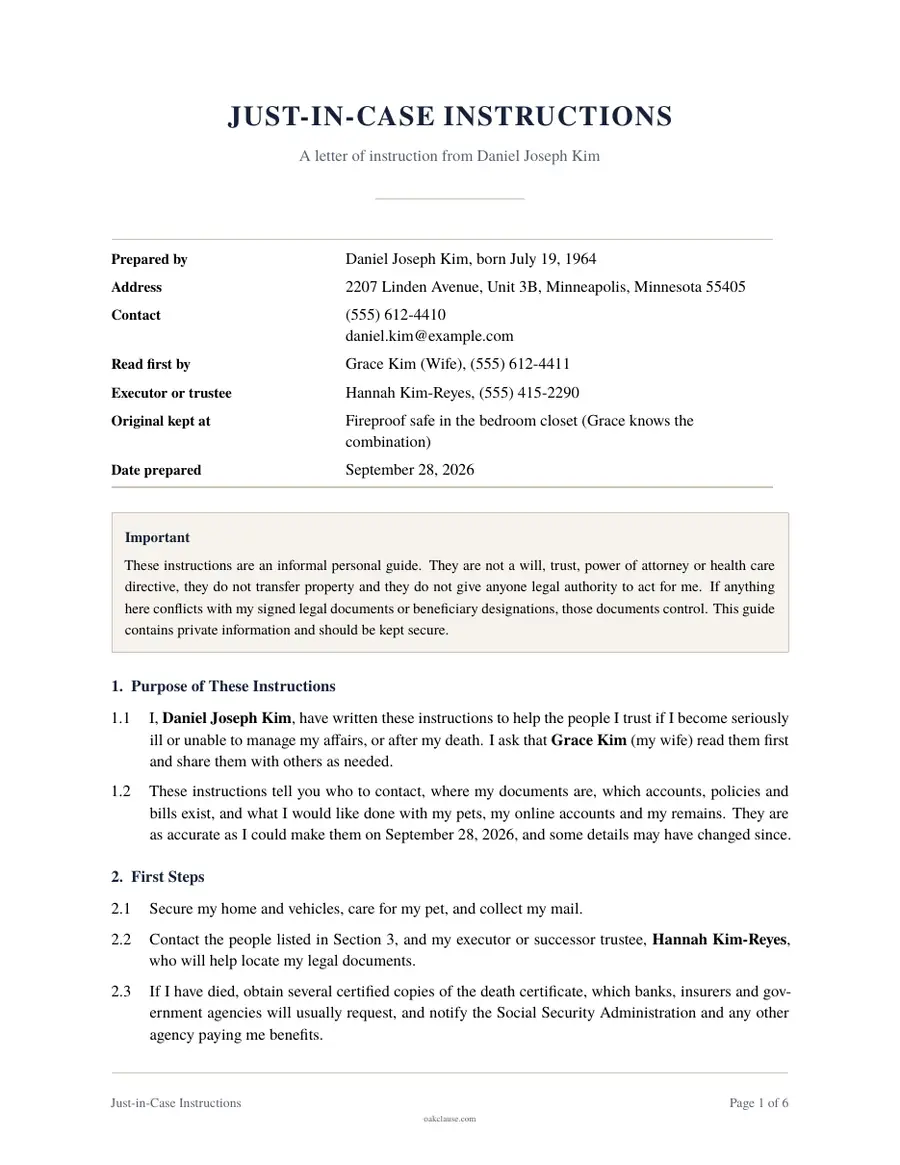
Is this the same as a will or a just-in-case letter?
No. An emergency plan focuses on staying safe and reuniting during a disaster. A will covers who inherits your property, and just-in-case instructions tell loved ones where to find your accounts and documents if you become ill or die. Many households keep all three.