Ohio Release of Liability
Close the book on an accident, damage claim or dispute.
Includes 30 days of edits
- 5 to 20 minutes
- Print-ready PDF
- Tailored to Ohio
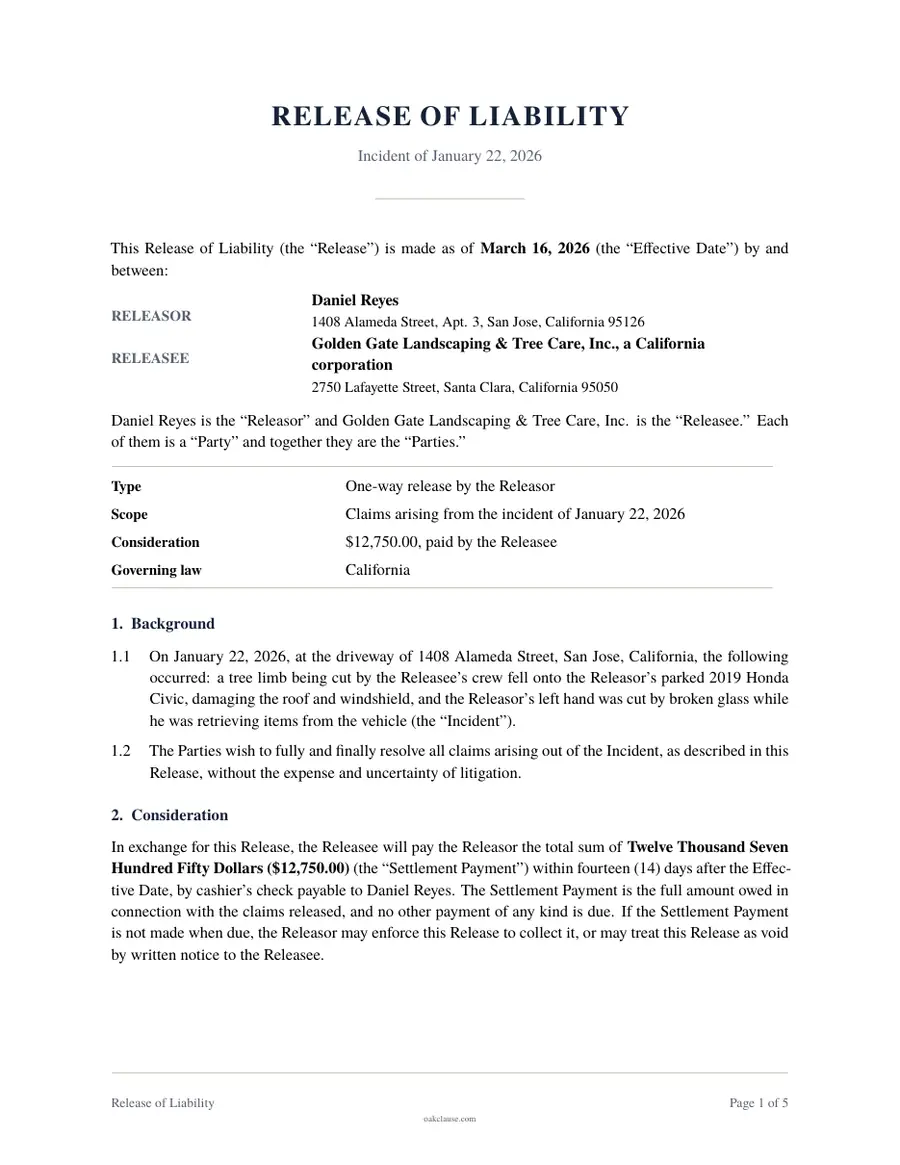
Liability Release rules in Ohio
State law governs whether a release is valid and how far it reaches. States differ on whether a general release covers claims the releasor did not know about when signing, and California and a few other states have statutes under which a general release does not reach unknown claims unless the releasing party clearly waives that protection. This document always includes an express release of unknown claims when you choose it, and adds the specific statutory waiver automatically when you choose California. Some states also restrict releases of certain claims, such as future negligence, workers' compensation or some employment claims, and many give minors' claims special protection that may require court approval. The release applies to the extent permitted by the law of the state you choose.
When you create this document for Ohio, the questionnaire uses Ohio as the governing law and adds wording that defers to Ohio requirements where they apply. Laws change, so confirm current rules with official Ohio sources or a local attorney for anything critical.
What is a Release of Liability?
A release of liability, sometimes called a general release or settlement release, is a contract in which a person or business (the releasor) gives up the right to bring legal claims against another person or business (the releasee). In return, the releasor usually receives something of value, most often a settlement payment.
Releases are typically signed after something has already happened: a car accident, an injury on someone's property, damage to a vehicle or belongings, or a business disagreement. Once signed, the release generally prevents the releasor from suing over the matters it covers, even if the losses later turn out to be larger than expected. That finality is the point of the document, and it is why the description of what is being released matters so much.
A release can be limited to a single incident or written broadly to cover every claim between the parties up to the signing date. It can be one-way or mutual, where both sides release each other. Optional terms cover confidentiality, non-disparagement, the dismissal of a pending lawsuit and responsibility for medical or other liens.
When to use it
- You are paying someone to settle a claim for an injury or property damage and want the matter closed for good.
- You were involved in a minor car accident and agreed to settle directly without going through insurance.
- You and another person or business are resolving a dispute and want both sides to release each other.
- You are accepting a settlement payment and the other side has asked you to put the release in writing.
- A lawsuit is pending and the parties have agreed on terms that include dismissing the case.
What is included
- One-way or mutual release with clearly defined parties
- Release limited to a specific incident or covering all claims to date
- Settlement payment amount, timing and method
- Optional release of unknown claims, with state-specific wording where needed
- Covenant not to sue and no admission of liability
- Responsibility for medical, insurance and other liens
- Optional confidentiality, non-disparagement and dismissal of a pending lawsuit
- Governing law, signature blocks and optional witness and notary sections
How to make your Liability Release
Answer the questions
Tell us about the parties and the terms you want. Most documents take about 5 to 20 minutes.
Review the preview
Check the draft as you go and change any answer. The document updates instantly.
Download, sign and keep a copy
Download a print-ready PDF, sign it with the other parties, and give everyone a copy.
Liability Release in another state
Back to the general liability release page51 states shown
- ALAlabama
- AKAlaska
- AZArizona
- ARArkansas
- CACalifornia
- COColorado
- CTConnecticut
- DEDelaware
- DCDistrict of Columbia
- FLFlorida
- GAGeorgia
- HIHawaii
- IDIdaho
- ILIllinois
- INIndiana
- IAIowa
- KSKansas
- KYKentucky
- LALouisiana
- MEMaine
- MDMaryland
- MAMassachusetts
- MIMichigan
- MNMinnesota
- MSMississippi
- MOMissouri
- MTMontana
- NENebraska
- NVNevada
- NHNew Hampshire
- NJNew Jersey
- NMNew Mexico
- NYNew York
- NCNorth Carolina
- NDNorth Dakota
- OHOhio
- OKOklahoma
- OROregon
- PAPennsylvania
- RIRhode Island
- SCSouth Carolina
- SDSouth Dakota
- TNTennessee
- TXTexas
- UTUtah
- VTVermont
- VAVirginia
- WAWashington
- WVWest Virginia
- WIWisconsin
- WYWyoming
Frequently asked questions
What is a release of liability?
It is a written agreement in which one party gives up its right to sue another party over certain claims, usually in exchange for money or something else of value. After signing, the releasing party generally cannot bring a lawsuit about the matters the release covers.
Is a release of liability the same as a waiver?
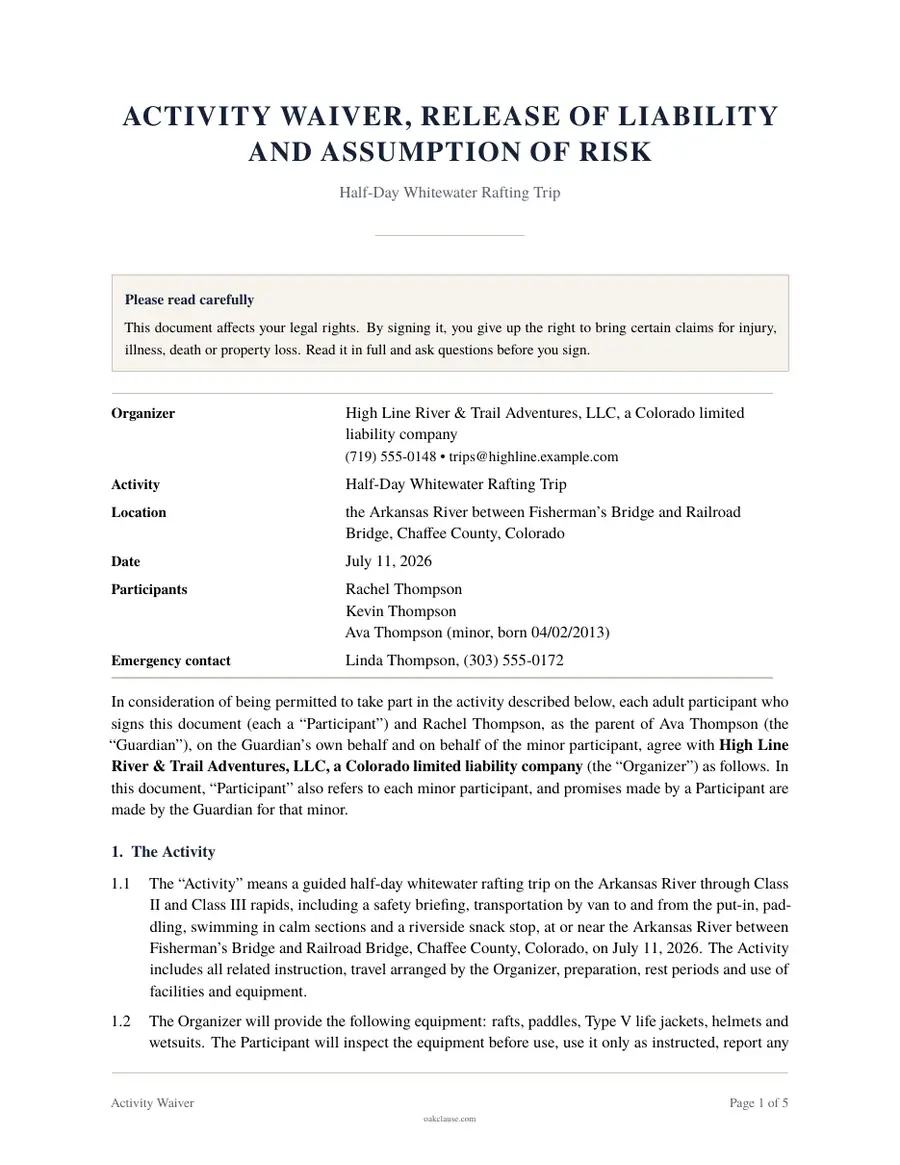
They are closely related. A release usually settles claims that already exist because of something that has already happened. A waiver, such as an activity waiver, is signed before an activity and covers injuries that might happen in the future.
What is the difference between a specific and a general release?
A specific release covers only claims arising from one identified incident, such as a particular accident. A general release covers all claims between the parties up to the date of signing, whatever their source. General releases are broader and more final.
Can I still sue if my injuries turn out to be worse than I thought?
Usually not, if the release covers unknown claims. That is why many people wait until the full extent of an injury or loss is known before signing. If you are unsure, consider talking with an attorney before you sign.
Does signing a release mean the other side admits fault?
No. Settlements are often made to avoid the cost and uncertainty of a dispute, and this release can include a statement that the payment is not an admission of liability by anyone.
Does a release of liability need to be notarized?
Most releases are valid without a notary. A notary acknowledgment or witness signatures can still help prove who signed and that they did so voluntarily, which is useful if the release is ever challenged.
Can a parent sign a release for a child's injury?
Rules for minors are strict. Many states require court approval before a settlement of a minor's injury claim becomes binding. This document is designed for adults and businesses; ask an attorney about settling a minor's claim.
What happens to a lawsuit that has already been filed?
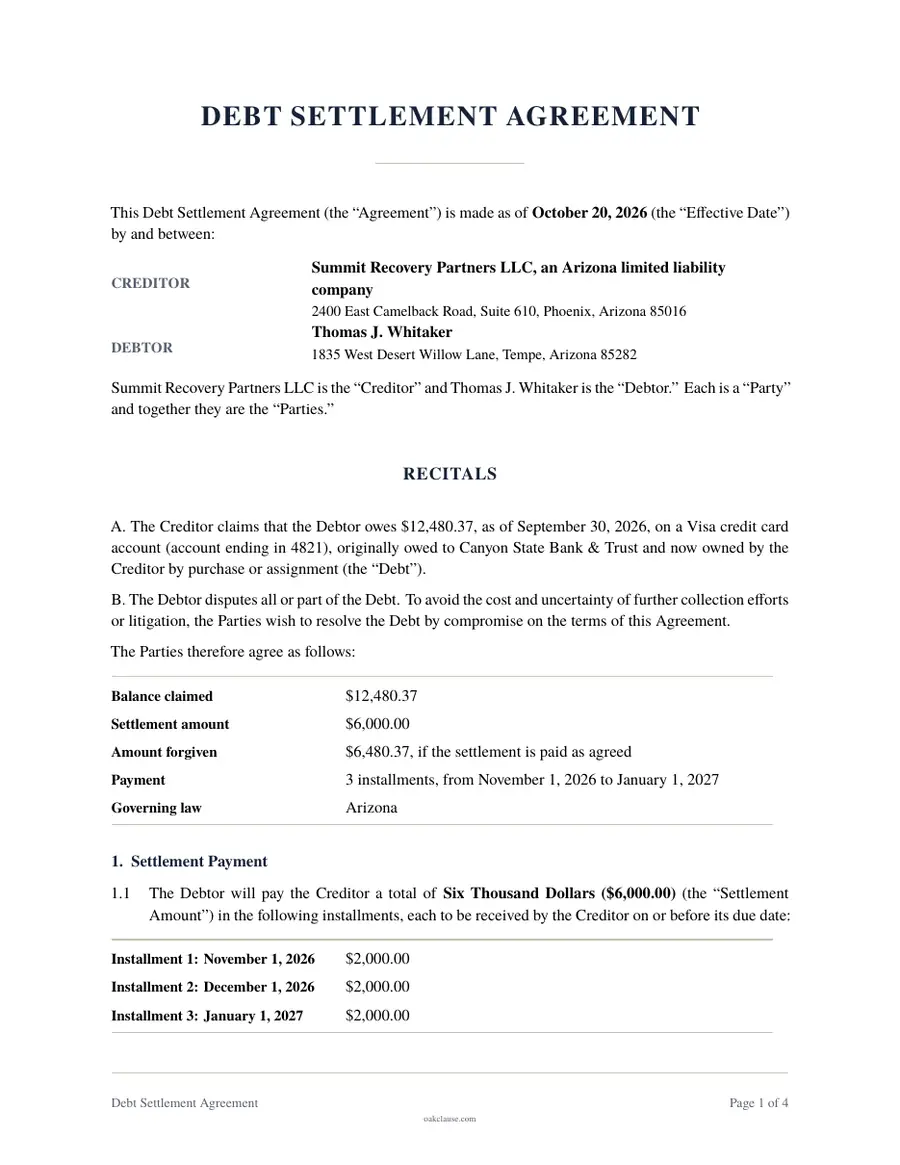
If a case is pending, the release can require the person who filed it to dismiss it with prejudice, which means it cannot be filed again. Dismissal paperwork is filed separately with the court.
More Ohio documents
Other documents people prepare for Ohio, each with the state’s rules where we have checked them.
All Ohio documents and rules