Recording Agreement
Put a recording project on paper before the first session.
Includes 30 days of edits
- 5 to 20 minutes
- Print-ready PDF
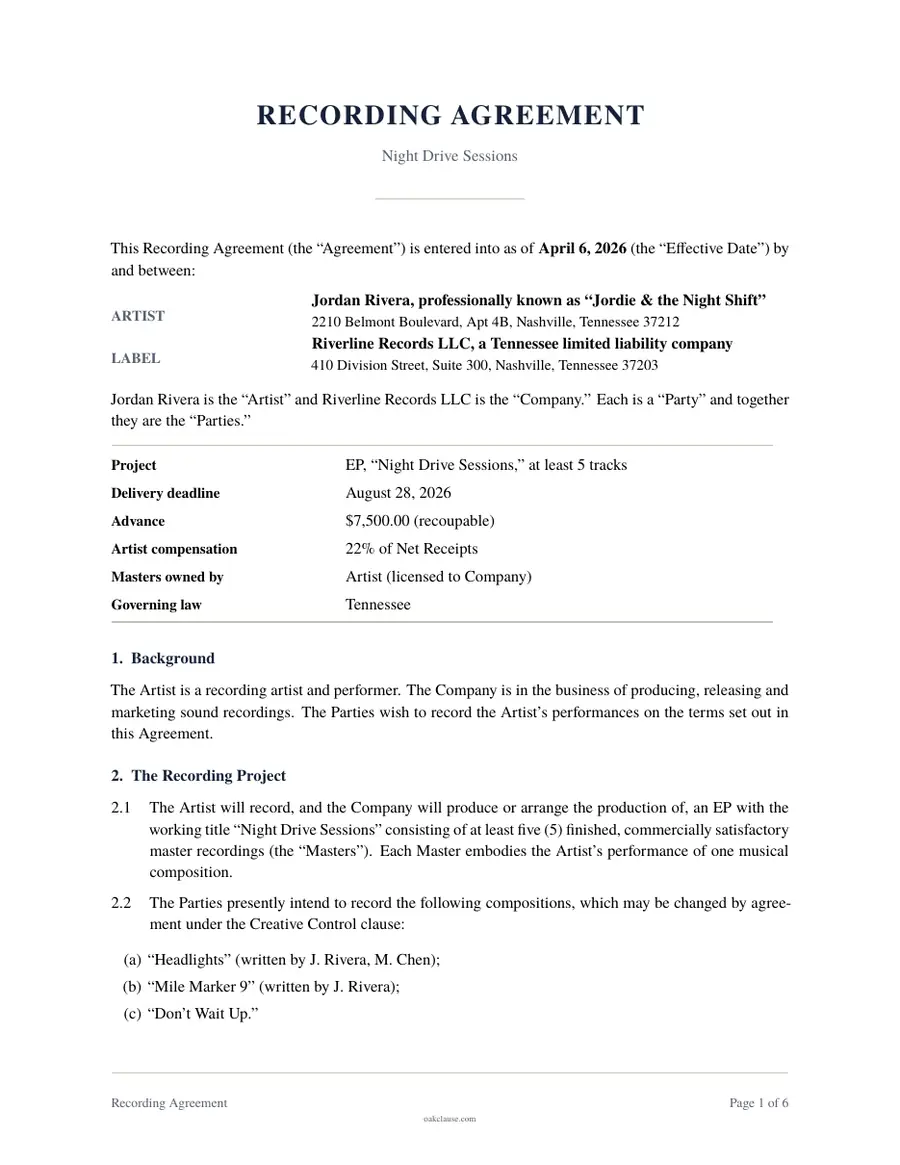
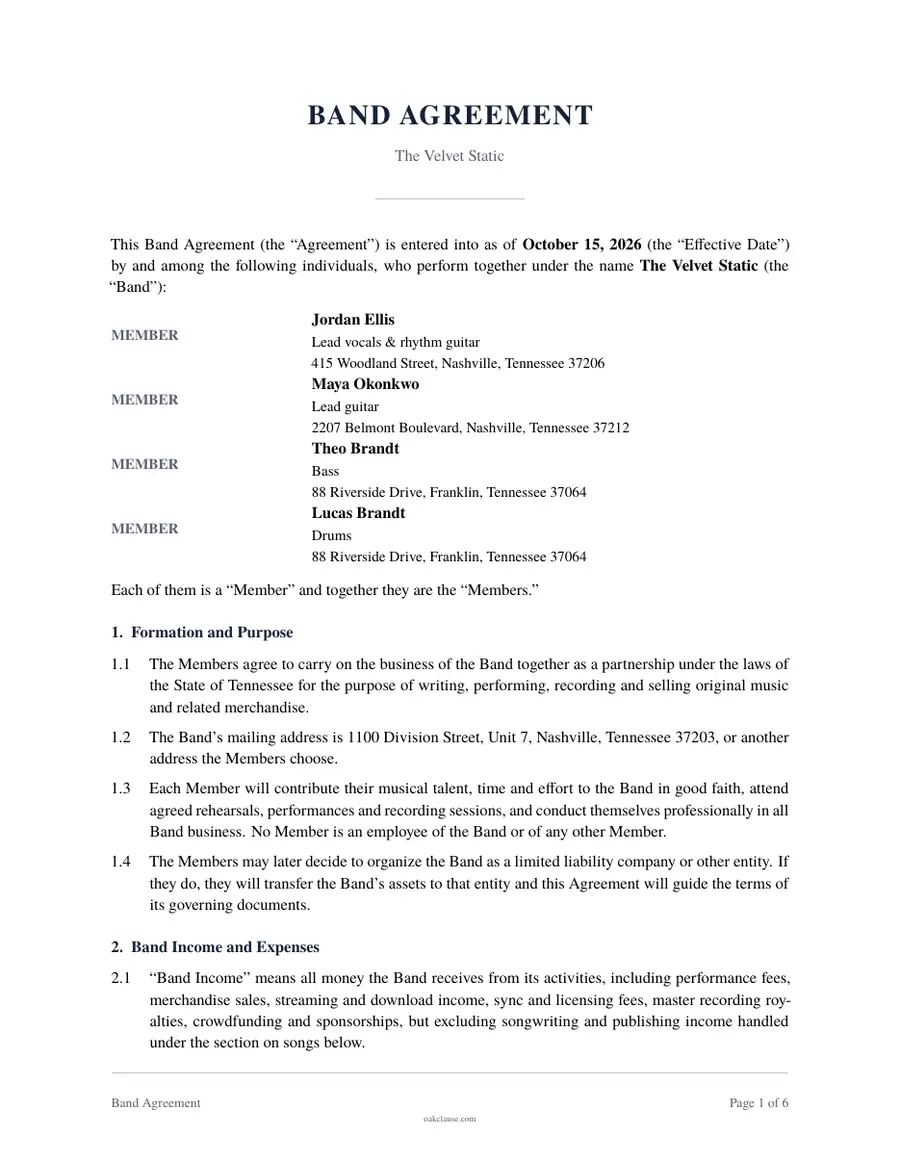
What is a Recording Agreement?
A recording agreement is a contract between a recording artist and the producer, label or studio that funds, records or releases the artist's music. It records the commercial deal behind a single, an EP or an album so that everyone knows what they are giving and what they will get back.
The heart of the agreement is ownership of the master recordings and the money that flows from them. The document says whether the masters belong to the company, the artist or both, whether the artist receives an advance, a royalty, a flat fee or a share of net profits, how often statements are sent, and which costs can be recouped before the artist is paid.
It also covers the practical side of the project: the number of tracks, the recording and delivery dates, creative control, credits, use of the artist's name and likeness, exclusivity during the term and any options to record more. Clear terms at the start make it far easier to release, license and get paid for the music later.
When to use it
- An independent label wants to sign an artist for a single, EP or album.
- A producer is funding studio time in exchange for ownership of, or a share in, the recordings.
- A recording studio is producing a project for an artist and wants the payment and ownership terms in writing.
- An artist is licensing recordings they already own to a label for release and distribution.
- You want to settle royalties, credits and creative approvals before recording sessions begin.
What is included
- Recording project details, track count and delivery date
- Recording costs and which of them are recoupable
- Advance, royalty, flat fee or net profit split
- Accounting statements and audit rights
- Ownership or license of the master recordings
- Song publishing kept separate from the masters
- Name, likeness, credit and creative control terms
- Exclusivity, term, options and release commitment
- Parent or guardian consent when the artist is a minor
- Governing law, dispute resolution and signature blocks
How to make your Recording Agreement
Answer the questions
Tell us about the parties and the terms you want. Most documents take about 5 to 20 minutes.
Review the preview
Check the draft as you go and change any answer. The document updates instantly.
Download, sign and keep a copy
Download a print-ready PDF, sign it with the other parties, and give everyone a copy.
Frequently asked questions
What is a master recording?
A master is the original, final recording of a performance from which copies, streams and downloads are made. The copyright in a master is separate from the copyright in the underlying song, so the owner of the master is not automatically the owner of the composition.
Who usually owns the masters in a recording agreement?
It depends on who takes the financial risk. In a traditional label deal, the label pays for recording and owns the masters. In a license or distribution-style deal, the artist keeps ownership and grants the company the right to exploit the recordings for a set period. This agreement supports company ownership, artist ownership with a license, and joint ownership.
What does recoupable mean?
A recoupable cost is one the company may take back out of the artist's royalties before paying the artist anything further. Advances and recording costs are often recoupable. Recoupment comes only from royalties; the artist does not have to repay unrecouped amounts out of pocket unless the contract says so.
How is a royalty different from a net profit split?
A royalty is a percentage of the company's receipts from the recordings, paid to the artist after recoupment. A net profit split divides what is left after agreed costs are deducted, often in larger percentages. Splits tend to suit smaller independent projects where both sides share costs and upside.
Does this agreement cover song publishing?
No. This agreement deals with the recordings. Ownership of the songs and publishing income stays with the songwriters and their publishers unless a separate publishing or co-writing agreement says otherwise. The document states this expressly to avoid confusion.
Can a minor sign a recording agreement?
Contracts with minors can often be cancelled by the minor, so a parent or guardian usually signs as well. Some states also require court approval of entertainment contracts with minors and may require part of the earnings to be set aside. Check the rules in the governing state before signing with an artist under 18.
What are option periods?
Options let the company extend the deal to cover additional records on the same terms. The company, not the artist, decides whether to exercise each option, usually by written notice before the current period ends.
Does a recording agreement need to be notarized?
No. A recording agreement is valid when signed by the parties. Electronic signatures are generally accepted for this type of contract.