New York LLC Operating Agreement
Put your LLC's ownership, management, voting, profit sharing and exit rules in writing so every member knows where they stand before questions turn into disputes.
Includes 30 days of edits
- 5 to 20 minutes
- Print-ready PDF
- Tailored to New York
Operating Agreement rules in New York
Each state has its own limited liability company statute, which supplies default rules wherever an operating agreement is silent and sets some rules the members cannot change. Areas that commonly vary include the duties members and managers owe each other and how far they can be limited, which records members may inspect, when a member may withdraw, how a transferee is treated, whether non-competition covenants are enforceable and the steps required to dissolve and wind up. A few states require an operating agreement to exist or expect it to be kept with company records. This agreement names the state you select as its governing law and defers to that state's non-waivable rules, so check your state's requirements and consider an attorney for complex ownership arrangements.
When you create this document for New York, the questionnaire uses New York as the governing law and adds wording that defers to New York requirements where they apply. Laws change, so confirm current rules with official New York sources or a local attorney for anything critical.
What is an LLC Operating Agreement?
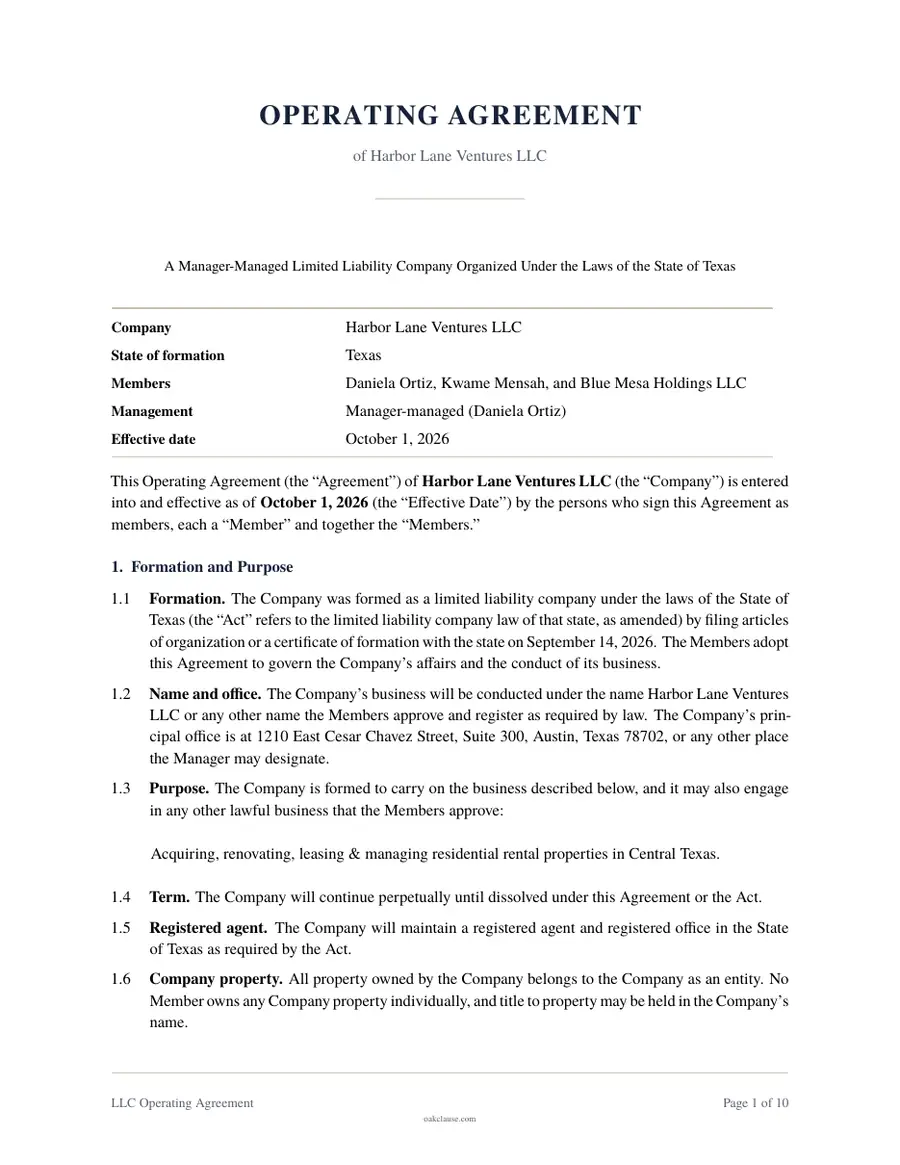
An LLC operating agreement is the internal contract among the owners (called members) of a limited liability company. It records who owns what percentage of the company, what each member contributed, how decisions are made, how profits and losses are divided, and what happens when a member wants to leave, dies or sells their interest.
Without an operating agreement, an LLC is governed by the default rules in its state's LLC statute. Those defaults may not match what the members actually intended, for example on how votes are counted or whether a departing member can force a buyout. A written agreement lets the members replace the defaults with their own deal and helps show banks, investors and courts that the LLC is run as a separate business.
This agreement is built for LLCs with two or more members. It supports both member-managed and manager-managed companies, ownership percentages that add up to 100 percent, supermajority or unanimous votes for major decisions, transfer restrictions, a right of first refusal and buyout terms for common exit events.
When to use it
- You and one or more co-owners have formed, or are about to form, an LLC.
- Your LLC has been operating without a written agreement and you want to document how it actually works.
- You are bringing in a new member and want clear rules on contributions, voting and profit shares.
- A bank, investor or landlord has asked to see the company's operating agreement.
- You want agreed buyout terms in place in case a member leaves, becomes disabled or dies.
What is included
- Company name, state of formation, purpose and principal office
- Members, capital contributions and ownership percentages
- Additional contributions and member loans
- Member-managed or manager-managed structure and voting rules
- Major decisions that require a higher vote
- Allocation of profits and losses, distributions and tax treatment
- Books, records, bank accounts and fiscal year
- Transfer restrictions, right of first refusal and buyout events
- Confidentiality, optional non-competition, dissolution and dispute resolution
- Member signatures and optional spousal consent
How to make your Operating Agreement
Answer the questions
Tell us about the parties and the terms you want. Most documents take about 5 to 20 minutes.
Review the preview
Check the draft as you go and change any answer. The document updates instantly.
Download, sign and keep a copy
Download a print-ready PDF, sign it with the other parties, and give everyone a copy.
Operating Agreement in another state
Back to the general operating agreement page51 states shown
- ALAlabama
- AKAlaska
- AZArizona
- ARArkansas
- CACalifornia
- COColorado
- CTConnecticut
- DEDelaware
- DCDistrict of Columbia
- FLFlorida
- GAGeorgia
- HIHawaii
- IDIdaho
- ILIllinois
- INIndiana
- IAIowa
- KSKansas
- KYKentucky
- LALouisiana
- MEMaine
- MDMaryland
- MAMassachusetts
- MIMichigan
- MNMinnesota
- MSMississippi
- MOMissouri
- MTMontana
- NENebraska
- NVNevada
- NHNew Hampshire
- NJNew Jersey
- NMNew Mexico
- NYNew York
- NCNorth Carolina
- NDNorth Dakota
- OHOhio
- OKOklahoma
- OROregon
- PAPennsylvania
- RIRhode Island
- SCSouth Carolina
- SDSouth Dakota
- TNTennessee
- TXTexas
- UTUtah
- VTVermont
- VAVirginia
- WAWashington
- WVWest Virginia
- WIWisconsin
- WYWyoming
Frequently asked questions
Is an operating agreement required for an LLC?
Most states do not require you to file an operating agreement, and only a few require the LLC to have one at all. Even so, multi-member LLCs benefit greatly from a written agreement because it replaces the state's default rules with terms the members actually chose. Banks and investors also commonly ask to see it.
Do I file the operating agreement with the state?
No. The operating agreement is a private document. You file articles of organization (or a certificate of formation) with the state, and you keep the signed operating agreement with your company records and give a copy to each member.
Do ownership percentages have to match capital contributions?
No. Members can agree on any split. One member might contribute cash while another contributes skills or ongoing work, and the members can set percentages that reflect the whole deal. The agreement records each member's contribution and percentage separately so the arrangement is clear.
What is the difference between member-managed and manager-managed?
In a member-managed LLC, all members take part in running the business and can usually act for the company. In a manager-managed LLC, the members appoint one or more managers to run the business, and members who are not managers vote only on major matters. The choice should match what you stated in your formation filing.
How are LLC profits taxed?
By default, the IRS taxes a multi-member LLC as a partnership: the company files an information return and each member reports their share of profit or loss on their own return. An LLC can instead elect to be taxed as an S corporation or a C corporation. The agreement records the chosen treatment, but a tax professional can help you decide.
What happens if a member wants to leave?
The agreement lets you choose which events trigger a buyout, such as voluntary withdrawal, death, disability or bankruptcy, and how the departing member's interest is valued and paid for. Without these terms, state default rules decide, and those rules may not give either side what they expect.
Can we change the operating agreement later?
Yes. The agreement can be amended by the vote it specifies, typically a written amendment signed by all members. Keep each signed amendment with the original agreement.
Why would a member's spouse sign the agreement?
In community property states and in divorces generally, a spouse may claim an interest in a member's LLC interest. A spousal consent confirms that the spouse knows about the agreement and agrees that any interest they may have is subject to its transfer and buyout restrictions. Whether it is effective depends on state law.
More New York documents
Other documents people prepare for New York, each with the state’s rules where we have checked them.
All New York documents and rules