Event Contract
Book a venue or hire an event planner with the dates, services, fees and refund rules spelled out.
Includes 30 days of edits
- 5 to 20 minutes
- Print-ready PDF
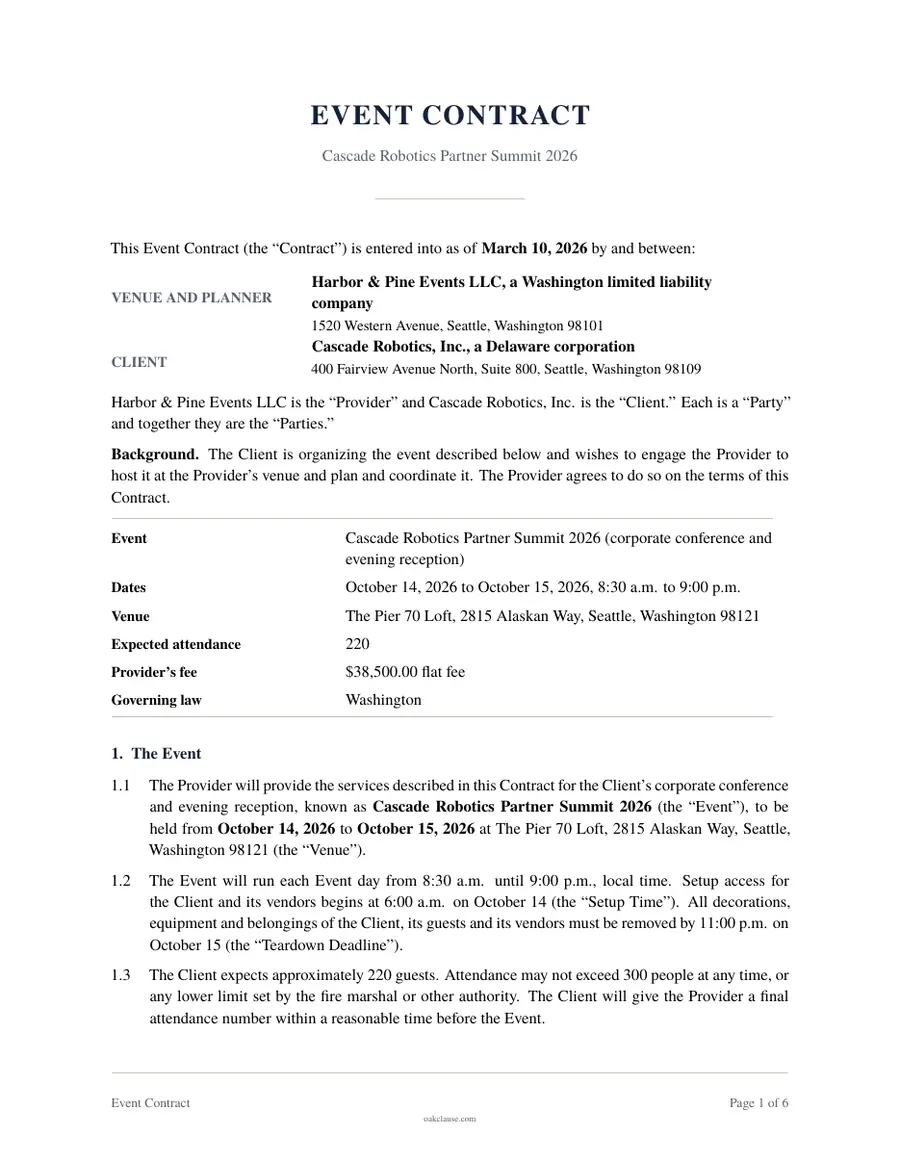
What is an Event Contract?
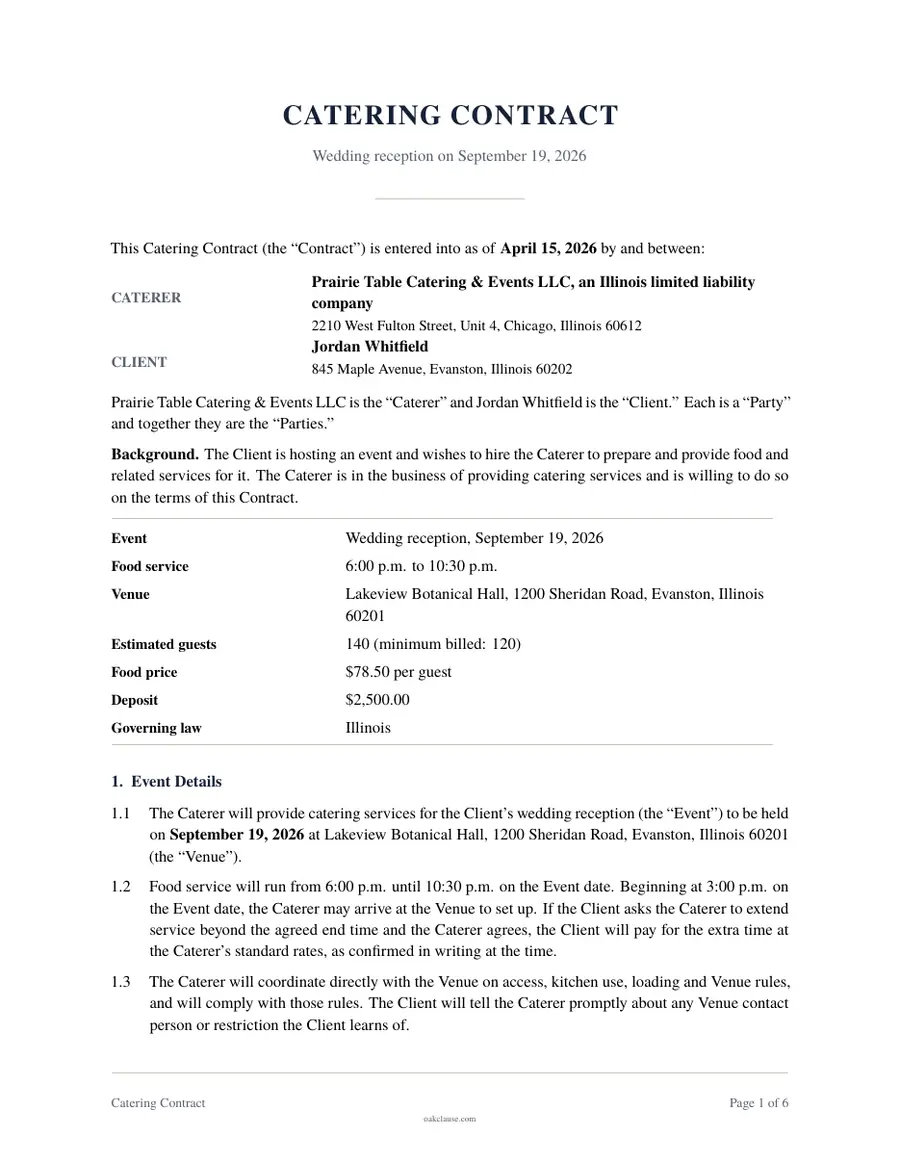
An event contract is an agreement between a client and a business that plans, hosts or manages an event, such as an event planner, a venue owner or a company that does both. It records what the event is, when and where it takes place, what the provider will do, and what the client will pay, including deposits, installments and security deposits.
Events are planned months in advance and involve money paid long before the day itself. That is why the most important parts of an event contract deal with change: what happens if the client cancels or postpones, if attendance changes, if the event runs late, or if a storm, illness or venue problem gets in the way. Clear rules on refunds and rescheduling prevent painful arguments later.
An event contract also divides responsibility for the practical and legal risks of bringing people together: who arranges outside vendors, who carries insurance, who serves alcohol, who pays for damage to the venue, and what rules guests must follow. Putting these terms in writing helps both sides plan confidently.
When to use it
- You own or manage a venue and rent it out for weddings, parties, meetings or performances.
- You are an event planner or coordinator and want clients to agree to your services and fees.
- You are hiring a planner or booking a venue and want the deposit and cancellation terms in writing.
- A company is organizing a conference, product launch, fundraiser or holiday party.
- The event involves outside vendors, alcohol or a large guest list, and responsibilities must be clear.
What is included
- Provider role: planner, venue or both
- Event name, dates, times, setup and teardown
- Venue spaces, capacity and expected attendance
- Services included and outside vendor rules
- Flat, hourly or percentage fees with a payment schedule
- Security deposit, overtime and expense reimbursement
- Cancellation schedule, postponement and force majeure
- Insurance, alcohol, decorations and noise rules
- Damage, indemnification and liability limits
- Dispute resolution, governing law and signatures
How to make your Event Contract
Answer the questions
Tell us about the parties and the terms you want. Most documents take about 5 to 20 minutes.
Review the preview
Check the draft as you go and change any answer. The document updates instantly.
Download, sign and keep a copy
Download a print-ready PDF, sign it with the other parties, and give everyone a copy.
Frequently asked questions
What is the difference between an event planner contract and a venue contract?
A planner contract covers professional services such as design, budgeting, vendor coordination and day-of management. A venue contract covers the right to use a space on specific dates, plus house rules and damage responsibility. This contract handles either one, or a provider that offers both, and adjusts the clauses to match.
Are event deposits refundable?
Only if the contract says so. Many venues and planners keep the reservation deposit because they turn down other bookings for the date. This contract lets you set a cancellation schedule that refunds a different percentage depending on how much notice the client gives.
What is a security deposit for an event?
A security deposit is a separate, refundable amount held to cover damage, excessive cleaning or unpaid charges. It is returned after the event, minus documented deductions, within the time stated in the contract.
Can the client bring in their own vendors?
That depends on the provider. Some venues allow any licensed and insured vendor, some require clients to choose from an approved list, and some provide everything in-house. This contract lets you pick the rule that applies and require vendors to carry insurance.
Does the client need event insurance?
Many venues require the client to buy a short-term event liability policy, especially when alcohol is served. Event cancellation insurance is also available and can protect the client's deposits. The contract can require proof of coverage before the event.
What happens if the event has to be cancelled because of weather or an emergency?
The force majeure clause excuses both sides when events beyond their control, such as natural disasters, government orders or utility failures, make the event impossible. The parties first try to reschedule, and the contract explains how payments are handled if they cannot.
Can an event run past the agreed end time?
Only if the provider agrees. This contract lets you set an overtime rate for each extra hour, so both sides know the cost in advance if the party runs late.
Does an event contract need to be notarized?
No. An event contract is valid once both parties sign it, and electronic signatures are commonly used. Large or complex events may still benefit from an attorney's review.