Catering Contract
Put the menu, guest count, price and cancellation rules in writing before anyone starts cooking.
Includes 30 days of edits
- 5 to 20 minutes
- Print-ready PDF
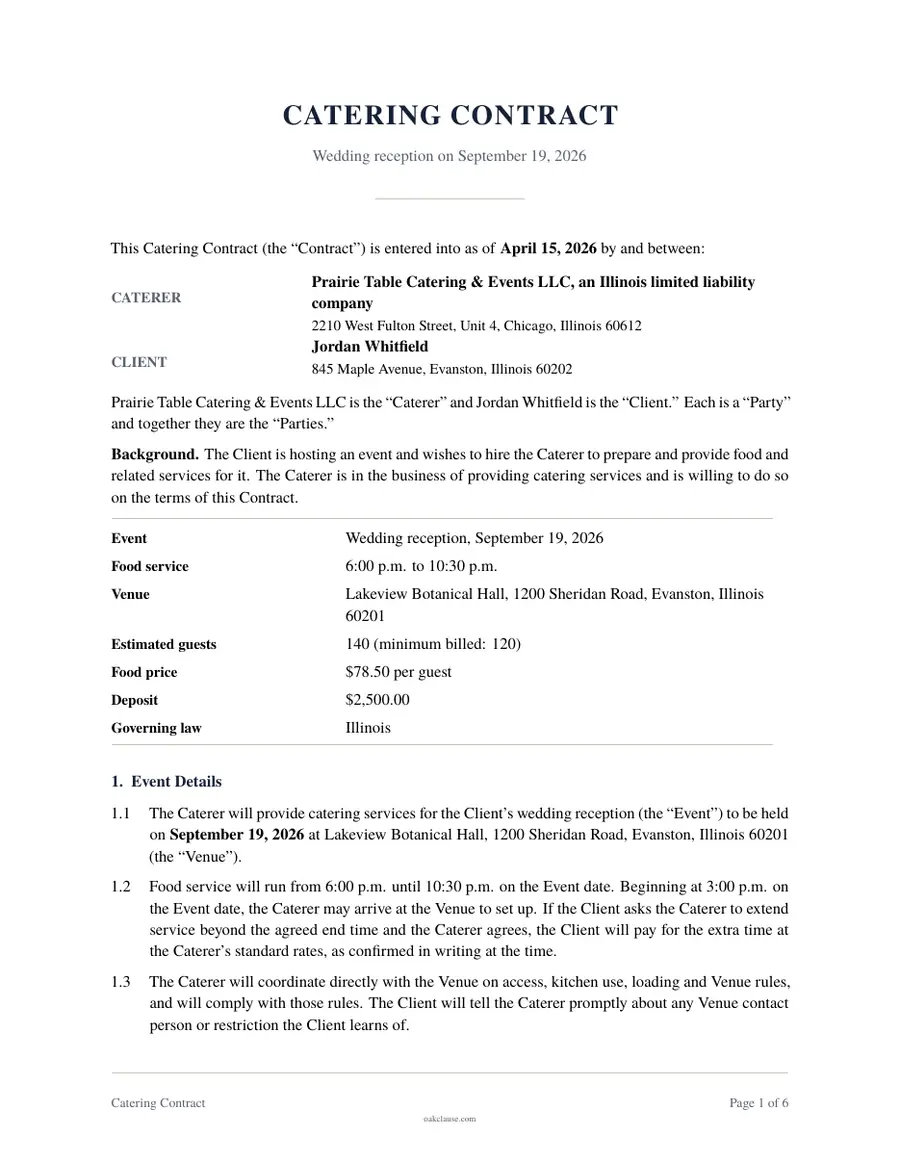
What is a Catering Contract?
A catering contract is an agreement between a caterer and a client who is hosting an event. It records what food and drink will be served, for how many guests, at what location and time, and what the client will pay for it, including deposits, service charges and taxes.
Catering involves a lot of moving parts that are easy to misremember: the final head count deadline, who supplies linens and tableware, whether staff will pour alcohol, who cleans up and what happens to leftover food. Writing these details down gives both sides a single reference point when plans change, and they usually do.
The contract also covers the situations people prefer not to think about until they happen: a cancelled or postponed event, a guest count far below the estimate, damage to the caterer's equipment, a storm or venue closure, or a disagreement about quality. Clear terms on refunds, liability and dispute resolution help keep a stressful day from turning into a legal dispute.
When to use it
- You run a catering business and want each client to confirm the menu, pricing and policies in writing.
- You are hosting a wedding, reunion, fundraiser or corporate function and are hiring a caterer.
- A venue or event planner has asked you for a signed catering agreement before the event can be booked.
- You are paying a deposit to reserve a caterer and want to know when it is refundable.
- The event involves alcohol service, rented equipment or staff, and responsibilities need to be clear.
What is included
- Event details, venue, timing and estimated guest count
- Final guest count deadline and optional minimum guarantee
- Service style, menu and dietary accommodations
- Staffing, setup, cleanup, rentals and alcohol service terms
- Per-person or flat pricing, service charge, gratuity and tax
- Deposit, balance due date and accepted payment methods
- Cancellation schedule, postponement and force majeure
- Food safety, permits, insurance and leftover food handling
- Liability limits, dispute resolution and governing law
- Signature blocks for individual or business parties
How to make your Catering Contract
Answer the questions
Tell us about the parties and the terms you want. Most documents take about 5 to 20 minutes.
Review the preview
Check the draft as you go and change any answer. The document updates instantly.
Download, sign and keep a copy
Download a print-ready PDF, sign it with the other parties, and give everyone a copy.
Frequently asked questions
What should a catering contract include?
At minimum it should name the parties, describe the event (date, time, location and guest count), set out the menu and service style, state the price and payment schedule, and explain what happens if the event is cancelled or changed. Most also cover staffing, rentals, alcohol service, insurance and liability.
Is a catering deposit refundable?
It depends on what the contract says. Many caterers treat the deposit as non-refundable because they turn away other bookings and buy supplies in advance. This contract lets you make the deposit non-refundable, or refundable only as set out in a cancellation schedule that depends on how early the client cancels.
What is a final guest count and why does it matter?
The final guest count is the number of guests the client confirms a set number of days before the event. Caterers use it to buy food and schedule staff, so the client usually pays for at least that number even if fewer people attend. Some contracts also set a minimum number of guests that will be billed no matter what.
Is a service charge the same as a tip?
Not necessarily. A service charge is often kept by the business to cover staffing and overhead, while a gratuity goes to the staff. This contract lets you state whether gratuity is included so guests and hosts are not confused. Some states and cities regulate how service charges must be described, so check local rules.
Who is responsible for serving alcohol at a catered event?
That depends on the arrangement. A caterer that sells or serves alcohol typically needs a liquor license and liability insurance, and many states hold servers or hosts responsible for serving visibly intoxicated or underage guests. The contract records who provides and serves alcohol and gives servers the right to refuse service.
What happens if the event has to be cancelled because of bad weather or an emergency?
The force majeure clause excuses both sides from performing when events outside their control, such as severe weather, a natural disaster or a government order, make the event impossible. The contract also explains how payments already made will be handled in that situation.
Can the client keep leftover food?
Some caterers allow it and others do not, often because of food safety concerns and liability once food leaves their control. This contract lets you choose who keeps leftovers and makes clear that the caterer is not responsible for food after it is handed over.
Does a catering contract need to be notarized?
No. A catering contract is a standard commercial agreement and is generally valid once both parties sign it. Electronic signatures are widely accepted for this type of contract.