Massachusetts Employment Contract
Put a new hire's role, pay, benefits and ground rules in one signed agreement, so the employer and the employee start with the same expectations.
Includes 30 days of edits
- 5 to 20 minutes
- Print-ready PDF
- Tailored to Massachusetts
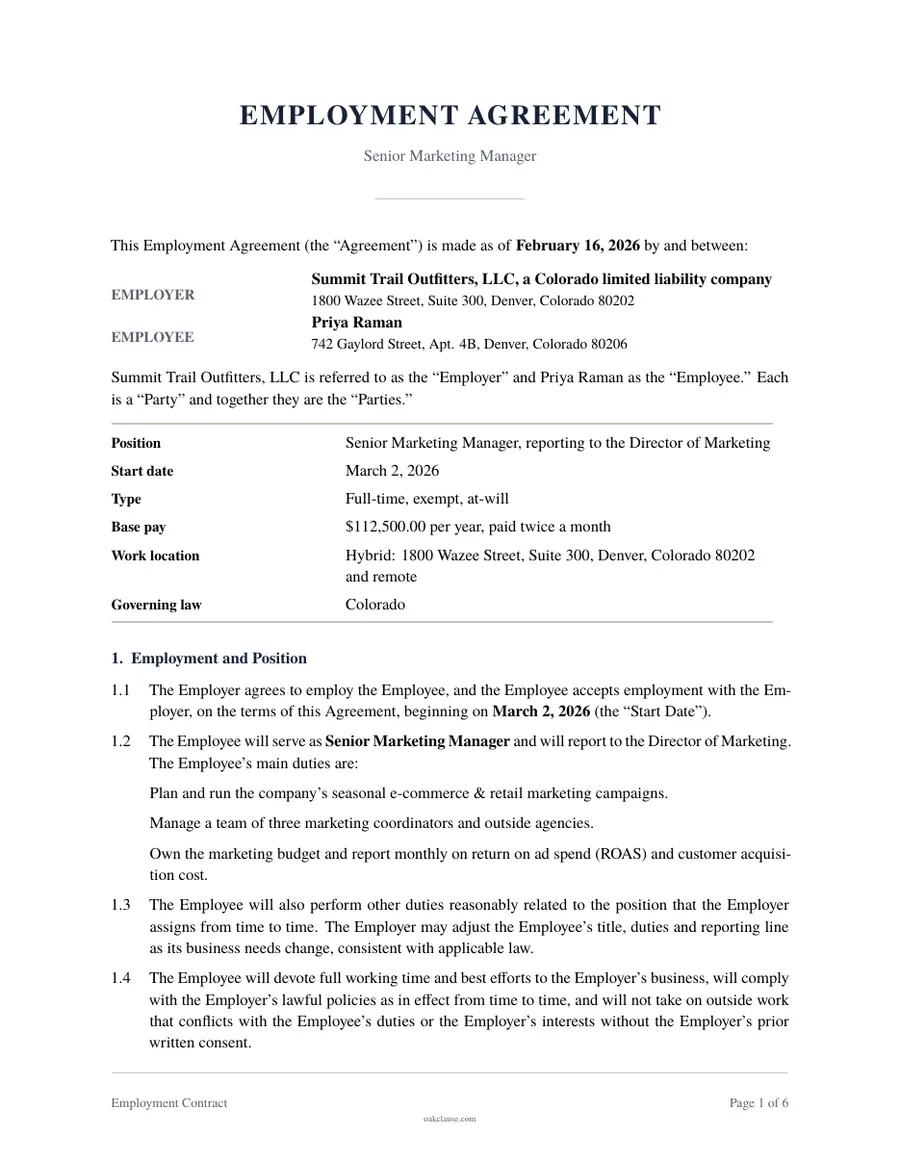
Employment Contract rules in Massachusetts
Employment is heavily regulated at the state level. States set their own minimum wage and overtime rules, final paycheck deadlines, paid sick leave requirements, rules on paying out unused vacation, and limits on deductions from pay. States also differ sharply on restrictive covenants: some ban most employee non-compete agreements, others require extra compensation or notice, and many limit how employers can claim inventions an employee creates on personal time. This contract applies the law of the state you choose and defers to that state's requirements on these points rather than stating fixed deadlines or amounts, so it stays accurate as rules change. Choose the state where the employee will primarily work, since that state's employment laws usually apply regardless of the contract.
When you create this document for Massachusetts, the questionnaire uses Massachusetts as the governing law and adds wording that defers to Massachusetts requirements where they apply. Laws change, so confirm current rules with official Massachusetts sources or a local attorney for anything critical.
What is an Employment Contract?
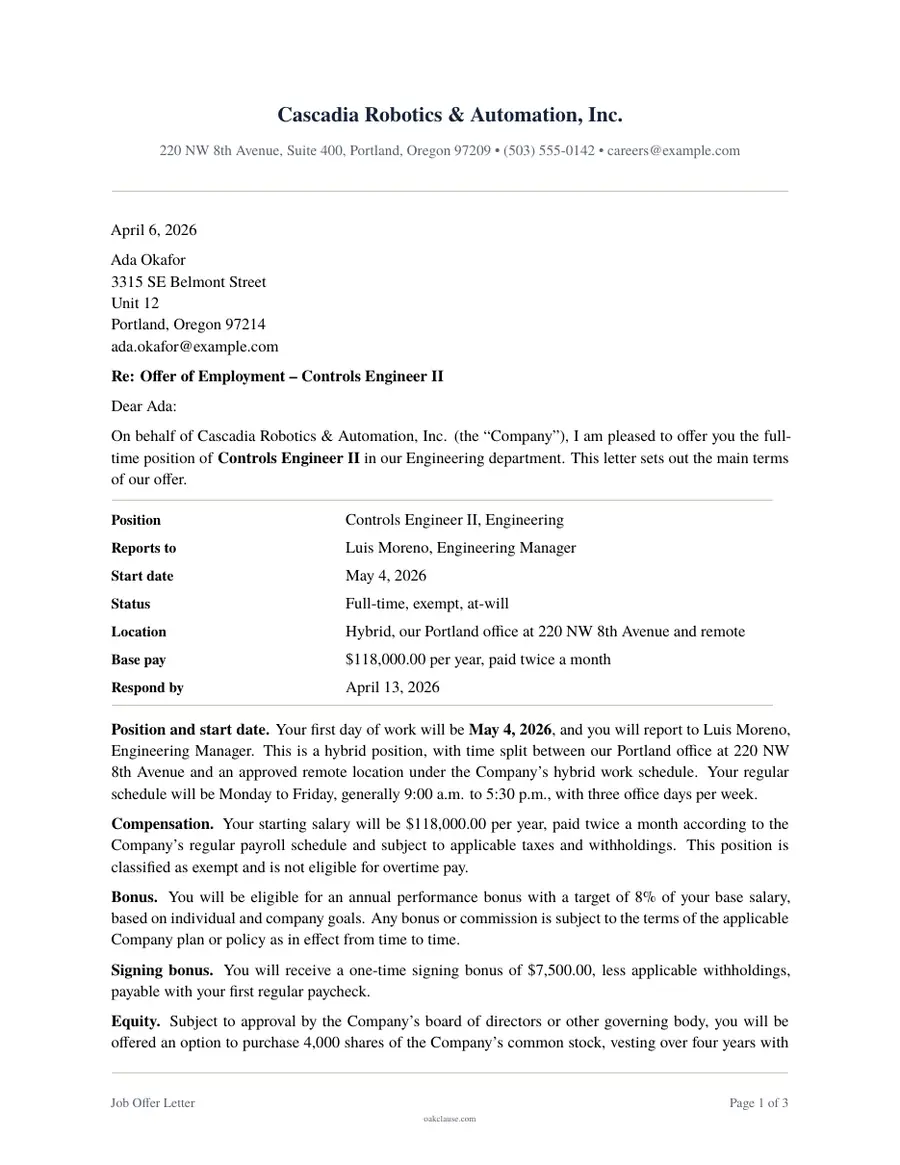
An employment contract, also called an employment agreement, is a written agreement between an employer and an employee that records the terms of the job: the position and duties, where and when the work happens, how much the employee is paid, which benefits apply, and how the relationship can end.
Most US jobs are at-will, meaning either side can end the relationship at any time for any lawful reason. A written contract can confirm that at-will status, or it can set a fixed term and limit early termination to specific reasons. Either way, putting the terms in writing reduces misunderstandings about pay, hours, time off and ownership of work product.
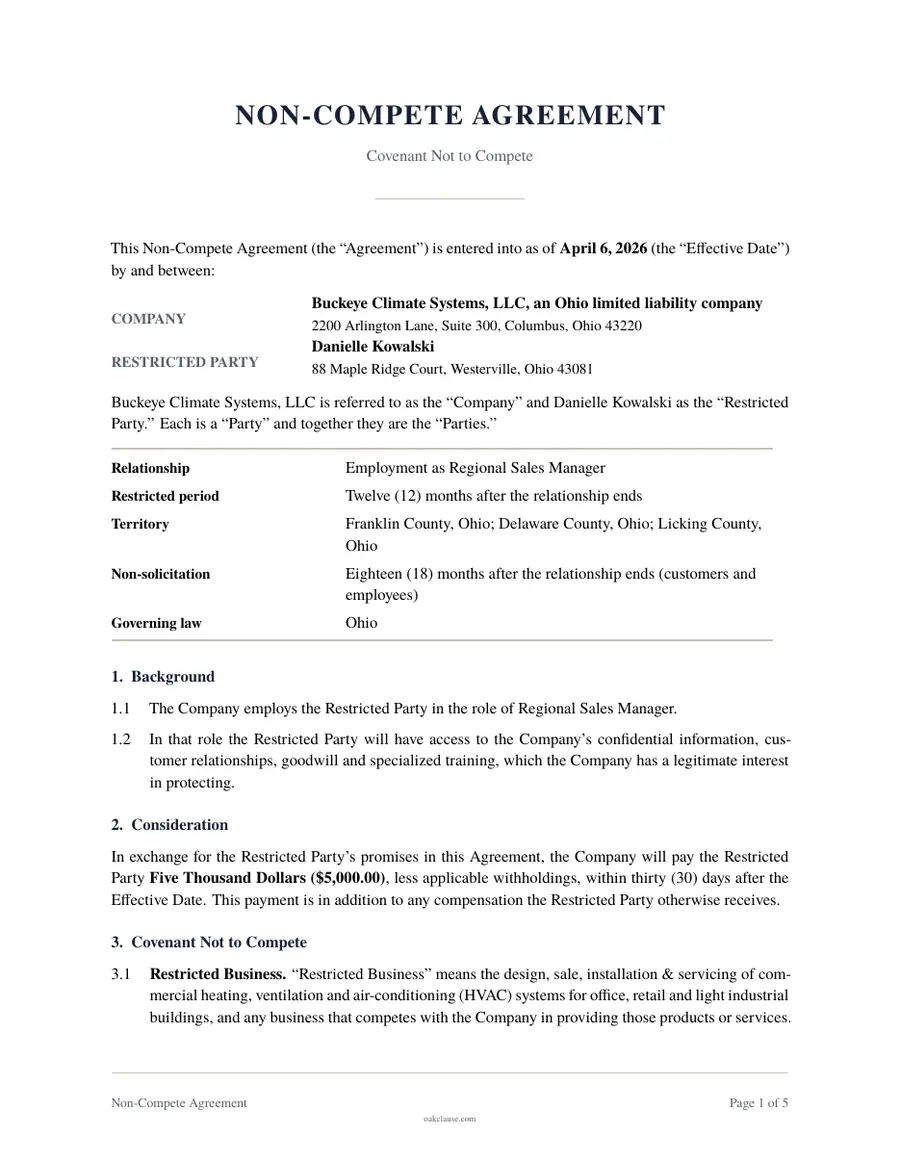
Employment contracts often also protect the business. Confidentiality, invention assignment, non-solicitation and, where state law allows, non-compete clauses help safeguard customer relationships and proprietary information. Because wage, leave and restrictive covenant rules differ from state to state, the agreement is tied to the law of the state you select.
When to use it
- You are hiring a full-time or part-time employee and want the key terms signed before the first day.
- You are bringing on a senior hire, manager or key employee whose pay, bonus or severance terms need to be documented.
- You want a fixed-term arrangement, such as a one-year engagement, instead of open-ended at-will employment.
- The employee will handle confidential information or create work product the business needs to own.
- You are converting an informal arrangement or a contractor relationship into formal employment.
What is included
- Position, duties, reporting line and work location (on-site, remote or hybrid)
- Full-time or part-time status, schedule and exempt or non-exempt classification
- At-will or fixed-term employment, with an optional introductory period
- Salary or hourly pay, pay schedule, overtime, bonuses and signing bonus
- Benefits, paid time off and expense reimbursement
- Confidentiality, invention assignment and federal whistleblower immunity notice
- Optional non-solicitation and non-compete covenants, limited to what state law allows
- Termination, notice, severance and return of company property
- Governing law, dispute resolution and standard general provisions
- Signature blocks for the employer and the employee
How to make your Employment Contract
Answer the questions
Tell us about the parties and the terms you want. Most documents take about 5 to 20 minutes.
Review the preview
Check the draft as you go and change any answer. The document updates instantly.
Download, sign and keep a copy
Download a print-ready PDF, sign it with the other parties, and give everyone a copy.
Employment Contract in another state
Back to the general employment contract page51 states shown
- ALAlabama
- AKAlaska
- AZArizona
- ARArkansas
- CACalifornia
- COColorado
- CTConnecticut
- DEDelaware
- DCDistrict of Columbia
- FLFlorida
- GAGeorgia
- HIHawaii
- IDIdaho
- ILIllinois
- INIndiana
- IAIowa
- KSKansas
- KYKentucky
- LALouisiana
- MEMaine
- MDMaryland
- MAMassachusetts
- MIMichigan
- MNMinnesota
- MSMississippi
- MOMissouri
- MTMontana
- NENebraska
- NVNevada
- NHNew Hampshire
- NJNew Jersey
- NMNew Mexico
- NYNew York
- NCNorth Carolina
- NDNorth Dakota
- OHOhio
- OKOklahoma
- OROregon
- PAPennsylvania
- RIRhode Island
- SCSouth Carolina
- SDSouth Dakota
- TNTennessee
- TXTexas
- UTUtah
- VTVermont
- VAVirginia
- WAWashington
- WVWest Virginia
- WIWisconsin
- WYWyoming
Frequently asked questions
Is an employment contract required by law?
No. Most US employers are not required to sign a written contract with each employee. A written agreement is still useful because it records the agreed pay, duties and policies, and it is often the only practical way to make confidentiality, invention assignment and similar promises enforceable.
What does at-will employment mean?
At-will employment means the employer or the employee can end the relationship at any time, with or without a reason and with or without notice, as long as the reason is not illegal (for example, discrimination or retaliation). Most states presume employment is at-will unless a contract says otherwise.
What is the difference between an at-will contract and a fixed-term contract?
An at-will contract describes the job but lets either side end it at any time. A fixed-term contract runs until a set end date. In this contract, the employer can end a fixed term early for cause, or without cause by paying the employee's base pay for the rest of the term. Fixed-term contracts give the employee more security but give both sides less flexibility.
What is the difference between exempt and non-exempt employees?
Non-exempt employees must be paid overtime for hours worked beyond the federal and state thresholds. Exempt employees are not entitled to overtime, but only if they meet specific salary and job-duty tests under federal and state law. The job title alone does not decide the classification, so check the tests before choosing exempt status.
Can I include a non-compete clause?
It depends on the state. Some states prohibit most employee non-competes, others enforce them only if they are reasonable in duration, geography and scope, and some require the employer to give extra pay or advance notice. This contract limits any restriction to what the chosen state's law allows, but consider having an attorney review a non-compete before relying on it.
Who owns the work an employee creates?
Under federal copyright law, most works created by an employee within the scope of the job belong to the employer. Inventions and other intellectual property are less automatic, which is why employment contracts usually include an assignment clause. Several states limit assignment of inventions an employee develops entirely on personal time without company resources.
Does an employment contract need to be notarized?
No. An employment contract is generally valid once both the employer and the employee sign it. Electronic signatures are widely accepted for employment agreements.
Can the terms be changed after the employee starts?
Yes, but changes should be made in a written amendment signed by both sides. Some changes, such as new restrictive covenants for an existing employee, may require additional consideration like a raise or bonus under the law of certain states.
More Massachusetts documents
Other documents people prepare for Massachusetts, each with the state’s rules where we have checked them.
All Massachusetts documents and rules