Cleaning Service Agreement
Agree on what gets cleaned, how often, and what it costs before the first visit.
Includes 30 days of edits
- 5 to 20 minutes
- Print-ready PDF
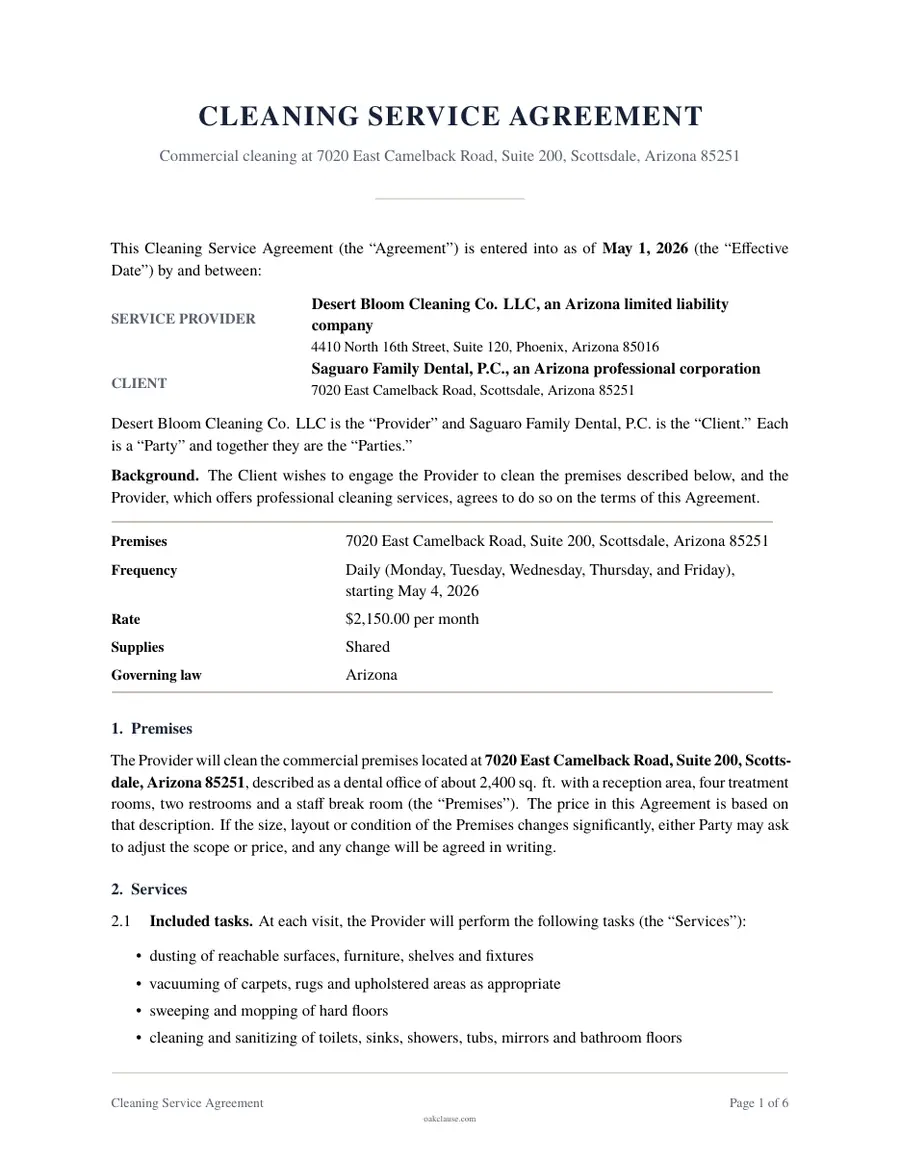
What is a Cleaning Service Agreement?
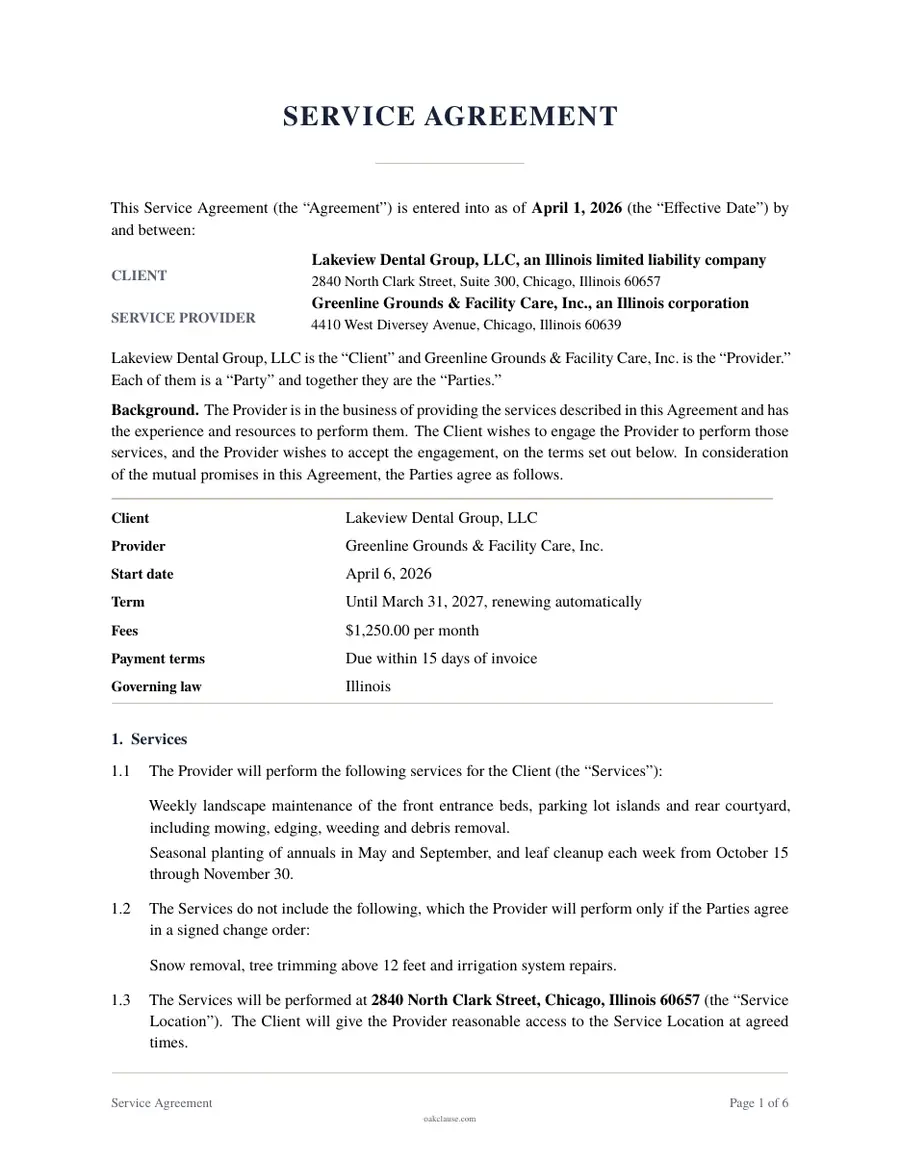
A cleaning service agreement is a contract between a cleaning business or independent cleaner and a client who owns, rents or manages a home or commercial space. It describes the premises, the tasks included in each visit, the cleaning schedule, the price and how the arrangement can end.
Cleaning work happens inside someone else's property, often while they are away, so trust and clarity matter. A written agreement settles practical questions that cause friction in practice: who supplies products and equipment, how the cleaner gets in, what happens when a visit is cancelled at the last minute, and how complaints about quality are handled.
The agreement also allocates risk. It records whether the cleaning company carries insurance or is bonded, how damage or missing items must be reported, how keys and access codes are protected, and whether the client may hire the company's cleaners directly. These terms protect both a small business and the customers who let it into their space.
When to use it
- You run a residential or commercial cleaning business and want consistent terms for every client.
- You are hiring a house cleaner, maid service or janitorial company for recurring visits.
- You manage an office, store, medical suite or short-term rental that needs scheduled cleaning.
- You need a one-time deep clean, move-in or move-out clean, or post-construction clean in writing.
- A long-standing cleaning arrangement has no written terms and you want to formalize it.
What is included
- Description of the premises and cleaning tasks included
- Exclusions and requests outside the agreed scope
- Visit frequency, days, start date and term
- Supplies and equipment responsibility
- Access, keys, security and pets at the premises
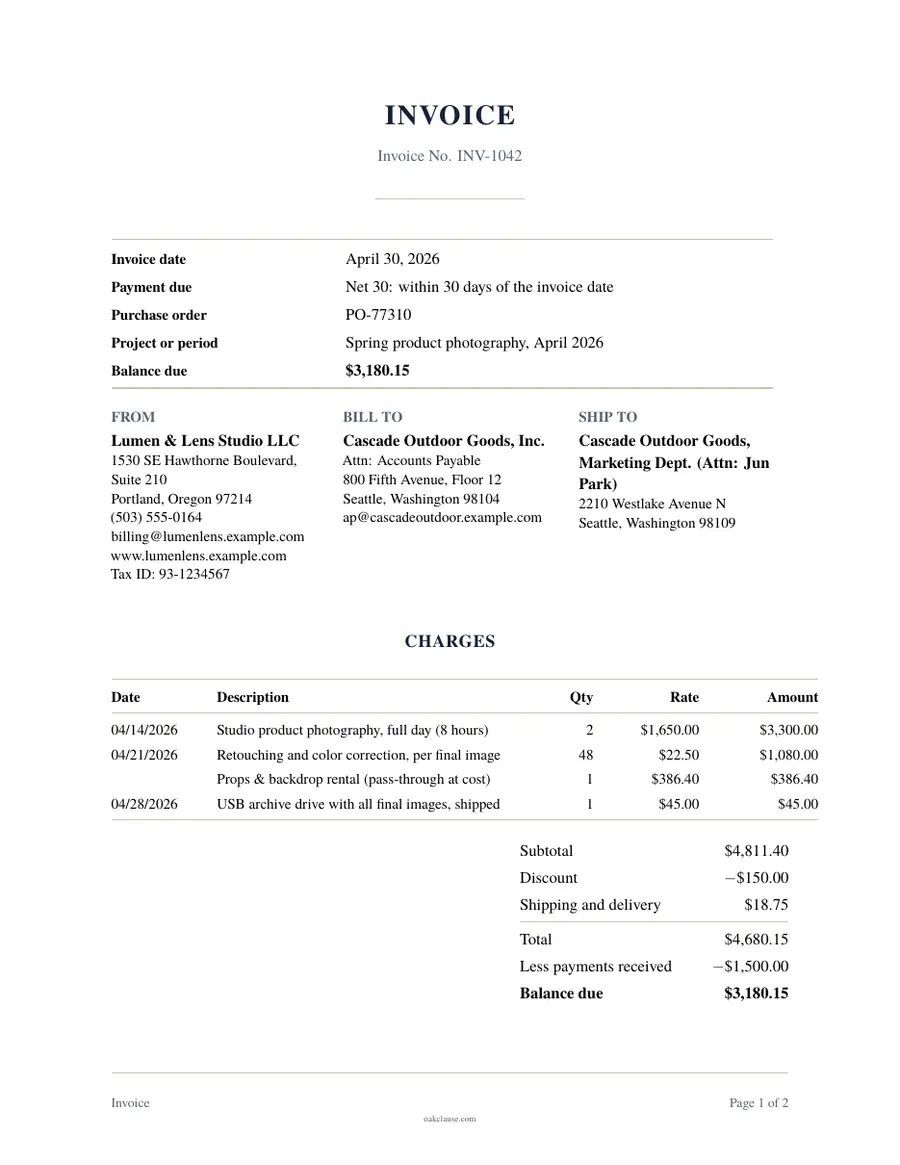
- Per-visit, hourly or monthly rates with invoicing terms
- Rescheduling, late cancellation and lockout fees
- Satisfaction re-clean, damage reporting and insurance
- Confidentiality and non-solicitation of cleaning staff
- Termination, governing law and signatures
How to make your Cleaning Agreement
Answer the questions
Tell us about the parties and the terms you want. Most documents take about 5 to 20 minutes.
Review the preview
Check the draft as you go and change any answer. The document updates instantly.
Download, sign and keep a copy
Download a print-ready PDF, sign it with the other parties, and give everyone a copy.
Frequently asked questions
What should be included in a cleaning service contract?
A good cleaning contract identifies the parties and the premises, lists the tasks included in each visit, sets the schedule and price, explains who supplies products and how the cleaner gets in, and covers cancellations, damage, insurance and how either side can end the arrangement.
Does this agreement work for both homes and businesses?
Yes. You choose whether the premises are residential or commercial, and pick the tasks, access method and insurance terms that fit. For large janitorial contracts with many sites or detailed performance standards, you may want an attorney to review the final document.
Who should provide the cleaning supplies?
Either side can. Many cleaning companies bring their own products and equipment and build the cost into the price, while some clients prefer specific products because of allergies, pets or surfaces. The agreement lets you choose the provider, the client, or a split.
Can I charge a fee if a client cancels at the last minute?
Many cleaning businesses do, because a late cancellation leaves a slot that cannot be refilled. This agreement lets you set how much notice the client must give and an optional late cancellation or lockout fee if the cleaner cannot get in.
Is a house cleaner an employee or an independent contractor?
It depends on the facts, not just the contract. A cleaning company or self-employed cleaner who sets their own methods and serves many clients is usually an independent contractor. A cleaner who works only for one household under its direction may be a household employee, which brings tax and wage obligations. Check IRS and state guidance if you are unsure.
What is the difference between being insured and being bonded?
Liability insurance pays for property damage or injuries the cleaner causes. A bond (often called a janitorial or fidelity bond) can compensate a client if an employee of the cleaning company is found to have stolen from them. Many commercial clients ask for both.
How can either side end a cleaning agreement?
For an ongoing arrangement, either party can usually end it by giving written notice a set number of days in advance. This agreement also allows immediate termination for a serious breach, such as non-payment or a safety or theft concern.
Does a cleaning service agreement need to be notarized?
No. It is a standard service contract and is generally binding once both parties sign. Electronic signatures are widely accepted.