New Mexico General Affidavit
Put the facts you know in writing and swear or affirm that they are true.
Includes 30 days of edits
- 5 to 20 minutes
- Print-ready PDF
- Tailored to New Mexico
Affidavit rules in New Mexico
Affidavits are recognized in every state, but the details of how they are sworn vary. States set their own rules for who may administer an oath, what a notary's jurat must say, and whether a notary must attach a state-specific certificate. Some states and courts also accept an unsworn declaration signed under penalty of perjury in place of a notarized affidavit for certain purposes. This document names your selected state in the venue heading and perjury statement, uses a general jurat that most notaries can complete, and notes that the notary may attach their state's required wording instead.
When you create this document for New Mexico, the questionnaire uses New Mexico as the governing law and adds wording that defers to New Mexico requirements where they apply. Laws change, so confirm current rules with official New Mexico sources or a local attorney for anything critical.
What is an Affidavit?
An affidavit is a written statement of facts that the person making it, called the affiant, swears or affirms is true in front of an official authorized to administer oaths, usually a notary public. Because it is made under oath, a false statement in an affidavit can carry the same penalties as lying in court.
Courts, government agencies, banks, insurers, employers and schools accept affidavits as evidence when a person cannot appear in person or when a sworn written record is needed. A general affidavit can cover almost any set of facts: what you saw, what you own, who you are, or what happened on a particular day.
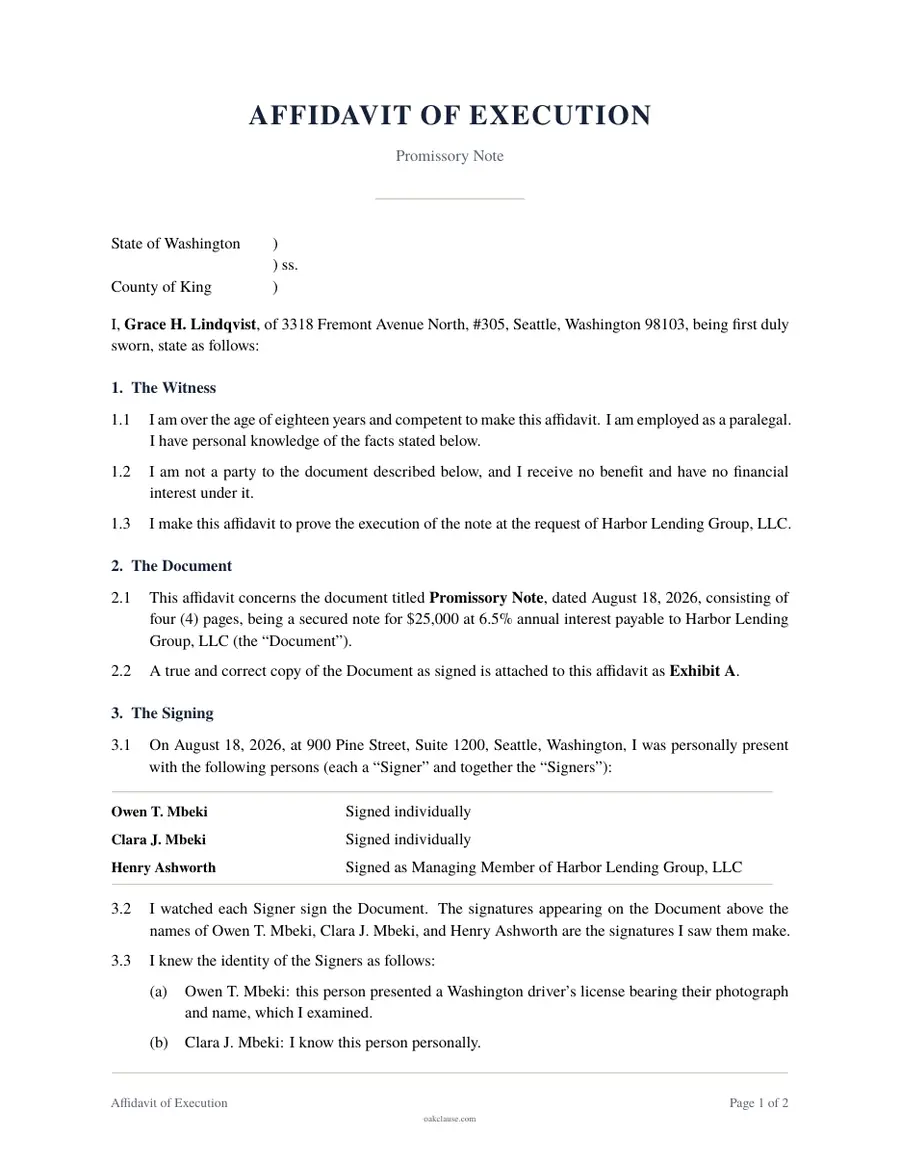
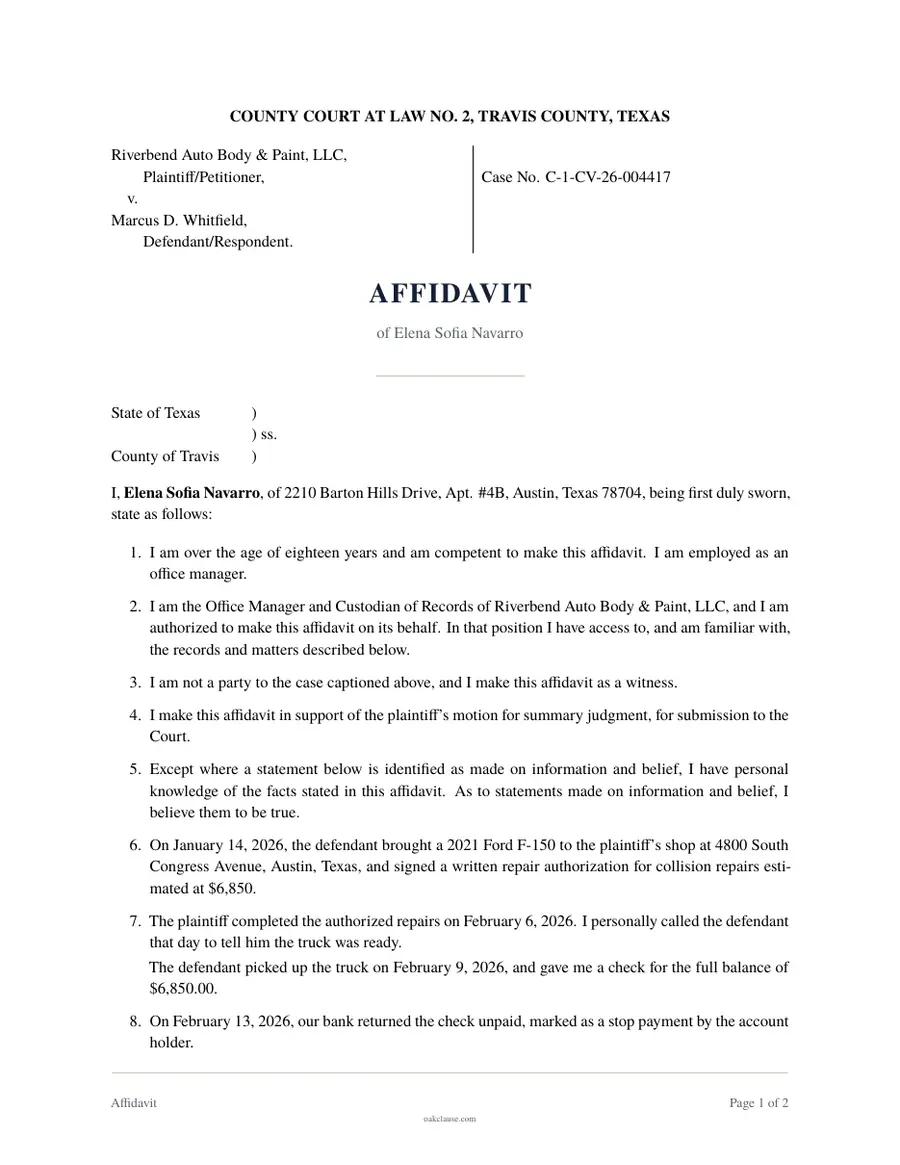
A clear affidavit identifies the affiant, states where it was sworn, lists the facts in short numbered paragraphs based on the affiant's own knowledge, and ends with the affiant's signature and the notary's jurat. This document follows that structure and can add a court caption and exhibits when you need them.
When to use it
- A court, agency or company has asked you for a sworn written statement of facts.
- You need to support a motion, application or claim with evidence from someone who cannot attend in person.
- You want to formally confirm facts such as your identity, a name change, ownership of property or a past event.
- You are a witness to an incident and have been asked to put what you observed on the record.
- A business needs an officer or employee to swear to facts about its records or dealings.
What is included
- State and county venue heading
- Optional court case caption
- Affiant identification and competency statement
- Capacity statement for individuals or business representatives
- Unlimited numbered statements of fact
- Basis of knowledge statement
- Optional list of attached exhibits
- Penalty of perjury declaration
- Affiant signature block
- Notary jurat for an oath or affirmation
How to make your Affidavit
Answer the questions
Tell us about the parties and the terms you want. Most documents take about 5 to 20 minutes.
Review the preview
Check the draft as you go and change any answer. The document updates instantly.
Download, sign and keep a copy
Download a print-ready PDF, sign it with the other parties, and give everyone a copy.
Affidavit in another state
Back to the general affidavit page51 states shown
- ALAlabama
- AKAlaska
- AZArizona
- ARArkansas
- CACalifornia
- COColorado
- CTConnecticut
- DEDelaware
- DCDistrict of Columbia
- FLFlorida
- GAGeorgia
- HIHawaii
- IDIdaho
- ILIllinois
- INIndiana
- IAIowa
- KSKansas
- KYKentucky
- LALouisiana
- MEMaine
- MDMaryland
- MAMassachusetts
- MIMichigan
- MNMinnesota
- MSMississippi
- MOMissouri
- MTMontana
- NENebraska
- NVNevada
- NHNew Hampshire
- NJNew Jersey
- NMNew Mexico
- NYNew York
- NCNorth Carolina
- NDNorth Dakota
- OHOhio
- OKOklahoma
- OROregon
- PAPennsylvania
- RIRhode Island
- SCSouth Carolina
- SDSouth Dakota
- TNTennessee
- TXTexas
- UTUtah
- VTVermont
- VAVirginia
- WAWashington
- WVWest Virginia
- WIWisconsin
- WYWyoming
Frequently asked questions
What is the difference between an affidavit and a declaration?
An affidavit is sworn or affirmed in front of a notary or other official who administers an oath. A declaration is signed under penalty of perjury without a notary. Some courts and agencies accept declarations for certain filings, but many institutions still ask for a notarized affidavit, so check what the recipient requires.
Does an affidavit have to be notarized?
In most situations, yes. What makes a document an affidavit is the oath or affirmation given before an authorized official, and a notary public is the official most people use. Do not sign the affidavit until you are in front of the notary, because the notary must watch you sign and administer the oath.
Can I swear to something I only heard from someone else?
Affidavits carry the most weight when they are based on personal knowledge, meaning things you saw, heard or did yourself. If some statements are based on what you were told, the document lets you say so, which is more accurate than presenting secondhand information as personal knowledge. Courts may give less weight to such statements.
What is the difference between swearing and affirming?
Both are promises that the statement is true, with the same legal effect. Swearing traditionally refers to an oath, sometimes with a religious element, while an affirmation is a solemn promise without one. You can choose either, and the jurat wording adjusts to match.
What happens if an affidavit contains false information?
Knowingly making a false statement in an affidavit can be prosecuted as perjury or a similar offense, and it can lead to the affidavit being rejected or a court case being lost. Only include facts you believe are true, and say so when a statement is based on information and belief rather than personal knowledge.
Can someone else write my affidavit for me?
Yes. A lawyer, paralegal or friend can help draft it, but the affiant must read it carefully and agree with every statement before signing, because the affiant is the one swearing to it. Change anything that is not accurate before you see the notary.
How do I attach documents to an affidavit?
List each document as a numbered exhibit in the questionnaire. The affidavit will refer to the exhibits, and you attach a copy of each one behind the signed affidavit, usually labeled with a cover sheet or stamp matching the exhibit number.
Can I use this affidavit in court?
Many courts accept affidavits to support motions and other filings, and the optional caption puts your case name and number at the top. Courts often have their own formatting rules or required forms, so check the local rules or ask the court clerk before filing.
More New Mexico documents
Other documents people prepare for New Mexico, each with the state’s rules where we have checked them.
All New Mexico documents and rules