Minnesota Real Estate Purchase Agreement
Put the sale of a home or land in writing: price, earnest money, financing, inspection and closing terms in one state-aware contract you can finish in about 20 minutes.
Includes 30 days of edits
- 5 to 20 minutes
- Print-ready PDF
- Tailored to Minnesota
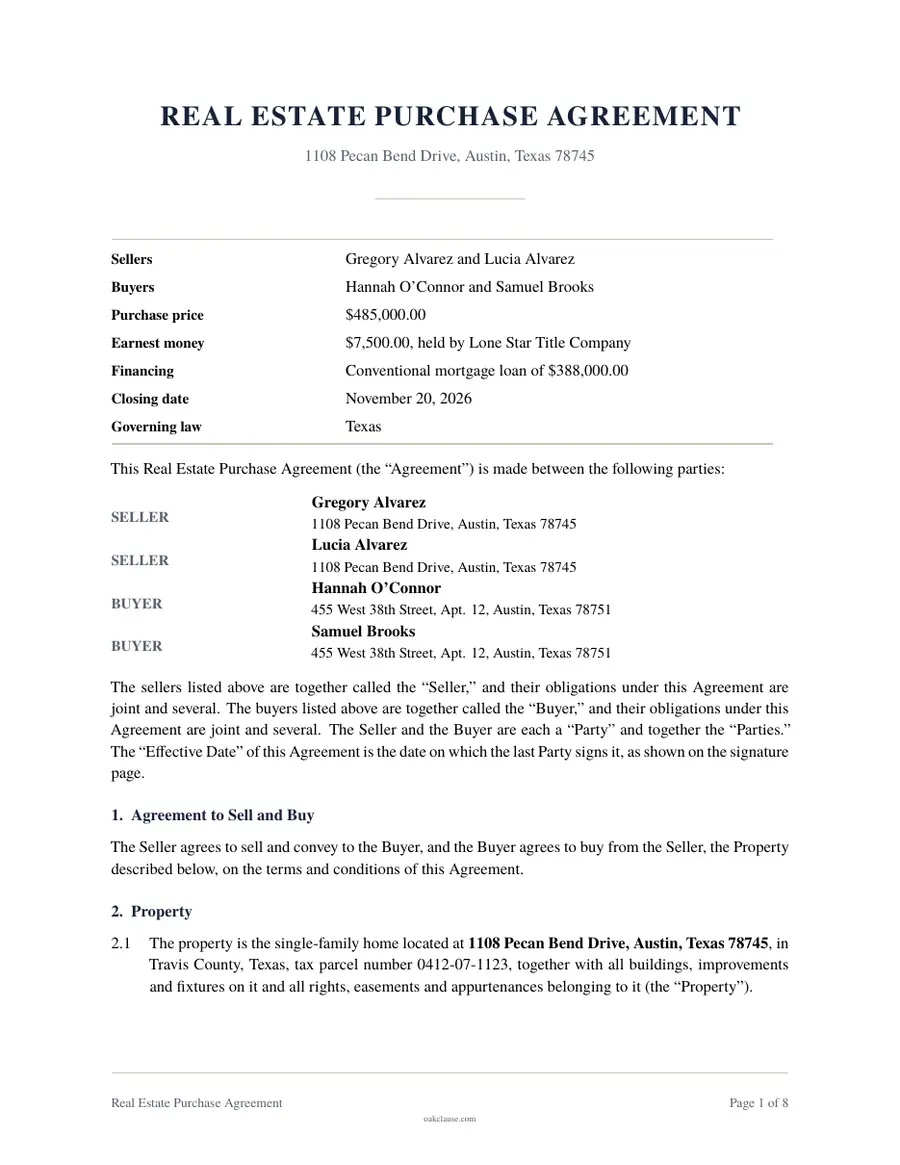
Purchase Agreement rules in Minnesota
The basics of a home sale are similar across the country, but states differ on several important points: which disclosure forms a seller must provide and when, whether an attorney must handle the closing, how earnest money held by a broker must be managed, which type of deed is customary, who traditionally pays transfer taxes and title insurance, and how much a buyer can recover if the seller backs out. Some states also give buyers a right to cancel after receiving certain disclosures. This agreement defers to the law of the state where the property is located on each of these points, so a requirement that applies to the sale is respected even when it is not spelled out. Attach any state or local disclosure forms that apply before signing.
When you create this document for Minnesota, the questionnaire uses Minnesota as the governing law and adds wording that defers to Minnesota requirements where they apply. Laws change, so confirm current rules with official Minnesota sources or a local attorney for anything critical.
What is a Real Estate Purchase Agreement?
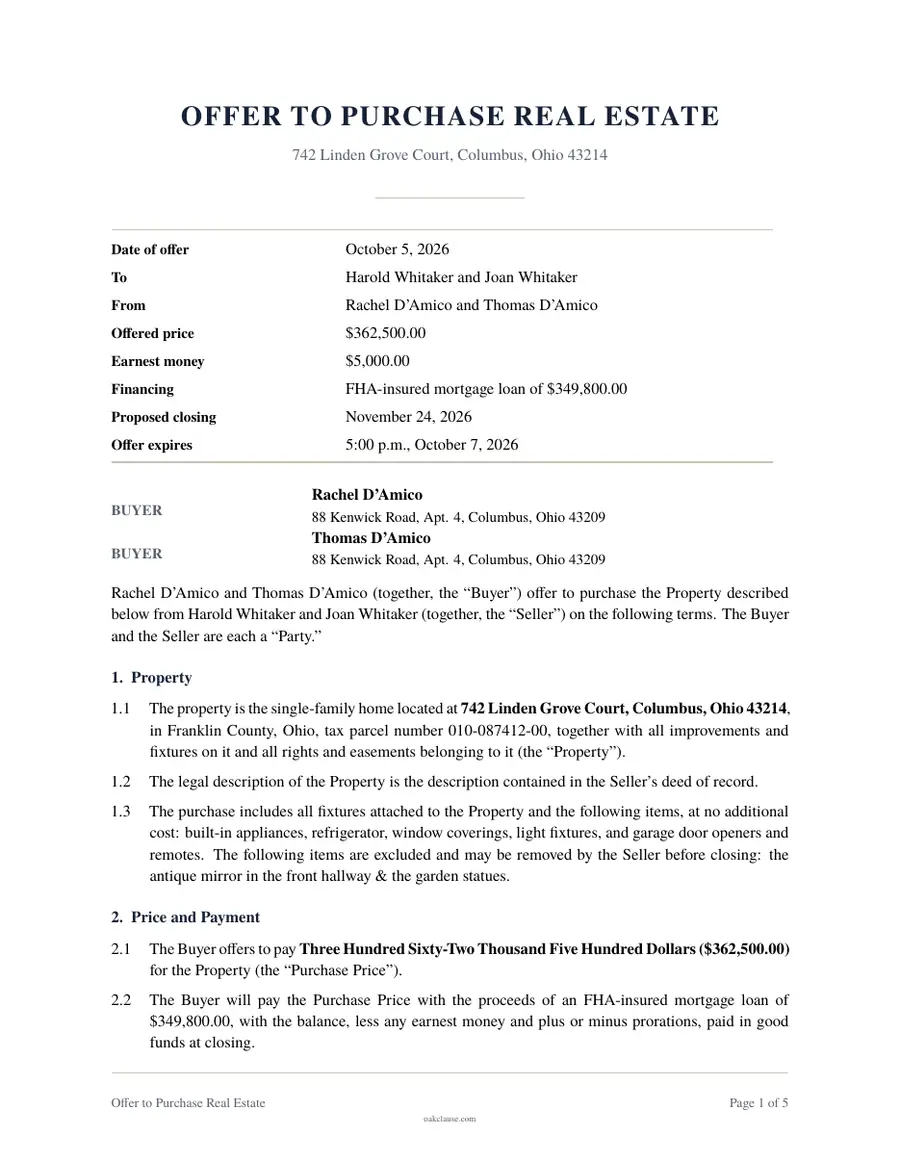
A real estate purchase agreement is the binding contract between the person selling real property and the person buying it. It records the price, how the buyer will pay, which conditions must be met before the sale goes through, and when and how ownership and possession will change hands at closing.
Once both sides sign, the agreement becomes the roadmap for the whole transaction. The title company or closing attorney works from it, the buyer's lender relies on it, and the deadlines it sets for inspections, financing and title review determine when each side may still walk away and when the earnest money is at risk.
Real estate transfers are governed by the law of the state where the property sits. This agreement asks for that state and defers to its rules on seller disclosures, closing practice, deed formalities and remedies, so the contract stays consistent with local requirements even where the details differ from state to state.
When to use it
- You have agreed on a price to buy or sell a house, condo, townhouse, multi-family building or parcel of land.
- You are selling a property yourself without a listing agent and need a complete written contract.
- A buyer's offer has been accepted and you want a full agreement covering every term before closing.
- You are buying from a relative, neighbor or landlord and want the deal documented properly.
- You want clear deadlines for inspections, financing approval and title review.
What is included
- Seller and buyer details, including business entities and co-owners
- Property address, legal description and included or excluded items
- Purchase price, earnest money deposit and escrow holder
- Cash or loan financing, with optional financing and appraisal contingencies
- Inspection, home sale, title and survey contingencies with deadlines
- Property condition, seller disclosures and lead-based paint disclosure
- Closing date, deed type, closing costs, prorations and possession
- Risk of loss, default remedies and dispute resolution
- Broker disclosure, home warranty and notice terms
- Signature blocks for every seller and buyer
How to make your Purchase Agreement
Answer the questions
Tell us about the parties and the terms you want. Most documents take about 5 to 20 minutes.
Review the preview
Check the draft as you go and change any answer. The document updates instantly.
Download, sign and keep a copy
Download a print-ready PDF, sign it with the other parties, and give everyone a copy.
Purchase Agreement in another state
Back to the general purchase agreement page51 states shown
- ALAlabama
- AKAlaska
- AZArizona
- ARArkansas
- CACalifornia
- COColorado
- CTConnecticut
- DEDelaware
- DCDistrict of Columbia
- FLFlorida
- GAGeorgia
- HIHawaii
- IDIdaho
- ILIllinois
- INIndiana
- IAIowa
- KSKansas
- KYKentucky
- LALouisiana
- MEMaine
- MDMaryland
- MAMassachusetts
- MIMichigan
- MNMinnesota
- MSMississippi
- MOMissouri
- MTMontana
- NENebraska
- NVNevada
- NHNew Hampshire
- NJNew Jersey
- NMNew Mexico
- NYNew York
- NCNorth Carolina
- NDNorth Dakota
- OHOhio
- OKOklahoma
- OROregon
- PAPennsylvania
- RIRhode Island
- SCSouth Carolina
- SDSouth Dakota
- TNTennessee
- TXTexas
- UTUtah
- VTVermont
- VAVirginia
- WAWashington
- WVWest Virginia
- WIWisconsin
- WYWyoming
Frequently asked questions
Is a real estate purchase agreement legally binding?
Yes. Once the buyer and seller have both signed and any acceptance is delivered, it is an enforceable contract. Most states require contracts for the sale of land to be in writing and signed, which is one reason a handshake deal on a house is risky. Contingencies let a party cancel in specific situations, but only within the deadlines the contract sets.
What is earnest money and what happens to it?
Earnest money is a good-faith deposit the buyer makes after the agreement is signed. It is usually held by a title company, closing attorney or broker and credited toward the price at closing. If the buyer cancels under a valid contingency it is normally returned; if the buyer simply defaults, the seller may be entitled to keep it, depending on the contract and state law.
What contingencies should a purchase agreement include?
Common contingencies cover the buyer's ability to get a loan, an appraisal at or above the price, a satisfactory home inspection, clear title, and sometimes the sale of the buyer's current home. Each one gives the buyer a way out within a set time. Fewer contingencies make an offer more attractive to a seller but put more risk on the buyer.
Can I sell my house without a real estate agent?
Yes. Owners can sell their own property in every state. You will still need a written purchase agreement, the disclosures your state requires and someone to handle the closing, such as a title company or real estate attorney. Some states require an attorney to take part in the closing.
Does a purchase agreement need to be notarized?
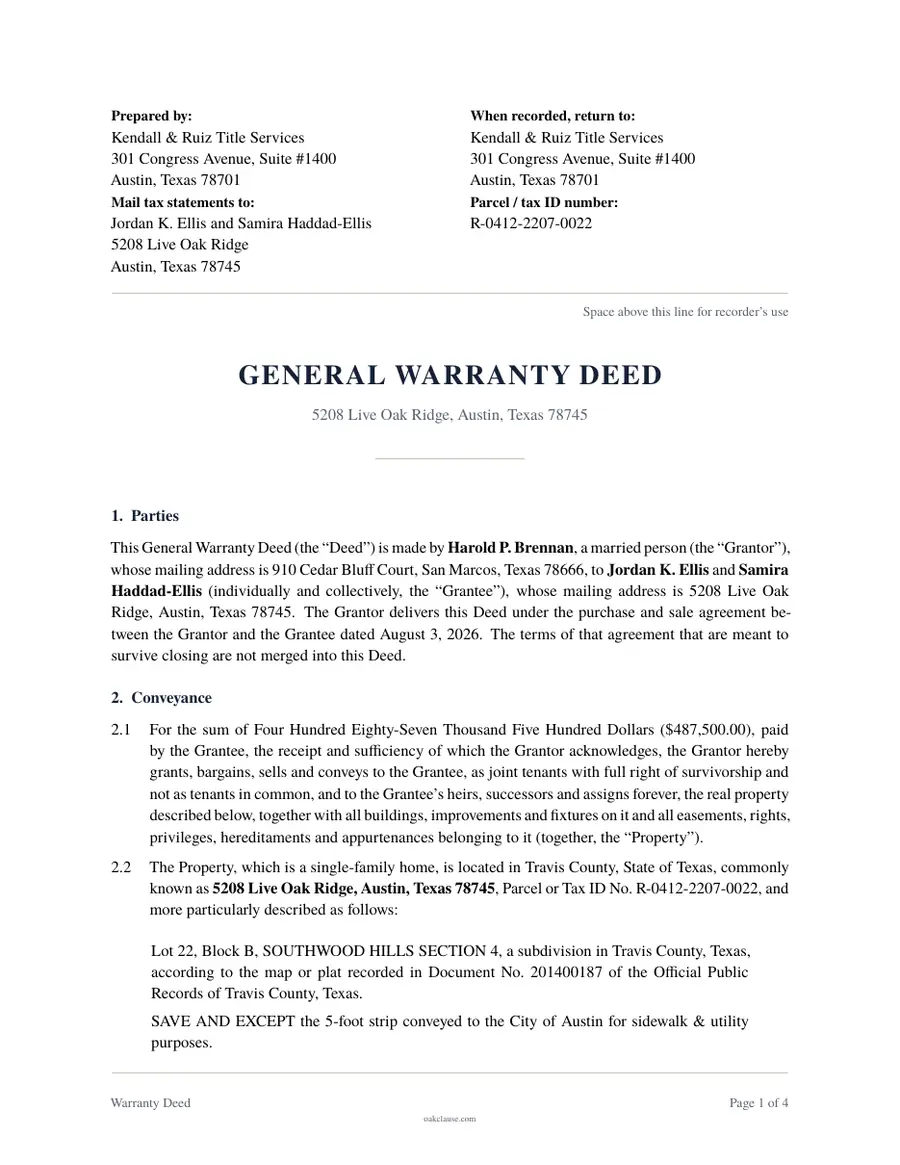
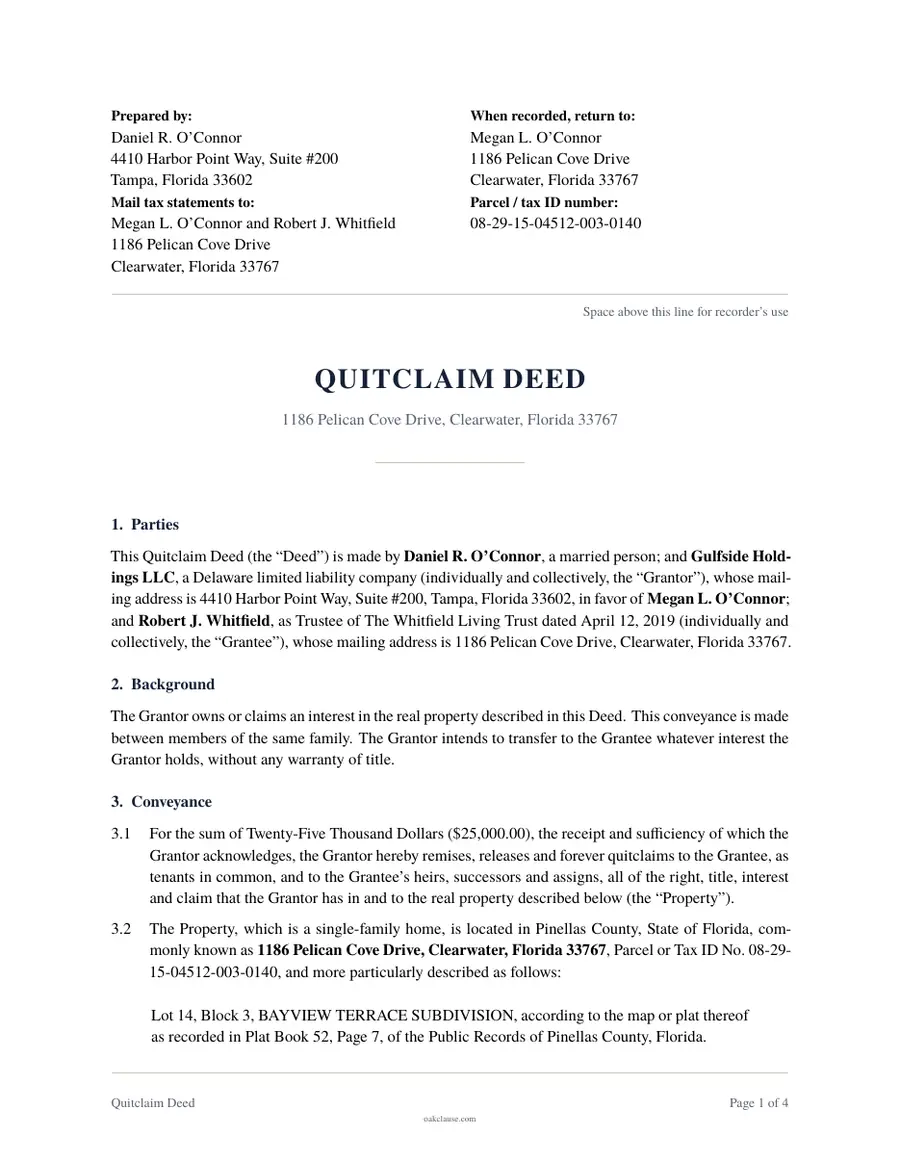
Usually not. The purchase agreement itself generally only needs the signatures of the buyer and seller. The deed that transfers ownership at closing is the document that is normally notarized and recorded with the county.
What does selling a property as is mean?
It means the seller will not make repairs and the buyer accepts the property in its current condition. It does not usually excuse a seller from disclosing known defects that state law requires to be disclosed, and the buyer can still have the property inspected if the contract includes an inspection contingency.
Who pays the closing costs?
It depends on the contract and local custom. Buyers typically pay loan-related costs, and sellers often pay for the deed preparation and, in many areas, the owner's title insurance policy. Transfer taxes and escrow fees are split differently from place to place. This agreement lets you follow local custom or split the shared costs equally.
What happens if the property is damaged before closing?
Under this agreement the seller carries the risk of loss until closing. If the property is significantly damaged, the buyer can choose to cancel and get the earnest money back or go ahead with the purchase and receive the insurance proceeds. Some states have default rules on this point that apply when a contract is silent.
How is a purchase agreement different from an offer to purchase?
An offer is the buyer's written proposal, which the seller can accept, reject or counter. A purchase agreement is the full contract both sides sign once they agree. In practice, an accepted offer can itself become the binding contract, so make sure any offer you sign contains terms you are prepared to be held to.
More Minnesota documents
Other documents people prepare for Minnesota, each with the state’s rules where we have checked them.
All Minnesota documents and rules