Utah Quitclaim Deed
Transfer whatever ownership interest you have in a piece of real estate to someone else, quickly and without promising anything about the title.
Includes 30 days of edits
- 5 to 20 minutes
- Print-ready PDF
- Tailored to Utah
Utah rules at a glance
Deed signing and recording
- Notary acknowledgment
- Required to record
- Witnesses
- None
- Transfer tax
- No state tax
Utah deeds need a certificate of acknowledgment, proof of execution, or jurat to be recorded, and Utah has no real estate transfer tax.
When you create this quitclaim deed for Utah, the questionnaire uses Utah as the governing law and adds wording that defers to Utah requirements where they apply.
General information, not legal advice. Laws change, and cities can add their own rules, so check the current statute before you rely on it.
What is a Quitclaim Deed?
A quitclaim deed is a document that transfers a person's interest in real property to someone else. The person giving up the interest is the grantor, and the person receiving it is the grantee. Unlike a warranty deed, a quitclaim deed makes no promises about the title: the grantor hands over whatever interest they actually hold, which could be full ownership, a partial share or nothing at all.
Because it carries no guarantees, a quitclaim deed is mostly used between people who know and trust each other, or where the history of the property is already clear. Common examples include adding or removing a spouse from the title, moving property into a living trust or a family LLC, dividing property after a divorce, and clearing up a possible claim that clouds the title.
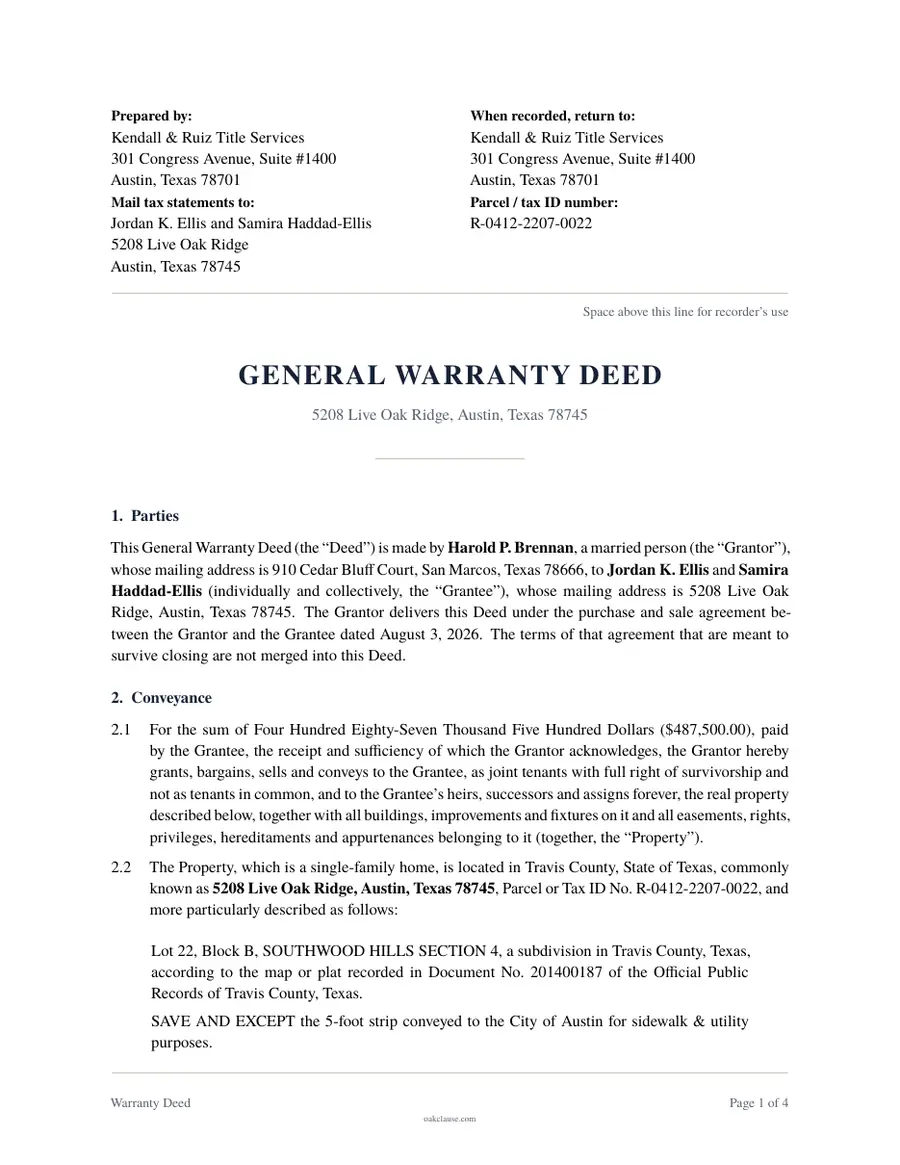
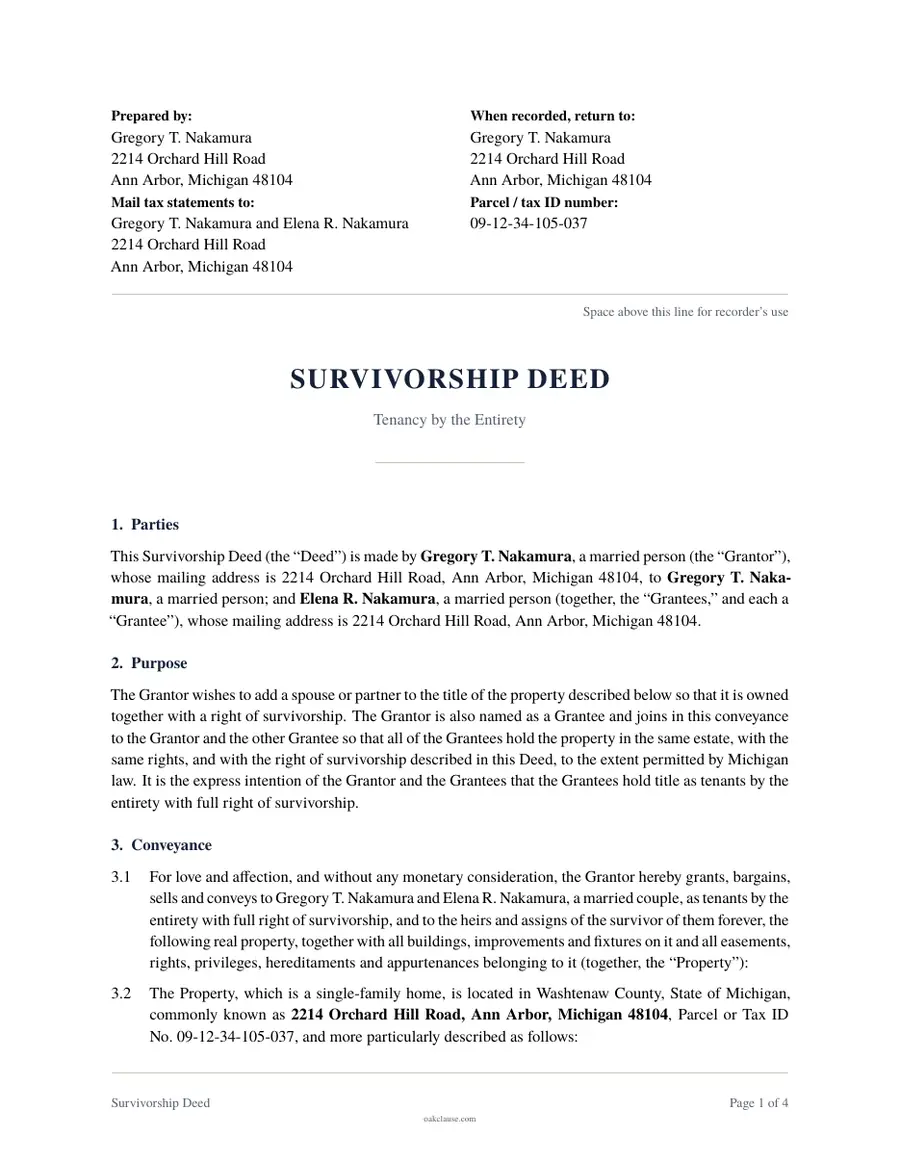
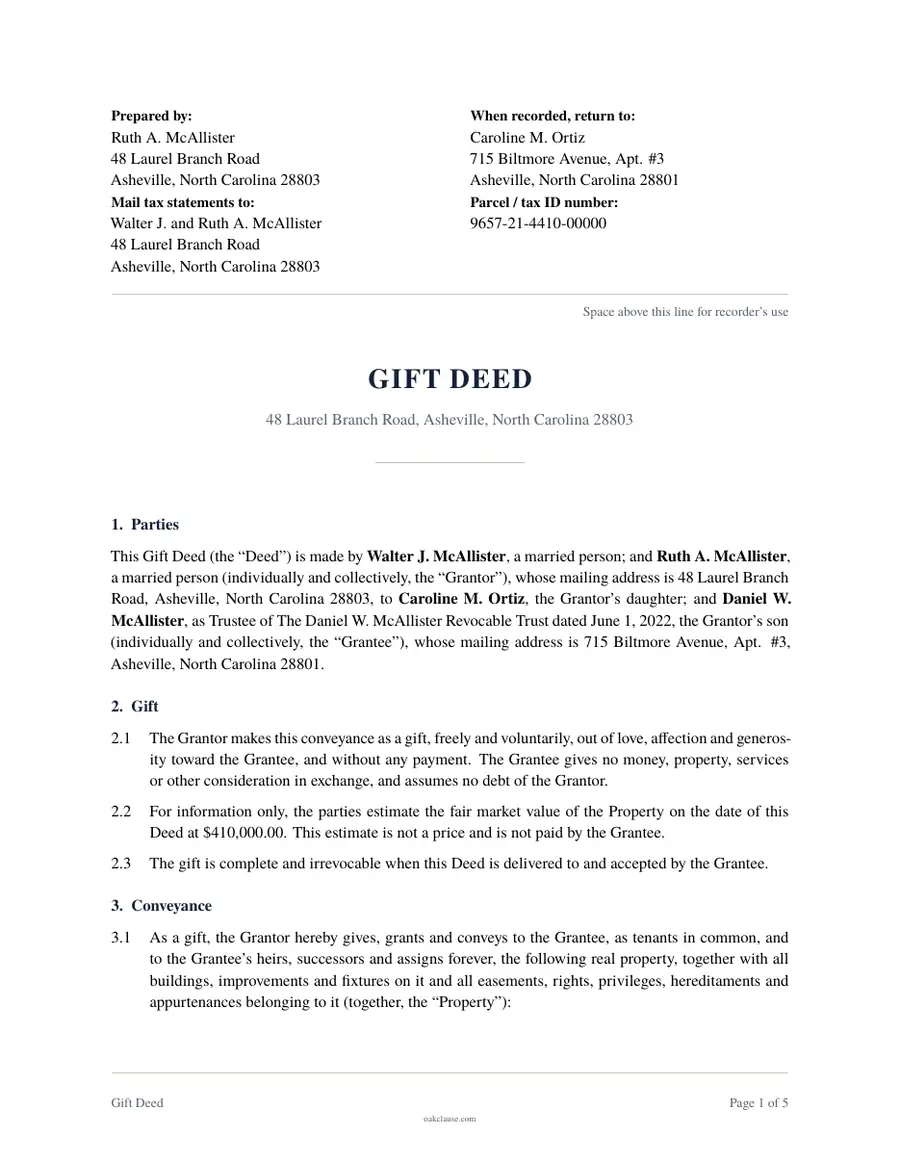
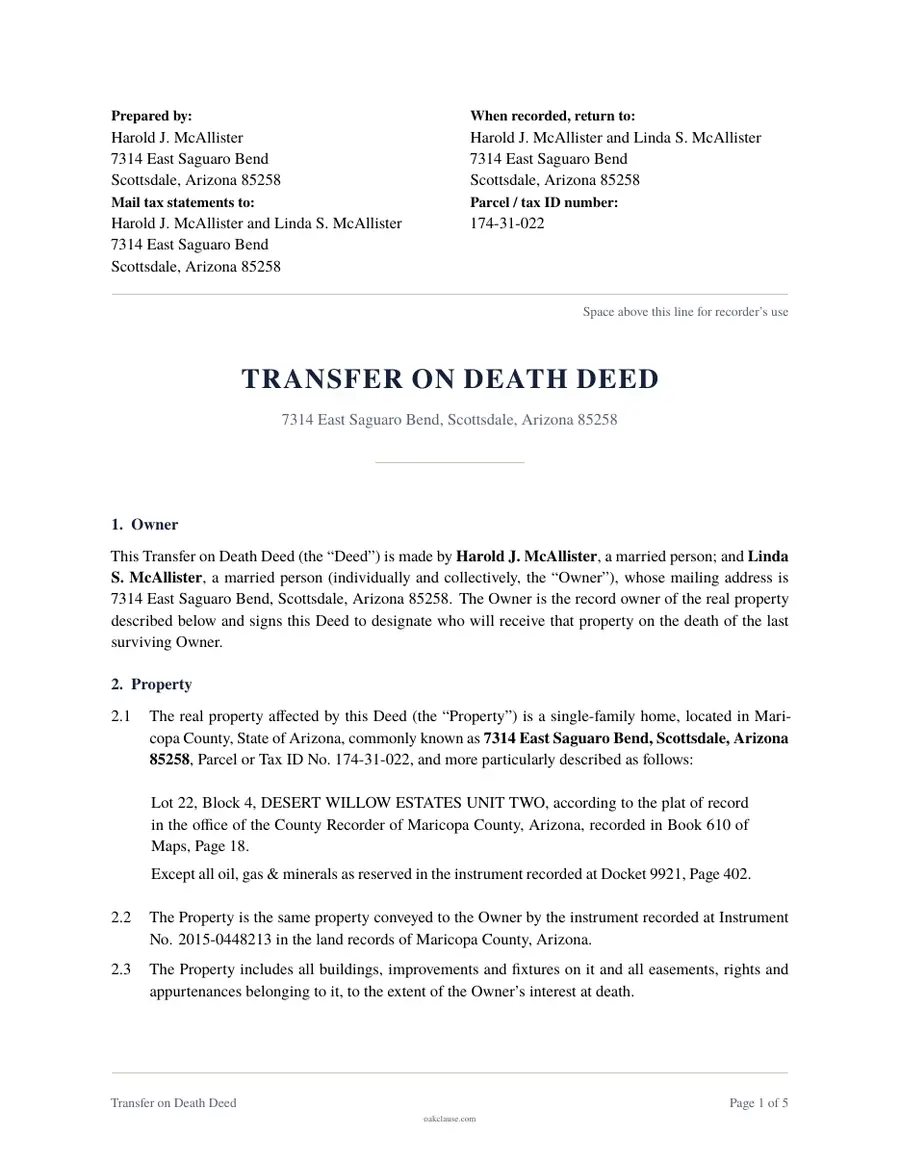
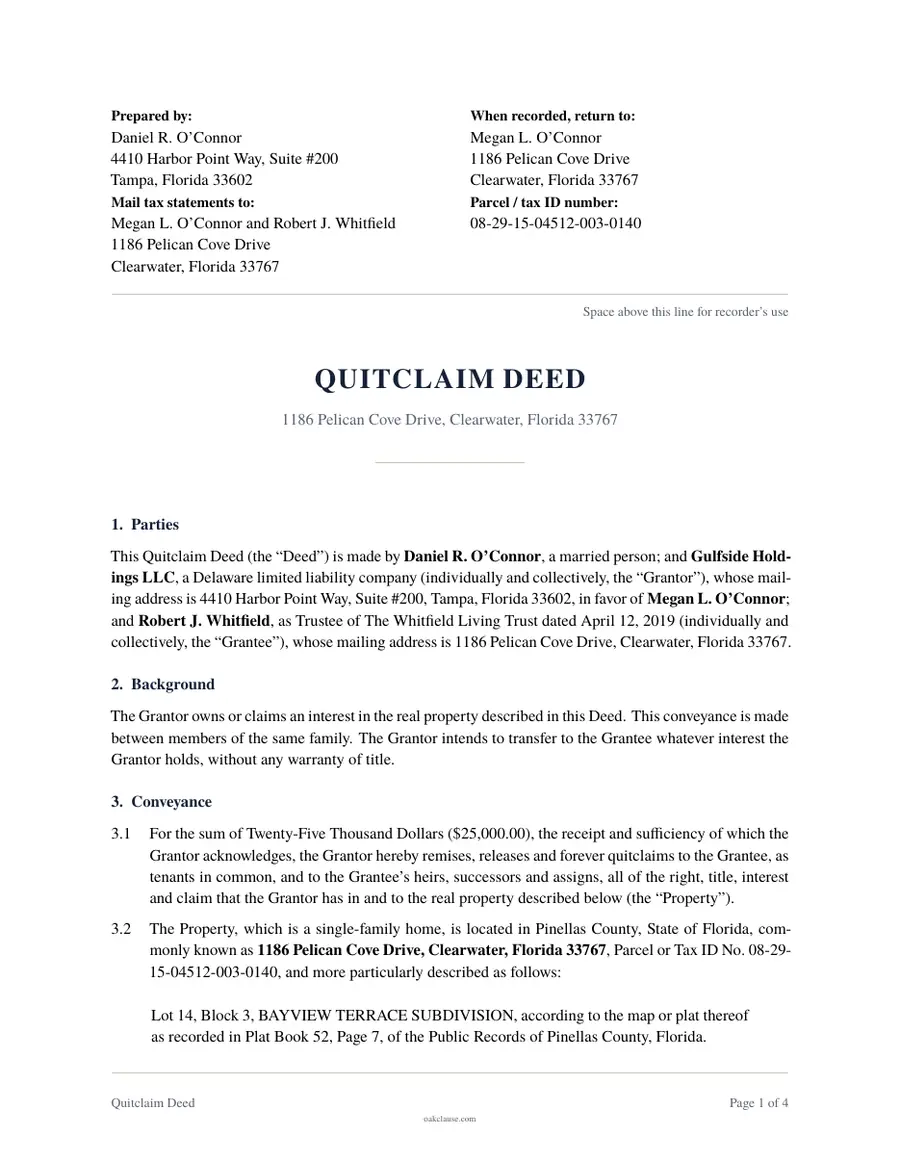
A deed is only effective against the rest of the world once it is signed, acknowledged before a notary and recorded with the county office that keeps land records where the property is located. This document includes the recording information block, a legal description, optional life estate and spousal joinder language, witness lines and a notary acknowledgment.
When to use it
- You want to add a spouse, partner or family member to the title of a home you already own.
- You are being removed from the title, for example as part of a divorce or separation.
- You are transferring property you own personally into your own living trust or business entity.
- You want to release a possible claim to a property so the title is clear for its current owner.
- You want to give a family member your interest in a property without promising anything about the title.
What is included
- Recording block with preparer, return address and tax statement address
- Grantor and grantee details for individuals, businesses and trustees
- Consideration statement, including nominal or gift transfers
- Legal description, parcel number and prior deed reference
- Co-ownership wording such as joint tenancy or tenants in common
- Optional reservation of a life estate
- Express disclaimer of title warranties
- Spousal joinder to release marital or homestead rights
- Signature lines with optional witnesses
- Notary acknowledgment
How to make your Quitclaim Deed
Answer the questions
Tell us about the parties and the terms you want. Most documents take about 5 to 20 minutes.
Review the preview
Check the draft as you go and change any answer. The document updates instantly.
Download, sign and keep a copy
Download a print-ready PDF, sign it with the other parties, and give everyone a copy.
Quitclaim Deed in another state
Back to the general quitclaim deed page51 states shown
- ALAlabama
- AKAlaska
- AZArizona
- ARArkansas
- CACalifornia
- COColorado
- CTConnecticut
- DEDelaware
- DCDistrict of Columbia
- FLFlorida
- GAGeorgia
- HIHawaii
- IDIdaho
- ILIllinois
- INIndiana
- IAIowa
- KSKansas
- KYKentucky
- LALouisiana
- MEMaine
- MDMaryland
- MAMassachusetts
- MIMichigan
- MNMinnesota
- MSMississippi
- MOMissouri
- MTMontana
- NENebraska
- NVNevada
- NHNew Hampshire
- NJNew Jersey
- NMNew Mexico
- NYNew York
- NCNorth Carolina
- NDNorth Dakota
- OHOhio
- OKOklahoma
- OROregon
- PAPennsylvania
- RIRhode Island
- SCSouth Carolina
- SDSouth Dakota
- TNTennessee
- TXTexas
- UTUtah
- VTVermont
- VAVirginia
- WAWashington
- WVWest Virginia
- WIWisconsin
- WYWyoming
Frequently asked questions
Does a deed need to be notarized in Utah?
Yes, in general. Utah deeds need a certificate of acknowledgment, proof of execution, or jurat to be recorded, and Utah has no real estate transfer tax.
How many witnesses does a deed need in Utah?
None. Utah does not require witnesses to sign a deed.
Is there a real estate transfer tax in Utah?
We found no state real estate transfer tax in Utah.
Where do the Utah rules for deeds come from?
They come from Utah Code 57-3-101. We last checked them in October 2026. Laws change, so check the current statute before you rely on it.
What is the difference between a quitclaim deed and a warranty deed?
A warranty deed includes promises from the grantor that the title is good and that the grantor will defend it against claims. A quitclaim deed contains no such promises. It only transfers whatever interest the grantor happens to hold, so the grantee has no claim against the grantor if a title problem turns up later.
Does a quitclaim deed remove my name from the mortgage?
No. A deed changes who owns the property, not who owes the loan. If you sign a quitclaim deed but your name is on the mortgage, you generally remain responsible for the debt until the lender releases you or the loan is refinanced or paid off.
Does a quitclaim deed need to be notarized?
In practice, yes. Almost every county recorder requires the grantor's signature to be acknowledged before a notary public before the deed can be recorded. A few states also require one or two witnesses. This document includes a notary acknowledgment and lets you add witness lines.
How do I record a quitclaim deed?
Take or mail the signed and notarized original to the recorder, register of deeds or clerk for the county where the property is located, together with the recording fee and any transfer tax form or exemption statement the county requires. The office stamps it with recording details and returns it to the address in the recording block.
Where do I find the legal description of the property?
Copy it word for word from the most recent recorded deed for the property, which you can usually get from the county recorder's office or its website. A street address alone is generally not enough to identify the land. If the description is long, it can be attached as an exhibit.
Can a quitclaim deed be used to transfer property into a trust?
Yes, this is one of the most common uses. The owner signs as grantor and conveys the property to themselves as trustee of their trust. Check whether your lender, title insurer or homeowner's insurer needs to be told about the transfer.
Are there tax consequences to a quitclaim deed?
There can be. Some states and counties charge a transfer tax when a deed is recorded, though many offer exemptions for gifts, transfers between spouses or transfers into a trust. Transferring property for less than its value may also be a gift for federal tax purposes. A tax professional can explain how the rules apply to your situation.
Can a quitclaim deed be reversed?
Once a valid deed is delivered and accepted, the grantor cannot simply take it back. The usual way to undo it is for the grantee to sign a new deed conveying the property back. A court can set aside a deed in limited cases, such as fraud or lack of capacity.
More Utah documents
Other documents people prepare for Utah, each with the state’s rules where we have checked them.
All Utah documents and rules