Arkansas Real Estate Gift Deed
Give a house, condo or piece of land to a family member, friend or charity with no payment in return.
Includes 30 days of edits
- 5 to 20 minutes
- Print-ready PDF
- Tailored to Arkansas
Arkansas rules at a glance
Deed signing and recording
- Notary acknowledgment
- Required to record
An Arkansas deed must be acknowledged (or proved) before it can be recorded, the execution statute also refers to two disinterested witnesses, and the state real property transfer tax totals $3.30 per $1,000 of consideration above $100.
When you create this gift deed for Arkansas, the questionnaire uses Arkansas as the governing law and adds wording that defers to Arkansas requirements where they apply.
General information, not legal advice. Laws change, and cities can add their own rules, so check the current statute before you rely on it.
What is a Gift Deed?
A gift deed is a deed that transfers ownership of real property from one person (the grantor, or donor) to another (the grantee, or recipient) without any payment. It states that the transfer is made out of love and affection or generosity, and that the recipient gives nothing in exchange. Once the deed is signed, delivered and accepted, the gift generally cannot be taken back.
Stating plainly that the transfer is a gift matters for several reasons. It explains why no price appears on the deed, it can support a transfer tax or reassessment exemption in places that offer one for gifts, and it records the donor's intent in case the transfer is questioned later. Gift deeds are common between parents and children, grandparents and grandchildren, spouses, and donors and charities.
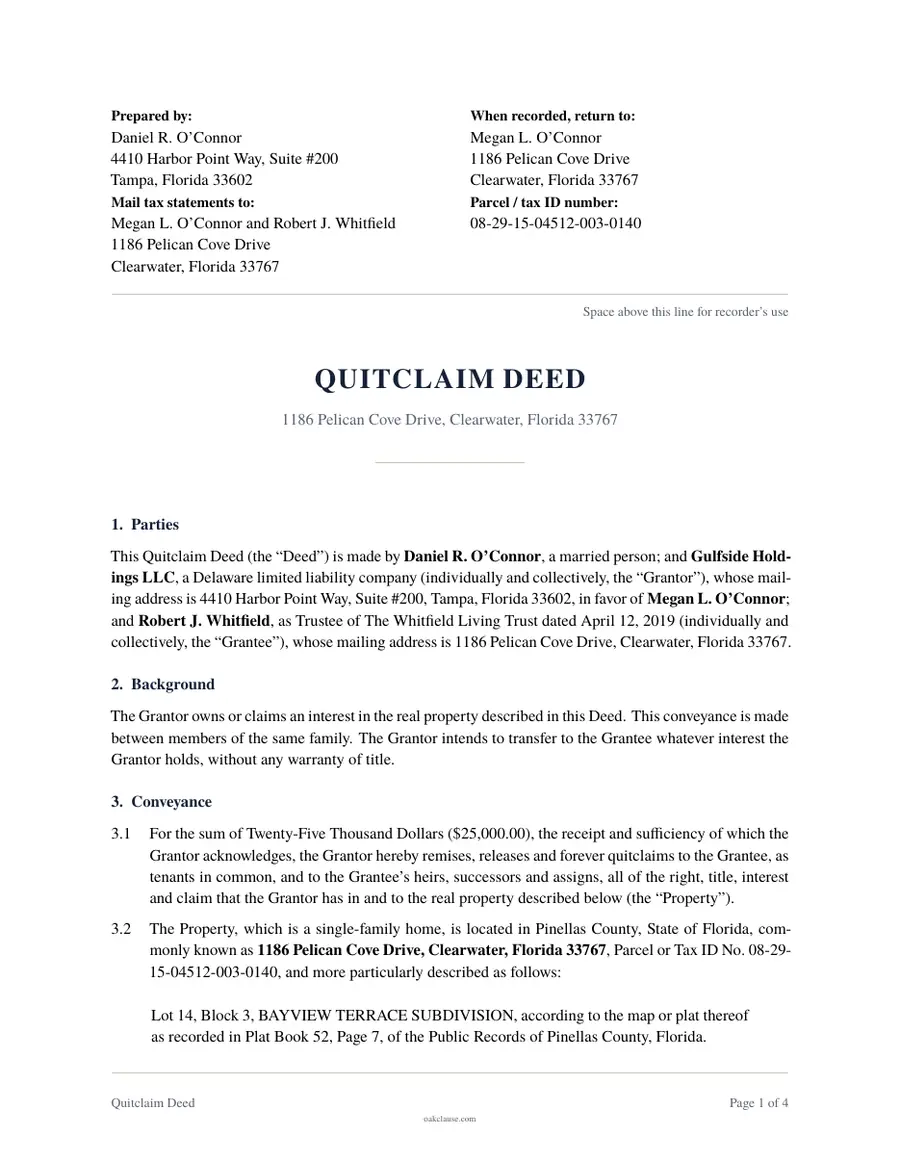
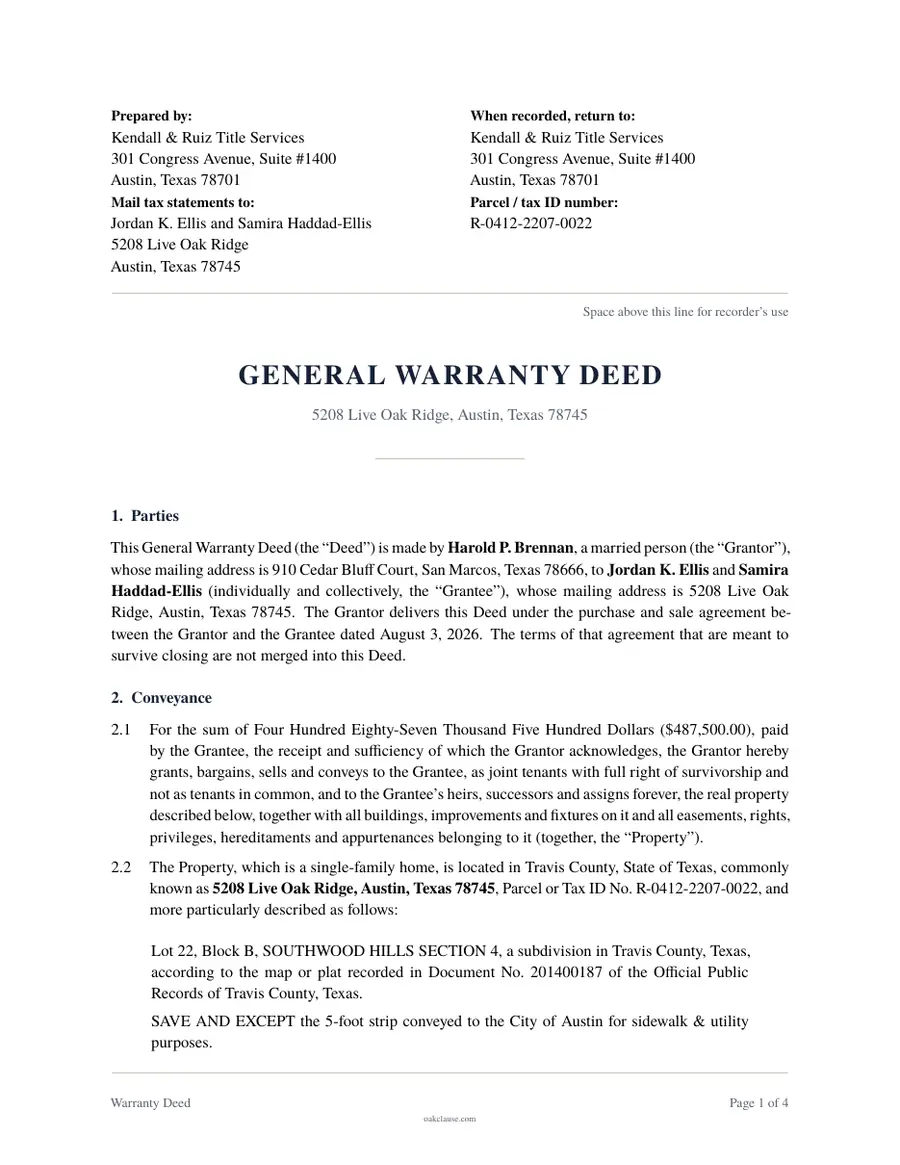
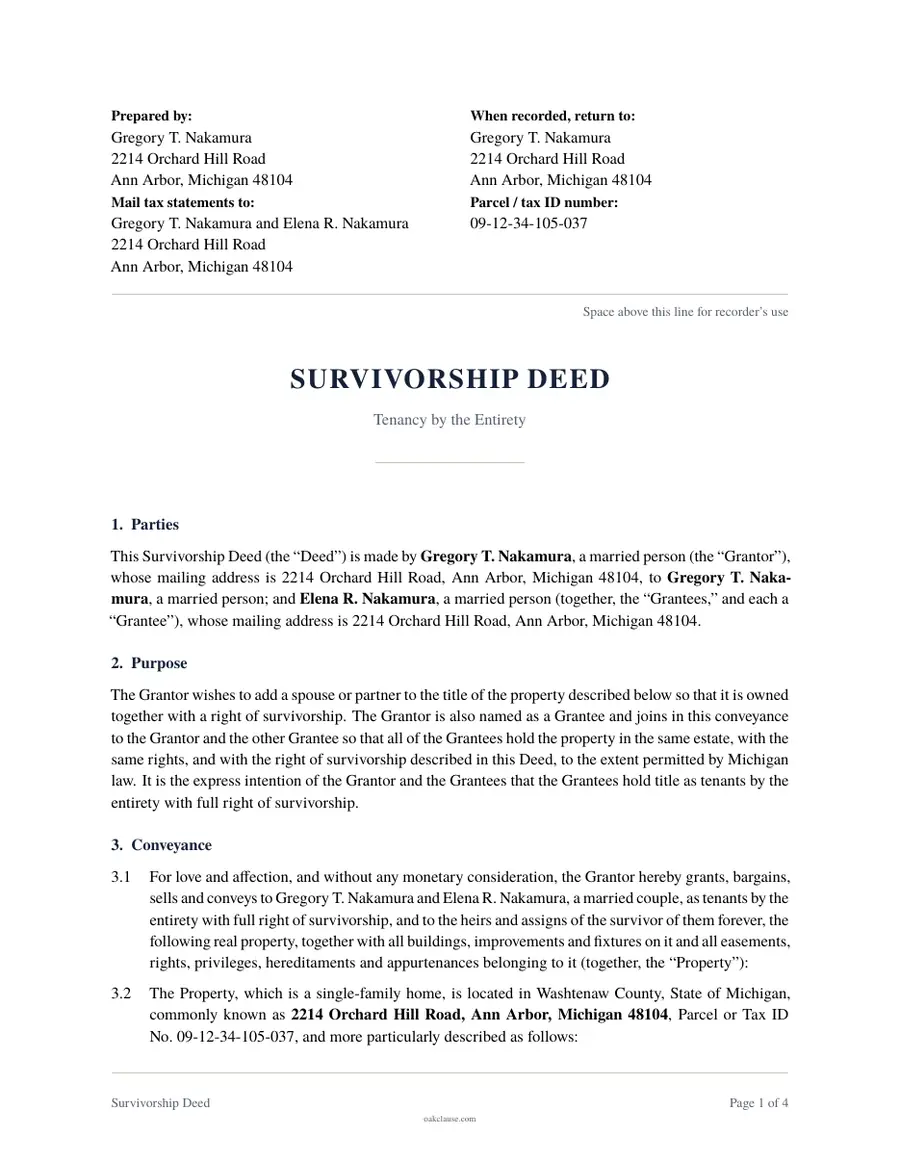
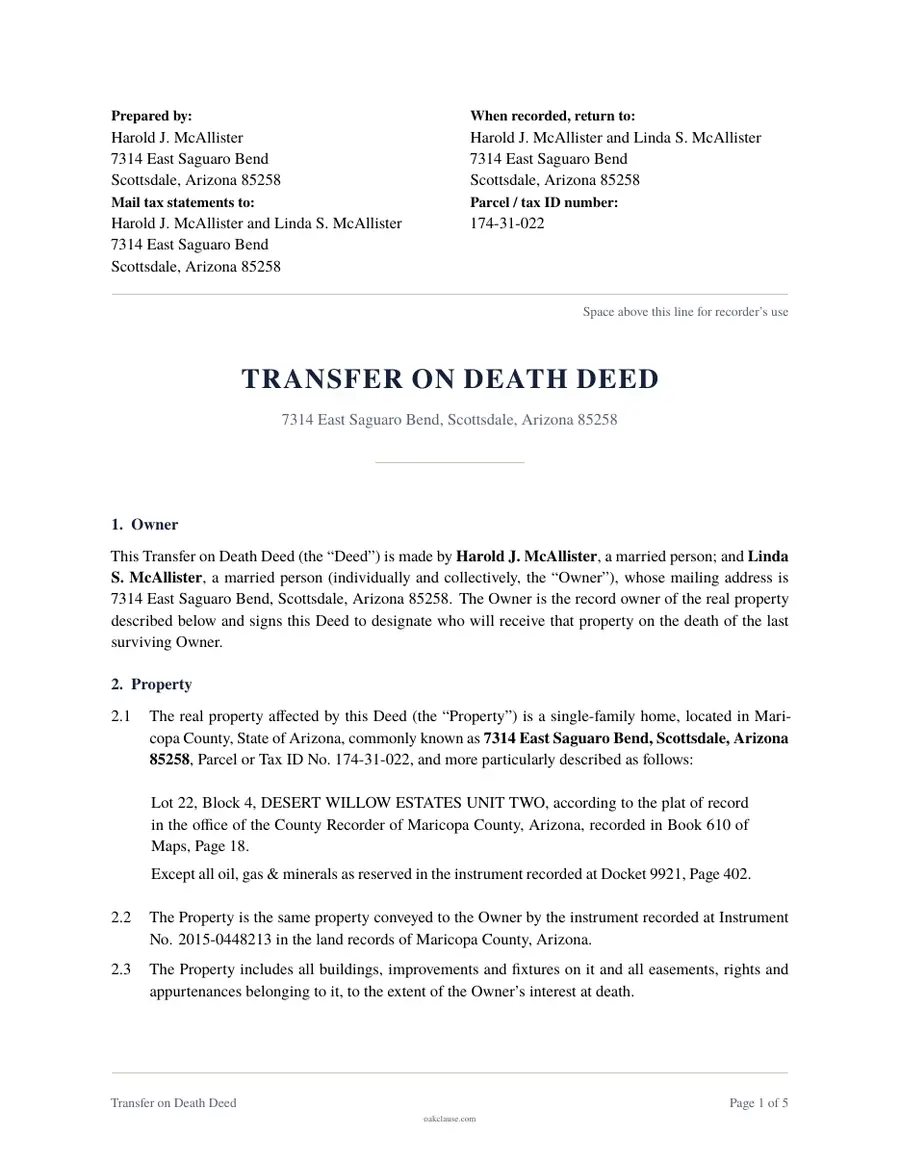
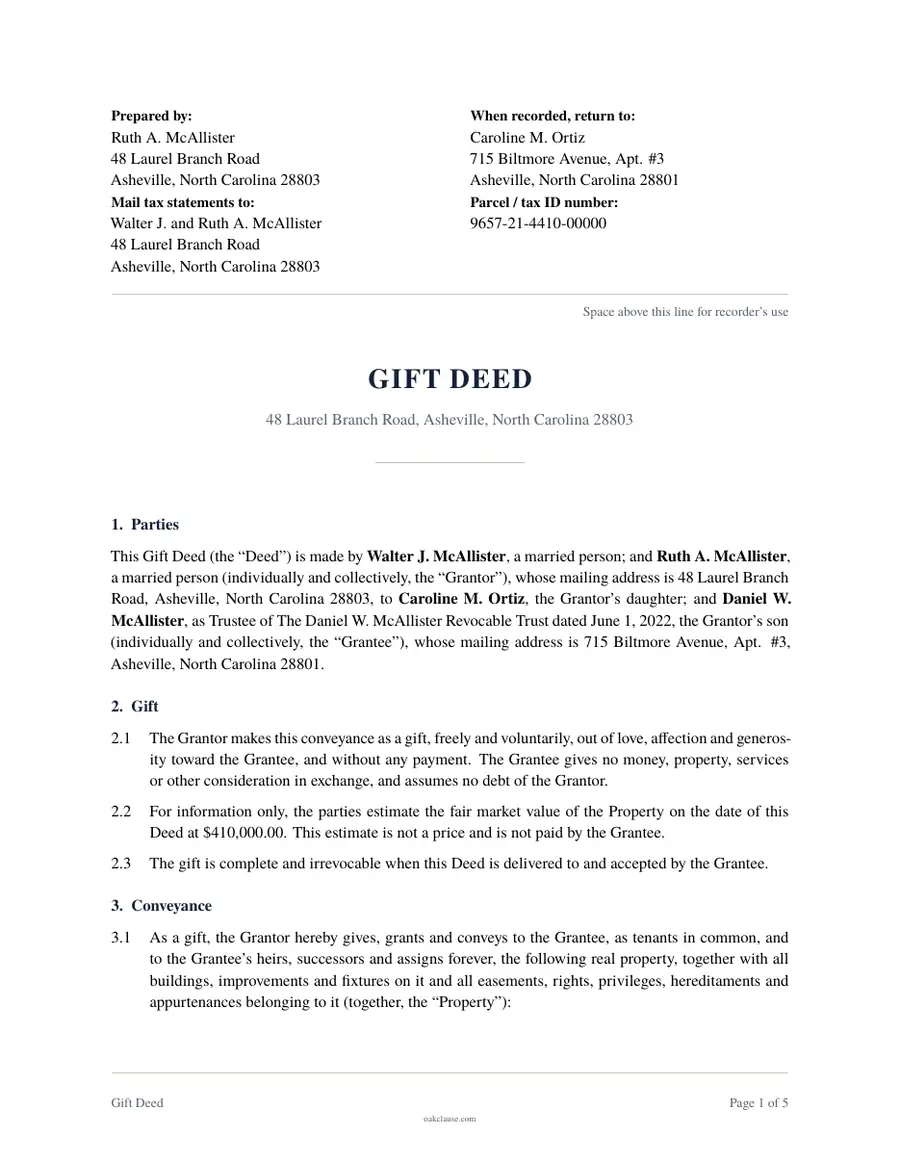
Like any deed, a gift deed must identify the property with its legal description, be signed by the donor, acknowledged before a notary and recorded in the county where the property is located. This document includes a recording block, the gift and conveyance clauses, a choice of title warranty, treatment of any existing mortgage, an optional life estate for the donor, a grantee acceptance, witness lines and a notary acknowledgment.
When to use it
- You want to give your home or land to a child, grandchild or other relative during your lifetime.
- You want to make your spouse or partner a co-owner or the sole owner of a property as a gift.
- You are donating real estate to a charity, school or religious organization.
- You want to give property away now but keep the right to live there for the rest of your life.
- You want the deed itself to record that no money changed hands and that the transfer was voluntary.
What is included
- Recording block with preparer, return address and tax statement address
- Donor and recipient details, including relationship
- Statement of gift intent with no consideration
- Legal description, parcel number and prior deed reference
- Co-ownership wording for multiple recipients
- Choice of no warranty, special warranty or general warranty
- Existing mortgage treatment and other exceptions
- Optional life estate reserved for the donor
- Donor representations and recipient acceptance
- Signature lines, optional witnesses and notary acknowledgment
How to make your Gift Deed
Answer the questions
Tell us about the parties and the terms you want. Most documents take about 5 to 20 minutes.
Review the preview
Check the draft as you go and change any answer. The document updates instantly.
Download, sign and keep a copy
Download a print-ready PDF, sign it with the other parties, and give everyone a copy.
Gift Deed in another state
Back to the general gift deed page51 states shown
- ALAlabama
- AKAlaska
- AZArizona
- ARArkansas
- CACalifornia
- COColorado
- CTConnecticut
- DEDelaware
- DCDistrict of Columbia
- FLFlorida
- GAGeorgia
- HIHawaii
- IDIdaho
- ILIllinois
- INIndiana
- IAIowa
- KSKansas
- KYKentucky
- LALouisiana
- MEMaine
- MDMaryland
- MAMassachusetts
- MIMichigan
- MNMinnesota
- MSMississippi
- MOMissouri
- MTMontana
- NENebraska
- NVNevada
- NHNew Hampshire
- NJNew Jersey
- NMNew Mexico
- NYNew York
- NCNorth Carolina
- NDNorth Dakota
- OHOhio
- OKOklahoma
- OROregon
- PAPennsylvania
- RIRhode Island
- SCSouth Carolina
- SDSouth Dakota
- TNTennessee
- TXTexas
- UTUtah
- VTVermont
- VAVirginia
- WAWashington
- WVWest Virginia
- WIWisconsin
- WYWyoming
Frequently asked questions
Does a deed need to be notarized in Arkansas?
Yes, in general. An Arkansas deed must be acknowledged (or proved) before it can be recorded, the execution statute also refers to two disinterested witnesses, and the state real property transfer tax totals $3.30 per $1,000 of consideration above $100.
Where do the Arkansas rules for deeds come from?
They come from Ark. Code 18-12-201, Ark. Code 18-12-104, Ark. Code 14-15-404 and 1 other source. We last checked them in October 2026. Laws change, so check the current statute before you rely on it.
What is the difference between a gift deed and a quitclaim deed?
A quitclaim deed describes how much title protection the grantor gives (none), while a gift deed describes why the property is being transferred (as a gift). A gift deed can include no warranty, like a quitclaim, or a special or general warranty. This document lets you choose, and states clearly that no payment is being made.
Do I have to pay gift tax if I give someone a house?
Usually not right away, but you may need to file a federal gift tax return if the value of your gifts to one person in a year is above the annual exclusion amount set by the IRS. Most people never owe gift tax because of the large lifetime exemption, but the filing requirement can still apply. A tax professional can confirm what applies to you.
What about the recipient's taxes when they sell the property?
A gift generally passes the donor's tax basis to the recipient, which can mean a larger capital gain when the recipient sells. Property inherited at death is often treated differently. Because the difference can be significant, many families get tax advice before choosing between a lifetime gift and an inheritance.
Can I give away a property that still has a mortgage?
Yes, but the mortgage stays attached to the property, and the lender may have the right to demand full repayment when ownership changes. Federal law limits that right for some transfers of a home to a spouse or child, but it is wise to check with the lender. This document lets you state who will keep paying the mortgage.
Can I keep living in the house after I give it away?
You can reserve a life estate, which lets you live in or use the property for the rest of your life while the recipient becomes the owner of what remains. When you die, the recipient owns the property outright without probate for that property. Reserving a life estate can have tax and benefits consequences, so consider professional advice.
Does the recipient need to sign the gift deed?
In most states the recipient does not have to sign for the deed to be valid, but a gift is only complete when it is accepted. Including an acceptance signature from the recipient is a simple way to show that acceptance. This document includes an optional acceptance section.
Can a gift deed be revoked?
Generally not. Once a gift deed is delivered and accepted, the property belongs to the recipient, and the donor cannot take it back on their own. A court may set aside a gift in limited situations, such as fraud, undue influence or lack of mental capacity. The recipient can choose to deed it back.
Does a gift deed need to be recorded?
Recording is not usually what makes a deed valid between the parties, but it protects the recipient by putting the public on notice of the new ownership. Recording also starts the county's process for sending tax bills to the new owner. Many counties require a transfer form or exemption statement at the same time.
More Arkansas documents
Other documents people prepare for Arkansas, each with the state’s rules where we have checked them.
All Arkansas documents and rules