Missouri Deed of Trust
Secure a real estate loan with the property itself.
Includes 30 days of edits
- 5 to 20 minutes
- Print-ready PDF
- Tailored to Missouri
Deed of Trust rules in Missouri
Real estate security instruments are governed by the law of the state where the land is located. States differ on whether deeds of trust are commonly used at all (some rely mainly on mortgages), whether a trustee may foreclose through a non-judicial sale or must go to court, who may serve as trustee, how much notice a borrower receives before a sale, whether a borrower can reinstate or redeem after default, and what the county recorder requires for page margins, cover sheets, witnesses and acknowledgments. This document names the state you select, gives the trustee a power of sale only to the extent that state allows one, and defers to that state's law on notices, cure rights and foreclosure procedure. Check the county recorder's formatting rules before you record it.
When you create this document for Missouri, the questionnaire uses Missouri as the governing law and adds wording that defers to Missouri requirements where they apply. Laws change, so confirm current rules with official Missouri sources or a local attorney for anything critical.
What is a Deed of Trust?
A deed of trust is a security instrument used when real estate backs a loan. The borrower (often called the trustor) transfers legal title to a neutral third party, the trustee, who holds it for the benefit of the lender (the beneficiary) until the debt is repaid. The borrower keeps living in or using the property and holds what is often described as equitable title in the meantime.
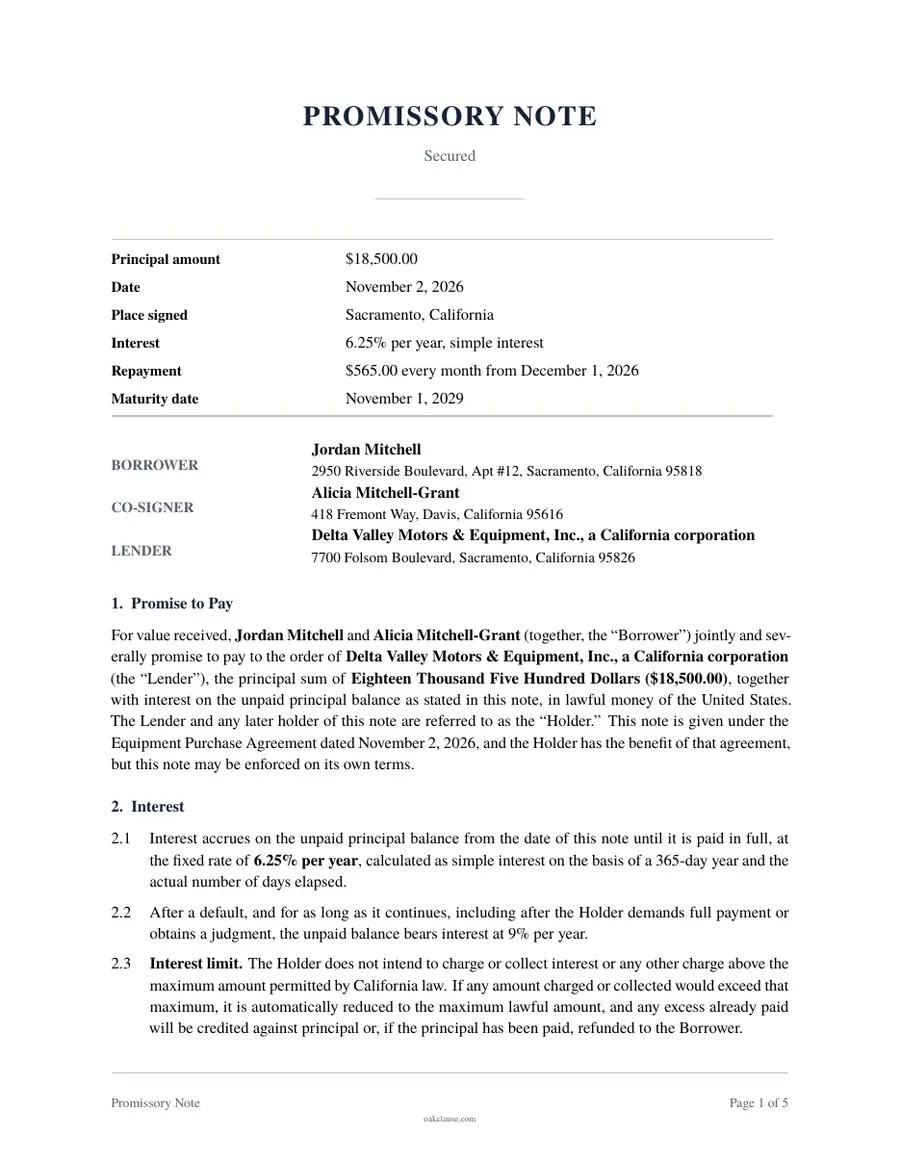
The deed of trust works alongside a promissory note. The note is the borrower's promise to repay; the deed of trust is what gives the lender a claim against the property if that promise is broken. It also sets the borrower's day-to-day duties, such as paying property taxes, keeping the home insured and maintaining it, and explains what happens if the borrower defaults or sells the property.
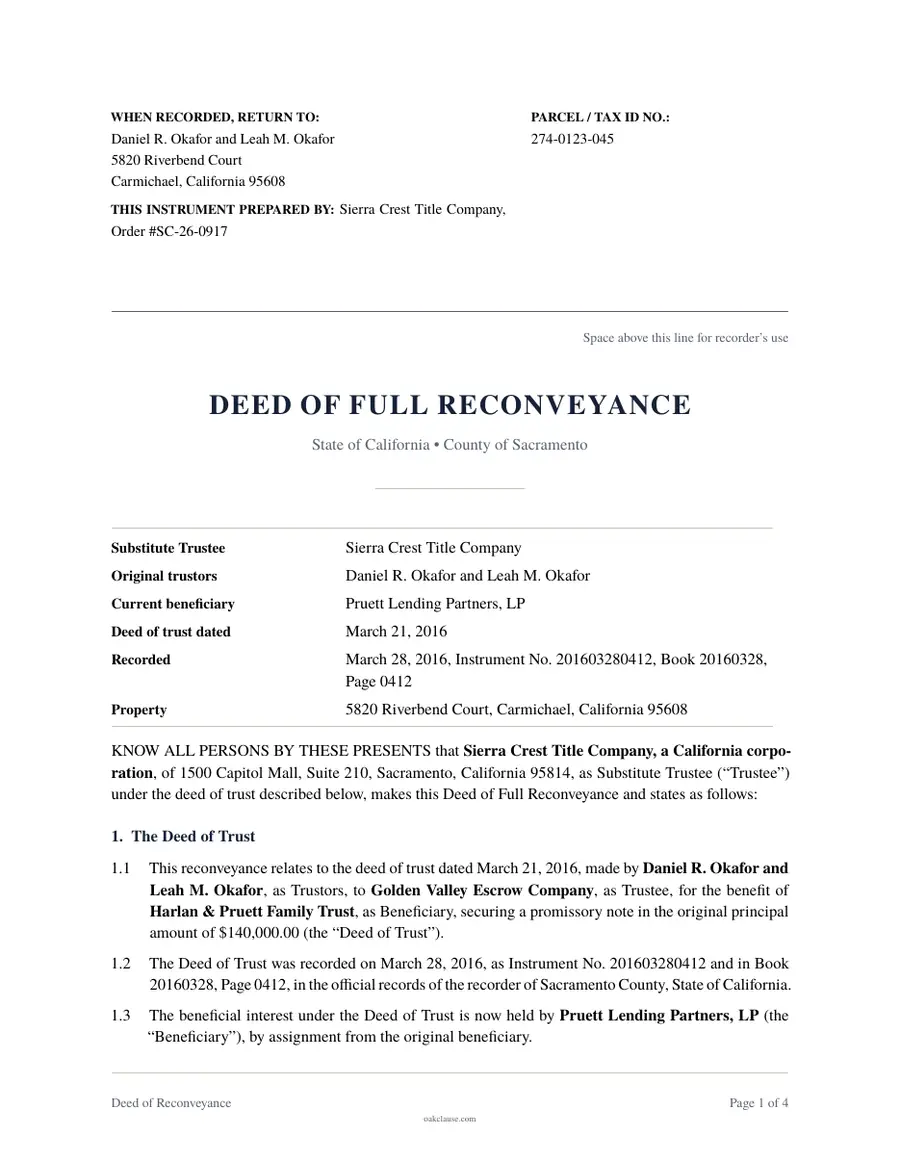
When the loan is paid in full, the lender asks the trustee to sign a deed of reconveyance, which returns full title to the borrower and clears the lien from the public record. Because a deed of trust affects title to land, it is normally signed before a notary and recorded with the county where the property is located.
When to use it
- You are lending money to a buyer, relative or business and want the loan secured by real estate.
- You are selling property with seller financing and will carry back a note from the buyer.
- You are borrowing from a private lender who requires a recorded lien on your property.
- You are making a second loan against a property that already has a first mortgage or deed of trust.
- You are refinancing a private loan and need a new security instrument to match the new note.
What is included
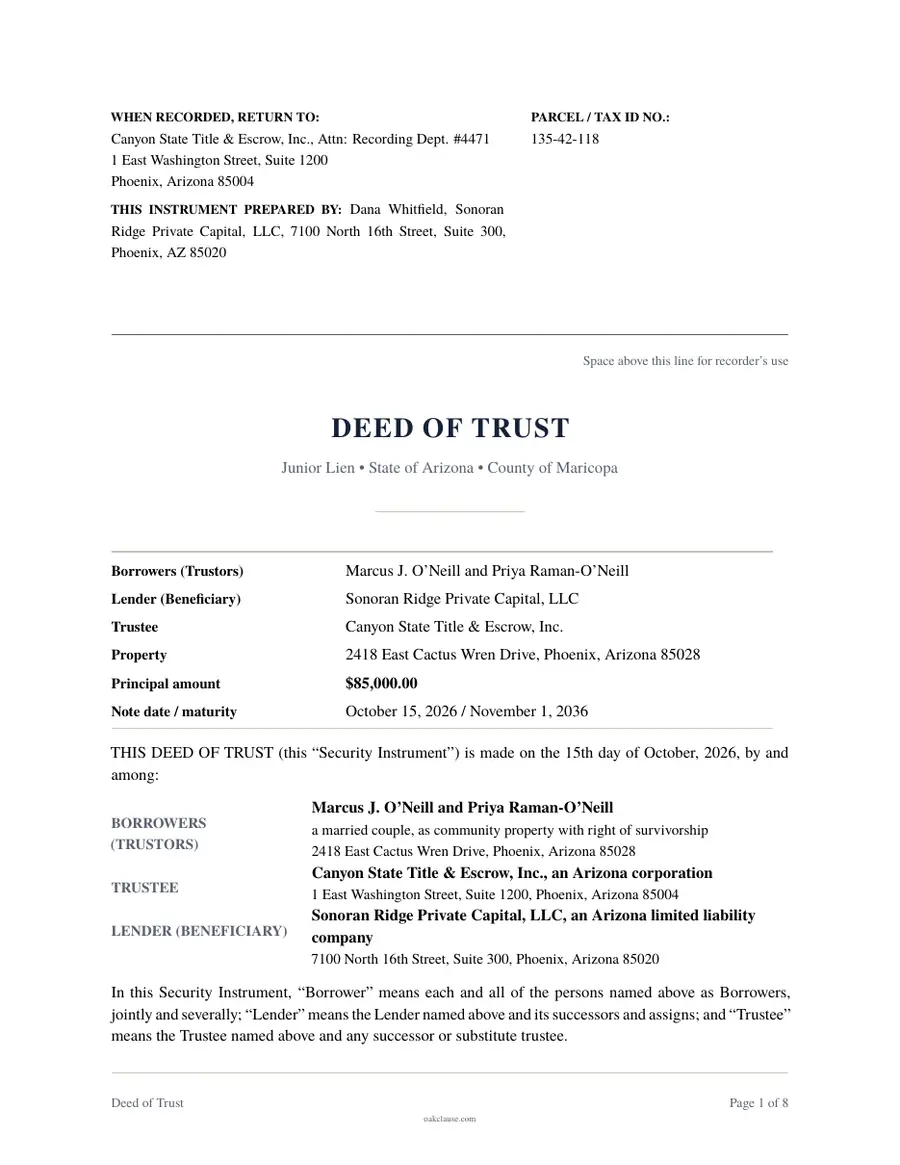
- Recording header with return address and parcel number
- Names of the borrower, lender and trustee
- Legal description of the property and grant in trust
- Loan amount, note date, interest rate and maturity date
- Tax, insurance and optional escrow obligations
- Occupancy, maintenance and homeowners association terms
- Due-on-sale, prepayment and lien priority terms
- Events of default, acceleration and foreclosure remedies
- Reconveyance on payoff and substitution of trustee
- Signature, witness and notary acknowledgment blocks
How to make your Deed of Trust
Answer the questions
Tell us about the parties and the terms you want. Most documents take about 5 to 20 minutes.
Review the preview
Check the draft as you go and change any answer. The document updates instantly.
Download, sign and keep a copy
Download a print-ready PDF, sign it with the other parties, and give everyone a copy.
Deed of Trust in another state
Back to the general deed of trust page51 states shown
- ALAlabama
- AKAlaska
- AZArizona
- ARArkansas
- CACalifornia
- COColorado
- CTConnecticut
- DEDelaware
- DCDistrict of Columbia
- FLFlorida
- GAGeorgia
- HIHawaii
- IDIdaho
- ILIllinois
- INIndiana
- IAIowa
- KSKansas
- KYKentucky
- LALouisiana
- MEMaine
- MDMaryland
- MAMassachusetts
- MIMichigan
- MNMinnesota
- MSMississippi
- MOMissouri
- MTMontana
- NENebraska
- NVNevada
- NHNew Hampshire
- NJNew Jersey
- NMNew Mexico
- NYNew York
- NCNorth Carolina
- NDNorth Dakota
- OHOhio
- OKOklahoma
- OROregon
- PAPennsylvania
- RIRhode Island
- SCSouth Carolina
- SDSouth Dakota
- TNTennessee
- TXTexas
- UTUtah
- VTVermont
- VAVirginia
- WAWashington
- WVWest Virginia
- WIWisconsin
- WYWyoming
Frequently asked questions
What is the difference between a deed of trust and a mortgage?
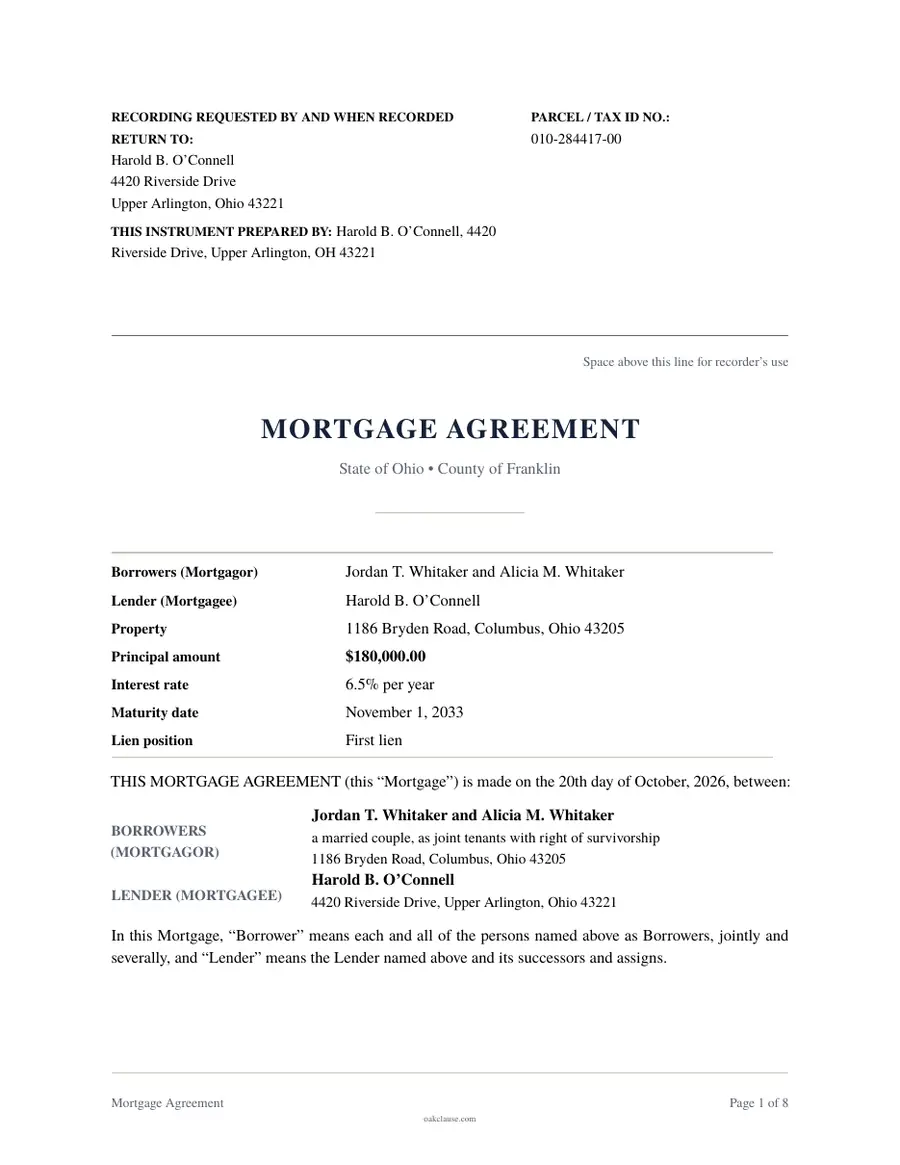
Both use real estate to secure a loan. A mortgage involves two parties, the borrower and the lender. A deed of trust adds a third, the trustee, who holds title until the loan is repaid. In states that allow it, a deed of trust usually lets the trustee sell the property after a default without filing a lawsuit, which is often faster than a court foreclosure.
Do I also need a promissory note?
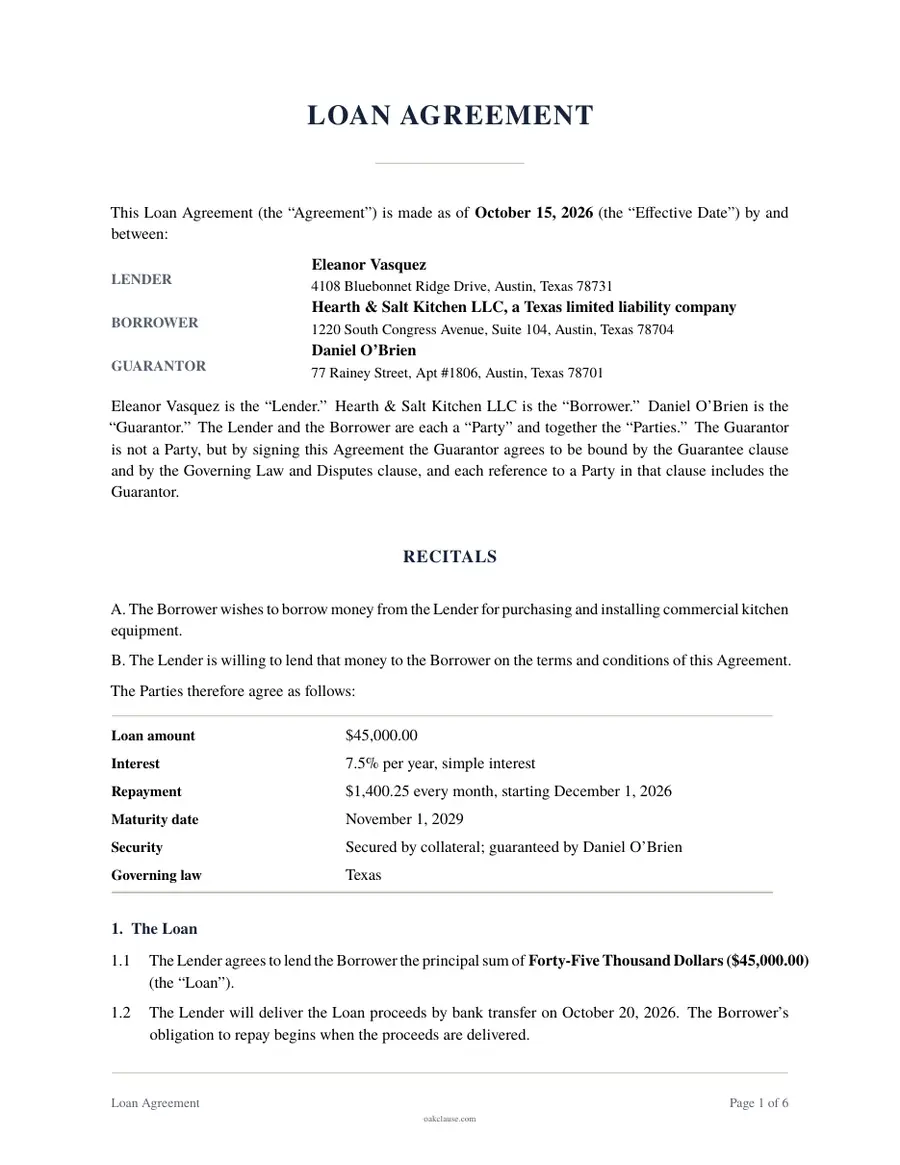
Yes. The deed of trust secures a debt, and the promissory note is what creates and describes that debt: the amount, interest rate and payment schedule. The two documents are signed together and should describe the same loan amount and dates.
Who can act as the trustee?
Trustees are often title companies, escrow companies, attorneys or banks, but the rules on who qualifies vary by state. The trustee is supposed to be neutral and usually has no role unless the loan is paid off or goes into default. Check your state's requirements before naming an individual.
Does a deed of trust have to be recorded?
Recording is what puts the public on notice of the lender's lien and usually establishes its priority against later buyers and lenders. An unrecorded deed of trust may still bind the borrower, but it can lose priority to someone who records first. Most lenders record the document with the county recorder right after signing.
Does a deed of trust need to be notarized?
In practice, yes. County recorders generally will not accept a deed of trust unless the borrower's signature is acknowledged before a notary public, and a few states also require one or two witnesses. This document includes a notary acknowledgment and optional witness lines.
What does a due-on-sale clause do?
It lets the lender demand payment of the full remaining balance if the borrower sells or transfers the property without the lender's consent. Federal law limits enforcement of these clauses in some transfers of a borrower's home, such as a transfer to a spouse or child, so the clause applies only as far as the law allows.
What happens when the loan is paid off?
The lender sends the trustee a request for reconveyance, and the trustee signs and records a deed of reconveyance releasing the property from the lien. Many states set a deadline for this step after payoff, so borrowers should confirm the reconveyance was actually recorded.
Can I use this for a second loan on the same property?
Yes. You can mark the deed of trust as a junior lien and identify the existing loan. The borrower then promises to keep the senior loan current, because a default on the first loan could wipe out the second lender's security in a foreclosure.
More Missouri documents
Other documents people prepare for Missouri, each with the state’s rules where we have checked them.
All Missouri documents and rules