Kansas Deed of Reconveyance
Clear a paid-off deed of trust from the property records.
Includes 30 days of edits
- 5 to 20 minutes
- Print-ready PDF
- Tailored to Kansas
Deed of Reconveyance rules in Kansas
Reconveyances are governed by the law of the state where the property is located. States differ on how quickly a beneficiary must request and a trustee must record a reconveyance after payoff, what fees may be charged, whether the original note must be surrendered, whether a beneficiary or title company may record a substitute release if the trustee does not act, and what recorders require for formatting, witnesses and acknowledgments. This document names the state you select and states that the reconveyance is made under that state's law, without listing specific deadlines or fees. Check your state's rules and the county recorder's requirements before recording.
When you create this document for Kansas, the questionnaire uses Kansas as the governing law and adds wording that defers to Kansas requirements where they apply. Laws change, so confirm current rules with official Kansas sources or a local attorney for anything critical.
What is a Deed of Reconveyance?
A deed of reconveyance is the document a trustee signs to release real estate from a deed of trust after the loan it secured has been repaid. Under a deed of trust, legal title to the property sits with a trustee for the lender's benefit while the loan is outstanding. Once the lender confirms it has been paid, the trustee "reconveys" that title back to the borrower or whoever now owns the property.
Recording the reconveyance in the county land records is what shows the world the lien is gone. Without it, the old deed of trust can keep appearing in title searches, which can delay a sale or refinance years later and force the owner to track down a lender or trustee that may have merged, moved or closed.
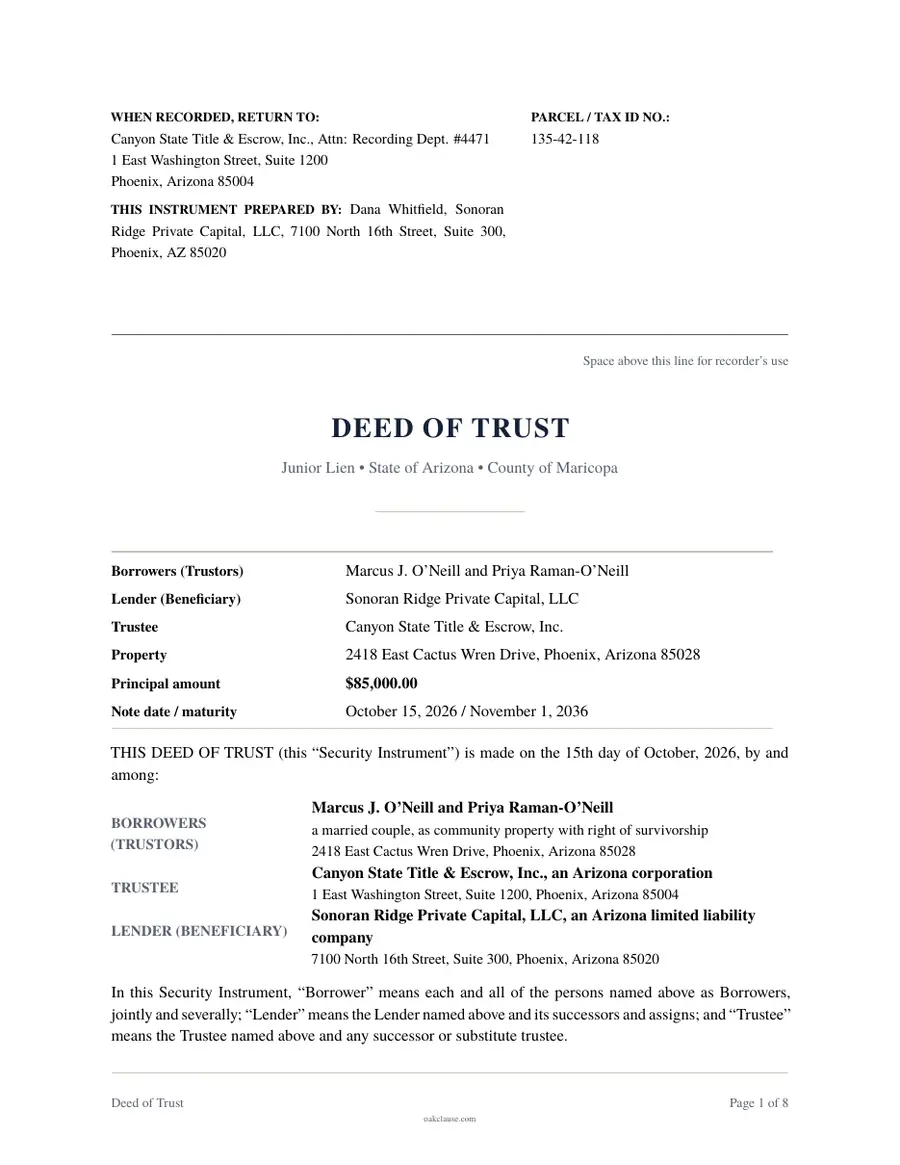
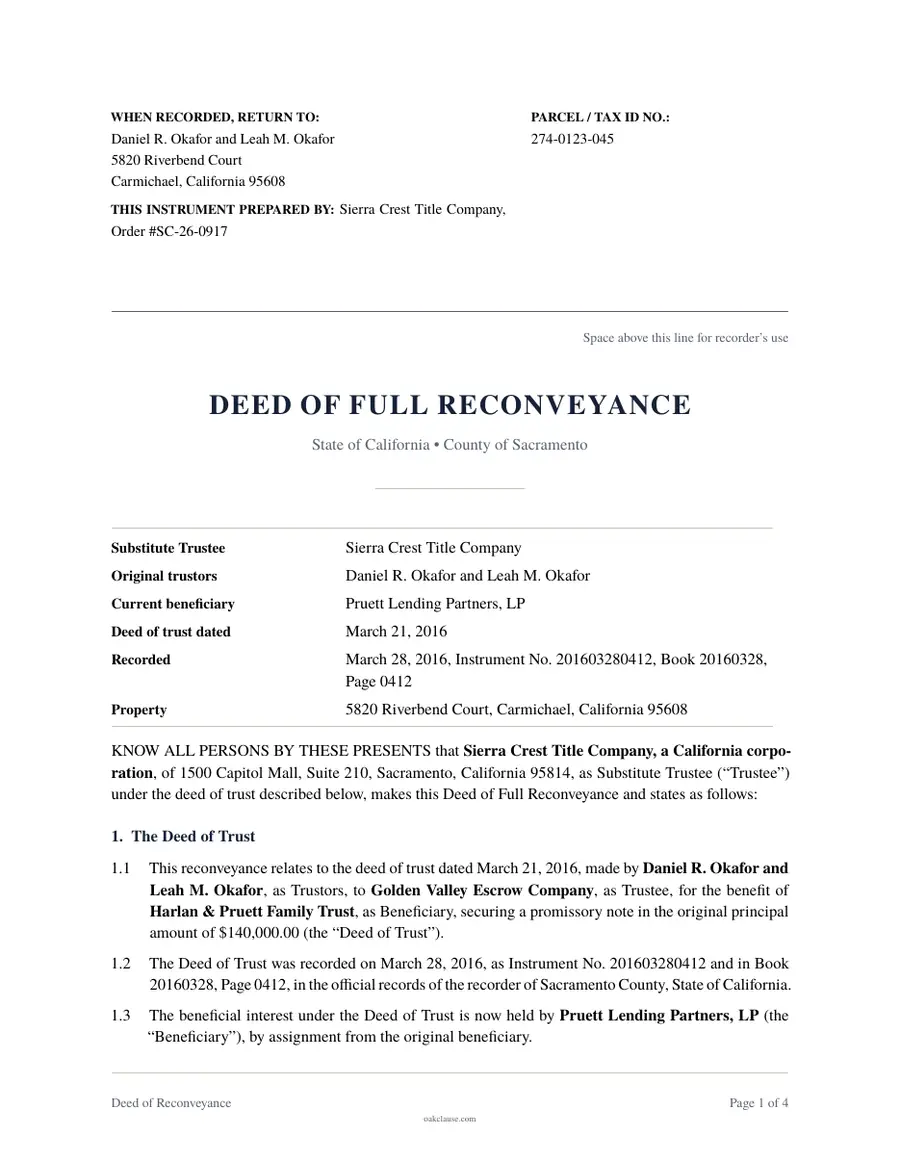
A reconveyance identifies the original deed of trust by its parties, date and recording reference, describes the property, states that the trustee acts at the beneficiary's request, and reconveys the property without warranty. It is signed by the trustee, acknowledged before a notary and recorded in the county where the property is located.
When to use it
- A loan secured by a deed of trust has been paid in full and the lien needs to be released of record.
- You are a private lender or seller-financier and the borrower has made the final payment.
- You are serving as trustee and have received the beneficiary's written request to reconvey.
- Part of a property is being released from a deed of trust, for example after a lot is sold from a larger parcel.
- A title search shows an old deed of trust that was paid years ago but never reconveyed.
What is included
- Recording header with return address and parcel number
- Identification of the trustee and its capacity
- Original trustor, beneficiary, date and loan amount
- Recording reference for the original deed of trust
- Beneficiary's request and confirmation of payment
- Full or partial reconveyance of the property
- Legal description of the property released
- Optional request for full reconveyance signed by the beneficiary
- Trustee signature, witness lines and notary acknowledgment
How to make your Deed of Reconveyance
Answer the questions
Tell us about the parties and the terms you want. Most documents take about 5 to 20 minutes.
Review the preview
Check the draft as you go and change any answer. The document updates instantly.
Download, sign and keep a copy
Download a print-ready PDF, sign it with the other parties, and give everyone a copy.
Deed of Reconveyance in another state
Back to the general deed of reconveyance page51 states shown
- ALAlabama
- AKAlaska
- AZArizona
- ARArkansas
- CACalifornia
- COColorado
- CTConnecticut
- DEDelaware
- DCDistrict of Columbia
- FLFlorida
- GAGeorgia
- HIHawaii
- IDIdaho
- ILIllinois
- INIndiana
- IAIowa
- KSKansas
- KYKentucky
- LALouisiana
- MEMaine
- MDMaryland
- MAMassachusetts
- MIMichigan
- MNMinnesota
- MSMississippi
- MOMissouri
- MTMontana
- NENebraska
- NVNevada
- NHNew Hampshire
- NJNew Jersey
- NMNew Mexico
- NYNew York
- NCNorth Carolina
- NDNorth Dakota
- OHOhio
- OKOklahoma
- OROregon
- PAPennsylvania
- RIRhode Island
- SCSouth Carolina
- SDSouth Dakota
- TNTennessee
- TXTexas
- UTUtah
- VTVermont
- VAVirginia
- WAWashington
- WVWest Virginia
- WIWisconsin
- WYWyoming
Frequently asked questions
Who signs a deed of reconveyance?
The trustee named in the deed of trust, or a substitute trustee who has been properly appointed, signs the reconveyance. The beneficiary (the lender or current loan holder) usually starts the process by sending the trustee a written request stating the debt has been paid.
What is the difference between a reconveyance and a satisfaction of mortgage?
Both release a lien after a loan is paid. A deed of reconveyance is used for deeds of trust, where a trustee holds title and must return it. A satisfaction or release of mortgage is used where the loan was secured by a mortgage, which has no trustee, and is usually signed by the lender.
Does a deed of reconveyance need to be notarized and recorded?
In nearly every county, a document must be acknowledged before a notary to be recorded, and recording is what removes the lien from the public record. Some states also require witnesses. This form includes a notary acknowledgment and optional witness lines.
What information do I need from the original deed of trust?
You need the names of the original trustor, beneficiary and trustee, the date of the deed of trust, the date it was recorded and its instrument number or book and page, plus the property's legal description. All of this appears on the recorded copy, which you can usually get from the county recorder.
What if the original trustee is no longer available?
The beneficiary can usually appoint a substitute trustee by recording a substitution of trustee, and the substitute then signs the reconveyance. Some states also offer an alternative release process if the trustee or beneficiary fails to act. This form lets you identify a substitute or successor trustee and the document that appointed it.
Can only part of the property be released?
Yes. A partial reconveyance releases a described portion of the land while the deed of trust stays in effect on the rest. This is common with subdivided land or when a borrower pays down a loan in exchange for releasing a lot. The remaining lien is not affected.
Who receives the property in a reconveyance?
Traditionally the trustee reconveys to the person or persons legally entitled to the property, which covers a borrower who has since sold or died without naming them. You can also name the current owners specifically if you prefer.
How long does a lender have to reconvey after payoff?
It depends on the state. Many states set deadlines for the beneficiary to request and the trustee to record the reconveyance, and some impose penalties for delay. Check your state's rules and follow up if you do not receive a recorded copy within a reasonable time after payoff.
More Kansas documents
Other documents people prepare for Kansas, each with the state’s rules where we have checked them.
All Kansas documents and rules