Arizona Contract for Deed
Sell or buy property with seller financing: set the price, down payment, installments and interest, with the deed delivered once the final payment is made.
Includes 30 days of edits
- 5 to 20 minutes
- Print-ready PDF
- Tailored to Arizona
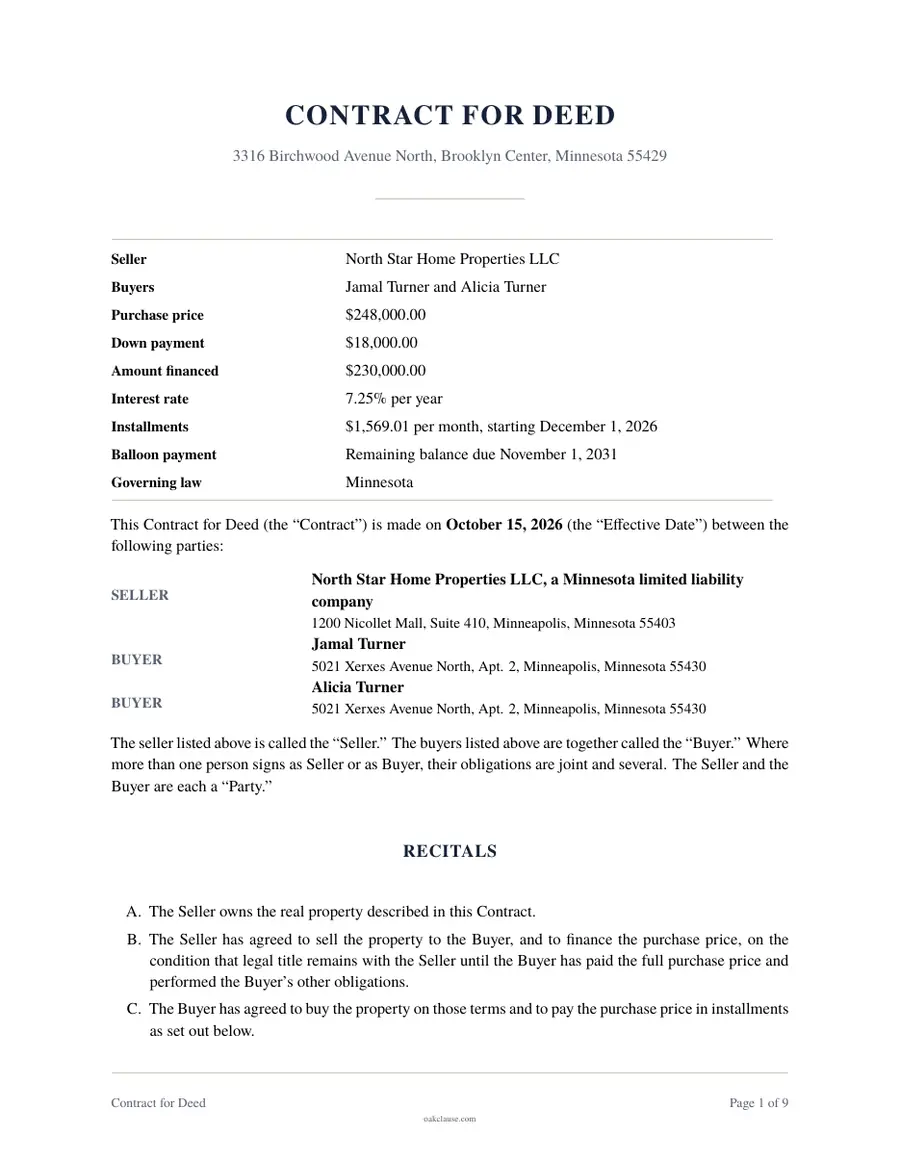
Contract for Deed rules in Arizona
State rules on contracts for deed vary more than for most real estate documents. Some states treat these contracts like mortgages, so a seller must go through foreclosure if the buyer defaults, while others allow cancellation after a statutory notice and cure period. Several states require specific disclosures to the buyer, require the seller to record the contract within a set time, or give buyers extra rights once they have paid a certain share of the price. Recording requirements, witness rules and notary formalities also differ. This contract defers to the law of the state where the property is located on each of these points, and any notice or cure period required by that law applies even if it is longer than the one written in the contract. Because of these differences, many people have a local real estate attorney review a contract for deed before signing.
When you create this document for Arizona, the questionnaire uses Arizona as the governing law and adds wording that defers to Arizona requirements where they apply. Laws change, so confirm current rules with official Arizona sources or a local attorney for anything critical.
What is a Contract for Deed?
A contract for deed, also called a land contract or installment land contract, is an agreement in which the seller finances the purchase of real property for the buyer. The buyer moves in and makes regular payments directly to the seller, and the seller keeps legal title until the price is paid in full. At that point the seller delivers a deed and the buyer becomes the owner of record.
This arrangement can open the door to ownership for buyers who cannot get a traditional mortgage, and it can help sellers reach more buyers and earn interest on the sale. Because the buyer takes on most of the responsibilities of ownership right away, including taxes, insurance and repairs, a clear written contract is essential to set expectations on both sides.
Contracts for deed are closely regulated in many states, especially when a buyer falls behind on payments. Some states require specific disclosures, recording, or a formal notice and waiting period before a seller can cancel. This contract asks for the property's state and defers to its rules on these points.
When to use it
- You are selling a home or land and are willing to finance the purchase yourself instead of requiring a bank loan.
- You are buying property and the seller has agreed to accept payments over time.
- You want the seller to keep title as security until the buyer has paid the full price.
- You are selling to a family member, tenant or neighbor on installment terms.
- You want a written schedule of payments, interest, balloon payment and default terms.
What is included
- Seller and buyer details, including business entities
- Property address, county and legal description
- Purchase price, down payment and amount financed
- Interest rate, installment amount, schedule and optional balloon payment
- Prepayment, late charges and where payments are made
- Property taxes, insurance and any existing mortgage on the property
- Possession, maintenance, alterations, leasing and assignment rules
- Default notice, cure period and remedies that defer to state law
- Deed type, title insurance and recording of the contract
- Signatures with notary acknowledgments and optional witnesses
How to make your Contract for Deed
Answer the questions
Tell us about the parties and the terms you want. Most documents take about 5 to 20 minutes.
Review the preview
Check the draft as you go and change any answer. The document updates instantly.
Download, sign and keep a copy
Download a print-ready PDF, sign it with the other parties, and give everyone a copy.
Contract for Deed in another state
Back to the general contract for deed page51 states shown
- ALAlabama
- AKAlaska
- AZArizona
- ARArkansas
- CACalifornia
- COColorado
- CTConnecticut
- DEDelaware
- DCDistrict of Columbia
- FLFlorida
- GAGeorgia
- HIHawaii
- IDIdaho
- ILIllinois
- INIndiana
- IAIowa
- KSKansas
- KYKentucky
- LALouisiana
- MEMaine
- MDMaryland
- MAMassachusetts
- MIMichigan
- MNMinnesota
- MSMississippi
- MOMissouri
- MTMontana
- NENebraska
- NVNevada
- NHNew Hampshire
- NJNew Jersey
- NMNew Mexico
- NYNew York
- NCNorth Carolina
- NDNorth Dakota
- OHOhio
- OKOklahoma
- OROregon
- PAPennsylvania
- RIRhode Island
- SCSouth Carolina
- SDSouth Dakota
- TNTennessee
- TXTexas
- UTUtah
- VTVermont
- VAVirginia
- WAWashington
- WVWest Virginia
- WIWisconsin
- WYWyoming
Frequently asked questions
What is the difference between a contract for deed and a mortgage?
With a mortgage, the buyer gets the deed at closing and a bank lends the money, holding a lien on the property. With a contract for deed, the seller acts as the lender and keeps the deed until the buyer pays the full price. The buyer has the right to use and occupy the property in the meantime and receives the deed at the end.
Is a contract for deed the same as rent to own?
Not quite. In a rent-to-own or lease-option arrangement, the occupant is a tenant who has the option to buy later, and rent may or may not count toward the price. In a contract for deed, the buyer has already agreed to buy, each installment is a payment toward the price, and the buyer usually takes on the responsibilities of an owner from the start.
Who pays property taxes and insurance under a contract for deed?
Usually the buyer, because the buyer has possession and the benefits of ownership. This contract lets you choose whether the buyer pays the taxes directly, pays them to the seller along with each installment, or the seller pays them. The buyer is required to insure the property and name the seller as an additional insured or loss payee.
What happens if the buyer stops making payments?
That depends heavily on state law. Some states allow the seller to cancel the contract after a written notice and cure period and keep the payments made, while others require the seller to foreclose as if the contract were a mortgage. This contract requires written notice and an opportunity to cure, and it limits the seller to the remedies and procedures allowed by the law of the state where the property is located.
Should a contract for deed be recorded?
Recording the contract, or a short memorandum of it, with the county gives public notice of the buyer's interest, which helps protect the buyer if the seller tries to sell or borrow against the property. Some states require recording. Recording usually requires the signatures to be notarized, which is why this document includes notary acknowledgments.
Can the seller have a mortgage on the property?
Yes, but it adds risk. If the seller stops paying an existing mortgage, the lender could foreclose even though the buyer is current. Many mortgages also allow the lender to demand full payment if the property is sold. This contract requires the seller to keep any existing mortgage current and to give the buyer proof of payment on request.
Can the buyer pay off the contract early?
If you allow prepayment, the buyer can pay extra or pay the balance in full at any time, which reduces the interest owed. Many buyers refinance with a traditional mortgage once their credit improves and use the loan to pay off the seller and receive the deed.
Do federal lending rules apply to seller financing?
They can. Federal rules on residential mortgage lending, including rules about verifying a buyer's ability to repay and about balloon payments, may apply to some seller-financed home sales, depending on how many properties the seller finances and the terms of the deal. If you plan to finance more than one sale, consider speaking with a real estate attorney.
More Arizona documents
Other documents people prepare for Arizona, each with the state’s rules where we have checked them.
All Arizona documents and rules