South Carolina Mortgage Agreement
Put a private home or property loan on solid footing.
Includes 30 days of edits
- 5 to 20 minutes
- Print-ready PDF
- Tailored to South Carolina
Mortgage Agreement rules in South Carolina
Real estate security instruments are governed by the law of the state where the land is located. States differ on whether mortgages or deeds of trust are customary, whether a lender may foreclose without going to court, the notices and waiting periods required before foreclosure, a borrower's right to reinstate or redeem, limits on late charges and prepayment penalties, homestead and marital property protections, and the formatting, witness and acknowledgment rules that recorders enforce. This mortgage asks for the property's state and county and defers to that state's law on each of these points rather than stating specific deadlines or limits. Check your county recorder's formatting rules before recording, and consider having an attorney review the document for larger or more complex loans.
When you create this document for South Carolina, the questionnaire uses South Carolina as the governing law and adds wording that defers to South Carolina requirements where they apply. Laws change, so confirm current rules with official South Carolina sources or a local attorney for anything critical.
What is a Mortgage Agreement?
A mortgage agreement is a written security instrument in which a property owner (the borrower, sometimes called the mortgagor) pledges real estate to a lender (the mortgagee) as collateral for a loan. The borrower keeps living in or using the property, but if the loan is not repaid, the lender can enforce its lien through foreclosure under state law.
Banks use long standardized mortgage forms, but many loans are made privately: a parent helping a child buy a first home, a seller financing the sale of their own house, an investor lending on a rental, or a business owner borrowing against a building. In each case, a signed and recorded mortgage gives the lender a public, enforceable claim against the property and tells future buyers and lenders that the debt exists.
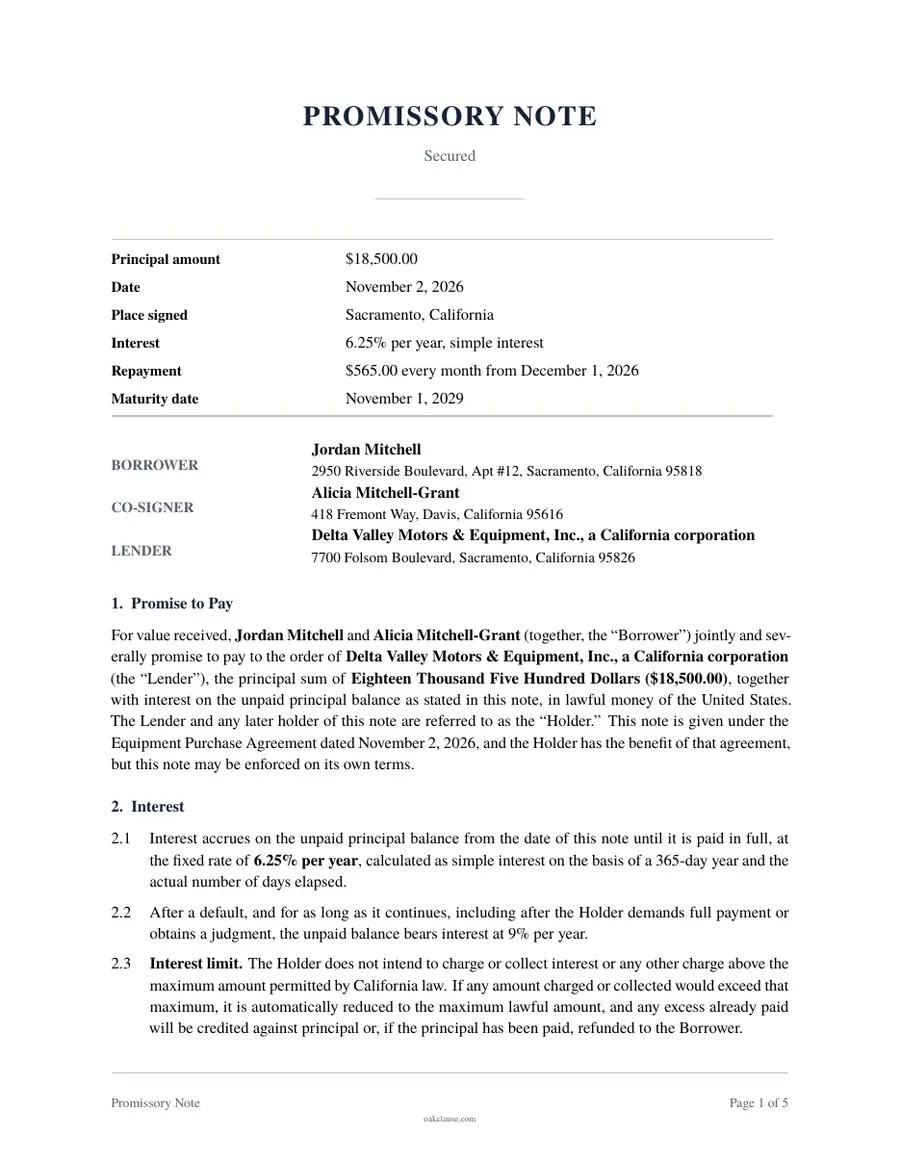
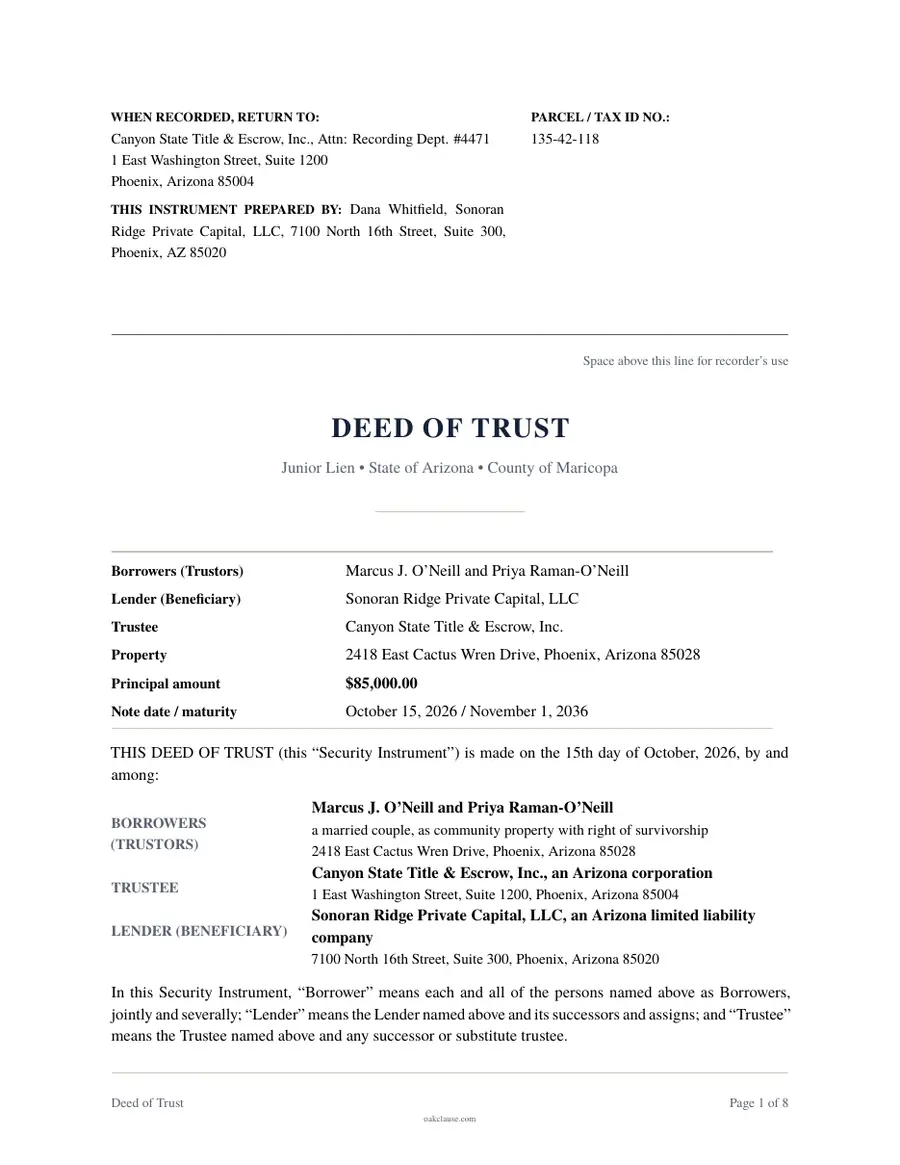
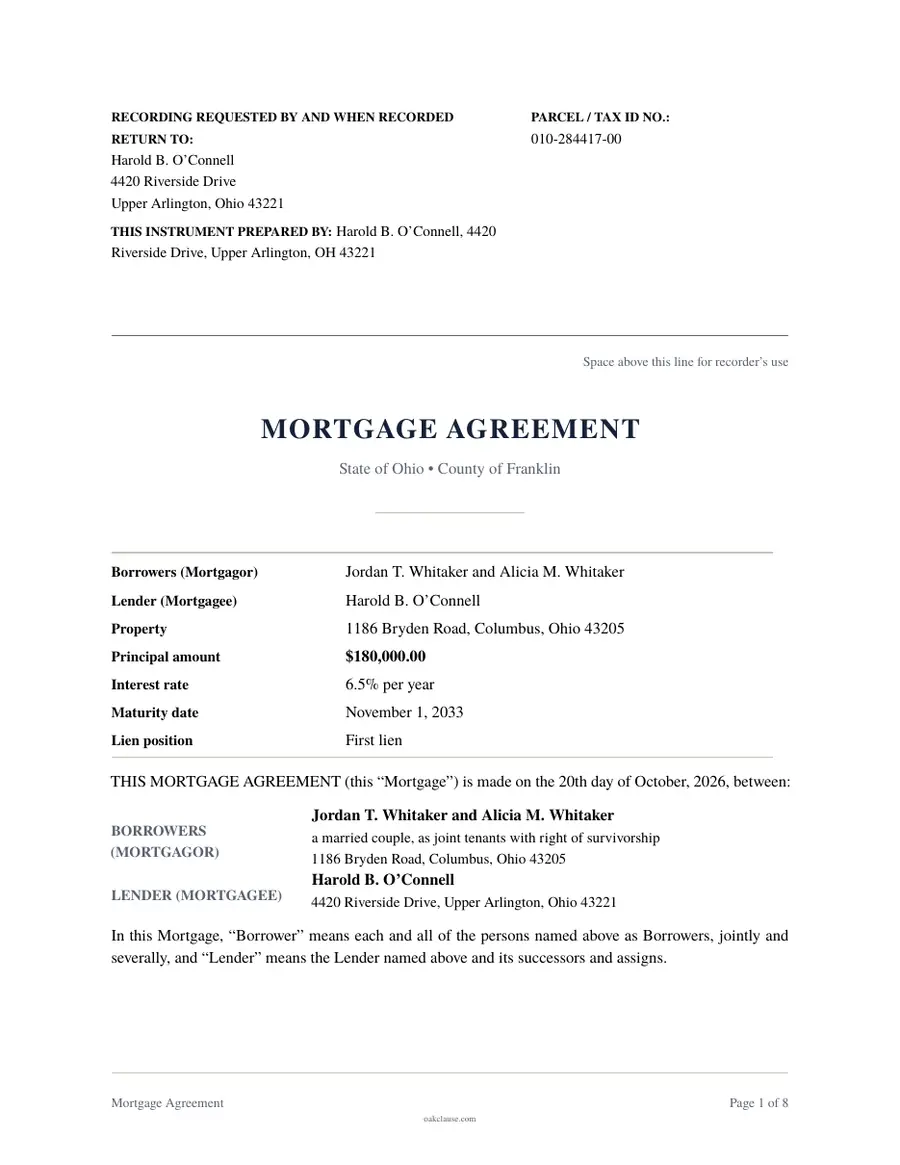
This document covers the loan amount and repayment, the property being pledged, the borrower's promises to pay taxes, insure and maintain the property, lien priority, transfers, default and remedies, and the lender's duty to release the mortgage once the debt is paid. It is laid out for recording with a recorder's header and a notary acknowledgment.
When to use it
- You are lending money to a family member or friend to buy or refinance a home and want the loan secured by the property.
- You are selling real estate and financing part of the price yourself (seller financing).
- You are a private investor lending against a rental, commercial building or land.
- You are borrowing against property you already own and the lender asks for a mortgage as security.
- A promissory note already exists and you need the matching security instrument to record with the county.
What is included
- Recorder's header with preparer, return address and parcel number
- Borrower, lender, property address and full legal description
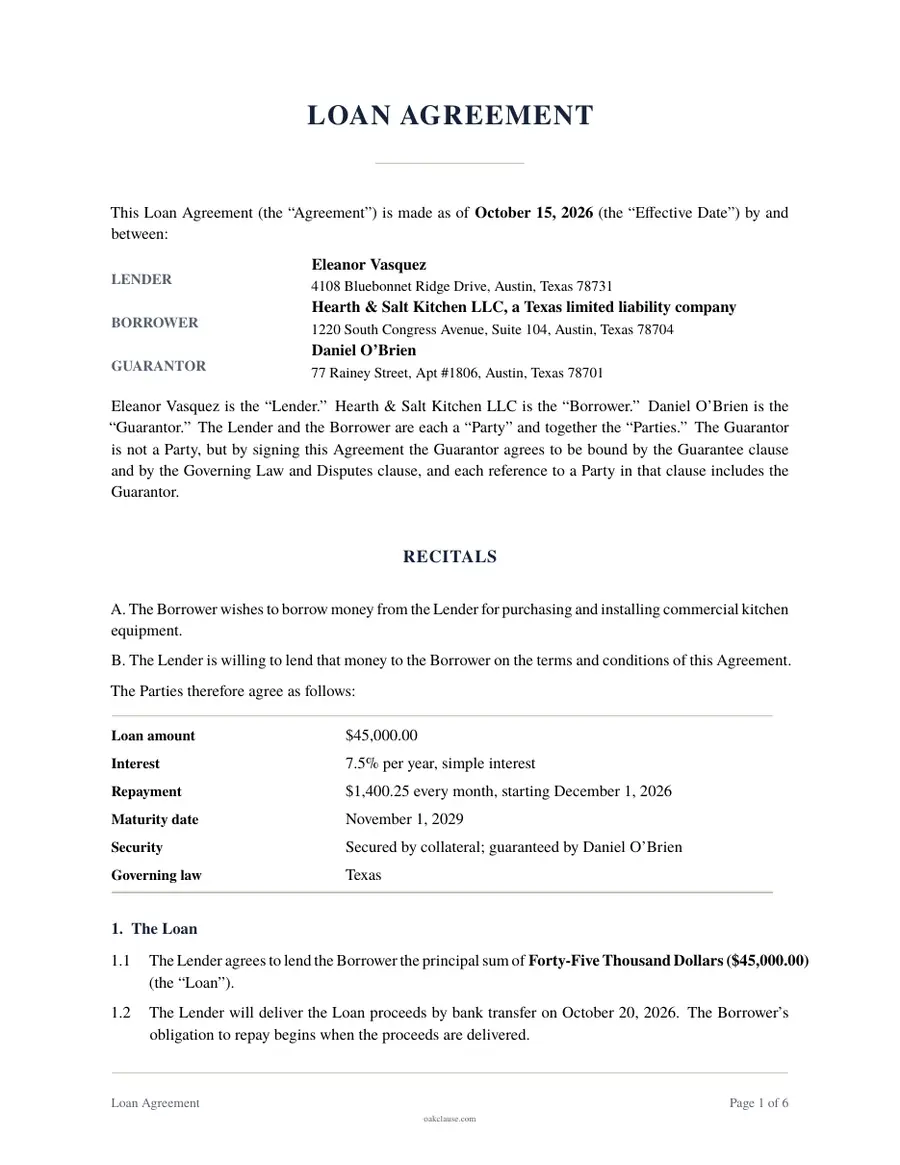
- Loan amount, interest rate, payment schedule and maturity date
- Optional late charges, default interest and prepayment terms
- Taxes, escrow, insurance, maintenance and occupancy covenants
- First or junior lien position, with senior lien terms
- Optional due-on-sale clause and assignment of rents
- Default, acceleration, foreclosure and cure rights deferred to state law
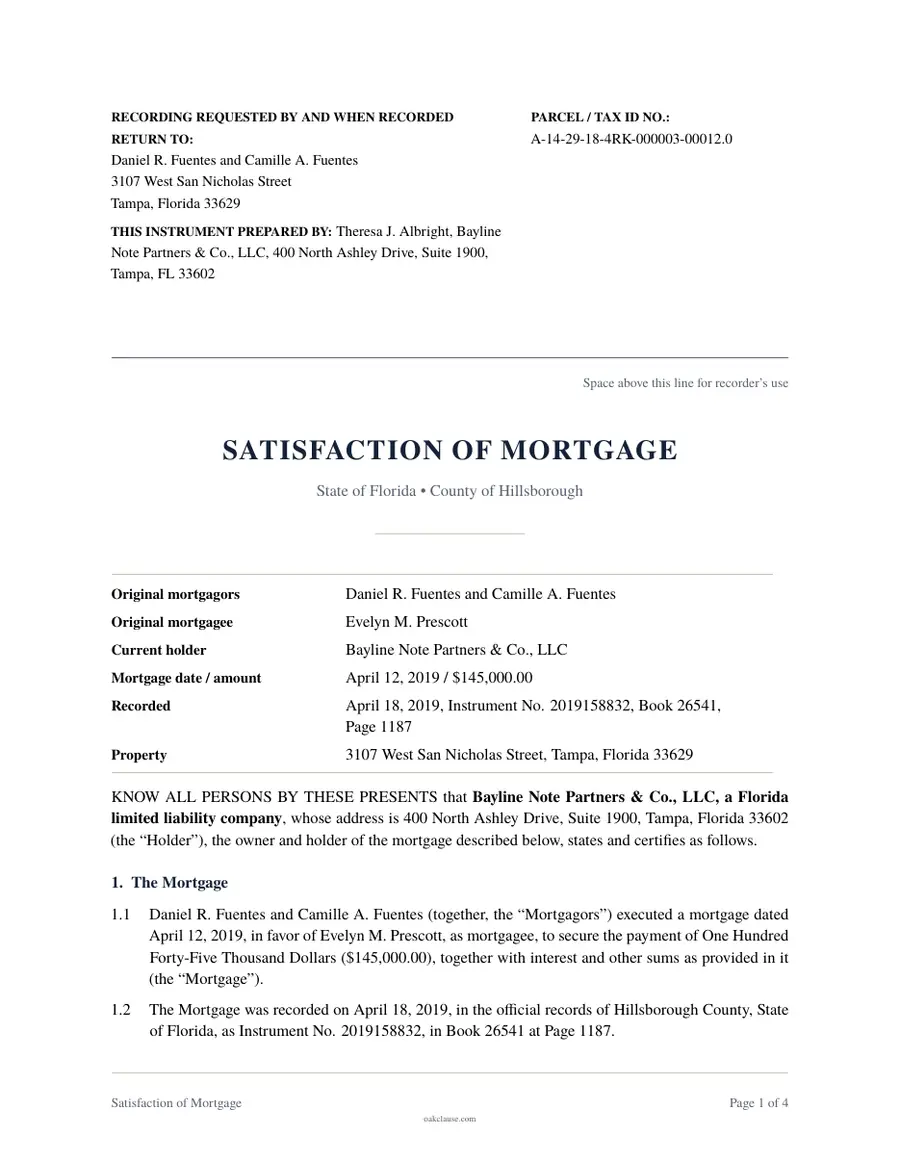
- Release of the mortgage when the loan is paid in full
- Signature, witness and notary acknowledgment blocks
How to make your Mortgage Agreement
Answer the questions
Tell us about the parties and the terms you want. Most documents take about 5 to 20 minutes.
Review the preview
Check the draft as you go and change any answer. The document updates instantly.
Download, sign and keep a copy
Download a print-ready PDF, sign it with the other parties, and give everyone a copy.
Mortgage Agreement in another state
Back to the general mortgage agreement page51 states shown
- ALAlabama
- AKAlaska
- AZArizona
- ARArkansas
- CACalifornia
- COColorado
- CTConnecticut
- DEDelaware
- DCDistrict of Columbia
- FLFlorida
- GAGeorgia
- HIHawaii
- IDIdaho
- ILIllinois
- INIndiana
- IAIowa
- KSKansas
- KYKentucky
- LALouisiana
- MEMaine
- MDMaryland
- MAMassachusetts
- MIMichigan
- MNMinnesota
- MSMississippi
- MOMissouri
- MTMontana
- NENebraska
- NVNevada
- NHNew Hampshire
- NJNew Jersey
- NMNew Mexico
- NYNew York
- NCNorth Carolina
- NDNorth Dakota
- OHOhio
- OKOklahoma
- OROregon
- PAPennsylvania
- RIRhode Island
- SCSouth Carolina
- SDSouth Dakota
- TNTennessee
- TXTexas
- UTUtah
- VTVermont
- VAVirginia
- WAWashington
- WVWest Virginia
- WIWisconsin
- WYWyoming
Frequently asked questions
What is the difference between a mortgage and a promissory note?
The promissory note is the borrower's promise to repay the loan. The mortgage is the separate document that pledges the property as security for that promise. Many private loans use both. This mortgage can either refer to a separate note or set out the repayment terms itself.
What is the difference between a mortgage and a deed of trust?
Both secure a loan with real estate. A mortgage involves two parties, the borrower and the lender, while a deed of trust adds a neutral trustee who holds legal title until the loan is repaid. Some states customarily use one or the other, and foreclosure procedures differ between them, so check which instrument is standard where the property is located.
Does a mortgage need to be recorded?
A mortgage is usually binding between the borrower and the lender once signed, but recording it with the county where the property is located protects the lender against later buyers and creditors and establishes its priority. Recording typically requires a notarized signature and may involve a recording fee or tax.
Does the mortgage have to be notarized?
In practice, yes. County recorders generally will not accept a mortgage for recording unless the borrower's signature is acknowledged before a notary public. A few states also require one or two witnesses, so this document lets you add witness lines.
Can a family member hold a mortgage on my home?
Yes. Private and family mortgages are common. Recording the mortgage and charging a reasonable interest rate can matter for tax purposes, so many families also consult a tax professional about interest rates and gift rules before signing.
What does a due-on-sale clause do?
It lets the lender require the full loan balance to be paid if the borrower sells or transfers the property without the lender's written consent. Without it, a buyer could take the property subject to the existing mortgage. Federal law limits enforcement of due-on-sale clauses in some situations, such as certain transfers between family members.
What happens when the mortgage is paid off?
The lender signs a satisfaction or release of mortgage and records it, or gives it to the borrower to record, which removes the lien from the public record. This agreement requires the lender to do so within the time required by state law.
Do federal lending rules apply to seller financing or family loans?
They can. Federal and state consumer lending rules may apply to loans secured by an owner-occupied home, including rules on the seller or lender's ability-to-repay review, disclosures, balloon payments and loan originator licensing. The rules depend on how many such loans the lender makes and on the loan terms, and they are more likely to matter for repeat seller financing or balloon payments. Consider having an attorney review a residential loan before signing.
Can I use this for a second mortgage?
Yes. Choose the junior lien option and enter the details of the existing first mortgage. The document then makes the new mortgage subordinate to the existing one and treats a default on the senior loan as a default on this one.
More South Carolina documents
Other documents people prepare for South Carolina, each with the state’s rules where we have checked them.
All South Carolina documents and rules