Delaware Lien Release
Clear a lien off real estate, a vehicle or other property once the debt behind it is resolved.
Includes 30 days of edits
- 5 to 20 minutes
- Print-ready PDF
- Tailored to Delaware
Lien Release rules in Delaware
Lien law is set mostly by the states, and the rules differ widely by lien type. For construction liens, several states require lien waivers and releases to follow an exact statutory form, distinguish between conditional and unconditional releases, and set deadlines for releasing a lien after payment. States also differ on where different liens are filed, what a recorder needs to accept a release, whether witnesses are required, and how a lien is removed from a vehicle title. This release asks for the state whose law applies and defers to it rather than citing specific deadlines or forms. If your state prescribes a mandatory form for your type of lien, use that form, and check the filing office's requirements before you record or submit the release.
When you create this document for Delaware, the questionnaire uses Delaware as the governing law and adds wording that defers to Delaware requirements where they apply. Laws change, so confirm current rules with official Delaware sources or a local attorney for anything critical.
What is a Lien Release?
A lien release, also called a release of lien, is a document in which the person or business holding a lien (the lienholder) confirms that its claim against a piece of property has ended and gives up its legal right to that property. Liens are created when property secures a debt or claim: a contractor who was not paid files a mechanic's lien, a creditor records a judgment, an association files an assessment lien, or a lender is listed on a vehicle title.
Once the underlying debt is paid, settled or otherwise resolved, the lien does not usually disappear on its own. The owner needs written proof that it was released, and for real estate the release normally has to be recorded in the same county office where the lien was filed. Until then, the lien can block a sale, a refinance or a title transfer.
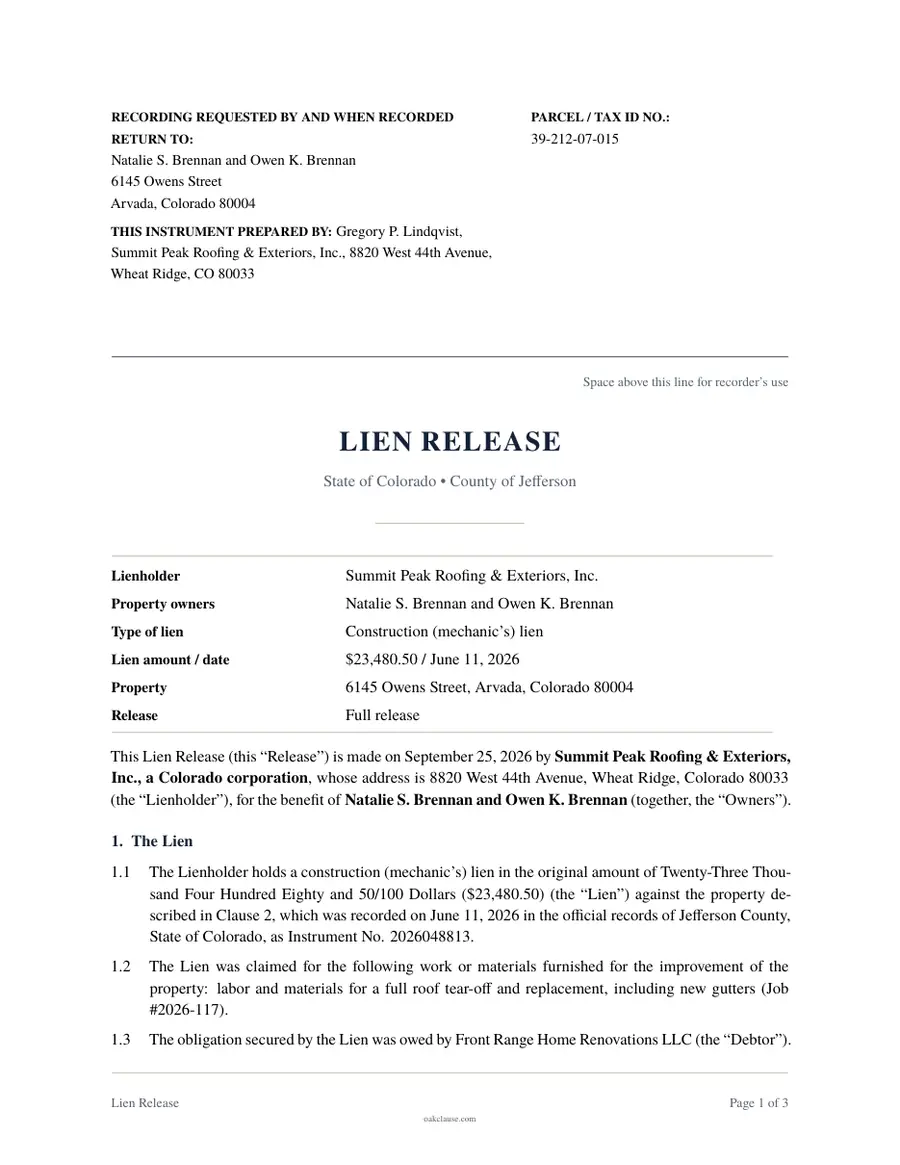
This form identifies the lien, the lienholder, the property owner and the property, states why the lien is being released, and either releases it completely or releases only part of the property or claim. For real estate it adds a recorder's header and directs the recording office to discharge the lien; for vehicles and other personal property it authorizes removal of the lien from the title or filing record.
When to use it
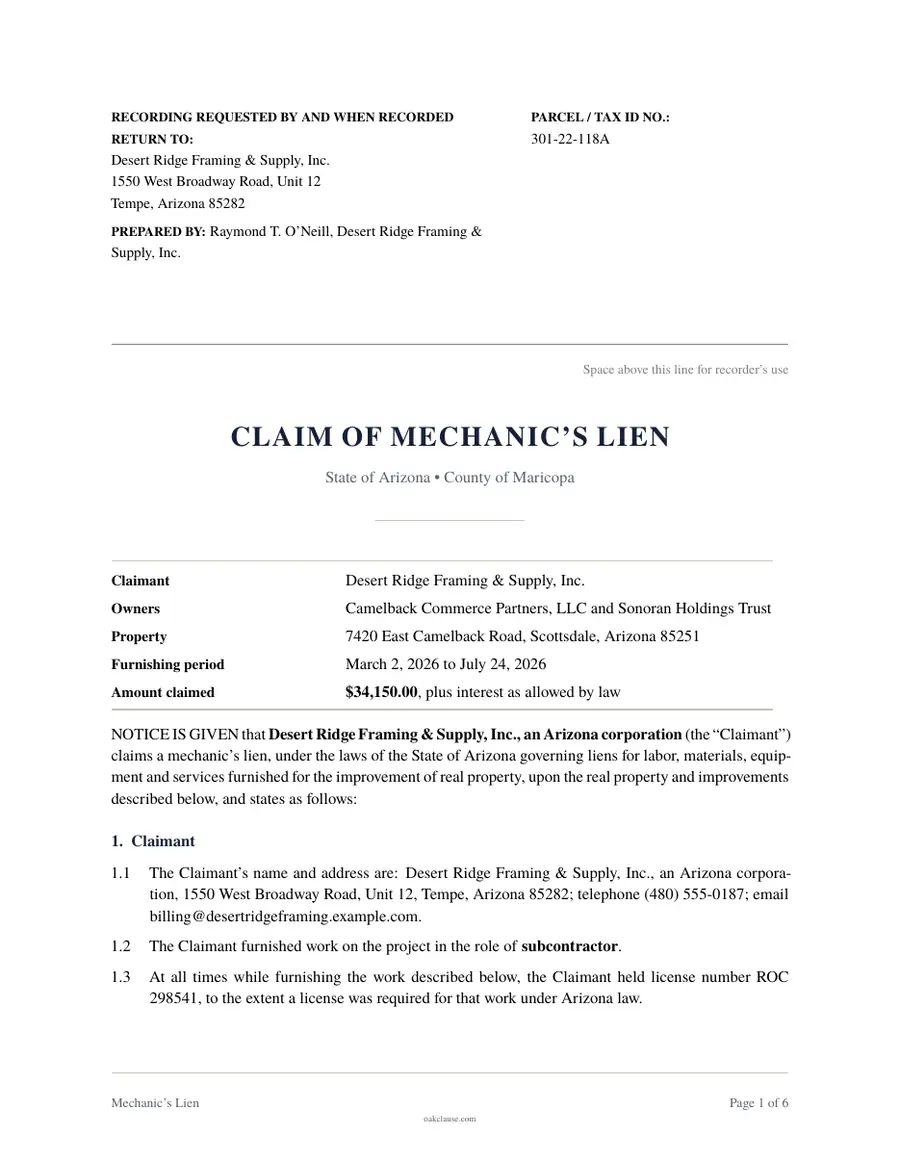
- A contractor, subcontractor or supplier was paid after filing a mechanic's or construction lien and must clear the owner's title.
- A judgment, association assessment or other recorded lien has been paid or settled.
- A private lender has been paid off on a loan secured by a vehicle, boat or equipment and needs to release its interest.
- A buyer, title company or lender requires proof that an old lien was released before a sale or refinance can close.
- Only part of a property or part of a claim is being released, for example one lot in a subdivision, and the lien stays on the rest.
What is included
- Recorder's header for liens on real estate
- Lienholder, property owner and debtor details
- Type of lien and original filing or recording information
- Description of real estate, vehicle or other property
- Reason for release: payment, settlement, bond or other
- Full release or partial release of property or amount
- Direction to the recorder or titling agency to discharge the lien
- Lienholder's statement of ownership and authority to release
- Signature, optional witness lines and notary acknowledgment
How to make your Lien Release
Answer the questions
Tell us about the parties and the terms you want. Most documents take about 5 to 20 minutes.
Review the preview
Check the draft as you go and change any answer. The document updates instantly.
Download, sign and keep a copy
Download a print-ready PDF, sign it with the other parties, and give everyone a copy.
Lien Release in another state
Back to the general lien release page51 states shown
- ALAlabama
- AKAlaska
- AZArizona
- ARArkansas
- CACalifornia
- COColorado
- CTConnecticut
- DEDelaware
- DCDistrict of Columbia
- FLFlorida
- GAGeorgia
- HIHawaii
- IDIdaho
- ILIllinois
- INIndiana
- IAIowa
- KSKansas
- KYKentucky
- LALouisiana
- MEMaine
- MDMaryland
- MAMassachusetts
- MIMichigan
- MNMinnesota
- MSMississippi
- MOMissouri
- MTMontana
- NENebraska
- NVNevada
- NHNew Hampshire
- NJNew Jersey
- NMNew Mexico
- NYNew York
- NCNorth Carolina
- NDNorth Dakota
- OHOhio
- OKOklahoma
- OROregon
- PAPennsylvania
- RIRhode Island
- SCSouth Carolina
- SDSouth Dakota
- TNTennessee
- TXTexas
- UTUtah
- VTVermont
- VAVirginia
- WAWashington
- WVWest Virginia
- WIWisconsin
- WYWyoming
Frequently asked questions
Who signs a lien release?
The lienholder signs it, meaning the person or company that filed the lien or is listed as the lienholder on a title. If the lien was assigned to someone else, the current holder signs. For a business, an owner, officer or other authorized representative signs on its behalf.
Is a lien release the same as a lien waiver?
Not quite. In construction, a lien waiver is usually given in exchange for a payment to give up future lien rights, often before any lien is filed. A lien release removes a lien that has already been filed or recorded. Some states use the terms interchangeably and some require specific statutory forms for each, so check your state's rules.
Does a lien release need to be notarized?
A release of a lien on real estate almost always needs a notarized signature to be recorded, and some states also require witnesses. Releases for vehicles and personal property may not legally require a notary, but many titling agencies and buyers expect one, so this form includes a notary acknowledgment.
Where do I file a lien release?
File it in the same office where the lien was filed or recorded. For real estate that is usually the county recorder, register of deeds or clerk. For a vehicle, the release is typically submitted with the title to the state motor vehicle agency. For liens filed with a secretary of state, a termination or amendment filing may also be needed.
What is a partial lien release?
A partial release frees part of the property or part of the claim while the lien stays in place on the rest. Developers use it when individual lots or units are sold, and contractors may use it when some, but not all, of the amount owed has been paid.
How quickly must a lien be released after payment?
It depends on the state and the type of lien. Many states require a lienholder to release a lien within a set time after it is paid and allow the owner to seek penalties or a court order if the lienholder does not. Check your state's rules for the deadline that applies.
Can I use this form to release a mortgage?
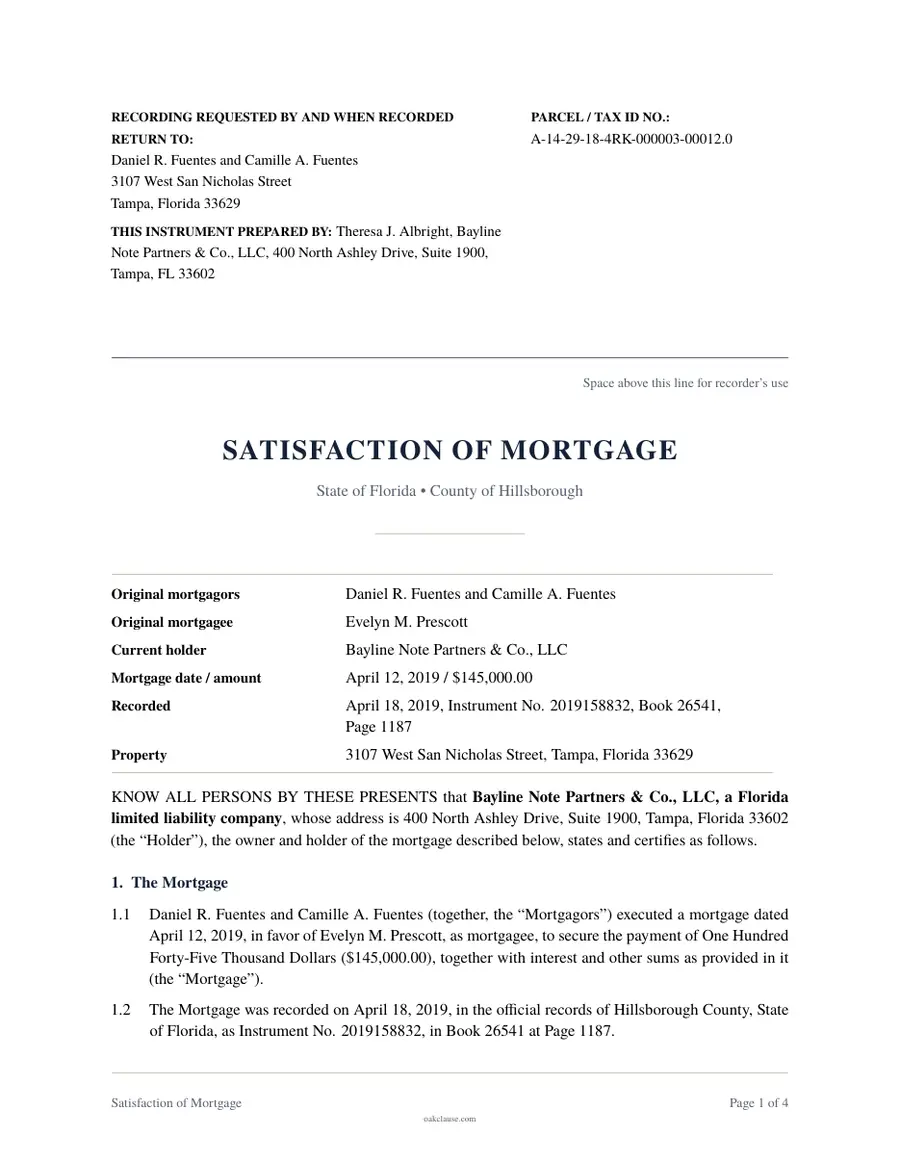
A mortgage is a type of lien, but it is usually released with a document called a satisfaction of mortgage, which recorders and title companies expect. Use the satisfaction of mortgage form for a paid-off mortgage and this form for other liens.
What information do I need about the original lien?
You need the names of the lienholder and owner, the type and amount of the lien, and where and when it was filed, such as the recording date and instrument or book and page number for real estate, or the title number and VIN for a vehicle.
More Delaware documents
Other documents people prepare for Delaware, each with the state’s rules where we have checked them.
All Delaware documents and rules