Virginia Postnuptial Agreement
Already married?
Includes 30 days of edits
- 5 to 20 minutes
- Print-ready PDF
- Tailored to Virginia
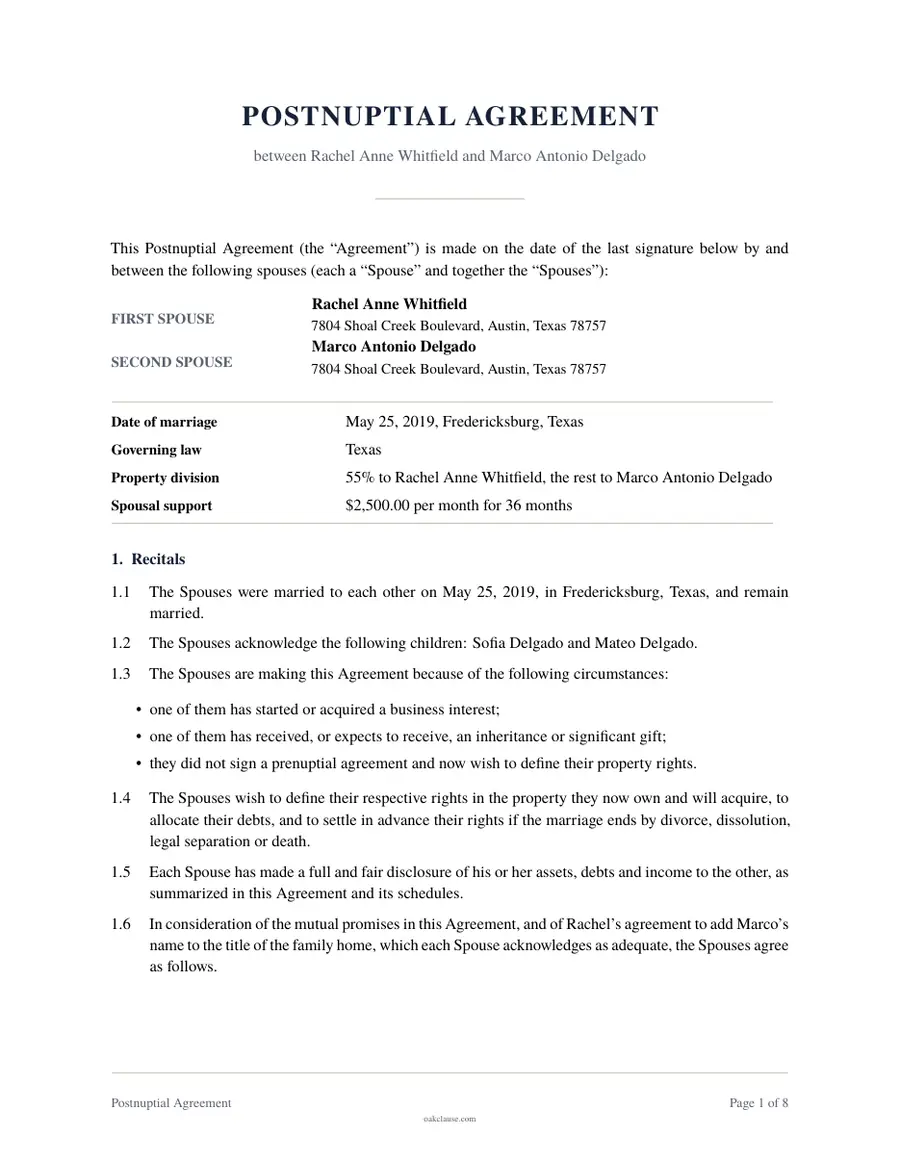
Postnup rules in Virginia
Postnuptial agreements are governed by state law, and states treat them differently. Most states enforce them, but many apply closer scrutiny than they do to prenups because the spouses are already in a confidential relationship. States differ on the consideration required, the level of financial disclosure expected, whether spousal support can be waived, whether a change in the character of property (a transmutation) must meet special formal requirements, and whether notarization or witnesses are needed. Community property states (Arizona, California, Idaho, Louisiana, Nevada, New Mexico, Texas, Washington and Wisconsin) use different starting rules from other states. The agreement uses the state you select as its governing law, adjusts its property terminology for community property states, and defers to that state's requirements instead of stating specific rules.
When you create this document for Virginia, the questionnaire uses Virginia as the governing law and adds wording that defers to Virginia requirements where they apply. Laws change, so confirm current rules with official Virginia sources or a local attorney for anything critical.
What is a Postnuptial Agreement?
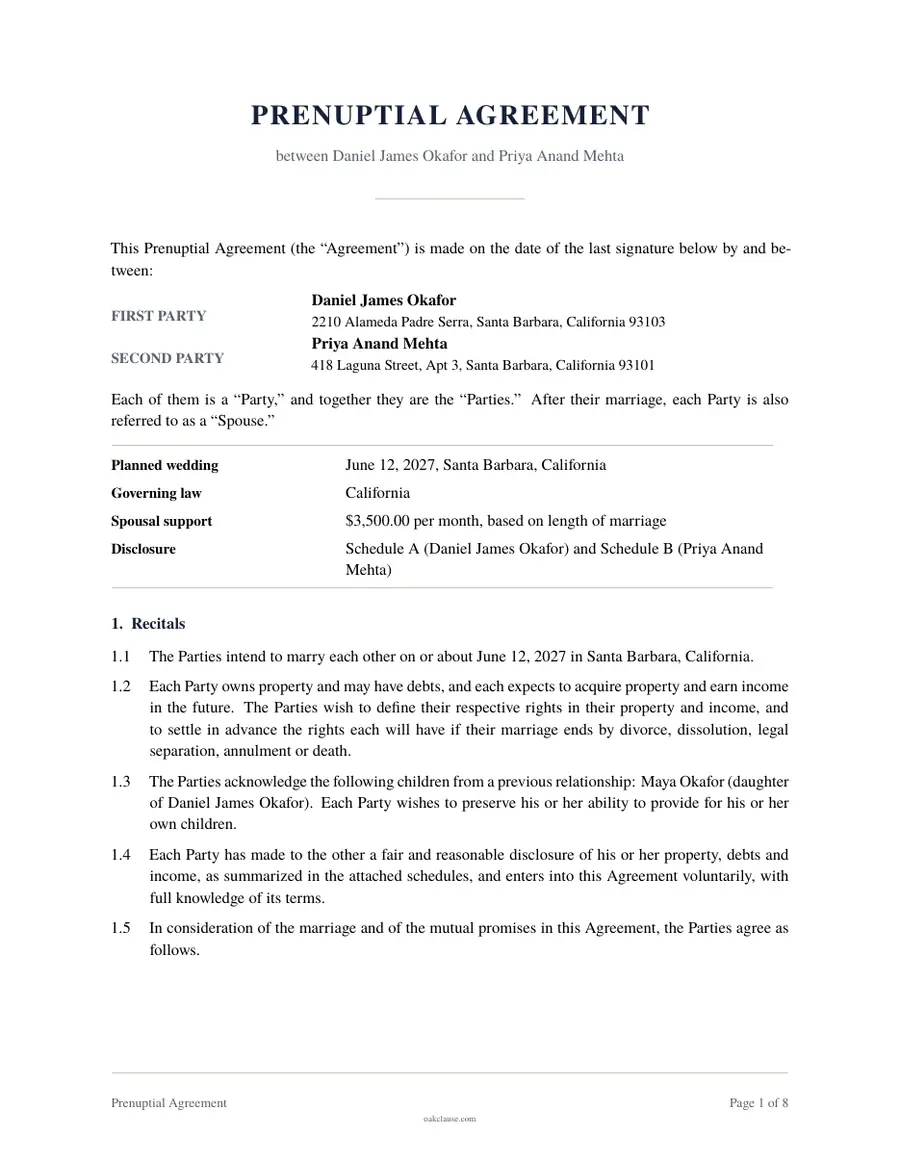
A postnuptial agreement, sometimes called a postnup or marital agreement, is a contract between spouses signed after the wedding. Like a prenup, it can classify property as separate or shared, allocate debts, set rules for income earned during the marriage, and decide in advance how property and spousal support would be handled in a divorce or on the death of a spouse.
Couples sign postnups for many reasons: one spouse starts a business or receives an inheritance, the couple moves to a different state, they want to reconcile after a difficult period with clearer financial ground rules, or they simply never got around to a prenup. A postnup can also update or replace an earlier prenuptial agreement.
Because spouses already owe each other duties of good faith, courts in many states review postnuptial agreements carefully. Agreements that are in writing, based on full financial disclosure, signed without pressure and reviewed by separate lawyers are the most likely to hold up. This document includes recitals, a property and debt classification schedule, counsel and voluntariness acknowledgments, and notary pages.
When to use it
- You did not sign a prenup and now want to clarify which assets are separate and which are shared.
- One spouse has started or bought a business and you want to agree how it will be treated.
- One spouse has received or expects an inheritance or a large gift.
- You are reconciling after a separation and want written financial terms going forward.
- You want to update or replace an existing prenuptial agreement.
- You have moved to a new state and want your arrangements to reflect its law.
What is included
- Marriage details and recitals explaining why the agreement is being made
- Schedule classifying each existing asset as separate or marital
- Schedule allocating existing debts between the spouses
- Rules for future earnings, gifts, inheritances and growth of separate property
- Marital home, joint accounts and retirement benefits
- Property division and spousal support if the marriage ends
- Rights at death and optional life insurance obligation
- Effect on any existing prenuptial agreement
- Financial disclosure, legal counsel and voluntariness acknowledgments
- Dispute resolution, general provisions, signature and notary pages
How to make your Postnup
Answer the questions
Tell us about the parties and the terms you want. Most documents take about 5 to 20 minutes.
Review the preview
Check the draft as you go and change any answer. The document updates instantly.
Download, sign and keep a copy
Download a print-ready PDF, sign it with the other parties, and give everyone a copy.
Postnup in another state
Back to the general postnup page51 states shown
- ALAlabama
- AKAlaska
- AZArizona
- ARArkansas
- CACalifornia
- COColorado
- CTConnecticut
- DEDelaware
- DCDistrict of Columbia
- FLFlorida
- GAGeorgia
- HIHawaii
- IDIdaho
- ILIllinois
- INIndiana
- IAIowa
- KSKansas
- KYKentucky
- LALouisiana
- MEMaine
- MDMaryland
- MAMassachusetts
- MIMichigan
- MNMinnesota
- MSMississippi
- MOMissouri
- MTMontana
- NENebraska
- NVNevada
- NHNew Hampshire
- NJNew Jersey
- NMNew Mexico
- NYNew York
- NCNorth Carolina
- NDNorth Dakota
- OHOhio
- OKOklahoma
- OROregon
- PAPennsylvania
- RIRhode Island
- SCSouth Carolina
- SDSouth Dakota
- TNTennessee
- TXTexas
- UTUtah
- VTVermont
- VAVirginia
- WAWashington
- WVWest Virginia
- WIWisconsin
- WYWyoming
Frequently asked questions
Are postnuptial agreements legally binding?
In most states, yes, if they meet the state's requirements. Courts generally look for a written agreement signed voluntarily by both spouses, full and fair disclosure of finances, and terms that are not unconscionable. Because spouses owe each other duties of good faith, some states review postnups more strictly than prenups.
What is the difference between a prenup and a postnup?
The main difference is timing. A prenup is signed before the wedding and takes effect on marriage, while a postnup is signed after the couple is already married. Postnups often address property the couple has already acquired together, which is why this agreement includes a schedule classifying existing assets.
Can a postnup change marital property into separate property?
Often it can. Converting property from one category to another is usually called a transmutation. Many states require the change to be in writing and to state clearly that the character of the property is being changed. This agreement includes express transmutation language for the assets you classify.
Do we each need a lawyer?
It is not always legally required, but it is strongly recommended. Separate lawyers help show that each spouse understood what they were giving up and signed freely. One lawyer cannot properly represent both spouses in negotiating a postnup.
Can a postnup address child custody or child support?
No. Courts decide custody, parenting time and child support according to the child's best interests when the issue arises. Spouses cannot bargain away a child's right to support. This agreement confirms that those matters are left to the court.
Can a postnuptial agreement replace our prenup?
Yes. Spouses can usually amend or revoke a prenuptial agreement with a later written agreement signed by both of them. This document lets you state whether it replaces, amends or supplements an existing prenup.
What if we reconcile after signing a postnup during a rough patch?
The agreement stays in effect unless you revoke or change it in a signed writing. If your circumstances change significantly, such as the birth of a child or a large change in income, consider reviewing and updating the agreement.
Should we update our wills after signing a postnup?
Usually yes. A postnup can waive rights a spouse would otherwise have at death, but it does not by itself transfer property. Wills, trusts, retirement plan beneficiaries and life insurance designations should be reviewed so they match the agreement.
More Virginia documents
Other documents people prepare for Virginia, each with the state’s rules where we have checked them.
All Virginia documents and rules