Birth Plan
Put your hopes for labor, delivery and your baby's first days in one clear document your care team can read in a couple of minutes.
Includes 30 days of edits
- 5 to 20 minutes
- Print-ready PDF
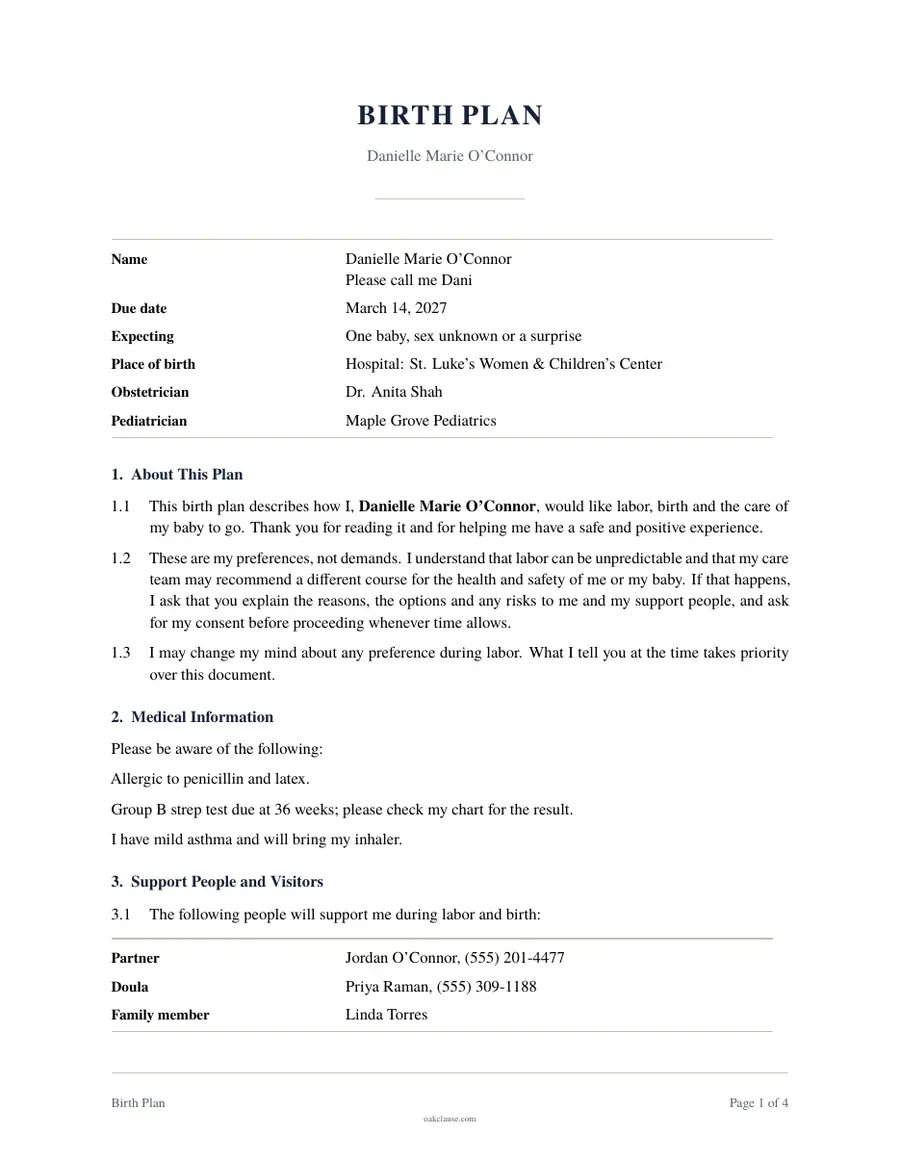
What is a Birth Plan?
A birth plan is a short written summary of how you would like labor, birth and the hours after delivery to go. It tells the doctors, midwives and nurses who care for you what matters most to you: who you want in the room, how you hope to manage pain, how you would like to push, what should happen right after the baby arrives and how you plan to feed your newborn.
Shift changes are common in hospitals and birth centers, and the person who delivers your baby may not be the provider you saw during pregnancy. A written plan means every new nurse or doctor can quickly learn your preferences without you having to explain them again in the middle of contractions. It also gives you a natural way to talk through options with your provider before your due date.
A birth plan is a statement of preferences, not a contract. Births are unpredictable, and your care team may recommend changes for the health of you or your baby. This document says so openly, includes a section on what you would like if a cesarean birth becomes necessary, and asks your team to explain any change and seek your consent whenever time allows.
When to use it
- You are expecting a baby and want your care team to know your preferences before labor begins.
- You plan to give birth in a hospital, birth center or at home and want a printable summary for your bag or chart.
- You want to discuss pain relief, monitoring or newborn procedures with your provider at a prenatal visit.
- A partner, doula or relative will support you and you want everyone to share the same understanding of your wishes.
- You have medical conditions, allergies, cultural or religious practices the team should know about.
- You want to record your wishes for an unplanned cesarean birth in advance.
What is included
- Key details about you, your due date, place of birth and providers
- Support people, visitors and photography preferences
- Labor environment, movement, eating and monitoring choices
- Pain relief approach and comfort measures
- Pushing, delivery, cord clamping and placenta wishes
- Cesarean birth preferences
- Newborn care, procedures and feeding plan
- Postpartum, cultural and special requests
- Statement of flexibility and informed consent
- Signature lines for you, your partner and an optional provider review
How to make your Birth Plan
Answer the questions
Tell us about the parties and the terms you want. Most documents take about 5 to 20 minutes.
Review the preview
Check the draft as you go and change any answer. The document updates instantly.
Download, sign and keep a copy
Download a print-ready PDF, sign it with the other parties, and give everyone a copy.
Frequently asked questions
Is a birth plan legally binding?
No. A birth plan records your preferences and helps your care team understand them, but it does not bind the hospital, birth center or your provider. Patients generally have the right to give or refuse informed consent to medical care, and a birth plan is a helpful way to communicate those choices ahead of time.
How long should a birth plan be?
Shorter is usually better. Nurses and doctors appreciate a plan they can read in a minute or two. This document groups your choices under clear headings and leaves out sections that do not apply, so it stays focused on what matters to you.
When should I write my birth plan?
Many people draft a plan in the second or early third trimester, which leaves time to review it with their provider at a prenatal visit, learn the facility's policies and make changes before the due date.
Who should get a copy of my birth plan?
Consider giving copies to your obstetrician or midwife, your doula, your partner or main support person, and packing several in your hospital bag. Some facilities will add a copy to your medical record if you bring it to a prenatal appointment or pre-registration.
What if my hospital does not allow something in my plan?
Facilities have their own policies on things like visitors, eating during labor, water birth and continuous monitoring. Ask about them in advance and talk with your provider about any preference that may conflict. You can then update your plan so it reflects options that are actually available to you.
Can I decline newborn procedures like eye ointment or vitamin K?
You can record your preferences, and many parents ask to discuss these procedures or to delay them until after the first hour of bonding. Some states and facilities require certain newborn procedures, such as eye ointment, so a decline may not always be honored. Ask your provider or pediatrician what applies where you plan to give birth and talk through the benefits and risks before your due date.
Should I include preferences for a cesarean birth?
It is a good idea even if you are planning a vaginal birth. If a cesarean becomes necessary, there is often little time to discuss details. Writing down wishes such as having your partner present or skin-to-skin contact in the operating room helps your team honor them where possible.
Can I change my birth plan during labor?
Yes. You can change your mind at any point, and your spoken wishes during labor take priority over anything written earlier. Many people find that their preferences shift once labor starts, and that is completely normal.
Does a birth plan replace talking to my doctor or midwife?
No. A birth plan works best as a starting point for a conversation with your provider, who can explain the benefits and risks of each option for your situation. This document is general information and is not medical or legal advice.