Georgia Revocation of Power of Attorney
Cancel a power of attorney you signed earlier and put your agent and the businesses they deal with on written notice.
Includes 30 days of edits
- 5 to 20 minutes
- Print-ready PDF
- Tailored to Georgia
POA Revocation rules in Georgia
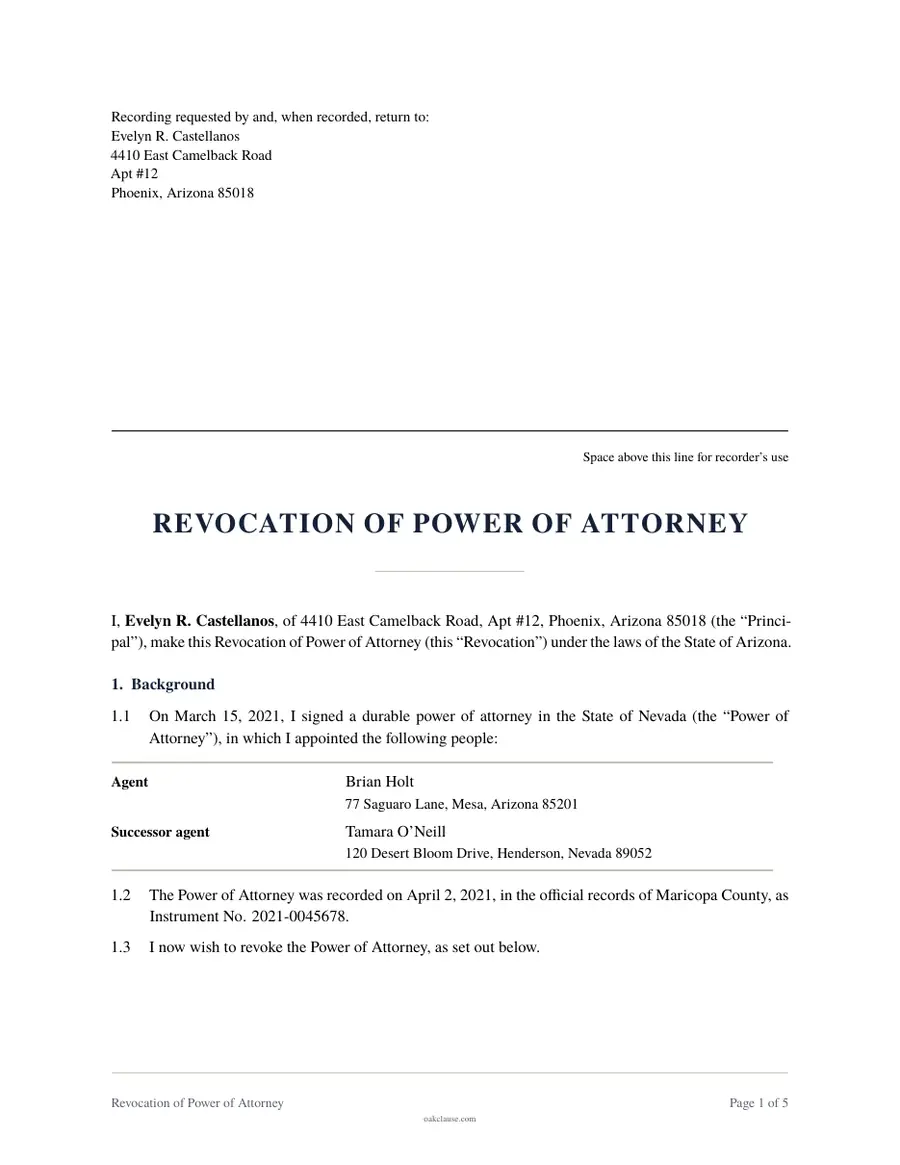
Each state's power of attorney law explains how a power of attorney may be revoked, when the revocation becomes effective against the agent, and how long third parties who have not been told may continue to rely on the old document. Some states also treat a later power of attorney differently depending on whether it says it revokes earlier ones. A revocation of a power of attorney that was recorded for real estate purposes generally needs to be notarized and recorded in the same county office to be effective against later buyers and lenders. This document applies the law of the state you select, defers to that state's rules on effectiveness and notice, and includes a notary acknowledgment and optional witness blocks so it can be recorded where needed.
When you create this document for Georgia, the questionnaire uses Georgia as the governing law and adds wording that defers to Georgia requirements where they apply. Laws change, so confirm current rules with official Georgia sources or a local attorney for anything critical.
What is a Revocation of Power of Attorney?
A revocation of power of attorney is a signed statement in which the person who granted a power of attorney, the principal, cancels it. Once the revocation takes effect and the agent learns of it, the agent no longer has authority to sign documents, access accounts or otherwise act on the principal's behalf.
People revoke a power of attorney for many reasons: the relationship with the agent has changed, the agent is no longer able to serve, the task the document was created for is finished, or the principal simply wants to name someone else. You can revoke the whole document or, in many cases, only the appointment of a particular agent while leaving the rest in place.
Signing the revocation is only half the job. Banks, brokers, title companies and other businesses may keep honoring the old power of attorney until they find out it has been cancelled, so the revocation is most effective when it is delivered to the agent and to every institution that has a copy. If the original was recorded with a county office, the revocation is usually recorded there too.
When to use it
- You no longer trust your agent or your relationship with them has changed, such as after a divorce or a falling out.
- Your agent has died, moved away or told you they can no longer serve.
- The specific transaction a limited power of attorney was created for has been completed.
- You are signing a new power of attorney and want to make clear the old one is no longer valid.
- You want to remove one co-agent or successor agent while keeping the rest of the document in effect.
What is included
- Principal details and a description of the original power of attorney
- Every agent, co-agent and successor agent whose authority is revoked
- Revocation of the entire document or of named agents only
- Optional recording details for a power of attorney filed with a county
- Instructions for the agent to stop acting, return documents and account
- List of banks and other third parties being notified
- Treatment of any new power of attorney you have signed
- Signature, optional witnesses and notary acknowledgment
- Optional notice of revocation letter addressed to your agent
How to make your POA Revocation
Answer the questions
Tell us about the parties and the terms you want. Most documents take about 5 to 20 minutes.
Review the preview
Check the draft as you go and change any answer. The document updates instantly.
Download, sign and keep a copy
Download a print-ready PDF, sign it with the other parties, and give everyone a copy.
POA Revocation in another state
Back to the general poa revocation page51 states shown
- ALAlabama
- AKAlaska
- AZArizona
- ARArkansas
- CACalifornia
- COColorado
- CTConnecticut
- DEDelaware
- DCDistrict of Columbia
- FLFlorida
- GAGeorgia
- HIHawaii
- IDIdaho
- ILIllinois
- INIndiana
- IAIowa
- KSKansas
- KYKentucky
- LALouisiana
- MEMaine
- MDMaryland
- MAMassachusetts
- MIMichigan
- MNMinnesota
- MSMississippi
- MOMissouri
- MTMontana
- NENebraska
- NVNevada
- NHNew Hampshire
- NJNew Jersey
- NMNew Mexico
- NYNew York
- NCNorth Carolina
- NDNorth Dakota
- OHOhio
- OKOklahoma
- OROregon
- PAPennsylvania
- RIRhode Island
- SCSouth Carolina
- SDSouth Dakota
- TNTennessee
- TXTexas
- UTUtah
- VTVermont
- VAVirginia
- WAWashington
- WVWest Virginia
- WIWisconsin
- WYWyoming
Frequently asked questions
Can I revoke a power of attorney at any time?
Generally yes. As long as you have the mental capacity to make the decision, you can revoke a power of attorney you granted, even if the agent objects. If you have already lost capacity, a court proceeding may be needed to remove an agent who is acting improperly.
Does a revocation need to be notarized?
Not every state requires it, but notarizing the revocation is widely recommended because banks and other institutions are more likely to accept it, and a notarized signature is usually required if the revocation must be recorded with a county office. Some states also ask for witnesses.
When does the revocation take effect?
The revocation is effective when you sign it, but your agent and third parties are generally protected for acts done in good faith before they learn about it. That is why it is important to deliver a copy to your agent and to every bank or business that has the original power of attorney.
How do I notify my agent?
Deliver a signed copy of the revocation to your agent in a way you can prove later, such as certified mail with return receipt or hand delivery with a signed acknowledgment. This document includes an optional notice letter you can send with it.
Does signing a new power of attorney automatically cancel the old one?
Not always. Depending on your state's law and the wording of the documents, two powers of attorney can both stay in effect. Signing a written revocation of the old document removes any doubt.
Do I need to record the revocation?
If the original power of attorney was recorded with a county recorder or register of deeds, usually because it was used for real estate, the revocation should generally be recorded in the same office so that title searches show the agent no longer has authority.
Can I remove just one agent and keep the rest of the power of attorney?
Often yes. This document lets you revoke only the appointment of specific agents, leaving the rest of the power of attorney and any remaining or successor agents in place. If the changes are extensive, signing a new power of attorney may be clearer.
What happens to transactions my agent made before the revocation?
Transactions your agent completed within their authority before the revocation generally remain valid. The revocation only stops future acts. If you believe your agent misused their authority, you can ask for an accounting and talk to an attorney about your options.
More Georgia documents
Other documents people prepare for Georgia, each with the state’s rules where we have checked them.
All Georgia documents and rules