Wyoming Pour-Over Will
Make sure anything you did not move into your living trust still ends up there.
Includes 30 days of edits
- 5 to 20 minutes
- Print-ready PDF
- Tailored to Wyoming
Wyoming rules at a glance
Will signing and witnesses
- Witnesses
- 2 witnesses
- Self-proving affidavit
- Allowed
- Handwritten (holographic) wills
- Recognized
A Wyoming will must be witnessed by two competent witnesses unless it is entirely in the testator's handwriting and signed by the testator, and it can be made self-proved with a notarized affidavit.
When you create this pour-over will for Wyoming, the questionnaire uses Wyoming as the governing law and adds wording that defers to Wyoming requirements where they apply.
General information, not legal advice. Laws change, and cities can add their own rules, so check the current statute before you rely on it.
What is a Pour-Over Will?
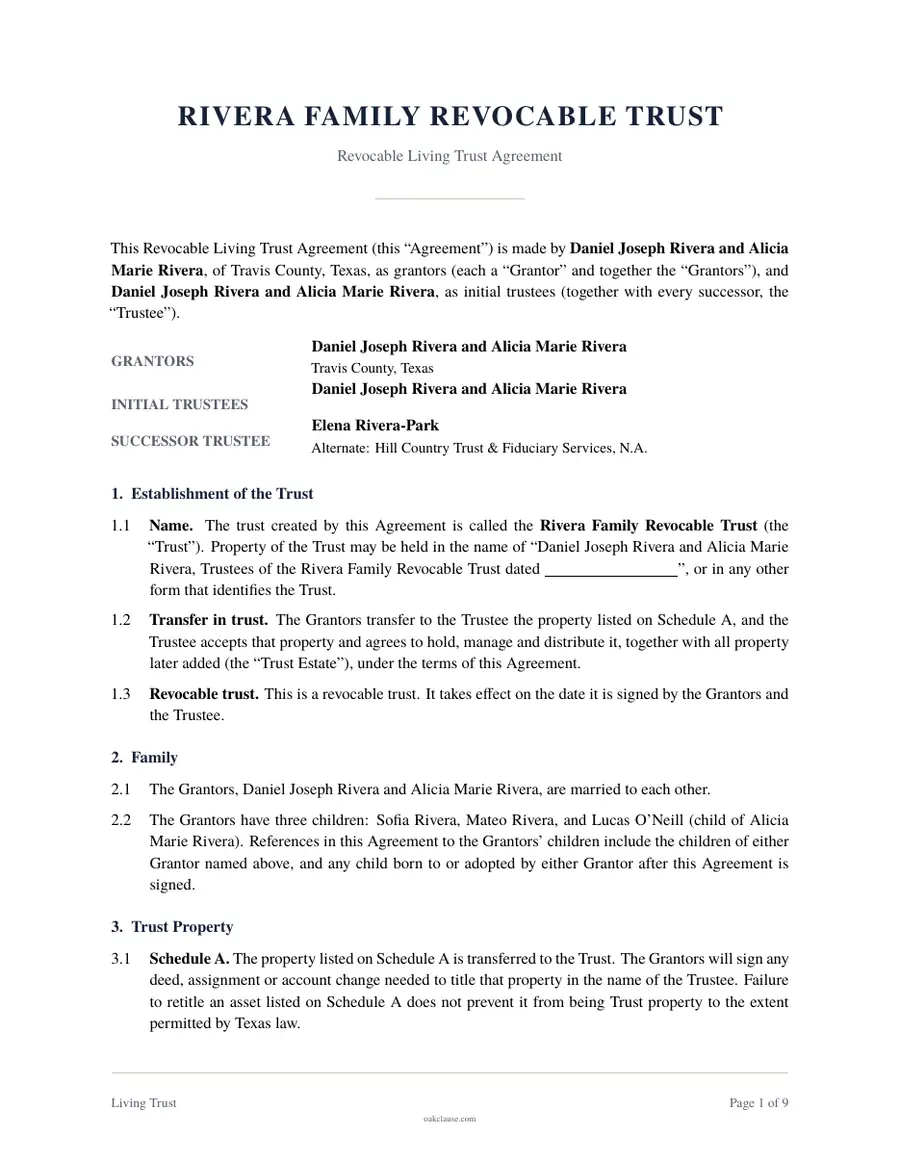
A pour-over will is a will designed to work alongside a revocable living trust. Its main job is to catch any property that is still in your individual name when you die, such as a car you bought recently or an account you never retitled, and transfer (or pour) it into your trust. Once there, it is distributed under the terms of the trust, so your trust stays the single rulebook for who inherits.
Even a carefully funded trust usually misses something, and property outside the trust would otherwise pass under your state's intestacy rules. A pour-over will closes that gap. Like any will, it also lets you name an executor to handle your estate and, if you have minor children, nominate a guardian for them, which a trust cannot do.
Assets that pass under a pour-over will generally still go through probate before they reach the trust, so it works best as a safety net rather than a substitute for funding the trust. It must be signed with your state's will formalities, usually two adult witnesses, and many states allow a self-proving affidavit before a notary. This document includes an attestation clause, witness blocks and an optional self-proving affidavit.
When to use it
- You have created, or are creating, a revocable living trust and want a will that supports it.
- You want any assets left out of your trust to be distributed under the trust's terms.
- You need to name an executor to handle property that is not in the trust.
- You have minor children and want to nominate a guardian alongside your trust plan.
- You want a backup plan in case the trust is revoked or cannot receive the property.
What is included
- Identification of your living trust by name, date and trustee
- Pour-over of your residuary estate to the trustee
- Backup instructions if the trust cannot receive your estate
- Executor and alternate executor, with bond and compensation choices
- Guardian and alternate guardian for minor children
- Choices for your personal belongings and optional specific gifts
- Debts, expenses and tax payment instructions
- Optional disinheritance and no-contest clauses
- Attestation clause with two or three witness blocks
- Optional self-proving affidavit with notary block
How to make your Pour-Over Will
Answer the questions
Tell us about the parties and the terms you want. Most documents take about 5 to 20 minutes.
Review the preview
Check the draft as you go and change any answer. The document updates instantly.
Download, sign and keep a copy
Download a print-ready PDF, sign it with the other parties, and give everyone a copy.
Pour-Over Will in another state
Back to the general pour-over will page51 states shown
- ALAlabama
- AKAlaska
- AZArizona
- ARArkansas
- CACalifornia
- COColorado
- CTConnecticut
- DEDelaware
- DCDistrict of Columbia
- FLFlorida
- GAGeorgia
- HIHawaii
- IDIdaho
- ILIllinois
- INIndiana
- IAIowa
- KSKansas
- KYKentucky
- LALouisiana
- MEMaine
- MDMaryland
- MAMassachusetts
- MIMichigan
- MNMinnesota
- MSMississippi
- MOMissouri
- MTMontana
- NENebraska
- NVNevada
- NHNew Hampshire
- NJNew Jersey
- NMNew Mexico
- NYNew York
- NCNorth Carolina
- NDNorth Dakota
- OHOhio
- OKOklahoma
- OROregon
- PAPennsylvania
- RIRhode Island
- SCSouth Carolina
- SDSouth Dakota
- TNTennessee
- TXTexas
- UTUtah
- VTVermont
- VAVirginia
- WAWashington
- WVWest Virginia
- WIWisconsin
- WYWyoming
Frequently asked questions
How many witnesses does a will need in Wyoming?
Two. A Wyoming will must be witnessed by two competent witnesses unless it is entirely in the testator's handwriting and signed by the testator, and it can be made self-proved with a notarized affidavit.
Can a will be self-proved in Wyoming?
Yes. Wyoming allows a self-proving affidavit, which lets a court accept the will without calling the witnesses to testify.
Is a handwritten will valid in Wyoming?
Yes. Wyoming recognizes handwritten (holographic) wills that meet its requirements.
Where do the Wyoming rules for wills come from?
They come from Wyo. Stat. Title 2. We last checked them in October 2026. Laws change, so check the current statute before you rely on it.
Why do I need a will if I have a living trust?
A trust controls only the property that has been transferred into it. Anything left in your own name at death needs a separate path, and without a will it passes under your state's intestacy rules. A pour-over will sends that property to your trust and also lets you name an executor and a guardian for minor children.
Does a pour-over will avoid probate?
Generally no. Property that passes under a pour-over will usually goes through probate before it reaches the trust, although many states offer simplified procedures for smaller estates. To keep probate to a minimum, transfer as many assets as possible into the trust during your lifetime.
Should I sign my pour-over will and trust at the same time?
Many people sign them together, and it is a common practice because the will refers to the trust by name and date. Some states require the trust to exist before or at the same time as the will. If your trust already exists, the will simply identifies it.
What happens if I amend my trust later?
In most states, property poured over into a trust is distributed under the trust as it reads at your death, including later amendments. This document states that intent. Check your state's rules, and update your will if you replace the trust with a completely new one.
What if my trust is revoked or does not exist when I die?
This document lets you choose a backup: the successor trustee named in your trust (or your executor, if no successor trustee can serve) can hold the property on the same terms as the trust, or it can pass to people you name, or to your heirs under state law. Without a backup clause, the gift to the trust could fail.
Who should be my executor?
Many people name the same person as both executor and successor trustee, since the two roles work closely together. You can choose different people. Some states add requirements for executors who live out of state, so check the rules where you live.
Can I leave specific gifts in a pour-over will?
Yes, but most people keep gifts in the trust so all of their instructions are in one place. This document lets you add a few specific gifts if you want, and choose how your personal belongings are handled.
Does a pour-over will need witnesses?
Yes. It must be signed with the same formalities as any other will in your state, which in most states means two adult witnesses. Choose witnesses who do not inherit under the will or trust to avoid complications.
More Wyoming documents
Other documents people prepare for Wyoming, each with the state’s rules where we have checked them.
All Wyoming documents and rules