Pennsylvania Living Trust
Place your home, accounts and other property in a revocable living trust that you control during your life and that passes to your beneficiaries without going through probate.
Includes 30 days of edits
- 5 to 20 minutes
- Print-ready PDF
- Tailored to Pennsylvania
Living Trust rules in Pennsylvania
Trust law is largely state law. Many states have adopted a version of the Uniform Trust Code, while others follow their own statutes, so rules on signing formalities, trustee duties, beneficiary notices and spendthrift protection differ. Most states do not require a living trust to be notarized or witnessed, but some states require the parts of a trust that take effect at death to be signed with the same formalities as a will, usually two witnesses, and notarization is widely recommended and is often needed to record a deed or prove the trust to banks. Community property states have special rules for property owned by married couples, and some states have their own procedures for small estates and for certifying a trust to third parties. When you choose your state, the document is governed by that state's law and defers to it wherever requirements vary.
When you create this document for Pennsylvania, the questionnaire uses Pennsylvania as the governing law and adds wording that defers to Pennsylvania requirements where they apply. Laws change, so confirm current rules with official Pennsylvania sources or a local attorney for anything critical.
What is a Living Trust?
A revocable living trust is a written agreement in which you (the grantor) transfer property to a trustee, who manages it for the people you choose (the beneficiaries). In most living trusts you are your own trustee while you are alive and well, so you keep full control: you can buy, sell, spend and change your mind at any time.
The trust also names a successor trustee who steps in if you become unable to manage your affairs or when you die. Because the trust, not you personally, owns the property, the successor trustee can usually manage and distribute it privately, without a probate court proceeding, following the instructions you wrote down.
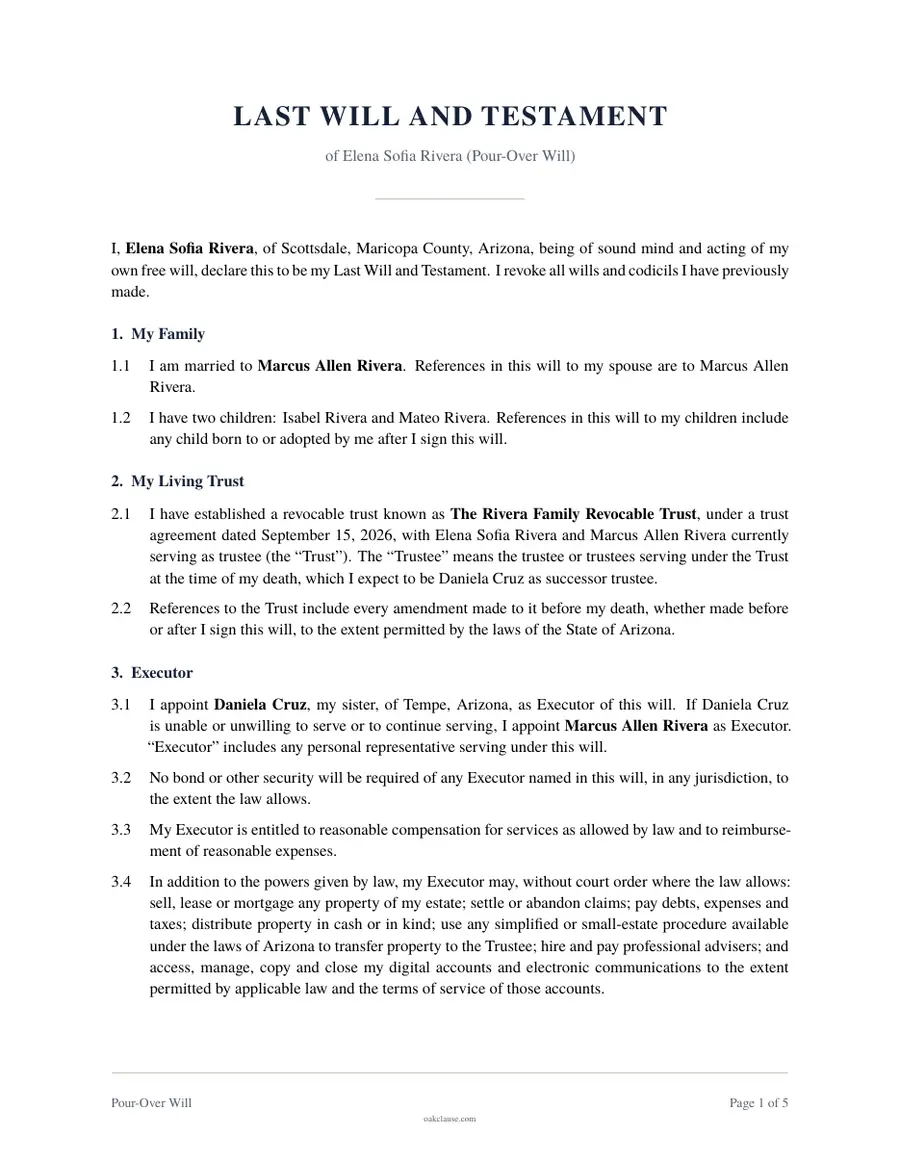
A trust only controls property that has actually been transferred into it. After signing, you retitle real estate with a new deed, change the owner of bank and brokerage accounts to the trustee, and list other assets on the schedule of trust property. Many people also sign a pour-over will to catch anything left outside the trust.
When to use it
- You want your property to pass to your family privately and without a probate proceeding.
- You own real estate in more than one state and want to avoid a separate probate in each.
- You want a trusted person to manage your property if you become ill or incapacitated, without a court guardianship.
- You want to hold an inheritance in trust until young beneficiaries reach a more mature age.
- You and your spouse want a single joint trust that continues for the survivor and then passes to your children or other beneficiaries. In this joint trust the surviving spouse can change the plan after the first death.
What is included
- Individual or joint (married couple) trust options
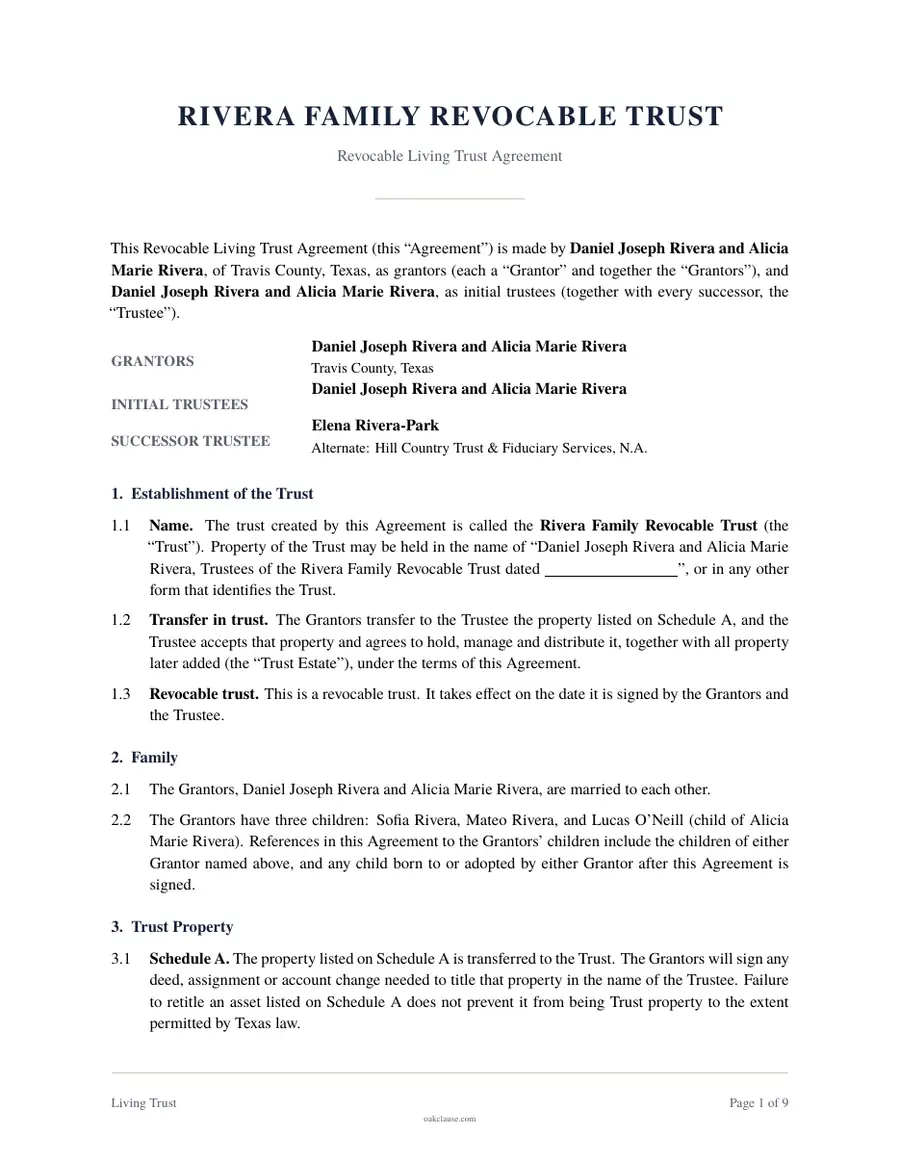
- Trust name, grantors and initial trustee
- Successor and alternate successor trustees, with bond and compensation choices
- Schedule A listing the property placed in the trust
- Right to revoke or amend the trust at any time
- Management of the trust during incapacity
- Specific gifts and a residuary distribution plan with percentage shares
- Continuing trusts for beneficiaries under a chosen age
- Spendthrift, no-contest and omitted-heir provisions
- Trustee powers, signature pages, trustee acceptance and notary acknowledgment
How to make your Living Trust
Answer the questions
Tell us about the parties and the terms you want. Most documents take about 5 to 20 minutes.
Review the preview
Check the draft as you go and change any answer. The document updates instantly.
Download, sign and keep a copy
Download a print-ready PDF, sign it with the other parties, and give everyone a copy.
Living Trust in another state
Back to the general living trust page51 states shown
- ALAlabama
- AKAlaska
- AZArizona
- ARArkansas
- CACalifornia
- COColorado
- CTConnecticut
- DEDelaware
- DCDistrict of Columbia
- FLFlorida
- GAGeorgia
- HIHawaii
- IDIdaho
- ILIllinois
- INIndiana
- IAIowa
- KSKansas
- KYKentucky
- LALouisiana
- MEMaine
- MDMaryland
- MAMassachusetts
- MIMichigan
- MNMinnesota
- MSMississippi
- MOMissouri
- MTMontana
- NENebraska
- NVNevada
- NHNew Hampshire
- NJNew Jersey
- NMNew Mexico
- NYNew York
- NCNorth Carolina
- NDNorth Dakota
- OHOhio
- OKOklahoma
- OROregon
- PAPennsylvania
- RIRhode Island
- SCSouth Carolina
- SDSouth Dakota
- TNTennessee
- TXTexas
- UTUtah
- VTVermont
- VAVirginia
- WAWashington
- WVWest Virginia
- WIWisconsin
- WYWyoming
Frequently asked questions
What is the difference between a living trust and a will?
A will takes effect only at death and usually must go through probate, a public court process. A living trust takes effect as soon as you sign and fund it, can be used to manage your property if you become incapacitated, and generally lets property pass to beneficiaries without probate. Many people use both: a trust for most assets and a pour-over will for anything left outside it.
Does a revocable living trust avoid estate taxes?
No. Property in a revocable trust is still treated as yours for federal and state estate tax purposes, and you continue to report trust income on your own tax return. More advanced trusts can be used for tax planning, which is a good reason to talk with an estate planning attorney or tax adviser if your estate is large.
Can I be my own trustee?
Yes. Most people who create a revocable living trust serve as their own trustee, so day-to-day life does not change. You name a successor trustee who takes over only if you become unable to manage the trust, resign or die.
What does it mean to fund a trust?
Funding means transferring ownership of your property into the trust. For real estate that typically means signing and recording a new deed to the trustee. For bank and investment accounts, the institution retitles the account in the trustee's name. Property that is never transferred is not controlled by the trust and may still need to go through probate.
Can I change or cancel my living trust later?
Yes. A revocable trust can be amended or revoked by the grantor at any time while the grantor is alive and has capacity. Changes are usually made with a signed written amendment, or by restating the whole trust. In a joint trust, the rules for revoking and amending during both spouses' lives and after the first death are set out in the document.
Does a living trust need to be notarized?
Most states do not require notarization for a trust to be valid, but having the grantor's signature acknowledged before a notary is common practice. Banks, title companies and county recorders often expect a notarized trust or certification of trust, and some states, such as Florida, require the provisions of a trust that take effect at death to be signed with the same formalities as a will, usually in front of two witnesses. Check the rules in your state, and add the witness blocks if your state requires them.
Should my spouse and I have a joint trust or separate trusts?
Married couples often choose a joint trust because it is simpler to manage a single set of documents and accounts. Separate trusts may suit couples with children from prior relationships, significant separate property, or concerns about creditor exposure. In the joint trust created here, the surviving spouse can amend or revoke the trust after the first death, which means the survivor could change who inherits, including the deceased spouse's children. Couples with children from earlier relationships may prefer separate trusts or a plan prepared by an attorney. The right choice depends on your situation and state law, so consider professional advice if you are unsure.
What happens to retirement accounts and life insurance?
These assets pass by beneficiary designation, not by your trust, unless you name the trust as beneficiary. Naming a trust as the beneficiary of a retirement account can have significant income tax consequences, so many people get advice before doing so.
More Pennsylvania documents
Other documents people prepare for Pennsylvania, each with the state’s rules where we have checked them.
All Pennsylvania documents and rules