Illinois Last Will and Testament
Decide who inherits your property, who settles your estate and who would care for your children.
Free with email
Final PDF after you confirm your email
- 5 to 20 minutes
- Print-ready PDF
- Tailored to Illinois
Illinois rules at a glance
Will signing and witnesses
- Witnesses
- 2 witnesses
- Self-proving affidavit
- Witness affidavit
- Allows a self-proving affidavit signed by the witnesses; no notary required
- Handwritten (holographic) wills
- Not recognized
An Illinois will must be signed by the testator and attested by two or more credible witnesses, it can be admitted on the witnesses' attestation clause or affidavit without live testimony, and unwitnessed handwritten wills are not valid.
When you create this last will and testament for Illinois, the questionnaire uses Illinois as the governing law and adds wording that defers to Illinois requirements where they apply.
General information, not legal advice. Laws change, and cities can add their own rules, so check the current statute before you rely on it.
What is a Last Will and Testament?
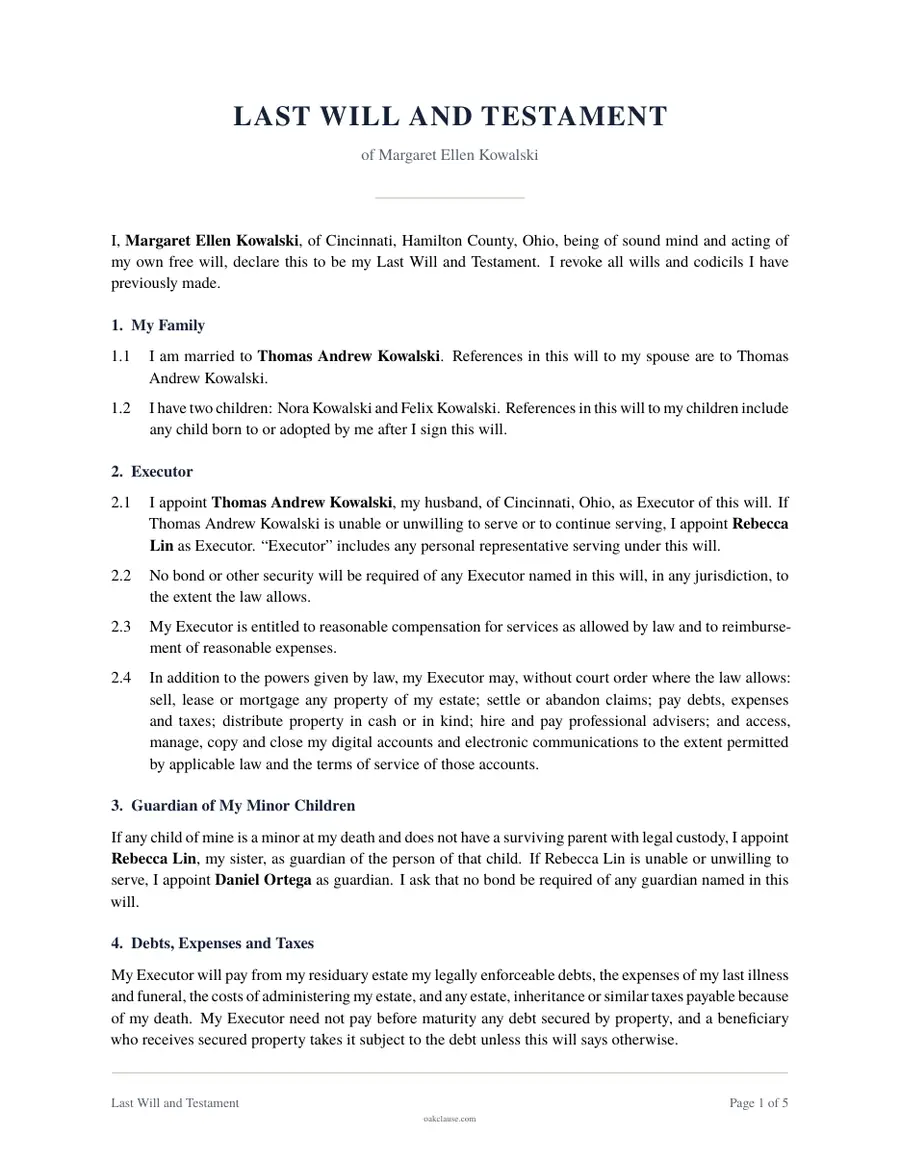
A last will and testament is a legal document that says what should happen to your property after you die. It names the people or organizations who will inherit (your beneficiaries), the person who will settle your estate (your executor), and, if you have minor children, the person you want to raise them (their guardian).
Without a will, state intestacy laws decide who inherits, usually in a fixed order of close relatives, and a court chooses who manages the estate and who cares for your children. A will lets you make those choices yourself, leave specific gifts to friends or charities, and make your wishes clear to your family.
A will only takes effect if it is signed with the formalities your state requires. Most states require you to sign in front of two adult witnesses, and many let you add a self-proving affidavit signed before a notary, which can make probate simpler. This document includes an attestation clause, witness blocks and an optional self-proving affidavit.
When to use it
- You want to decide who inherits your property instead of leaving it to state default rules.
- You have children under 18 and want to name a guardian for them.
- You want to name a trusted person to settle your estate and waive the bond requirement where allowed.
- You want to leave specific items, cash gifts or charitable gifts to particular people or organizations.
- Your circumstances have changed, such as a marriage, divorce, new child or a move to another state, and your old will no longer fits.
What is included
- Your personal details, family members and marital status
- Executor and alternate executor, with bond and compensation choices
- Guardian and alternate guardian for minor children
- Unlimited specific gifts of cash, real estate, vehicles and personal items
- Residuary estate plan with percentage shares and a backup beneficiary
- Survivorship period and protection for young beneficiaries
- Optional disinheritance, pet care, funeral wishes and no-contest clause
- Executor powers, including digital assets
- Attestation clause and two or three witness signature blocks
- Optional self-proving affidavit with notary block
How to make your Last Will
Answer the questions
Tell us about the parties and the terms you want. Most documents take about 5 to 20 minutes.
Review the preview
Check the draft as you go and change any answer. The document updates instantly.
Download, sign and keep a copy
Download a print-ready PDF, sign it with the other parties, and give everyone a copy.
Last Will in another state
Back to the general last will page51 states shown
- ALAlabama
- AKAlaska
- AZArizona
- ARArkansas
- CACalifornia
- COColorado
- CTConnecticut
- DEDelaware
- DCDistrict of Columbia
- FLFlorida
- GAGeorgia
- HIHawaii
- IDIdaho
- ILIllinois
- INIndiana
- IAIowa
- KSKansas
- KYKentucky
- LALouisiana
- MEMaine
- MDMaryland
- MAMassachusetts
- MIMichigan
- MNMinnesota
- MSMississippi
- MOMissouri
- MTMontana
- NENebraska
- NVNevada
- NHNew Hampshire
- NJNew Jersey
- NMNew Mexico
- NYNew York
- NCNorth Carolina
- NDNorth Dakota
- OHOhio
- OKOklahoma
- OROregon
- PAPennsylvania
- RIRhode Island
- SCSouth Carolina
- SDSouth Dakota
- TNTennessee
- TXTexas
- UTUtah
- VTVermont
- VAVirginia
- WAWashington
- WVWest Virginia
- WIWisconsin
- WYWyoming
Frequently asked questions
How many witnesses does a will need in Illinois?
Two. An Illinois will must be signed by the testator and attested by two or more credible witnesses, it can be admitted on the witnesses' attestation clause or affidavit without live testimony, and unwitnessed handwritten wills are not valid.
Can a will be self-proved in Illinois?
Yes, through the witnesses. Illinois allows a self-proving affidavit signed by the witnesses; no notary required.
Is a handwritten will valid in Illinois?
No. Illinois does not recognize unwitnessed handwritten wills made under its own law.
Where do the Illinois rules for wills come from?
They come from 755 ILCS 5/4-3 (Signing and attestation) and 755 ILCS 5/6-4 (Admission of will to probate; testimony or affidavit of witnesses). We last checked them in October 2026. Laws change, so check the current statute before you rely on it.
Do I need a lawyer to make a will?
No state requires a lawyer to prepare a will. Many people with straightforward situations make their own. Consider speaking with an estate planning attorney if you have a large or complex estate, own a business, have a blended family, want to plan for a beneficiary with special needs, or expect someone to challenge your will.
How many witnesses does a will need?
Most states require two adult witnesses who see you sign the will and then sign it themselves. Using witnesses who are not beneficiaries is strongly recommended, because some states limit what a witness-beneficiary can inherit. You can choose to include a third witness block for extra protection.
What is a self-proving affidavit?
It is a sworn statement, signed by you and your witnesses in front of a notary, confirming that the will was signed properly. In states that recognize it, the court can accept the will without contacting the witnesses later. Not every state recognizes self-proving affidavits, and some use their own wording.
What happens to property that is not mentioned in my will?
It passes under the residuary clause, which covers everything not given away by a specific gift. That is why the residuary section is one of the most important parts of a will. Property with a named beneficiary, such as a retirement account or life insurance policy, passes to that beneficiary instead.
Can I leave someone out of my will?
Generally yes, with important limits. Adult children can usually be disinherited, and this document lets you state that intentionally. Most states protect a surviving spouse with a right to claim a share of the estate, regardless of the will, unless they waived it in a valid prenuptial or postnuptial agreement.
Does a will avoid probate?
No. Property that passes under a will usually goes through probate, the court process that confirms the will and supervises the estate. Some states offer simplified procedures for small estates. If avoiding probate is a priority, consider a living trust or beneficiary designations as well.
Where should I keep my will?
Keep the signed original somewhere safe but accessible, such as a fireproof home safe, with your attorney, or with the probate court where your county offers will deposit. Tell your executor where it is. A bank safe deposit box can be hard for others to open after your death.
How do I change my will later?
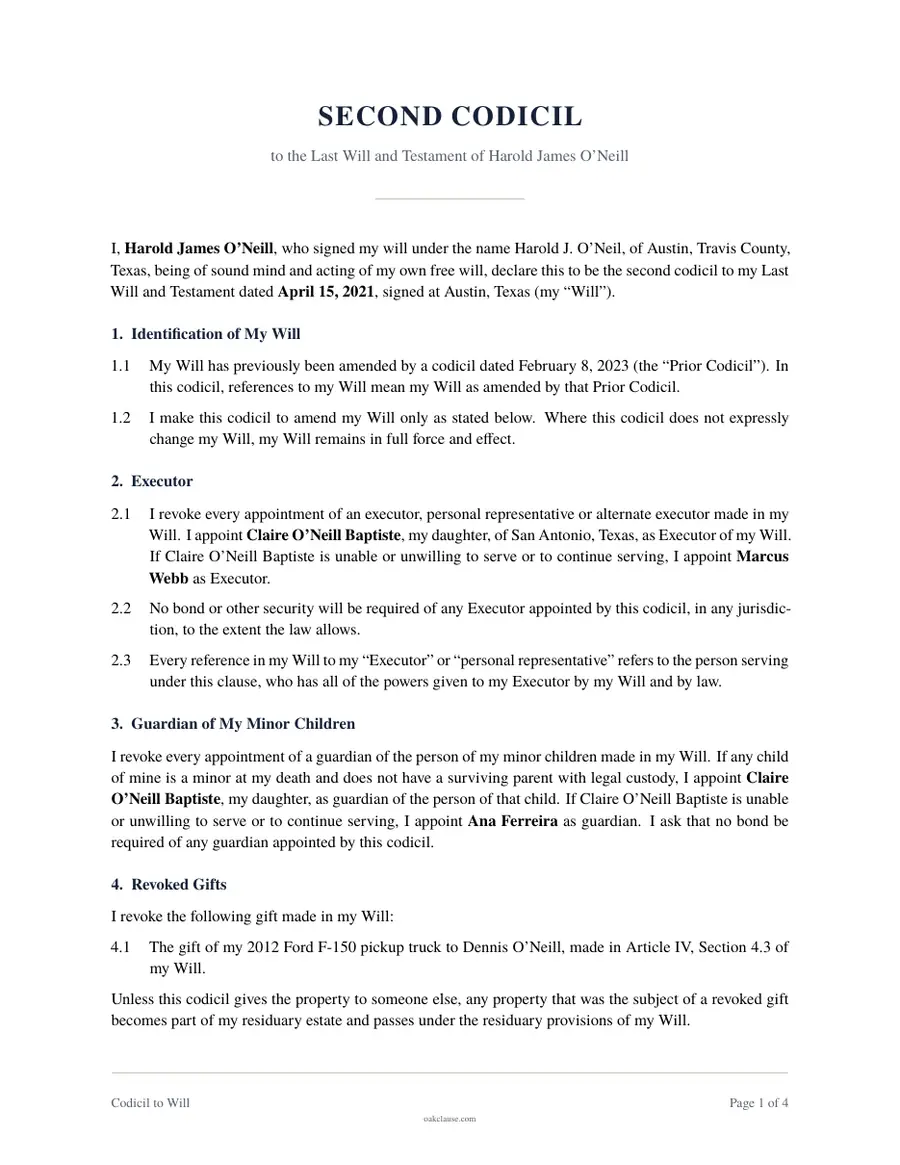
You can make a new will that revokes the old one, or sign a codicil, a short amendment signed with the same formalities as a will. Do not write changes on the signed original; handwritten edits can invalidate parts of it or cause confusion.
Is a handwritten or electronic will valid?
Some states accept handwritten (holographic) wills without witnesses, and a growing number accept electronic wills, but rules vary widely. A typed will signed with witnesses following your state's requirements is accepted everywhere in the United States.
More Illinois documents
Other documents people prepare for Illinois, each with the state’s rules where we have checked them.
All Illinois documents and rules