Therapy Services Agreement
Start the therapeutic relationship with clear expectations.
Includes 30 days of edits
- 5 to 20 minutes
- Print-ready PDF
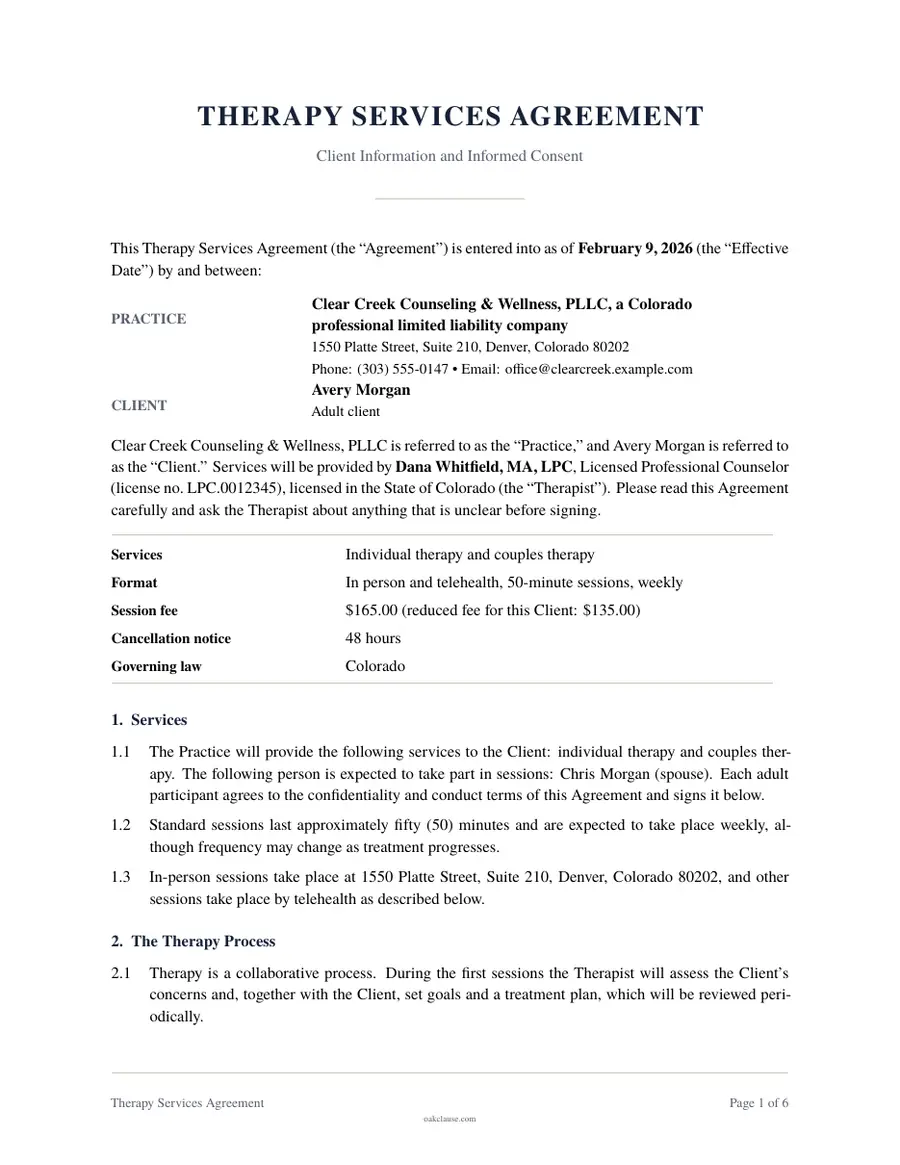
What is a Therapy Services Agreement?
A therapy services agreement, sometimes called a client services agreement or informed consent agreement, is the written understanding between a therapist or counseling practice and a client. It is usually signed at intake, before or at the first session.
The agreement explains what therapy involves, how much sessions cost and when payment is due, what happens when a session is cancelled late or missed, and how insurance or self-pay billing works. Just as importantly, it tells the client in plain terms what stays confidential and the situations in which a therapist may be required by law to share information.
Having these points in writing protects both sides. Clients know what they are agreeing to and can ask questions before treatment starts, and the practice has a signed record of the client's informed consent, financial responsibility and communication preferences.
When to use it
- You are a licensed counselor, psychologist, social worker or therapist taking on a new client.
- Your practice is adding telehealth sessions and wants consent and technology terms in writing.
- You want a clear record of your cancellation, no-show and payment policies.
- You are starting therapy with a minor and need a parent or guardian's consent and signature.
- You are updating an older intake packet so that fees, communication and records terms match how you practice today.
What is included
- Therapist, practice and license details
- Types of services, session length and in-person or telehealth format
- Session fees, intake fee and sliding scale option
- Insurance, superbill or self-pay billing and the Good Faith Estimate notice
- Late cancellation and missed appointment fees
- Confidentiality and the legal limits of confidentiality
- Telehealth consent, electronic communication and emergency resources
- Records, client rights and ending therapy
- Consent for treatment of a minor
- Governing law and signature blocks
How to make your Therapy Agreement
Answer the questions
Tell us about the parties and the terms you want. Most documents take about 5 to 20 minutes.
Review the preview
Check the draft as you go and change any answer. The document updates instantly.
Download, sign and keep a copy
Download a print-ready PDF, sign it with the other parties, and give everyone a copy.
Frequently asked questions
Is a therapy services agreement the same as informed consent?
They overlap. Informed consent is the client's agreement to treatment after learning what it involves, its benefits and risks, and its alternatives. A therapy services agreement usually includes that consent along with the business terms, such as fees, cancellations and billing.
What are the limits of confidentiality in therapy?
What a client says in therapy is generally kept private, but every state has exceptions. Common ones include suspected child or elder abuse, a serious risk that the client will harm themselves or someone else, and a valid court order. The exact rules depend on the state, which is why this agreement refers to state law.
Can a therapist charge for a late cancellation or no-show?
Many therapists charge a fee when a client cancels with less than the notice set in the agreement or does not attend. Insurers usually will not pay for missed sessions, so the fee is the client's responsibility. Practices that bill insurance should check their payer contracts before charging these fees.
What is a Good Faith Estimate?
Under the federal No Surprises Act, health care providers, including therapists, must give clients who are uninsured or not using insurance an estimate of the expected charges for their care. This agreement includes a notice of the client's right to receive one.
Does this agreement cover telehealth sessions?
Yes. If you offer online or phone sessions, the agreement adds consent to telehealth, explains the client's responsibilities for privacy and technology, and sets a plan for disconnections and emergencies. Licensing rules for clients located in another state vary, so check them before offering cross-state sessions.
Can a minor sign a therapy agreement?
Usually a parent or legal guardian signs for a minor. Some states allow older minors to consent to certain counseling on their own. When the client is a minor, this agreement adds a parent or guardian consent section and signature line.
Does this replace a HIPAA Notice of Privacy Practices?
No. Practices covered by HIPAA must provide a separate Notice of Privacy Practices. This agreement can include the client's acknowledgment that they received that notice, but the notice itself is a separate document.
Is this agreement legal advice about my practice?
No. It is a general template. Licensing boards and professional associations often have specific disclosure requirements, so practitioners may want an attorney or their board's guidance to review their intake documents.