West Virginia Single-Member LLC Operating Agreement
Document how your one-owner LLC is owned, managed and financed, keep your business and personal affairs visibly separate, and plan who takes over if you cannot.
Includes 30 days of edits
- 5 to 20 minutes
- Print-ready PDF
- Tailored to West Virginia
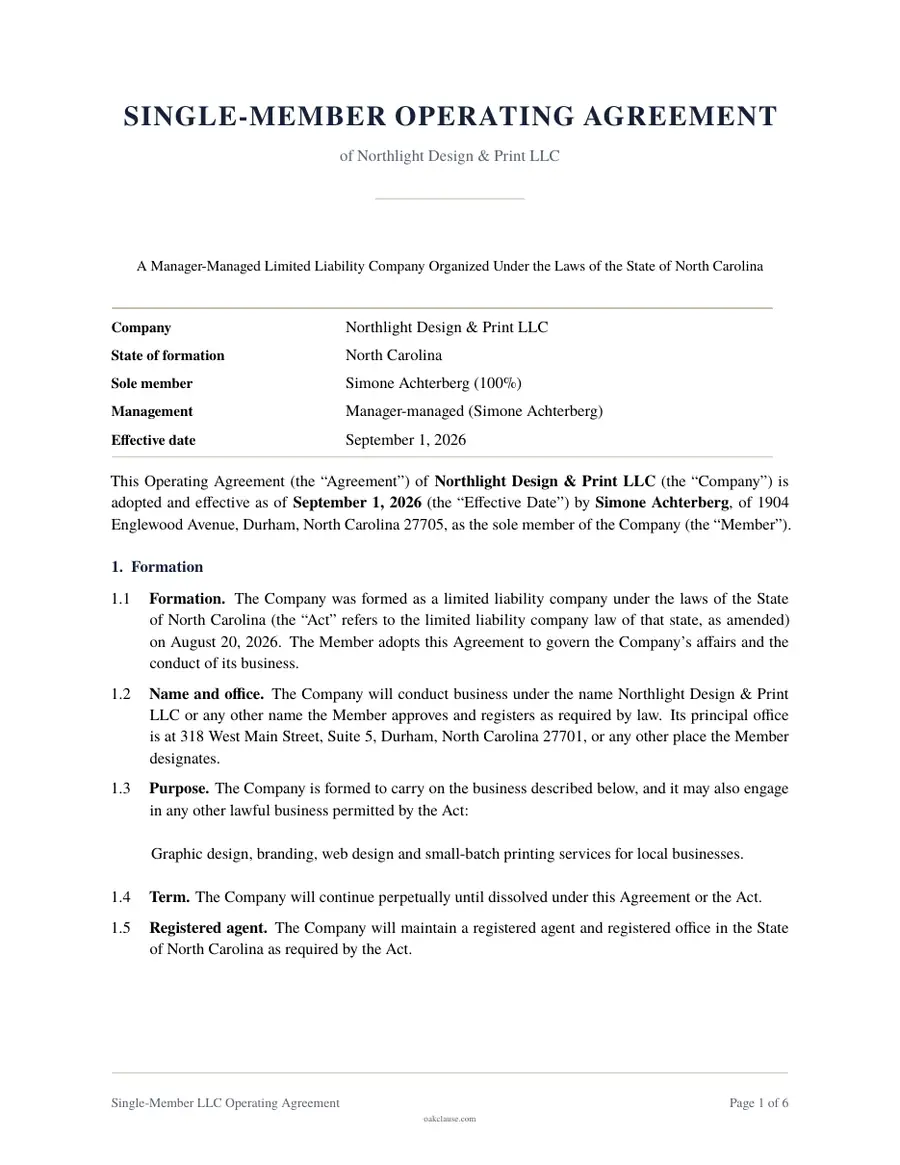
Single-Member Operating Agreement rules in West Virginia
Every state's limited liability company statute supplies default rules that apply when an operating agreement is silent, and some of those rules cannot be changed. Points that vary include whether an LLC must have a written operating agreement, what happens to a sole member's interest at death, how much protection a single-member LLC receives from a member's personal creditors, which records must be kept and the steps to dissolve. This agreement names the state you select as its governing law and defers to that state's requirements, so it works alongside local rules without stating them. Check your state's requirements, and consider an attorney when the business holds significant assets.
When you create this document for West Virginia, the questionnaire uses West Virginia as the governing law and adds wording that defers to West Virginia requirements where they apply. Laws change, so confirm current rules with official West Virginia sources or a local attorney for anything critical.
What is a Single-Member LLC Operating Agreement?
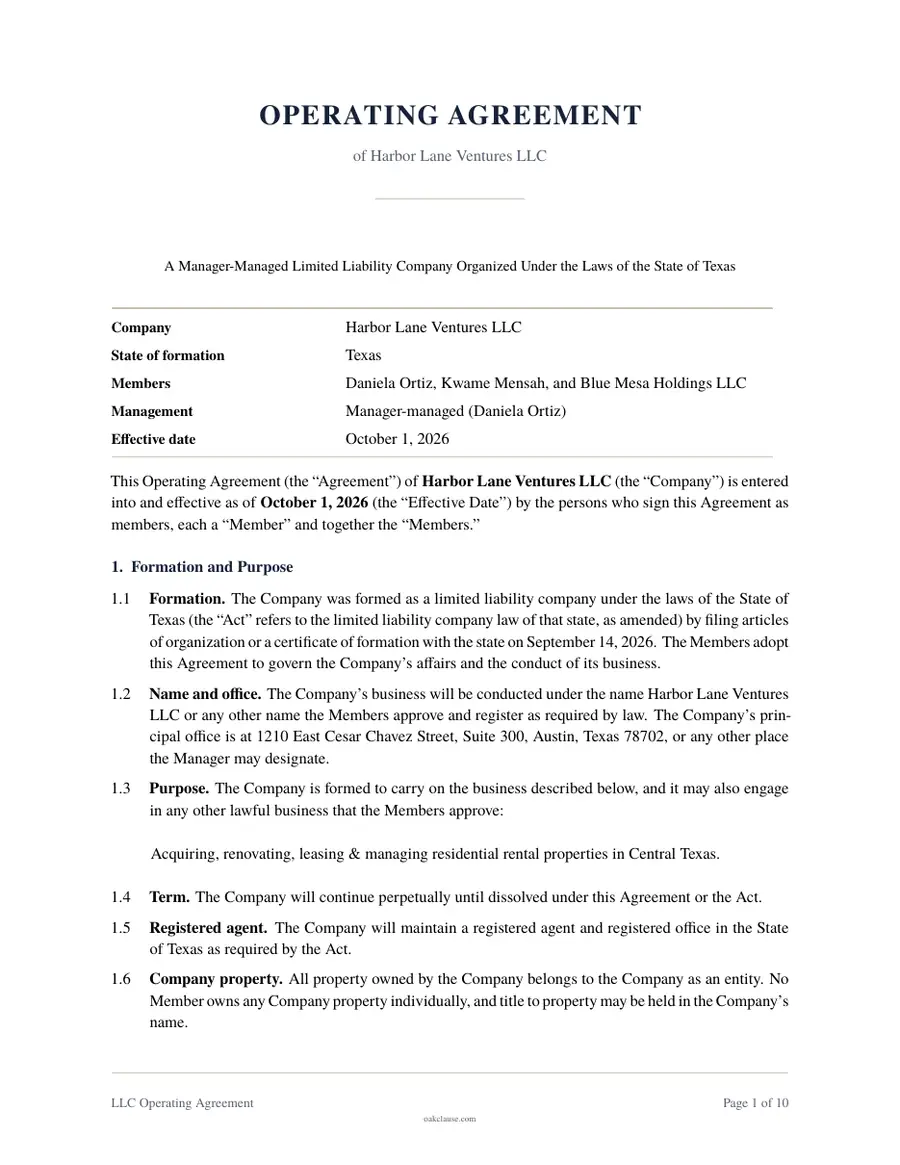
A single-member LLC operating agreement is the governing document for a limited liability company that has only one owner. Even though there is no co-owner to negotiate with, the agreement records that the company is a separate business, explains how it is managed, describes the owner's capital contribution and sets out what happens to the company if the owner dies or becomes incapacitated.
For a one-owner business, the biggest value of a written agreement is credibility. Courts that are asked to hold an owner personally liable for company debts often look at whether the business was run as a genuinely separate entity. A signed agreement, a separate bank account and clean records all help show that it was. Banks, landlords and investors also commonly ask to see an operating agreement before opening accounts or signing contracts.
This agreement supports an individual or a company as the sole member, optional managers and officers, the default disregarded-entity tax treatment or an S or C corporation election, and a named successor who can step in to keep the business running.
When to use it
- You have formed, or are forming, an LLC that you will own by yourself.
- Your bank, landlord or a lender has asked for a copy of your operating agreement.
- You want to strengthen the separation between your personal assets and the business.
- You want a trusted person to be able to manage the company if you die or become incapacitated.
- A parent company is setting up a wholly owned LLC subsidiary.
What is included
- Company name, state of formation, purpose and principal office
- Sole member details and capital contribution
- Member-managed or manager-managed structure, with optional officers
- Separateness and limited liability provisions
- Distributions and tax classification
- Books, records, banking and fiscal year
- Successor member on death or incapacity
- Admission of new members and transfers
- Indemnification, dissolution and general provisions
How to make your Single-Member Operating Agreement
Answer the questions
Tell us about the parties and the terms you want. Most documents take about 5 to 20 minutes.
Review the preview
Check the draft as you go and change any answer. The document updates instantly.
Download, sign and keep a copy
Download a print-ready PDF, sign it with the other parties, and give everyone a copy.
Single-Member Operating Agreement in another state
Back to the general single-member operating agreement page51 states shown
- ALAlabama
- AKAlaska
- AZArizona
- ARArkansas
- CACalifornia
- COColorado
- CTConnecticut
- DEDelaware
- DCDistrict of Columbia
- FLFlorida
- GAGeorgia
- HIHawaii
- IDIdaho
- ILIllinois
- INIndiana
- IAIowa
- KSKansas
- KYKentucky
- LALouisiana
- MEMaine
- MDMaryland
- MAMassachusetts
- MIMichigan
- MNMinnesota
- MSMississippi
- MOMissouri
- MTMontana
- NENebraska
- NVNevada
- NHNew Hampshire
- NJNew Jersey
- NMNew Mexico
- NYNew York
- NCNorth Carolina
- NDNorth Dakota
- OHOhio
- OKOklahoma
- OROregon
- PAPennsylvania
- RIRhode Island
- SCSouth Carolina
- SDSouth Dakota
- TNTennessee
- TXTexas
- UTUtah
- VTVermont
- VAVirginia
- WAWashington
- WVWest Virginia
- WIWisconsin
- WYWyoming
Frequently asked questions
Does a single-member LLC really need an operating agreement?
Most states do not require one, but it is still widely recommended. The agreement helps show that the LLC is a separate business rather than an extension of the owner, which matters if anyone tries to hold the owner personally responsible for company debts. Many banks also ask for it when you open a business account.
How is a single-member LLC taxed?
By default, the IRS treats a single-member LLC as a disregarded entity. If the owner is an individual, business income and expenses are usually reported on the owner's personal return. The LLC can instead elect to be taxed as an S corporation or a C corporation. A tax professional can help you weigh the options.
What happens to my LLC if I die?
Without a plan, the company could be left with no one authorized to run it while your estate is settled, and some state default rules may even cause it to dissolve. This agreement lets you name a successor who is admitted as a member, or who can manage the company, when you die or become incapacitated, alongside your estate plan.
Can I pay myself from my single-member LLC?
Yes. Owners of a disregarded single-member LLC usually take money out as distributions rather than salary. If the LLC elects S corporation treatment, the owner who works in the business generally needs to be paid reasonable wages through payroll. The agreement allows distributions as long as the company can still pay its debts.
What is the difference between member-managed and manager-managed for one owner?
Most single-member LLCs are member-managed, meaning the owner runs everything. A manager-managed structure lets you appoint someone else, such as a professional manager or a business partner who is not an owner, to handle day-to-day operations while you keep ownership.
Can I add a member later?
Yes. Adding a member changes the company's tax treatment and governance, so the agreement requires a written amendment or a new operating agreement before anyone else is admitted. Most owners switch to a multi-member operating agreement at that point.
Should I keep separate bank accounts for my LLC?
Keeping company money in its own account and never mixing it with personal funds is one of the most important habits for protecting limited liability. The agreement commits the company to separate accounts and records for that reason.
More West Virginia documents
Other documents people prepare for West Virginia, each with the state’s rules where we have checked them.
All West Virginia documents and rules