Shareholder Loan Agreement
Put a loan between a corporation and one of its shareholders on a proper footing, with clear interest, repayment and default terms in either direction.
Includes 30 days of edits
- 5 to 20 minutes
- Print-ready PDF
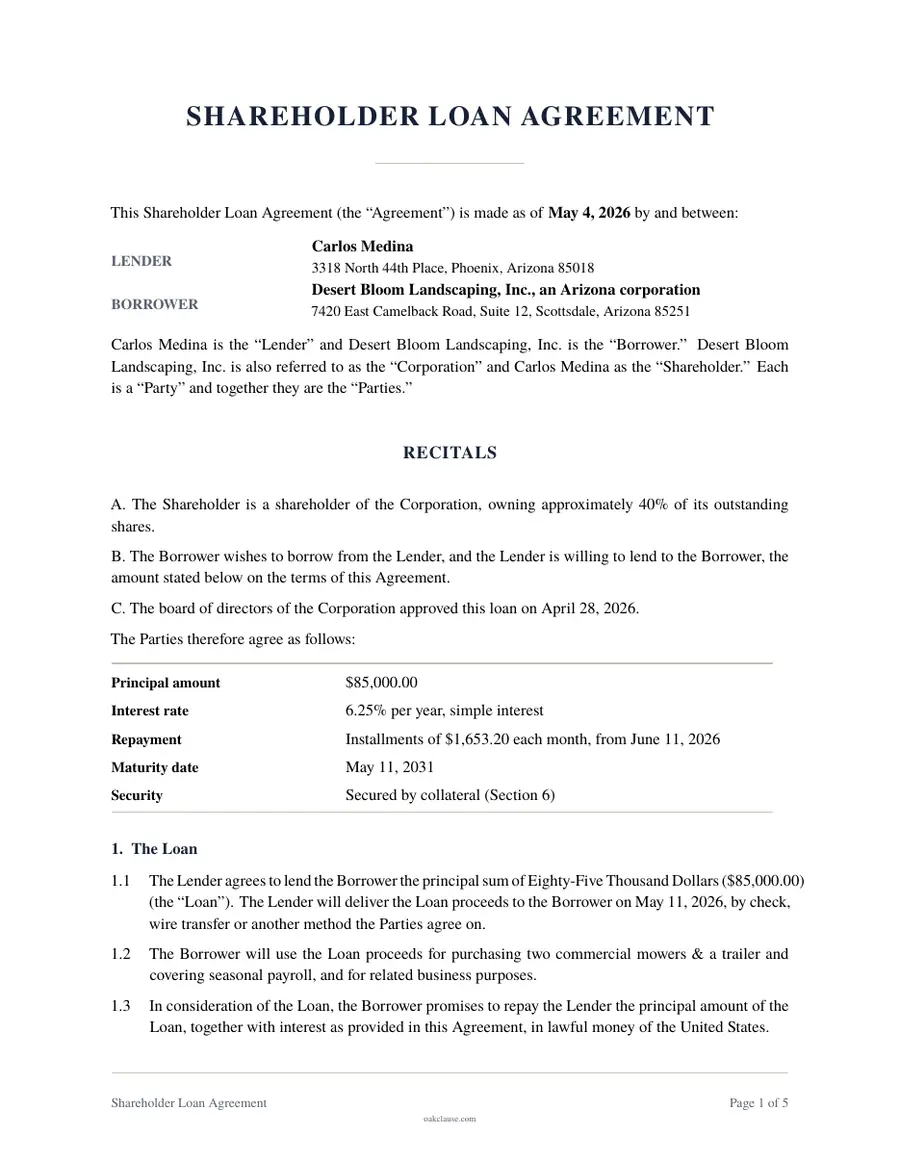
What is a Shareholder Loan Agreement?
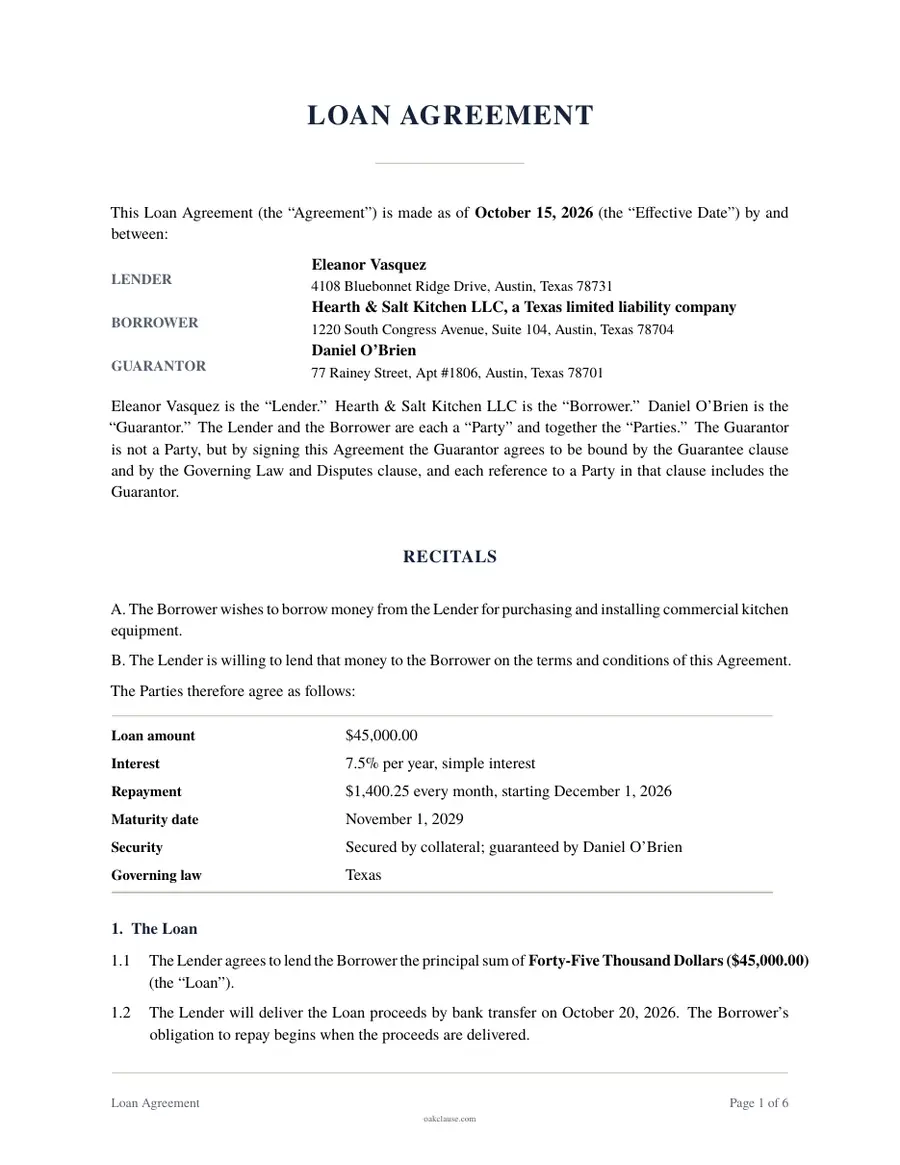
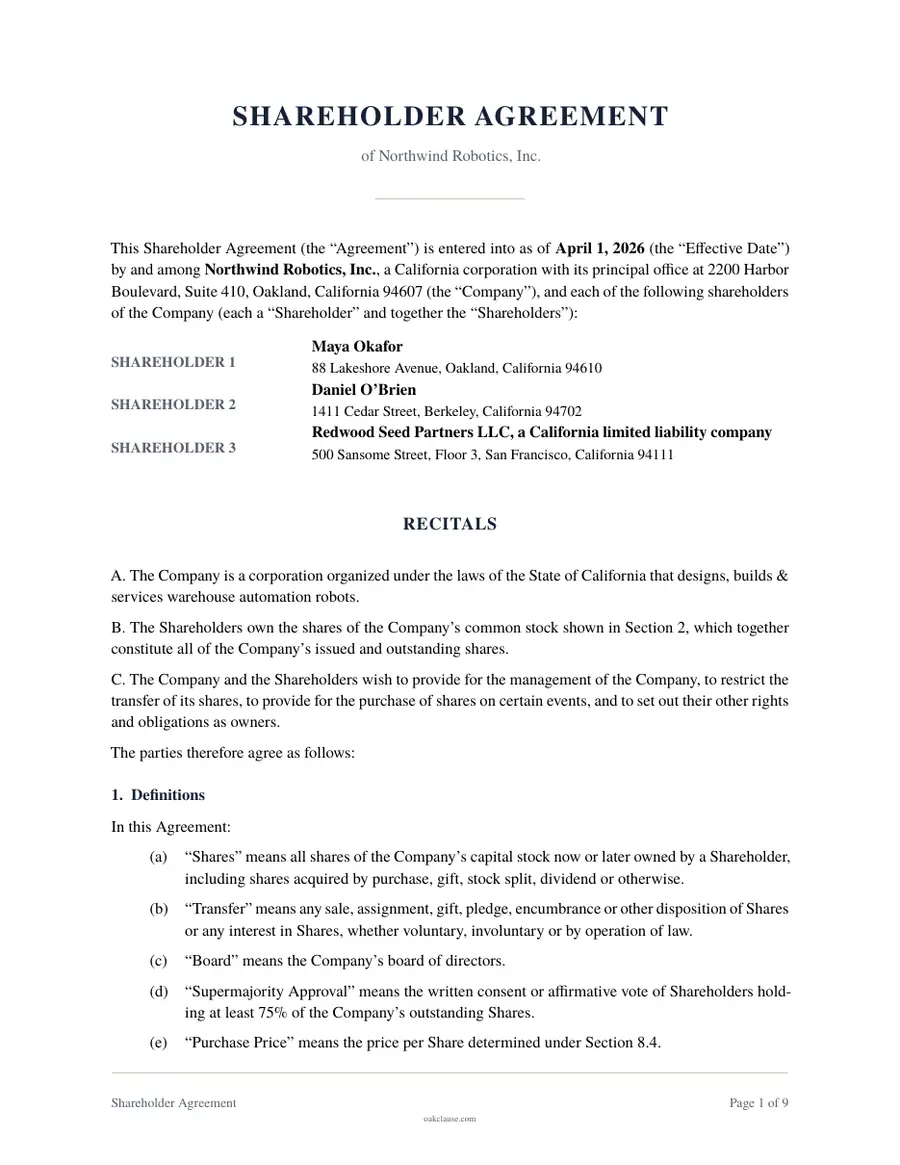
A shareholder loan agreement is a contract that documents money lent by a shareholder to the corporation they own, or money the corporation lends to one of its shareholders. It sets out the amount, the interest rate, how and when the loan will be repaid, and what happens if payments are missed.
Loans between a company and its owners are common in small businesses. Owners often fund early growth or a cash-flow gap with a loan rather than buying more shares, and companies sometimes advance money to an owner. Because the parties are related, these arrangements are easy to leave informal, which can cause problems later.
A written agreement helps show that the transaction is a genuine loan rather than a capital contribution, salary or disguised dividend. That distinction can matter to tax authorities, to other shareholders, to lenders and creditors, and in any later sale or dispute. The agreement also protects both sides by making the repayment expectations explicit.
When to use it
- You are lending your own money to a corporation you own shares in.
- Your corporation is advancing money to a shareholder and wants it treated as a loan.
- A bank or investor wants owner loans documented and possibly subordinated to other debt.
- Your accountant has asked for paperwork supporting a shareholder loan on the books.
- You want to secure the loan with company assets or other collateral.
What is included
- Loan in either direction, with the correct lender and borrower roles
- Principal amount, purpose and disbursement date
- Fixed interest rate, or an interest-free loan
- Installment, interest-only, single payment or on-demand repayment
- Prepayment rights, late charges and application of payments
- Optional security interest in collateral
- Optional subordination to bank debt or setoff against pay and distributions
- Bona fide debt statement and board approval recital
- Events of default, acceleration and default interest
- Governing law, dispute resolution and optional notary acknowledgment
How to make your Shareholder Loan
Answer the questions
Tell us about the parties and the terms you want. Most documents take about 5 to 20 minutes.
Review the preview
Check the draft as you go and change any answer. The document updates instantly.
Download, sign and keep a copy
Download a print-ready PDF, sign it with the other parties, and give everyone a copy.
Frequently asked questions
Why put a loan to my own company in writing?
Without paperwork, money you put into your company may look like a capital contribution, which is generally not repaid ahead of other claims and is treated differently for tax purposes. A signed loan agreement with interest and a repayment schedule is strong evidence that you intended a real loan and expect to be repaid.
Do I have to charge interest on a shareholder loan?
The parties can agree to any lawful rate, including zero. However, the IRS publishes minimum interest rates, called applicable federal rates, and loans below those rates between a corporation and its shareholder can have tax consequences for both. Many people set the rate at or above the applicable federal rate and check with a tax adviser.
What is the difference between a shareholder loan agreement and a promissory note?
A promissory note is a short promise to repay. A loan agreement is a fuller contract that also covers the purpose, representations, security, default and remedies. This document works as the loan agreement and includes the borrower's promise to pay, so a separate note is usually not required.
What does it mean to subordinate a shareholder loan?
Subordination means the shareholder agrees to be repaid only after the company's senior lenders, such as a bank. Banks frequently require owner loans to be subordinated before they will lend, so this agreement lets you include that commitment.
Can the company deduct loan payments from a shareholder's salary?
This agreement can give the company a right to set off amounts due against salary, bonuses or distributions owed to the shareholder. Wage deduction rules vary by state and often require specific written authorization, so the setoff applies only to the extent the law allows.
Does a shareholder loan need board approval?
Corporation laws and bylaws often require board approval for loans to or from insiders, and some states restrict loans to directors or officers. Recording board approval protects the transaction from later challenge. This agreement includes a recital confirming approval when you have obtained it.
Does a shareholder loan agreement need to be notarized?
Generally no. A loan agreement is valid when signed by the parties. You can add a notary acknowledgment for extra proof of signing, and notarization may be needed if the collateral includes something that must be recorded, such as real estate.