Personal Property Rental Agreement
Rent out a trailer, boat, camera, camping gear or other personal item with a simple written agreement covering the fee, deposit, pickup, care rules and what happens if something is damaged.
Includes 30 days of edits
- 5 to 20 minutes
- Print-ready PDF
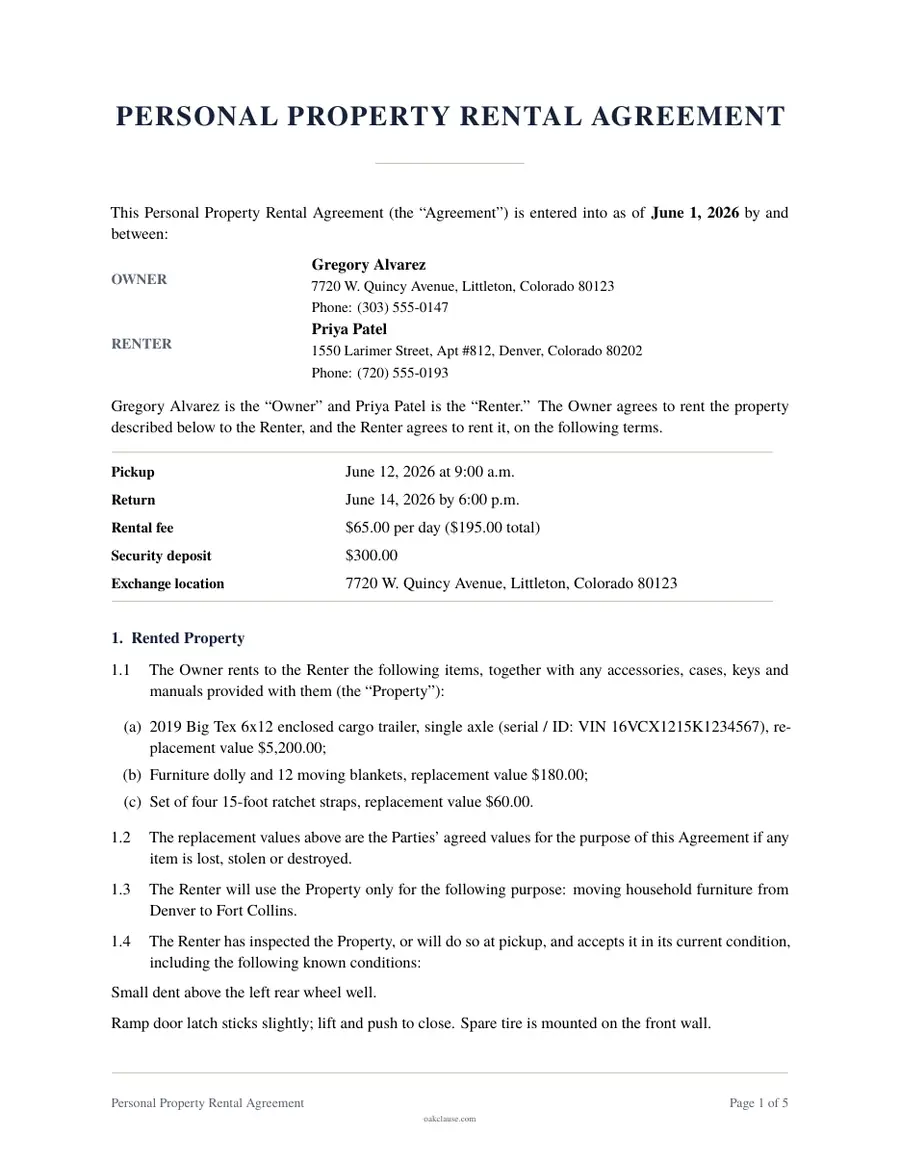
What is a Personal Property Rental Agreement?
A personal property rental agreement is a contract between the owner of a movable item and someone who wants to borrow it for a short time in exchange for a fee. It is often used between neighbors, friends, hobbyists and small side businesses for things like utility trailers, kayaks, paddleboards, cameras and lenses, drones, musical instruments, party supplies and outdoor gear.
The agreement lists exactly what is being rented and what it is worth, when and where it will be picked up and returned, how much the rental costs and whether a security deposit is held. It also sets ground rules for use, such as who may use the item, where it may be taken, and whether smoking, pets or commercial use are allowed.
Most importantly, it answers the question everyone worries about: who pays if the item is damaged, lost or stolen, or if someone gets hurt using it. A written agreement with a condition checklist, signed at pickup and again at return, makes those conversations much easier.
When to use it
- You are renting your utility trailer, boat, jet ski or camper to someone for a weekend or a week.
- You lend out photography, audio, video or drone equipment for a fee.
- You rent party supplies, tents, tools or sporting goods to people in your community.
- You are renting an item from a private owner and want the terms, fee and refund policy in writing.
- You want the renter to confirm the item's condition at pickup so damage disputes are easier to settle.
What is included
- List of rented items with identification numbers and values
- Pickup and return dates, times and location
- Rental fee, payment timing and cancellation policy
- Security deposit and late return charges
- Who may use the item and where it may be taken
- House rules such as smoking, pets and commercial use
- Responsibility for damage, loss and theft
- Optional insurance requirement and assumption of risk
- Check-out and check-in condition record
How to make your Property Rental
Answer the questions
Tell us about the parties and the terms you want. Most documents take about 5 to 20 minutes.
Review the preview
Check the draft as you go and change any answer. The document updates instantly.
Download, sign and keep a copy
Download a print-ready PDF, sign it with the other parties, and give everyone a copy.
Frequently asked questions
What kinds of items can I rent out with this agreement?
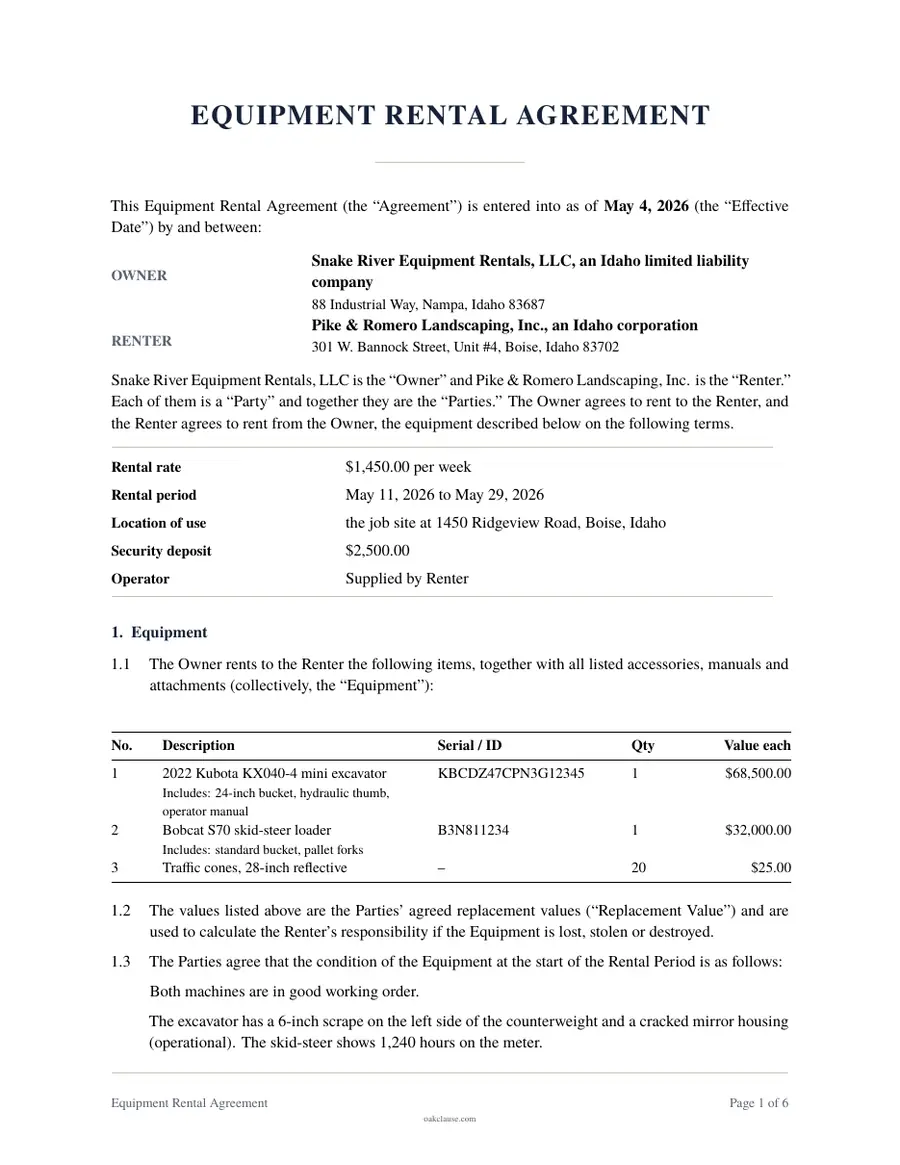
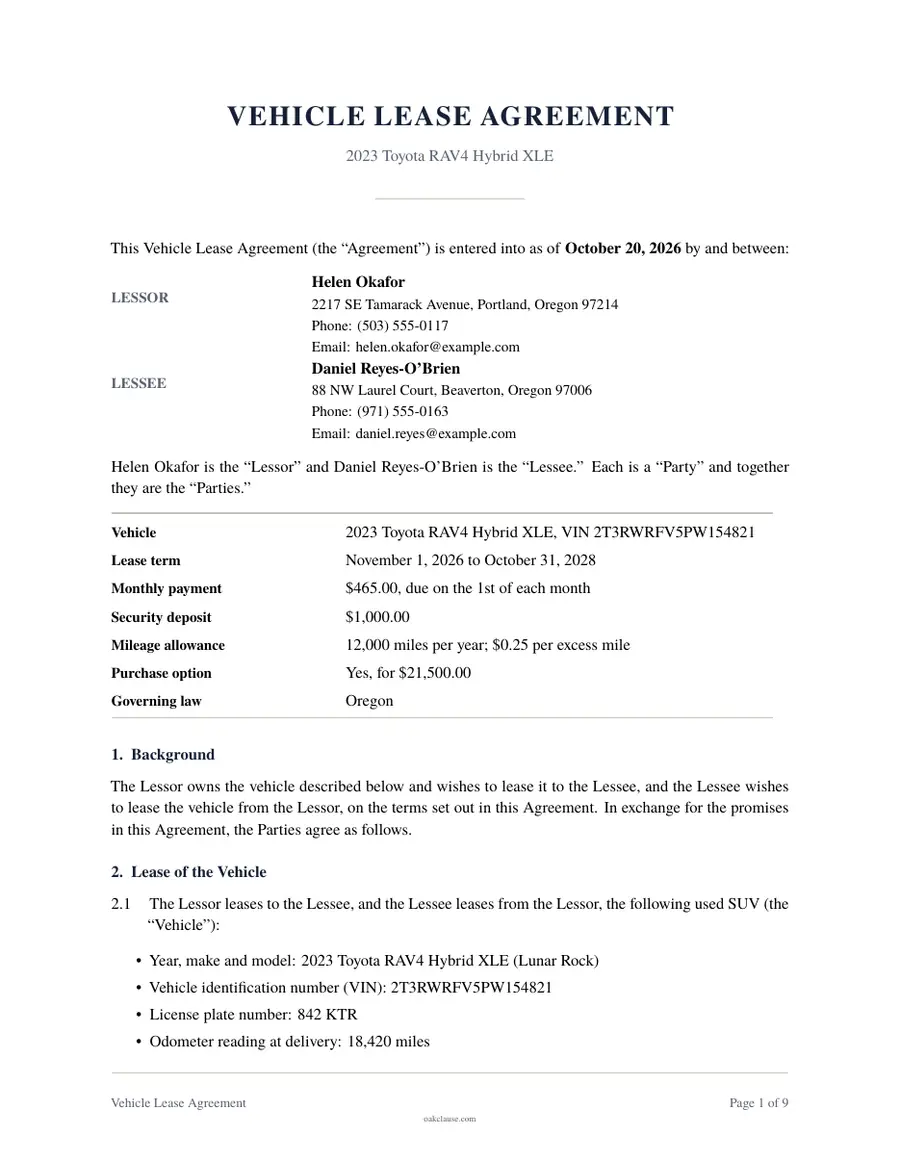
Almost any movable personal item, such as a utility or cargo trailer, boat, kayak, jet ski, camera, drone, musical instrument, tent, tools or party equipment. For heavy machinery rented to businesses, an equipment rental agreement is usually a better fit, and for cars and trucks a vehicle lease agreement covers road-specific issues.
Who pays if the rented item is damaged or stolen?
Under this agreement, the renter is responsible for loss, theft and damage beyond normal wear from pickup until return. You can choose whether the renter pays the full repair or replacement cost, or only the deductible when the owner's insurance covers the loss.
Should I collect a security deposit?
A deposit is common for valuable items. It gives the owner a fund to cover late fees, cleaning or minor damage without having to chase payment. This agreement requires the owner to return the deposit, minus any itemized deductions, after the item is returned and checked.
Does my insurance cover items I rent out?
Often not. Many homeowners, renters and boat policies exclude or limit coverage when an item is rented to someone else for a fee. Check your policy before renting out an item, and consider requiring the renter to show their own coverage, for example an auto policy that extends to a towed trailer.
Can a renter sign a waiver for injuries?
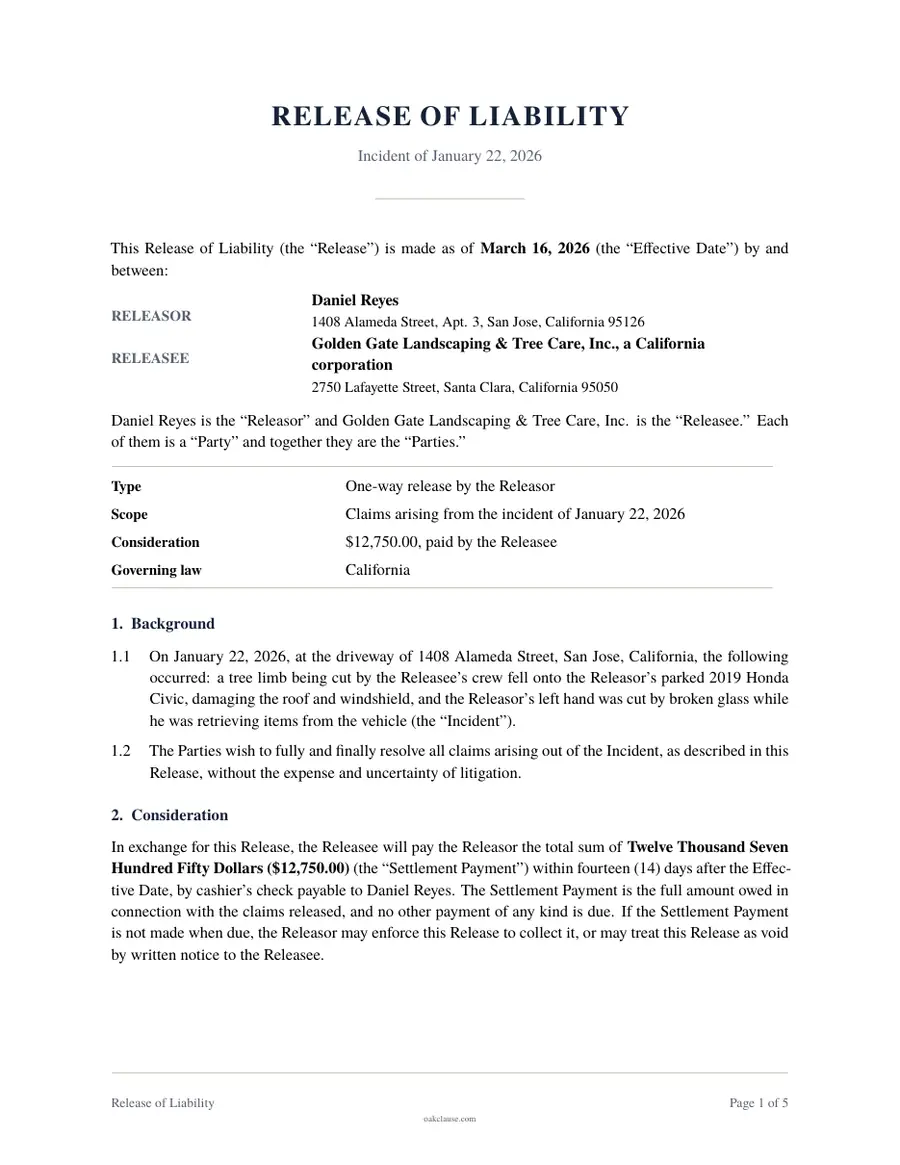
This agreement includes an optional assumption of risk and release in which the renter accepts the ordinary risks of using the item. States limit how far these releases go, and many will not enforce a release of claims for gross negligence or intentional harm, so the clause applies only to the extent the governing state's law allows.
What happens if the renter returns the item late?
You can set a late return fee per day. The fee applies for each day or part of a day the item is kept past the return date, and the owner can still recover any additional loss, such as a canceled booking by the next renter.
Do I need to fill in the condition checklist?
It is optional but strongly recommended. Walking around the item together at pickup, noting scratches or missing parts and taking dated photos, gives both sides a clear record to compare against at return.
Does a personal property rental agreement need to be notarized?
No. The agreement is valid when both the owner and the renter sign it, and electronic signatures are generally accepted.