Equipment Rental Agreement
Rent out tools, machinery or business equipment with a written agreement that sets the rental rate, deposit, care rules and return terms, so both sides know who pays if something breaks.
Includes 30 days of edits
- 5 to 20 minutes
- Print-ready PDF
What is an Equipment Rental Agreement?
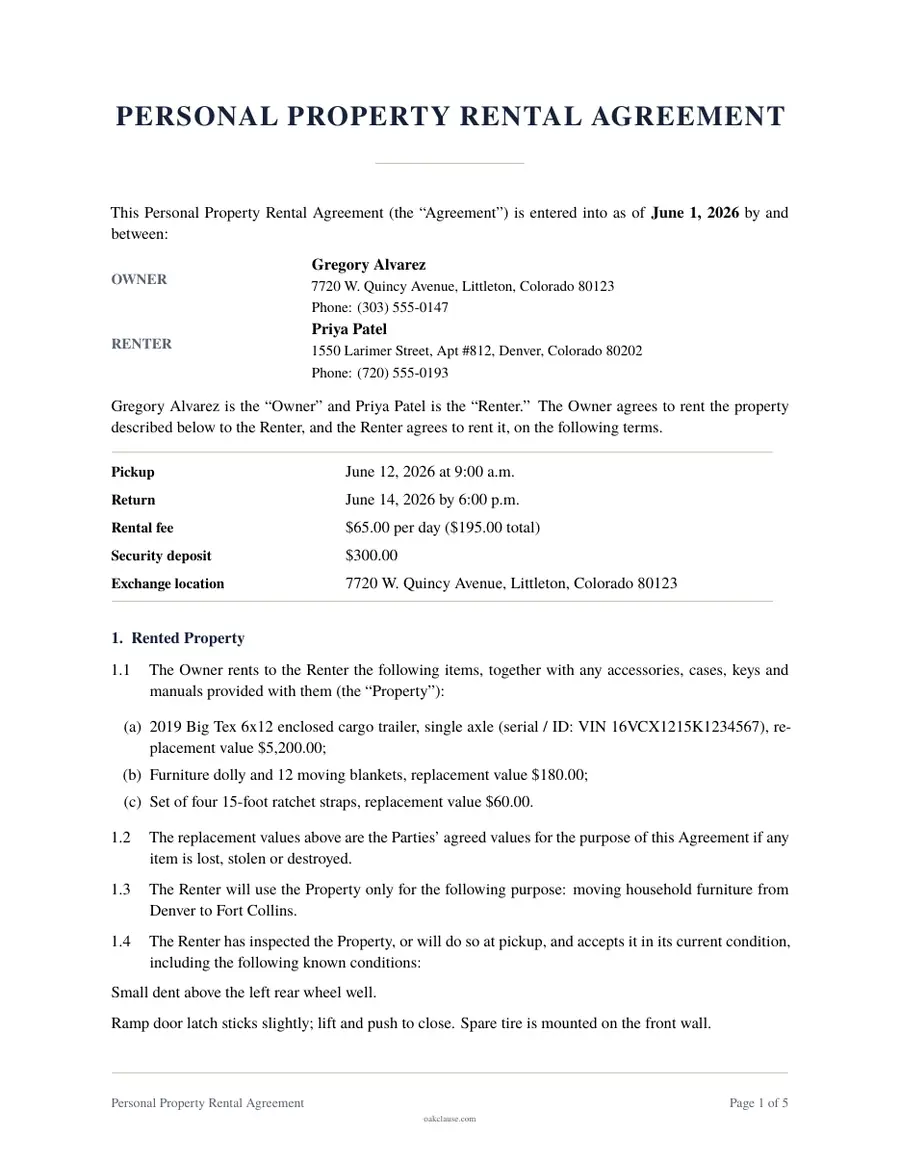
An equipment rental agreement is a contract between the owner of equipment and a person or business that wants to use it for a limited time in exchange for a fee. It can cover anything from a single pressure washer to a fleet of excavators, generators, scaffolding, medical devices, audio-visual gear or office machines.
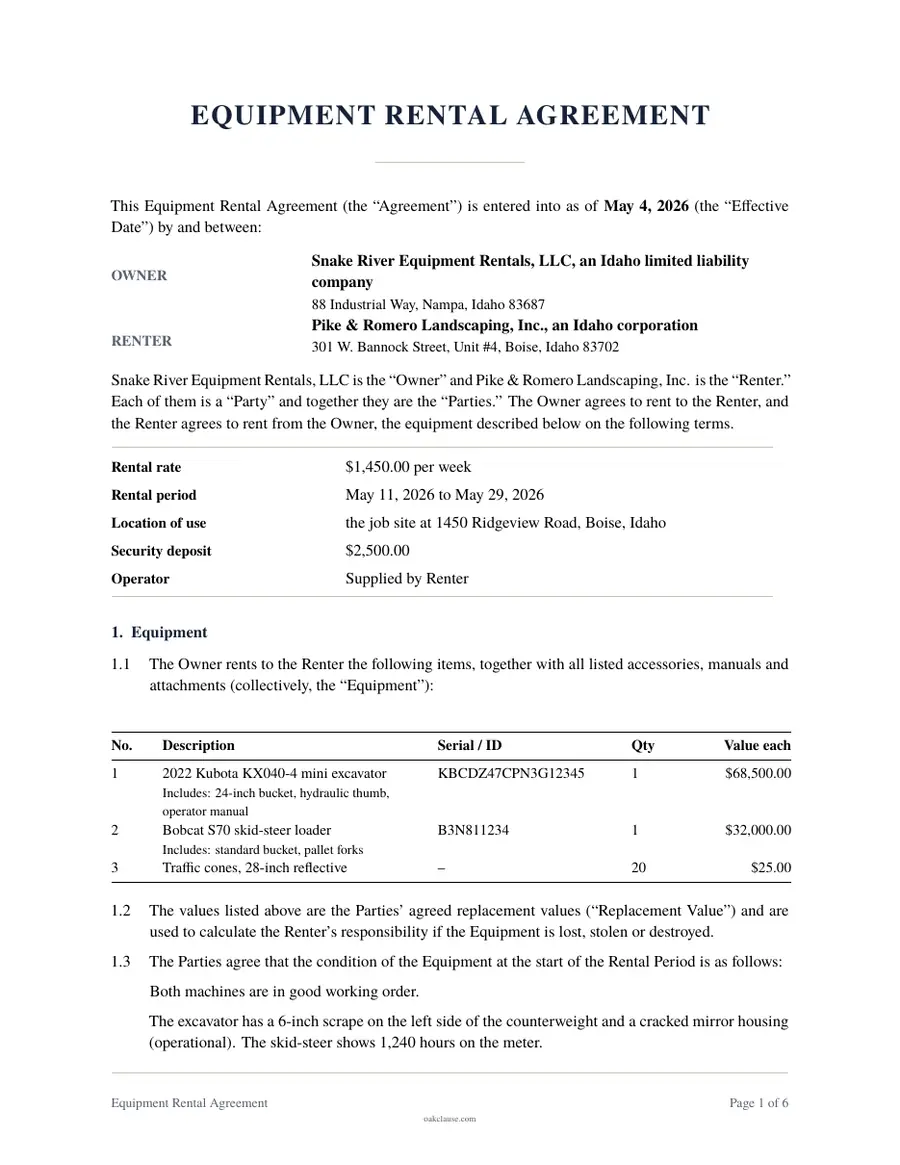
The agreement identifies each piece of equipment and its value, sets the rental period and rate, and explains how the equipment will be delivered, used, maintained and returned. It also allocates risk: who carries insurance, who pays for damage or theft, and what happens if the renter returns the equipment late or stops paying.
Unlike an equipment financing lease, a rental does not transfer ownership or build equity. The owner keeps title the whole time, and the agreement says so, which helps protect the equipment from the renter's creditors and makes it clear the renter cannot sell or pledge it.
When to use it
- Your company rents construction, landscaping, farm or industrial equipment to customers or other contractors.
- You own expensive equipment that sits idle part of the year and want to rent it out to another business.
- You need to rent equipment for a project and want the owner's promises about condition and support in writing.
- You are renting event, audio-visual, medical or office equipment for a set number of days, weeks or months.
- You want clear rules on operators, insurance and damage before handing over valuable machinery.
What is included
- Schedule of equipment with serial numbers and replacement values
- Rental period, rate, payment schedule and late fees
- Security deposit and how deductions are made
- Delivery, pickup and inspection at the start and end of the rental
- Permitted use, authorized operators and location limits
- Maintenance, repairs, fuel and breakdown procedures
- Insurance requirements, risk of loss and indemnification
- Owner's title, warranty or as-is terms and limitation of liability
- Late return charges, default remedies and repossession
- Governing law, dispute resolution and signatures
How to make your Equipment Rental
Answer the questions
Tell us about the parties and the terms you want. Most documents take about 5 to 20 minutes.
Review the preview
Check the draft as you go and change any answer. The document updates instantly.
Download, sign and keep a copy
Download a print-ready PDF, sign it with the other parties, and give everyone a copy.
Frequently asked questions
What is the difference between renting and leasing equipment?
The words are often used interchangeably. In practice, a rental usually means shorter use, priced by the hour, day, week or month, with the owner keeping full ownership. A lease is often longer and may include an option to buy. This agreement is a true rental: the renter never gains an ownership interest.
Who is responsible if rented equipment is damaged or stolen?
Under this agreement, the renter bears the risk of loss or damage from the moment the equipment is delivered until it is returned, except for normal wear and tear. The renter pays for repairs or, if the equipment cannot be repaired, its stated replacement value. Requiring insurance helps make sure there is money to cover that cost.
Should I require the renter to carry insurance?
For valuable equipment or equipment that could injure people or property, many owners require the renter to insure the equipment against damage and theft and to carry liability insurance. You can choose the coverage types and minimum liability amount, and ask to be named as an additional insured or loss payee.
Can I charge a late fee if the equipment is not returned on time?
Yes. This agreement charges rent at the regular rate for each period the equipment is kept past the return date, and you can add a separate late payment fee for overdue invoices. Late fees should be reasonable; some states limit fees that look like a penalty rather than a fair estimate of the owner's loss.
Do I need a security deposit?
A deposit is optional but common. It gives the owner a fund to cover unpaid rent, cleaning, missing parts or damage. This agreement explains when the deposit is returned and requires the owner to provide an itemized list of any deductions.
Can the owner provide an operator with the equipment?
Yes. If the owner supplies a trained operator, choose that option and the agreement will say the operator remains under the owner's control and responsibility for operating the equipment, while the renter directs the work and keeps the site safe. Equipment rented with an operator is sometimes treated differently for insurance and tax purposes.
Is sales tax charged on equipment rentals?
In many states, rental charges for equipment are subject to sales or use tax, but the rules and exemptions vary. This agreement makes the renter responsible for taxes on the rental itself. Check with your state's tax agency to confirm whether you must collect tax.
Does an equipment rental agreement need to be notarized?
No. An equipment rental agreement is valid when signed by both parties, and electronic signatures are generally accepted. Notarization is not usually required.