Minnesota Mechanic's Lien
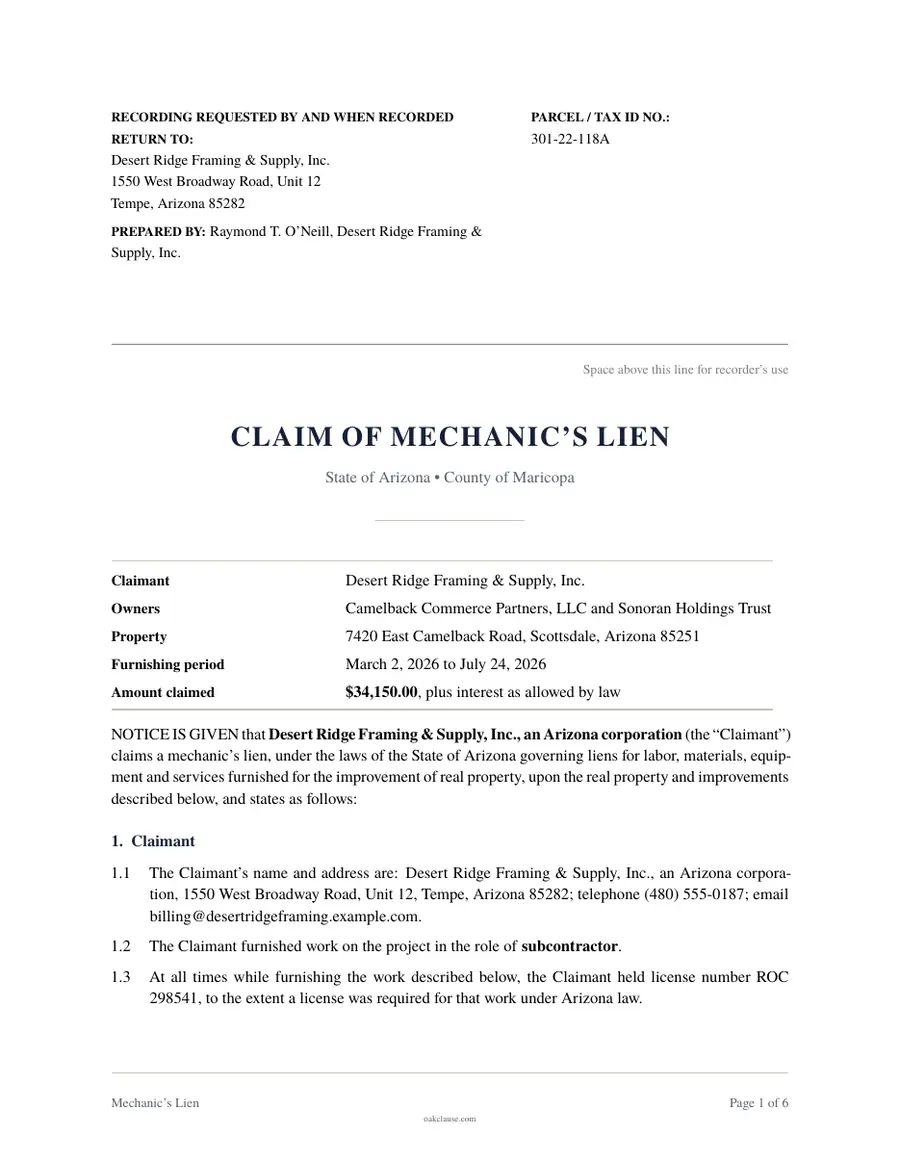
Prepare a sworn claim of lien against real property when you supplied labor, materials or equipment for an improvement and have not been paid.
Includes 30 days of edits
- 5 to 20 minutes
- Print-ready PDF
- Tailored to Minnesota
Mechanic's Lien rules in Minnesota
Lien law is set state by state, and the differences matter. States decide who can claim a lien, whether preliminary or pre-lien notices must be served and when, how long after the last day of work the claim must be recorded, what the claim must contain and whether a specific statutory form is required, who must receive a copy and how, and how long the claimant has to file a lawsuit to enforce the lien. Some states also limit liens on owner-occupied homes or require the claimant to be properly licensed. This document uses the selected state for its wording and defers to that state's requirements on deadlines, notices and service, but it does not calculate deadlines. Check your state's lien statute or consult a construction attorney before recording, especially if a deadline is close.
When you create this document for Minnesota, the questionnaire uses Minnesota as the governing law and adds wording that defers to Minnesota requirements where they apply. Laws change, so confirm current rules with official Minnesota sources or a local attorney for anything critical.
What is a Mechanic's Lien?
A mechanic's lien, also called a construction lien or a claim of lien, is a legal claim against real property filed by someone who helped improve that property and was not paid. Contractors, subcontractors, suppliers, laborers, equipment rental companies and, in many states, design professionals can use it. Once recorded in the county land records, the lien attaches to the property itself, which makes it difficult for the owner to sell or refinance until the debt is resolved.
The claim identifies the property, the owner, the person who hired the claimant, the work or materials provided, the dates of work and the amount still owed. It is usually signed under oath and acknowledged before a notary, then recorded with the county recorder, clerk or register of deeds where the property is located. If the debt is not paid, the claimant may later have to file a lawsuit to foreclose the lien within a deadline set by state law.
Mechanic's lien rights are created entirely by state statute, and every state handles them differently. This document asks for the property's state and uses state-aware wording, but it does not replace your state's official form where one is required, and it cannot track your deadlines for you. Missing a notice or filing deadline can mean losing lien rights altogether.
When to use it
- You are a contractor and the owner has not paid for work on a home or commercial building.
- You are a subcontractor or supplier and the general contractor has not paid you for labor or materials.
- You rented equipment for use on a construction project and the rental charges remain unpaid.
- You are a laborer who worked on an improvement to real property and wages for that work are unpaid.
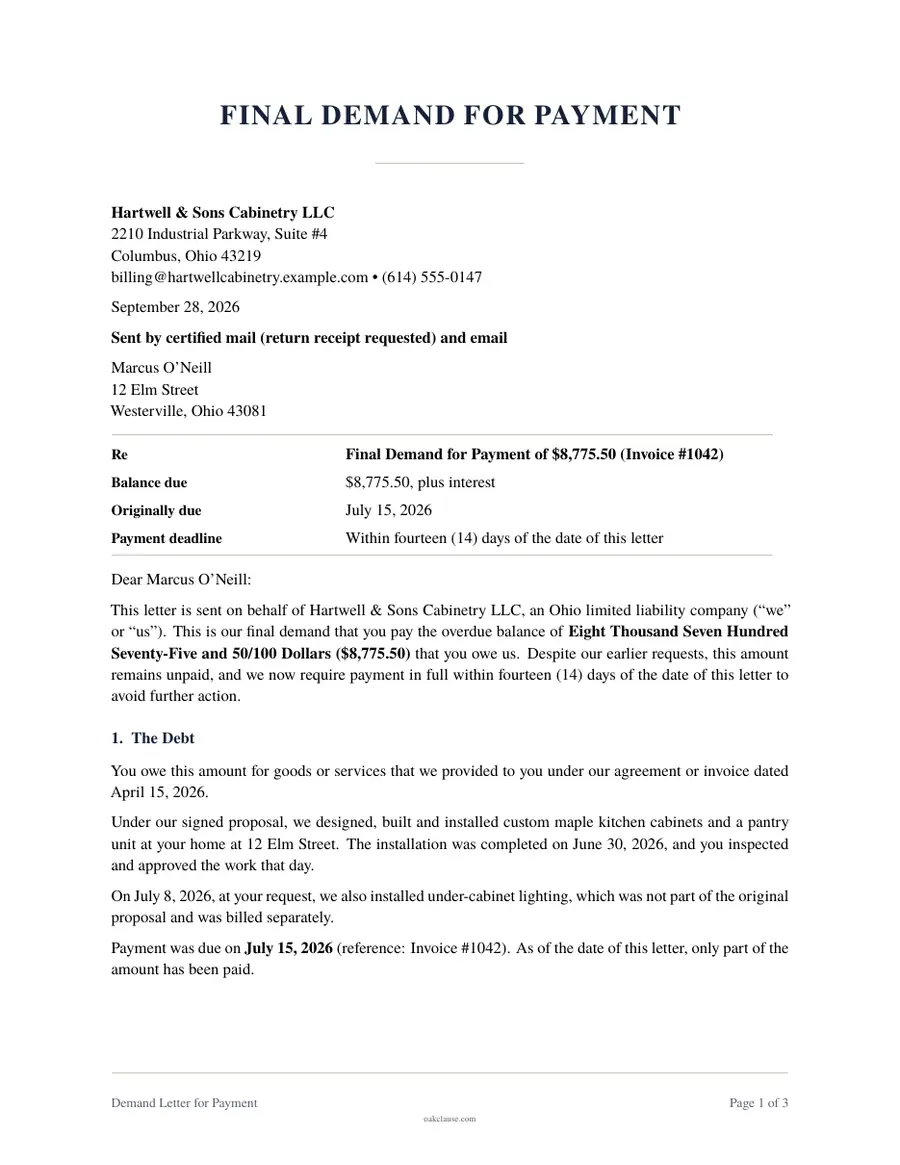
- Informal payment requests and a demand letter have not resolved an overdue construction invoice.
What is included
- Recording information and return address block
- Claimant details, role in the project and license number
- Property address, county, parcel number and legal description
- Owner, hiring party and general contractor information
- Description and dates of the labor, materials or equipment furnished
- Contract price, extra work, payments, credits and amount claimed
- Preliminary notice and service details
- Sworn verification by the claimant
- Notary acknowledgment
- Optional proof of service on the owner
How to make your Mechanic's Lien
Answer the questions
Enter the property, the parties, the work you did and what is still owed. Have your contract, invoices and the property's legal description handy.
Sign before a notary
Download the claim and sign the verification in front of a notary public, who completes the acknowledgment.
Record and serve
Record the claim with the county office that keeps land records where the property is located, pay the recording fee, and serve copies as your state requires.
Mechanic's Lien in another state
Back to the general mechanic's lien page51 states shown
- ALAlabama
- AKAlaska
- AZArizona
- ARArkansas
- CACalifornia
- COColorado
- CTConnecticut
- DEDelaware
- DCDistrict of Columbia
- FLFlorida
- GAGeorgia
- HIHawaii
- IDIdaho
- ILIllinois
- INIndiana
- IAIowa
- KSKansas
- KYKentucky
- LALouisiana
- MEMaine
- MDMaryland
- MAMassachusetts
- MIMichigan
- MNMinnesota
- MSMississippi
- MOMissouri
- MTMontana
- NENebraska
- NVNevada
- NHNew Hampshire
- NJNew Jersey
- NMNew Mexico
- NYNew York
- NCNorth Carolina
- NDNorth Dakota
- OHOhio
- OKOklahoma
- OROregon
- PAPennsylvania
- RIRhode Island
- SCSouth Carolina
- SDSouth Dakota
- TNTennessee
- TXTexas
- UTUtah
- VTVermont
- VAVirginia
- WAWashington
- WVWest Virginia
- WIWisconsin
- WYWyoming
Frequently asked questions
Who can file a mechanic's lien?
It depends on the state, but lien rights usually extend to general contractors, subcontractors, material suppliers and laborers who improve real property. Many states also cover equipment rental companies, architects, engineers and surveyors. Suppliers far down the chain, such as a supplier to a supplier, are often excluded.
How long do I have to file a mechanic's lien?
Every state sets its own deadline, typically counted from the last day you furnished labor or materials or from completion of the project. The window can be short, and missing it usually means losing the right to a lien. Check your state's lien statute as soon as payment becomes a problem.
Do I need to send a preliminary notice first?
Many states require some claimants, especially subcontractors and suppliers who did not contract directly with the owner, to send a preliminary or pre-lien notice early in the project. Some states require a notice of intent to lien shortly before recording. If a required notice was not sent, the lien may be invalid.
Where do I file the lien?
A mechanic's lien is recorded with the county office that keeps real property records where the property is located, often called the county recorder, county clerk or register of deeds. The office charges a recording fee and may have formatting rules such as margins and page size.
Does a mechanic's lien need to be notarized?
In most states the claim must be signed under oath or verified, and recording offices generally require a notary acknowledgment. This document includes a sworn verification and a notary acknowledgment for that reason.
What happens after the lien is recorded?
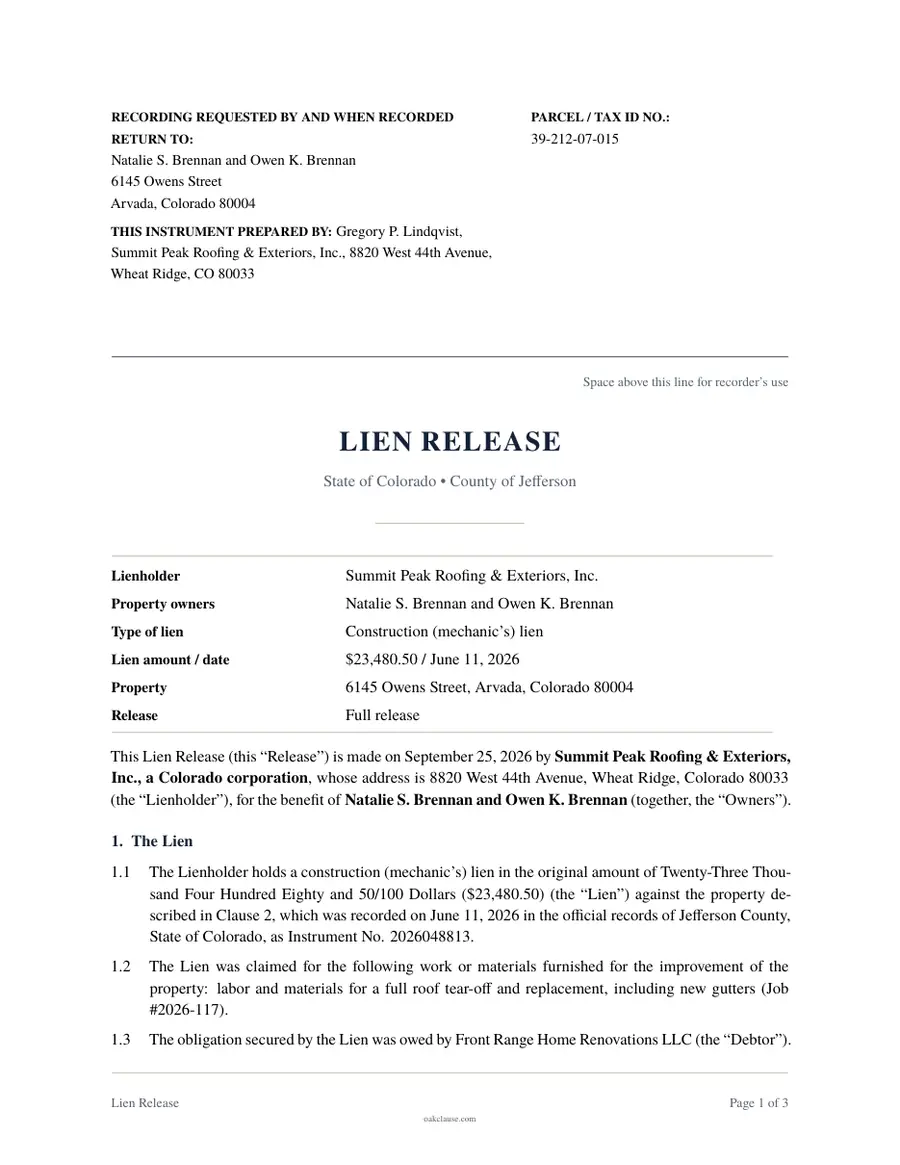
The lien clouds the owner's title, which often prompts payment. If the debt is not paid, the claimant usually must file a lawsuit to foreclose the lien within the period set by state law, or the lien expires. Once paid, the claimant should record a lien release.
Can I include interest, fees or lost profits in the lien amount?
Generally the lien amount is limited to the value of labor, materials and equipment actually furnished and still unpaid, under the contract or at a reasonable value. Whether interest, attorney fees or other charges can be included varies by state. Overstating a lien can have serious consequences in some states.
Can I file a lien on public property?
Usually not. Public property such as government buildings is generally exempt from mechanic's liens. Claimants on public projects typically rely instead on payment bonds or a claim against retained funds under federal or state law.
More Minnesota documents
Other documents people prepare for Minnesota, each with the state’s rules where we have checked them.
All Minnesota documents and rules