Texas LLC Articles of Organization
In Texas, filing a certificate of formation for an LLC costs $300; LLCs file no annual report with the Secretary of State but are subject to the state franchise tax and file a yearly Public Information Report with the Comptroller.
Official source: Texas SOS Form 205, Certificate of Formation (LLC)
Includes 30 days of edits
- 5 to 20 minutes
- Print-ready PDF
- Tailored to Texas
- Free to fill in and preview. Pay only to download.
- 30-day money-back guarantee
- Secure payment with Stripe
Texas rules checked . Template last updated .
Articles of Organization rules in Texas
Formation rules are set by each state. The details that most often differ are the name of the filing, which words or abbreviations the LLC name must include, whether the names of members or managers must be listed, whether the registered agent must sign, the filing fee, any publication requirement after formation and whether the state requires its own form or online portal. Some states also require initial or annual reports soon after formation. These articles use the state you select for the filing heading and governing law and defer to that state's limited liability company laws on everything else. Before filing, compare the document with your Secretary of State's current instructions and use the state's own form where it is mandatory.
When you create this document for Texas, the questionnaire uses Texas as the governing law and adds wording that defers to Texas requirements where they apply. Laws change, so confirm current rules with official Texas sources or a local attorney for anything critical.
What is an LLC Articles of Organization?
Articles of organization are the document that brings a limited liability company (LLC) into legal existence. Once the filing is accepted by the state's business filing office, usually the Secretary of State, the LLC becomes a separate legal entity that can own property, sign contracts and protect its owners from most business debts. Some states call the same filing a certificate of formation or a certificate of organization.
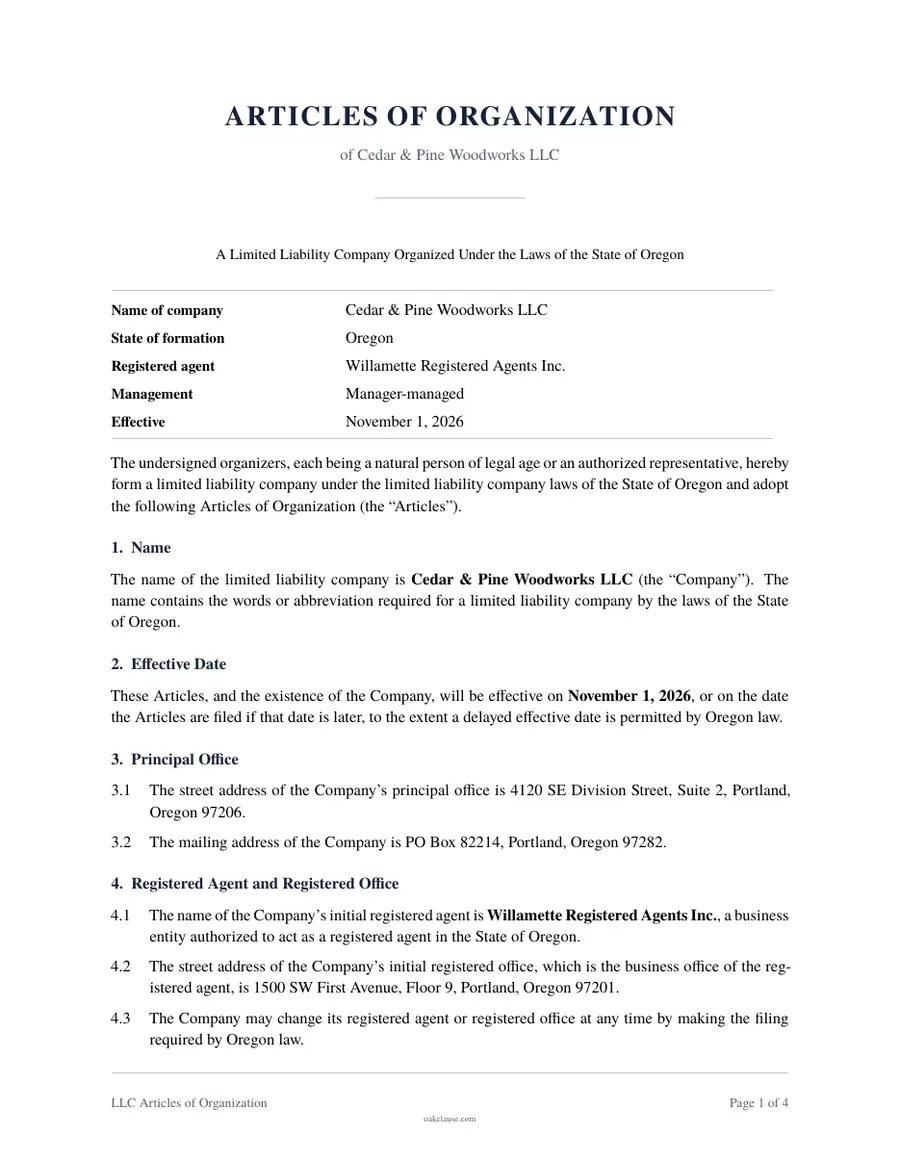
The articles themselves are short and public. They typically state the LLC's name, its principal office, the registered agent who will accept legal papers on the company's behalf, whether the company is run by its members or by managers, and who organized it. The detailed rules for how the business is owned and run belong in a separate, private operating agreement.
Every state sets its own required contents, fees and filing method, and many states require or prefer their own online form. This document gathers the information that states commonly ask for into a clean, signed set of articles that you can file where paper or uploaded filings are accepted, or use as a worksheet when completing the state's own form.
When to use it
- You are starting a new business and want limited liability protection for its owners.
- You are converting an informal side business or sole proprietorship into an LLC.
- You want to organize all of your formation details before completing your state's online filing.
- You are forming an LLC on behalf of a client or a group of founders as the organizer.
- You are setting up a professional LLC for a licensed service, where your state allows it.
What is included
- LLC name and the state of formation
- Effective date of formation, immediate or delayed
- Principal office and mailing address
- Registered agent name, address and optional acceptance of appointment
- Business purpose, including professional LLC wording
- Duration of the company
- Member-managed or manager-managed structure, with optional names
- Liability, indemnification and other optional provisions
- Organizer signatures and filing contact details
How to make your Articles of Organization
Answer the questions
Tell us about the parties and the terms you want. Most documents take about 5 to 20 minutes.
Review the preview
Check the draft as you go and change any answer. The document updates instantly.
Download, sign and keep a copy
Download a print-ready PDF, sign it with the other parties, and give everyone a copy.
Articles of Organization in another state
Back to the general articles of organization page51 states shown
- ALAlabama
- AKAlaska
- AZArizona
- ARArkansas
- CACalifornia
- COColorado
- CTConnecticut
- DEDelaware
- DCDistrict of Columbia
- FLFlorida
- GAGeorgia
- HIHawaii
- IDIdaho
- ILIllinois
- INIndiana
- IAIowa
- KSKansas
- KYKentucky
- LALouisiana
- MEMaine
- MDMaryland
- MAMassachusetts
- MIMichigan
- MNMinnesota
- MSMississippi
- MOMissouri
- MTMontana
- NENebraska
- NVNevada
- NHNew Hampshire
- NJNew Jersey
- NMNew Mexico
- NYNew York
- NCNorth Carolina
- NDNorth Dakota
- OHOhio
- OKOklahoma
- OROregon
- PAPennsylvania
- RIRhode Island
- SCSouth Carolina
- SDSouth Dakota
- TNTennessee
- TXTexas
- UTUtah
- VTVermont
- VAVirginia
- WAWashington
- WVWest Virginia
- WIWisconsin
- WYWyoming
Frequently asked questions
How much does it cost to form an LLC in Texas?
Formation filing fee in Texas: $300.
How much is the LLC annual report fee in Texas?
Annual or biennial report fee in Texas: $0 (no Secretary of State report). No annual report is filed with the Secretary of State. LLCs file a Public Information Report with the Comptroller as part of the franchise tax report.
How often must an LLC file a report in Texas?
Report frequency in Texas: No report (yearly franchise tax filing). The annual franchise tax report is due May 15.
Does Texas charge an annual LLC tax or franchise tax?
Yes, franchise tax. Annual LLC or franchise tax in Texas: yes, franchise tax. Entities at or below the no tax due threshold ($2,650,000 for 2026 and 2027 reports) file an information report instead of paying tax.
Are articles of organization the same as an operating agreement?
No. Articles of organization are the short public filing that creates the LLC with the state. An operating agreement is a private contract among the owners that explains how the company is managed, how profits are shared and what happens when someone leaves. Most LLCs benefit from having both.
Where do I file articles of organization?
Articles are filed with the business filing office of the state where the LLC is formed, which is usually the Secretary of State or a similar agency. Many states offer online filing, and some require it or require their own form. Check the filing office's website for the current method and fee.
What is a registered agent and do I need one?
A registered agent is a person or company with a physical address in the state who agrees to receive lawsuits and official notices for the LLC. Every state requires an LLC to have one. You can usually act as your own agent if you live in the state, or hire a commercial registered agent service.
Should my LLC be member-managed or manager-managed?
In a member-managed LLC, the owners run the business day to day and can generally bind the company. In a manager-managed LLC, one or more managers, who may or may not be owners, run the business while the other members act more like passive investors. Many small businesses choose member-managed, but the right choice depends on how involved each owner will be.
Do I have to list the members of my LLC?
It depends on the state. Some states require the names and addresses of the members or managers in the articles, while others do not ask for them at all. Because the articles become a public record, many owners list only what their state requires. You can choose whether to include names in this document.
Who can be the organizer of an LLC?
The organizer is the person who signs and submits the articles. It can be a future member, a manager, an attorney or a filing service. The organizer does not automatically become an owner of the LLC just by signing the filing.
Does the LLC exist as soon as I sign the articles?
No. The LLC generally comes into existence when the state accepts the filing, or on a later effective date if you choose one and your state allows it. Keep the state's filing confirmation with your company records.
What should I do after my articles are approved?
Common next steps include signing an operating agreement, getting an employer identification number from the IRS, opening a separate business bank account, registering for state taxes and licenses, and calendaring any annual report deadlines. Some states also require newspaper publication after formation.
More Texas documents
Other documents people prepare for Texas, each with the state’s rules where we have checked them.
All Texas documents and rules