Confidentiality Agreement
Put a clear, focused promise of secrecy in writing before you hand over sensitive information to an employee, contractor, vendor or prospective buyer.
Includes 30 days of edits
- 5 to 20 minutes
- Print-ready PDF
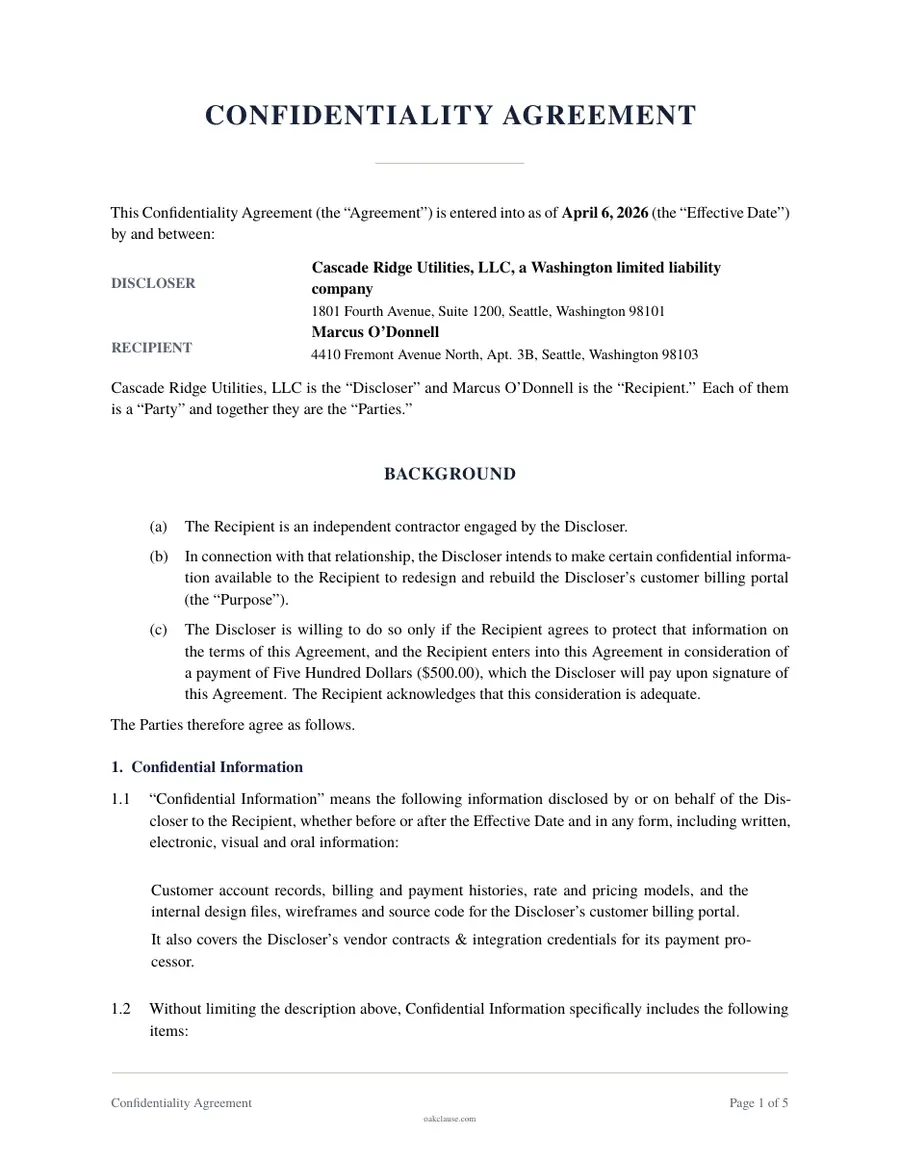
What is a Confidentiality Agreement?
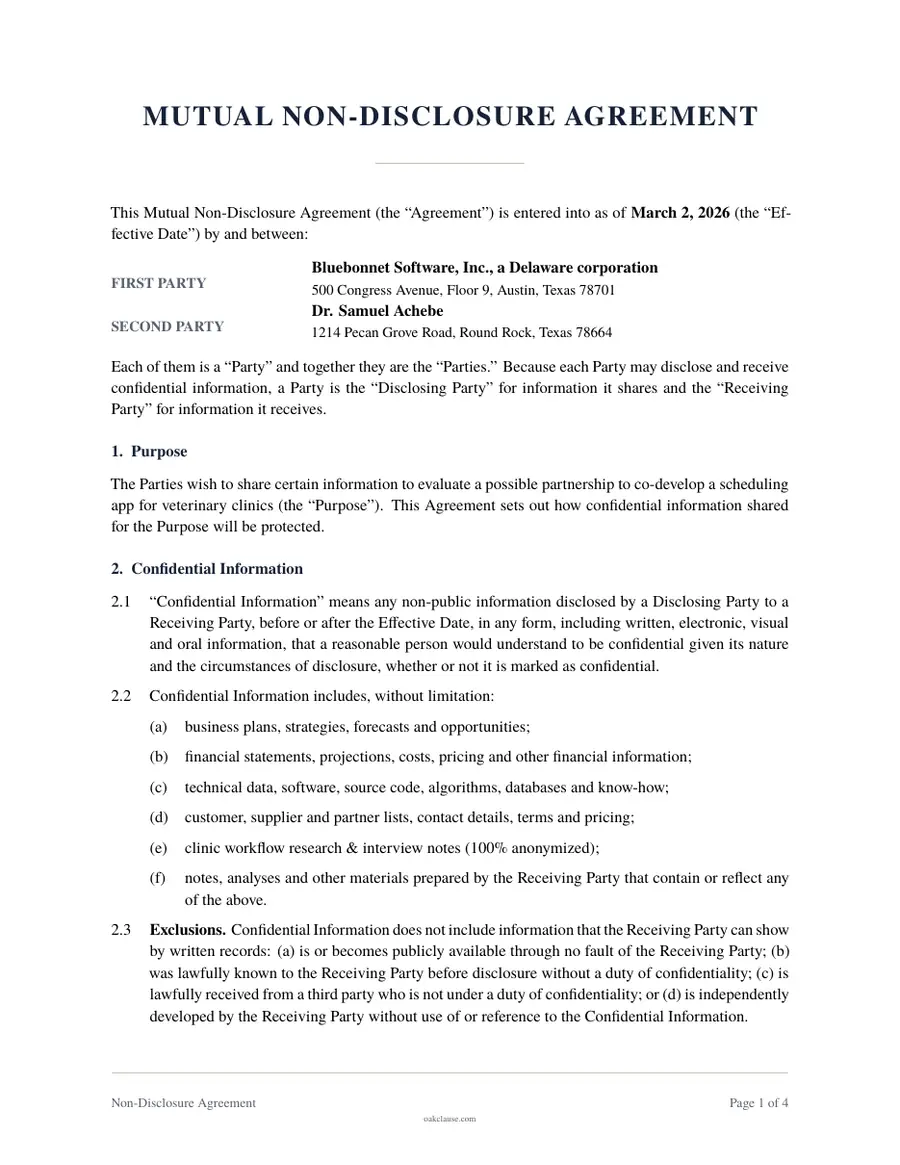
A confidentiality agreement is a contract in which one party (the recipient) promises to keep information supplied by another party (the discloser) private, to use it only for a stated reason, and to give it back or destroy it when asked.
It does the same basic job as a non-disclosure agreement, but it is usually narrower and tied to a specific relationship or project: a new hire joining a product team, a freelancer working on a client account, a vendor getting access to a customer database, or a buyer reviewing a company's books before an acquisition. Because it is focused, it can name the exact materials being shared and spell out practical handling rules, such as no copies, no personal devices or encrypted storage only.
Putting these expectations in writing helps prove that you took reasonable steps to keep the information secret, which matters if you ever need to protect it as a trade secret. It also gives you a clear basis to ask a court to stop a leak quickly.
When to use it
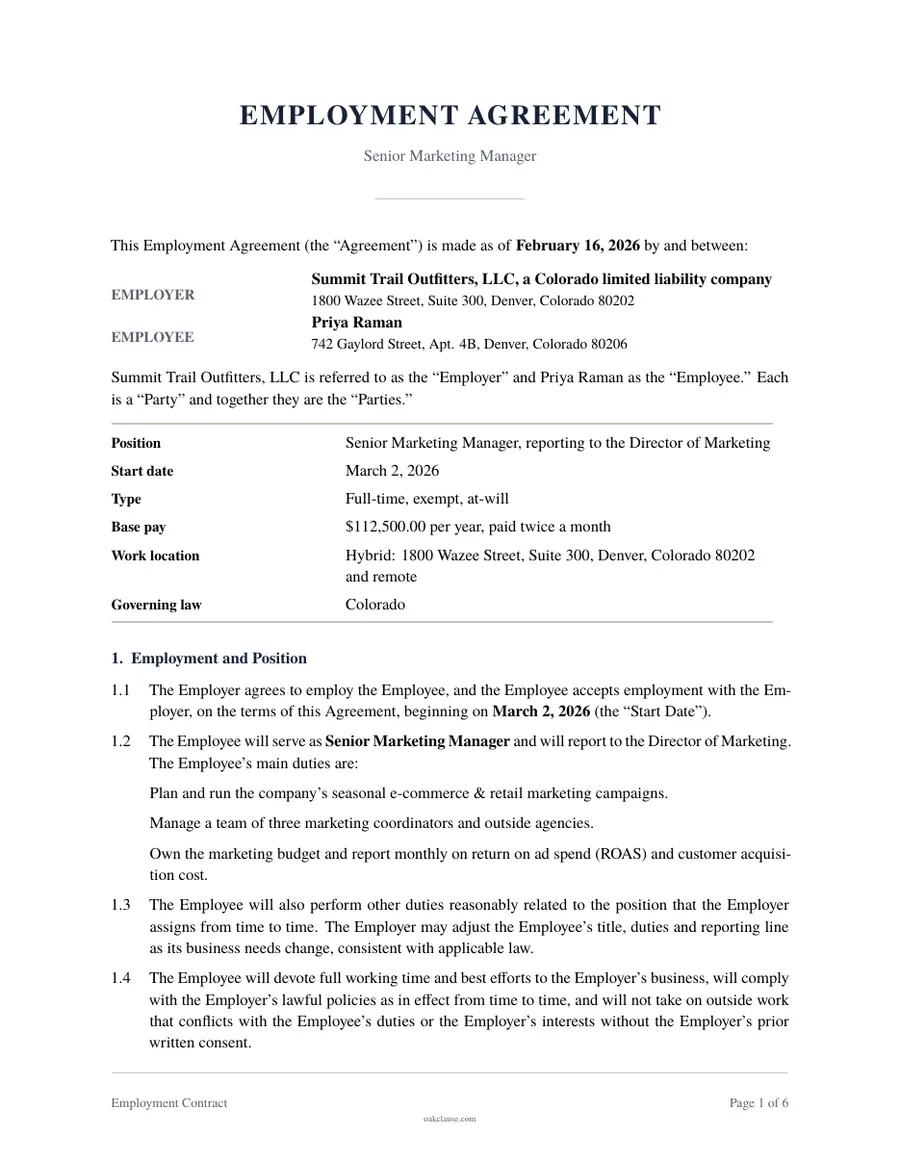
- A new employee, intern or temporary worker will see internal plans, customer records or pricing.
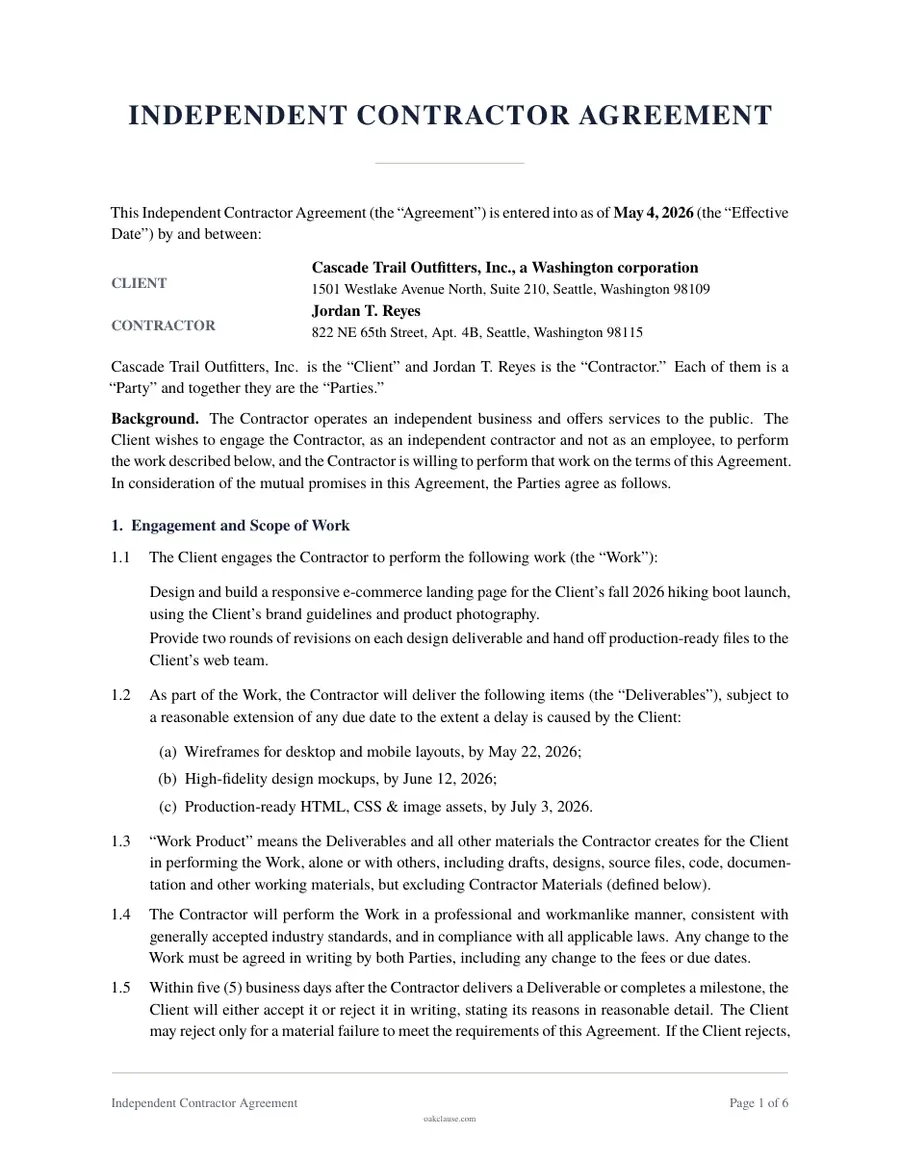
- You are engaging a freelancer, consultant or agency to work on a sensitive project.
- A vendor, IT provider or contractor needs access to your systems, files or premises.
- A potential buyer, lender or investor wants to review your financial records or operations.
- You want a single, identified set of documents or data to be covered by a written promise of secrecy.
What is included
- Description of the relationship and the reason information is shared
- Definition of confidential information, with a list of specific items
- Standard exclusions such as public or independently developed information
- Who the recipient may share information with, if anyone
- Practical security and handling rules you choose
- Compelled disclosure and federal whistleblower immunity notice
- Return or destruction of materials and written certification
- Duration of the duty of confidentiality and trade secret protection
- Injunctive relief, dispute resolution and governing law
- Signature blocks for individuals or business signers
How to make your Confidentiality Agreement
Answer the questions
Tell us about the parties and the terms you want. Most documents take about 5 to 20 minutes.
Review the preview
Check the draft as you go and change any answer. The document updates instantly.
Download, sign and keep a copy
Download a print-ready PDF, sign it with the other parties, and give everyone a copy.
Frequently asked questions
What is the difference between a confidentiality agreement and an NDA?
Legally they are the same kind of contract. People often use confidentiality agreement for a narrower, one-way document tied to a particular job, project or set of materials, and NDA for broader deals such as mutual discussions between two companies.
Does a confidentiality agreement need to be notarized?
No. A confidentiality agreement is a private contract that is valid once the parties sign it. Electronic signatures are generally accepted under federal and state e-signature laws.
Can I ask an employee to sign a confidentiality agreement after they have started?
Often yes, but some states require new consideration, such as a raise, bonus or other benefit, for an agreement signed mid-employment to be enforceable. This form lets you state what the recipient receives in exchange. If you are unsure, check your state's rules or speak with an attorney.
How long should confidentiality last?
Many agreements protect ordinary business information for two to five years. Trade secrets can be protected for as long as they stay secret, so this form lets you extend protection for trade secrets indefinitely.
Can a confidentiality agreement stop someone from reporting a crime or workplace misconduct?
No. People may always report possible violations of law to government agencies, and federal law grants immunity for certain confidential disclosures of trade secrets to officials and attorneys. Several states also limit agreements that would silence discussion of harassment or discrimination. The agreement includes a notice reflecting these protections.
What should I list as confidential information?
Describe the general category of information and, where possible, list the specific documents, databases, files or projects being shared. Being specific makes it easier to show what was covered if there is ever a dispute.
What happens if the recipient breaks the agreement?
The discloser can sue for breach of contract and seek damages. Because harm from leaked information is hard to undo, the agreement also allows the discloser to ask a court for an injunction to stop further use or disclosure.
Does the recipient have to return everything at the end?
Yes. You choose whether materials must be returned, destroyed, or either at your option, how quickly, and whether the recipient must confirm in writing that nothing has been kept.